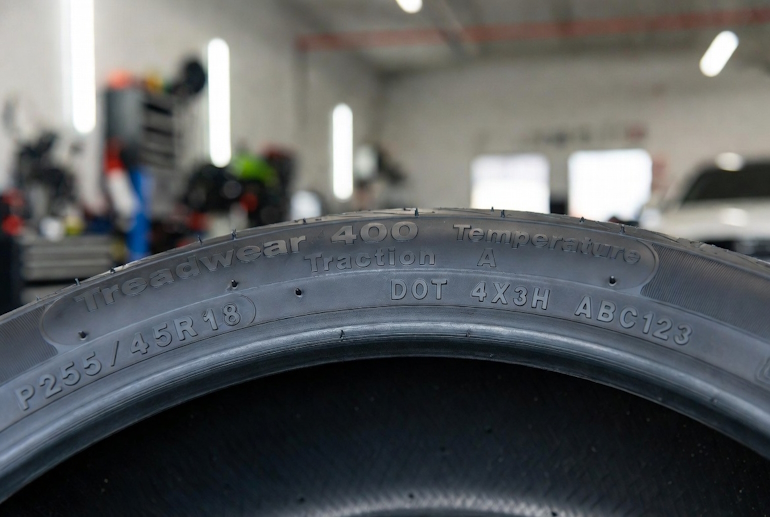
A complete guide to decoding car tire markings and choosing rubber for different body types will help you avoid purchase mistakes.
Understanding speed ratings, load indexes, treadwear, and temperature grades allows you to select the perfect set for both quiet city driving and aggressive off-roading.
A smart analysis of a tire’s technical parameters guarantees safety, predictable handling, and maximum tire life under any road conditions.
Detailed Breakdown of Key Car Tire Characteristics
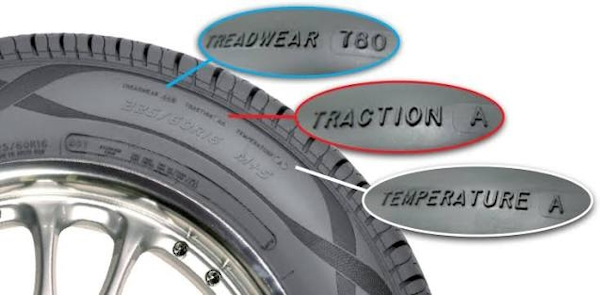
- The Traction rating determines braking efficiency and wet grip performance, which is critical for preventing accidents in rainy weather.
This characteristic is tested under strict laboratory conditions during straight-line braking and is always stamped on the sidewall or listed on the tire information label. The highest tier is graded AA, which guarantees the shortest stopping distance and excellent grip even when a layer of water builds up on the asphalt.
- An A rating is also an excellent score that ensures confident everyday driving for most motorists.
Grades B and C represent compromised options where wet traction drops noticeably, meaning you should avoid hard maneuvering on these tires when it rains.
- The Treadwear rating indicates the tire’s potential lifespan and its resistance to mechanical wear during standard daily driving.
A baseline value of 100 represents the control tire’s mileage on a specialized test track, against which all other wear coefficients are mathematically calculated. Soft performance tires typically feature an index around 200 to 300, offering phenomenal grip and sharp handling at the cost of a rapidly shrinking lifespan.
- Tires scored at 500 or 600 utilize a much harder rubber compound, allowing them to last for years and clear massive highway mileages without needing a replacement.
However, you pay for this impressive durability with a noticeable drop in traction during panic stops or sharp high-speed cornering.
- The Temperature grade indicates how well a tire dissipates the destructive heat build-up generated during extended high-speed driving.
Excessive heat is the primary enemy of the tire’s internal plies, prompting manufacturers to assign alphabetical grades from A to C.
The highest tier, Grade A, means the tire effectively dissipates excess heat and maintains its structural integrity even under extreme summer loads.
Grade B demonstrates moderate heat resistance, which is perfectly adequate for normal driving within standard speed limits.
A C grade is the minimum acceptable quality baseline, and running these tires hard or fast in hot summer weather is highly dangerous due to the risk of thermal tread separation.
- The speed rating reflects the maximum safe velocity a tire can maintain under its specified load without risking structural deformation. For example, a Y rating means the rubber is engineered to run safely at speeds up to 186 miles per hour.
This parameter is stamped as a letter on the sidewall and links directly to the casing’s structural rigidity: the higher the limit, the less the tire distorts under immense centrifugal forces.
Opting for tires with a high speed rating makes sense even if you don’t own a supercar or hit the track. The stiffer sidewall of these models ensures faster, crisper steering response, making vehicle handling highly predictable.
- The load index is a numerical code defining the maximum weight a single tire can safely carry at its top rated speed.
This spec typically sits on the sidewall right after the width, aspect ratio, and wheel diameter data. For standard passenger cars, these numbers usually range from 70 to 120, translating to a load capacity of 739 to 3,086 pounds per tire.
When picking a set, the combined load capacity of all four tires must exceed your vehicle’s Gross Vehicle Weight Rating (GVWR) with a safe buffer. Mounting tires with a lower load index than required leads to frequent suspension bottoming out, sidewall bubbles, and catastrophic highway blowouts.
Yet, baseline speed and traction ratings are just the tip of the iceberg.
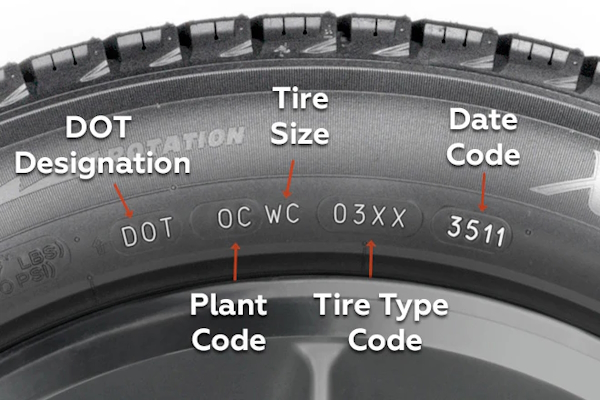
Every modern tire sidewall contains several other critical markings; ignoring them might cause you to buy stale, aged inventory, mess up the installation at the shop, or ruin a heavy vehicle’s handling.
Date of Manufacture (DOT Code). The Department of Transportation (DOT) safety symbol contains encrypted details about the manufacturing plant and, crucially, the exact week the tire left the assembly line. This stamp always features four digits enclosed in a stamped oval window: the first two digits represent the calendar week, while the last two reveal the year of manufacture.
Buying summer tires that are older than three years is highly discouraged, even if they are brand new and spent their whole life sitting on a warehouse shelf. Over time, the rubber’s chemical compound degrades, hardening the tread, reducing elasticity, and forming micro-cracks that tank wet grip and trigger high-speed tread separation risks.
Reinforced Casings (XL / Reinforced) and RunFlat Technology. An XL (Extra Load) or RF designation tells you the tire features a reinforced internal casing engineered to handle significantly higher air pressure. These tires use extra plies and beefed-up sidewalls to protect the rubber from bubbles and pinch shocks when hitting deep potholes.
Acronyms like RFT, SSR, ZP, or RunFlat identify self-supporting tire tech built with ultra-stiff rubber sidewall inserts. If you suffer a puncture and lose all air pressure, the tire won’t collapse under the vehicle’s weight, allowing you to safely drive up to 50 miles at a maximum speed of 50 mph to reach the nearest repair shop.
Direction of Rotation and Mounting Side (Rotation, Outside/Inside). To ensure the tread’s water evacuation channels function as intended, manufacturers use strict directional indicators for mounting. Directional tires with a V-shaped tread pattern feature a large arrow alongside the word “Rotation,” explicitly dictating which way the tire must turn when rolling forward.
Asymmetrical models, common in the high-performance and premium segments, require exact orientation: the word “Outside” must always face away from the car, and “Inside” must face inward toward the suspension. An installation error by the shop will flip the channels’ function, forcing water directly into the contact patch instead of pushing it away, causing instant hydroplaning.
Tread Wear Indicators (TWI). The TWI acronym or a small triangle symbol on the tire’s shoulder points to the raised wear bars nestled deep inside the main drainage grooves. When the tread rubber wears down flush with these indicator bars, the tire has reached the end of its legal life and needs immediate replacement.
By law, the minimum legal tread depth for summer tires is 2/32 of an inch (1.6 mm), though real-world safety demands an earlier change. Once your tread drops below 4/32 or 5/32 of an inch, hydroplaning resistance plummets exponentially, turning any deep puddle into a hazardous obstacle.
Before letting a tire center mount your new set, you should personally verify the technicians’ attention to detail. Improper installation completely ruins the performance of advanced tires, making this final post-installation checklist essential before leaving the shop bay:
-
Verify that the “Rotation” arrow on the sidewall matches the vehicle’s forward direction.
-
Visually inspect all four sidewalls to ensure the “Outside” marker faces the exterior side of the rim.
-
Monitor internal inflation pressures against the factory door placard, especially for rigid XL-rated models.
Additional minor letter codes stamped near the bead also reveal specific construction properties of the rubber compound. Manufacturers apply these symbols to communicate compliance and design baselines:
-
TL (Tubeless) — A tubeless tire design, which serves as the absolute standard for all modern passenger vehicles.
-
FR (Flange Protector) — A specialized, dense rubber rim guard designed to shield the edge of alloy wheels from curb rash.
-
E4 — An official international certification mark confirming compliance with rigid European safety and noise regulations.
Choosing Rubber for Different Vehicle Classes
Selecting the right set depends on more than just reading codes; you must factor in the mechanical specs, center of gravity, and exact purpose of the vehicle itself. The core principles of choosing tires come down to finding the perfect balance between ride comfort, off-road capability, and sporty driving dynamics.
The essential steps before making your final summer tire purchase follow this pre-buying workflow:
-
Consult the vehicle’s owner’s manual for recommended tire sizes and inflation pressures.
-
Objectively evaluate the primary road surfaces encountered along your daily commutes.
-
Compare the vehicle’s actual curb weight against the maximum load index of your chosen tire.
For a standard commuter sedan, the top priorities are cabin quietness, low rolling resistance for optimized fuel economy, and maximum tire life. Tires featuring a Treadwear rating from 400 to 600, an H or V speed rating (up to 130 or 149 mph), and a compliant sidewall work best here. These tires soak up road seams and potholes beautifully, providing several seasons of reliable use.
Sports sedans and performance coupes demand completely different traits from their contact patch. Given high engine outputs and hard cornering forces, the primary focus shifts to maximum grip (Traction AA), elite thermal capacity (Temperature A) and a W or Y speed rating. Tread life becomes a secondary concern (Treadwear 200 to 300) because keeping the vehicle glued to its line requires an ultra-soft, high-grip compound.
A typical family crossover has a high center of gravity and serious mass, meaning it requires reinforced tire casings. Its load index must be significantly higher than a sedan of similar dimensions. For performance SUVs, the engineering logic mirrors that of high-end coupes: low-profile, ultra-high-performance models are used to control body roll and provide razor-sharp handling via stiff sidewalls, intentionally trading off a plush ride over bumps.
True 4×4 off-roaders require a completely different approach to tire design. Off-road vehicles that frequently tackle mud, jagged rocks, or sand rely on All-Terrain (A/T) or Mud-Terrain (M/T) tires. These heavy-duty tires feature deep, self-cleaning tread patterns, multi-ply steel belts, and armored sidewalls to resist punctures from branches or rocks. Their speed limits and dry-asphalt traction scores are minimal, as their sole purpose is digging for traction in extreme off-road environments.
To lock in this information and make shopping easy, we can break down the primary focus areas for each vehicle type:
-
Commuter Cars: Focused on cabin quietness, ride compliance, and long-term cost savings via extended tread life.
-
Performance Models: Absolute priority given to sharp handling, stopping power, and heat resistance.
-
Crossovers & SUVs: A balanced compromise between high load capacity and predictable street handling.
-
True Off-Roaders: Maximum casing durability, tread elasticity when aired down, and deep mud-clearing lugs.
Our summary comparison table will help guide you through the recommended marking ranges for various driving styles and vehicle categories:
| Vehicle Class | Optimal Traction | Treadwear Range | Speed Rating | Construction Features (DOT, XL, RunFlat, Mounting) |
| Standard Commuter Sedan | A or B | 400 – 600 | H, V | Standard TL casing, strict monitoring of DOT freshness (under 3 years) |
| Sports Sedan / Coupe | AA | 200 – 300 | W, Y | Frequently RunFlat, mandatory asymmetry (Outside), FR rim protector flange |
| Classic Crossover / SUV | A | 300 – 500 | V, W | Mandatory XL (Extra Load) reinforced construction for heavy body styles |
| Performance SUV | AA | 200 – 300 | W, Y, (Y) | Combination of XL and RunFlat, asymmetric tread patterns |
| 4×4 Off-Roader | Specific | Application-dependent | Q, S, T | Reinforced multi-ply cas |

Welcome to Poznayu.com!
My name is Alex, and I founded this project together with a team of like-minded professionals. At Poznayu.com, we create in-depth reviews, explore fascinating facts, and share well-researched, reliable knowledge that helps you navigate complex topics with confidence.
Our mission is simple: to explain complicated ideas in clear, accessible language. We believe that high-quality information should be available to everyone. Every article we publish is designed to provide practical value, actionable insights, and trustworthy analysis you can rely on.
Join our growing community of curious readers. Your feedback matters — share your thoughts in the comments, ask questions, and suggest topics you’d like us to cover next.