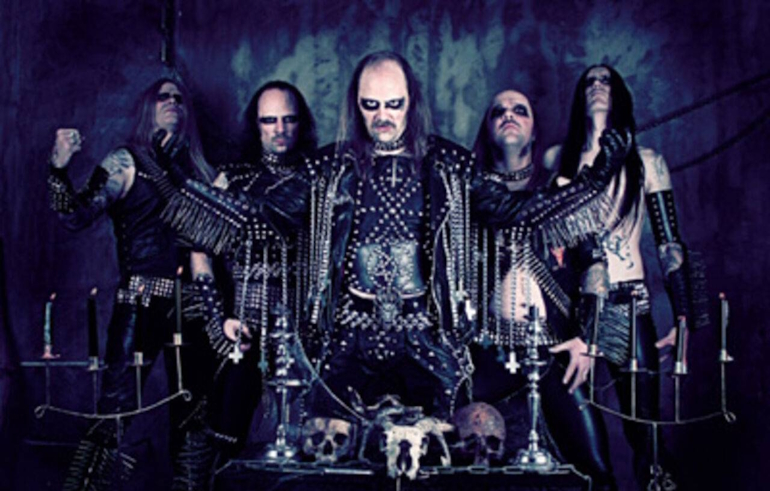
The history of Swedish black-thrash outfit Nifelheim reveals the phenomenon of a uncompromising underground band that remained faithful to the dark arts for three decades.
There is not much to tell in terms of a detailed history, and most of the story is already well known, but below you will learn about the band’s current status, the reasons behind their years in the shadows and official breakup, as well as the detailed lineup history and turbulent path of the Gustafsson brothers.
An examination of their key songs and stylistic traits helps explain how the band created a definitive blend of primitive black metal and aggressive thrash while remaining a legend without making commercial compromises.
The Band’s Current Fate: Going Underground and Officially Breaking Up
Nifelheim officially ceased to exist at the end of 2022, permanently closing the chapter on one of Sweden’s most uncompromising bands.
In Norse mythology, Niflheim is a frozen realm of mist and the dwelling place of the dead, which symbolized the band’s themes of primal darkness, cold, and the inevitable end of all things.
Frontman Per Gustafsson publicly announced the project’s breakup because of irreconcilable personal differences with his twin brother, Erik. The family conflict reached a critical point, making it impossible for them to continue writing music or performing together and ultimately bringing their shared creation to an end.
The reason they remained in the shadows for so long lies in their radical rejection of the modern music industry. The musicians deliberately resisted market trends, refusing polished digital production, active social media promotion, and large-scale publicity campaigns. They released records only when they felt the material was completely ready, which meant that over three decades they produced only a handful of full-length releases that never reached a mass audience.
After the breakup, the brothers went their separate ways, leaving the Nifelheim name in the graveyard of history.
Per Gustafsson quickly assembled a new band called Hellbutcher, continuing to play fast black-thrash in the best old-school tradition and successfully releasing a debut full-length album.
Erik completely withdrew from the active metal scene, focusing on collecting rare vinyl and quietly supporting Sweden’s local underground.
Founding History and Lineup Evolution
The band’s history began in 1990 in the tiny Swedish town of Dals Långed.
Twin brothers Per and Erik Gustafsson, who adopted the stage names Hellbutcher and Tyrant, set out to create the most evil and filthy band on the planet as a counterpoint to the melodic death metal scene that was popular in Gothenburg at the time. Their main musical reference points were the early recordings of Venom, Bathory, and Celtic Frost, along with the visual aesthetic of classic heavy metal in the style of Britain’s Iron Maiden.
The first demos, particularly the 1993 cassette “Unholy Death,” quickly attracted the attention of independent labels because of their primitive rawness. The Swedes soon signed with Necropolis Records, allowing them to release their self-titled debut album in 1994. Jon Nödtveidt of the cult band Dissection was brought in to record lead guitar parts during the early period, helping shape the dense and sinister sound that became characteristic of their releases.
Over the years, the lineup changed constantly, with only the uncompromising authority of the founding brothers remaining unchanged. Many top-level Swedish musicians passed through the band, including drummer Peter Stjärnvind of Entombed and technically skilled guitarists from Necrophobic. The constant lineup turnover never altered the band’s artistic direction because the entire songwriting and visual concept remained under the twins’ authoritarian control.
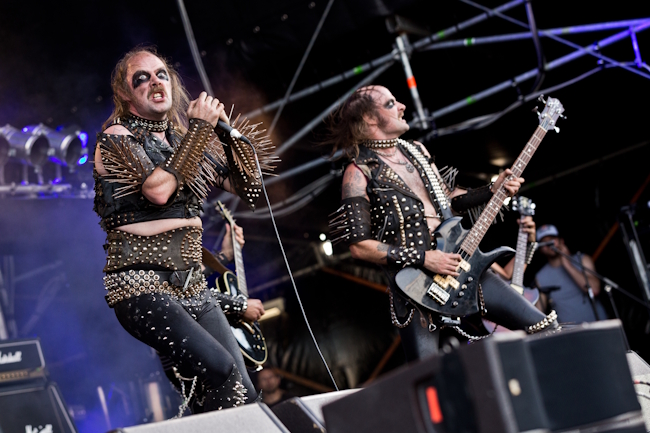
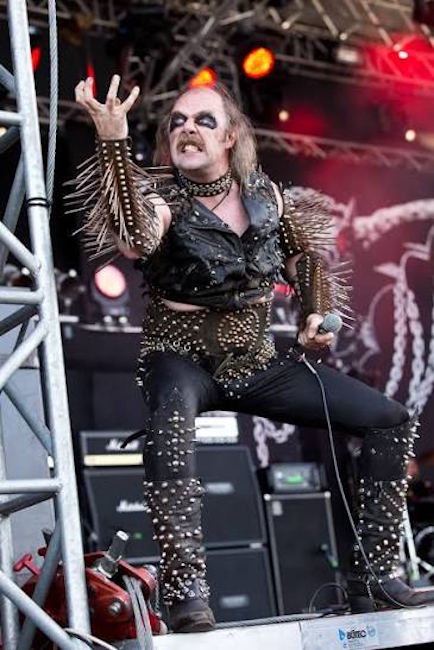
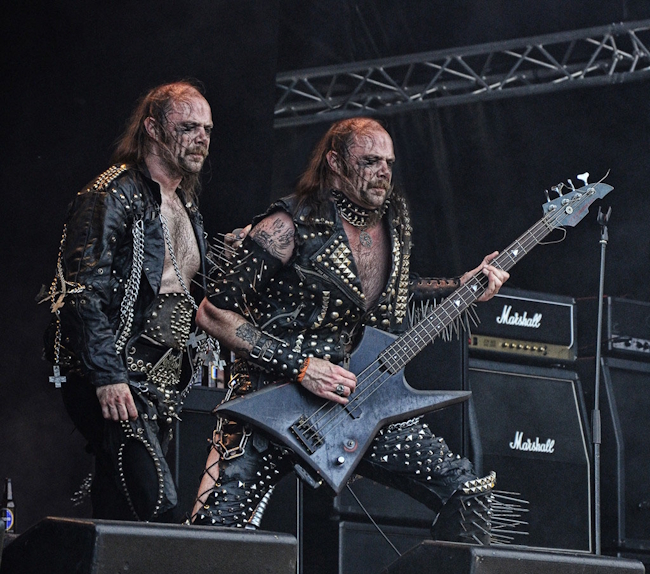
The peak of their creative activity came around the turn of the millennium with the release of the full-length albums “Devil’s Force” and “Servants of Darkness.” Those records permanently established the brothers as uncompromising guardians of the old school, while their fanatical devotion to the genre was expressed through an abundance of rusty spikes, leather, and chains. They turned their rare live appearances into aggressive rituals, permanently securing the band’s place in the pantheon of European extreme metal.
Style Philosophy and Analysis of Signature Songs
To understand the Nifelheim phenomenon, it is necessary to break down their musical arsenal, which is built around strict genre principles. The core elements of their sound form a monolithic foundation that has barely changed since the early 1990s.
Style Element
Nifelheim Sound Characteristics
Vocal Delivery
Sharp, hysterical screaming inherited directly from the first wave of European black metal.
Guitar Riffs
Dirty distortion focused on aggressive tremolo picking and fast, cutting thrash passages.
Rhythm Section
Primitive yet technical blast beats without studio quantization or computer-assisted alignment.
Lyrical Message
Total nihilism, occultism, and glorification of dark forces without philosophical complexity.
To grasp the essence of their work, it is useful to identify several key thematic directions that the band explored continuously throughout its career:
Radical rejection of modern religious beliefs and accepted moral standards.
Aesthetic glorification of primal chaos and the inevitable physical destruction of the world.
Direct references to classic themes from European medieval occultism.
Below is a quick breakdown of signature songs that reflect the ideological core of the Swedish band, with each track representing concentrated hatred of commercial polish:
No more life — An ode to absolute nihilism in which the narrator calls for the end of all existence while rejecting the value of human life. The track stands out for its extreme speed and instrumental aggression.
Infernal flame of destruction — An anthem to an infernal cleansing flame that burns away the false sanctuaries of modern society. Musically, the song relies on heavy, oppressive marching guitar riffs.
Raging flames — The song focuses on visualizing the apocalypse through an uncontrollable wildfire. The track is defined by chaotic guitar solos and the frontman’s frantic vocal intensity.
Evocation of the end — An occult ritual translated into the language of black metal, telling of the summoning of ancient entities for the complete destruction of the universe.
Sepulchral fornication — A filthy and blasphemous track that launches a radical challenge to puritanical morality through necromantic and sacrilegious imagery.
Gates of damnation — A depiction of humanity’s irreversible descent into darkness, where the gates of damnation serve as the inevitable price of weakness.
The evil always return — A philosophical statement about the cyclical nature of dark ages, where primal evil is presented as the only eternal constant in the universe.
Claws of death — A metaphorical description of death coming for every living being, reinforced by an intentionally cold, grinding guitar sound.
Suffered souls — A descent into the suffering of damned souls trapped between worlds, conveyed through dragging, gloomy rhythmic shifts in the drums.
Storm of the reaper — A fast, uncompromising attack describing the harvest of death sweeping entire civilizations away without the slightest trace of remorse.
Envoy of lucifer — A central manifesto of devotion to dark forces, serving as the Gustafsson brothers’ main declaration of classical Satanism.
Evil is eternal — A direct continuation of the theme of eternal primordial chaos, with a musical structure that leaves no room for melodic detours.
Raging flames — A repeated reinforcement of the all-consuming fire concept, underscoring the band’s obsession with the element as the main instrument of global cleansing.
Belials prey — A brutal tale of the victims of demonic forces, in which humanity appears only as weak and helpless prey in a vast cosmic war.
Example, “The evil always return”:
Nifelheim’s Guitars
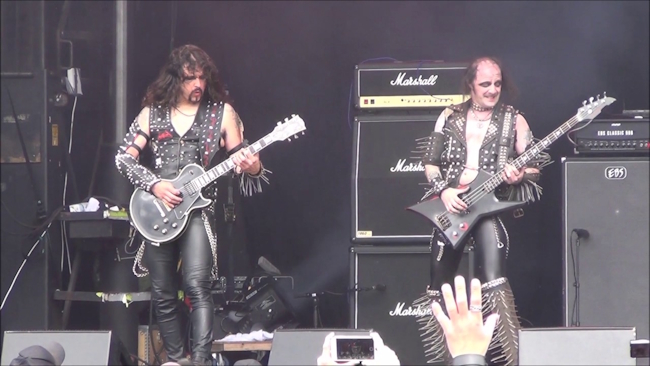
Let’s look at the three instruments that appeared most often during live performances.
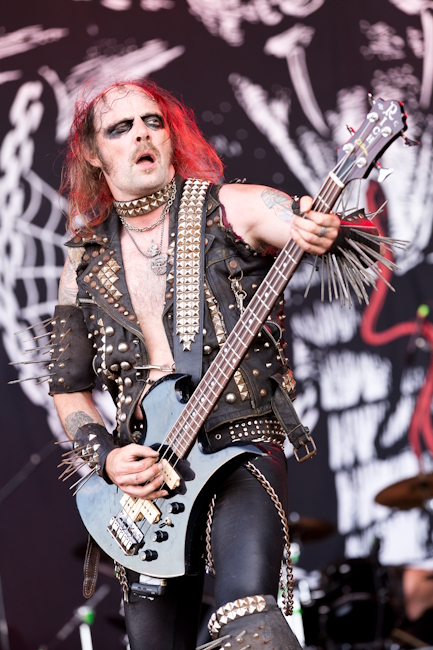
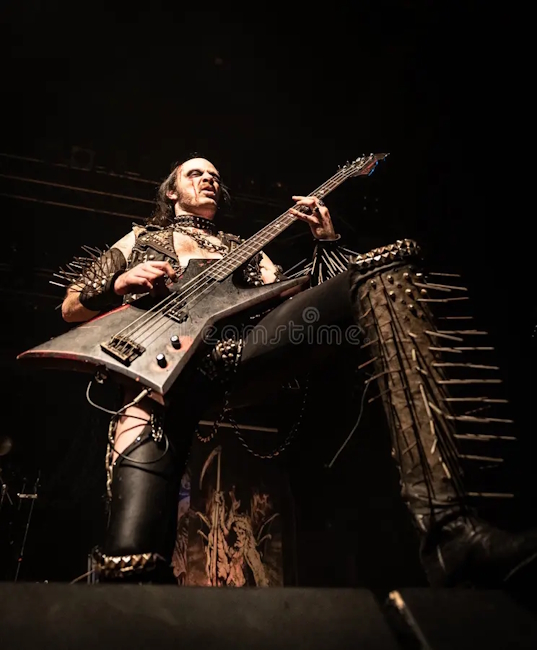
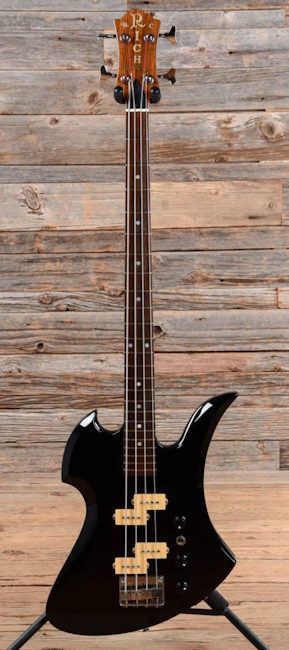
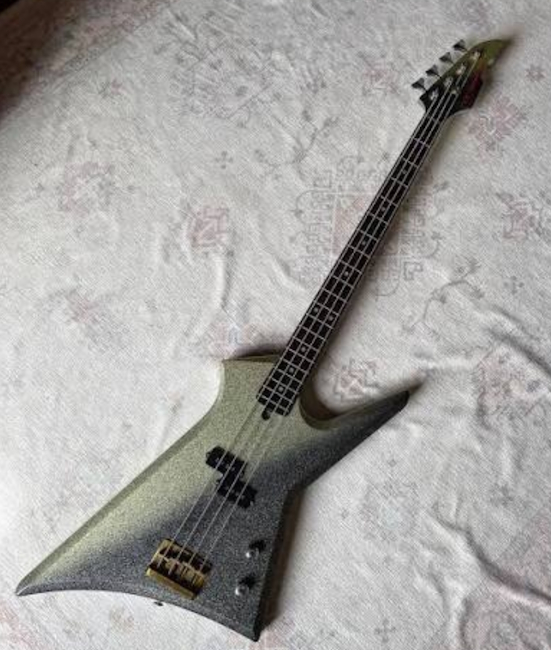
B.C. Rich Mockingbird Bass (or a very similar custom/legacy version — as shown in the photo above). The classic asymmetrical “bird” shape with sharp cutaways is characteristic of BC Rich instruments from the 1980s and 1990s. The metallic blue-gray finish, neck-through construction, and powerful humbuckers make it a quintessential metal instrument with an aggressive appearance. These basses are valued for their bright, heavy tone in hard-edged music.
Westone Raider Bass I/II — a Japanese bass made by Matsumoku and produced around 1983–1984. It features a 34-inch scale length, an alder body, and a maple neck; the Raider I had a single pickup, while the later Raider II had two. It is a rare vintage model recognized by its angular, Explorer-style body shape. Finding one for sale is extremely difficult.
Both instruments are strongly associated with the glam, thrash, and heavy metal aesthetic of the 1980s. Musicians often used them as part of their stage image.
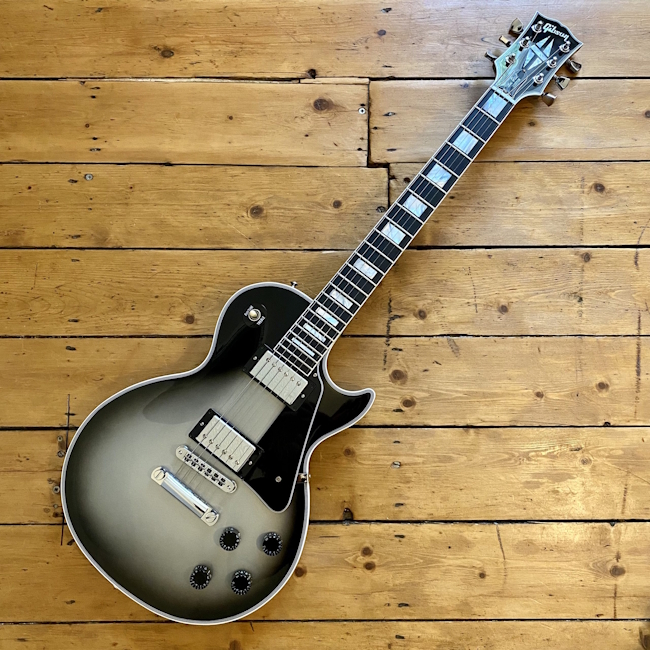
Gibson Les Paul Custom Silverburst — a premium Les Paul version with a mahogany body, maple top, set neck, and two humbuckers. It is known for its Silverburst finish, powerful, dense tone, and long sustain, and is especially popular in hard rock and metal. It has been produced in various versions since 1979 and is considered one of Gibson’s most recognizable models.
Welcome to Poznayu.com!
My name is Alex, and I founded this project together with a team of like-minded professionals. At Poznayu.com, we create in-depth reviews, explore fascinating facts, and share well-researched, reliable knowledge that helps you navigate complex topics with confidence.
Our mission is simple: to explain complicated ideas in clear, accessible language. We believe that high-quality information should be available to everyone. Every article we publish is designed to provide practical value, actionable insights, and trustworthy analysis you can rely on.
Join our growing community of curious readers. Your feedback matters — share your thoughts in the comments, ask questions, and suggest topics you’d like us to cover next.