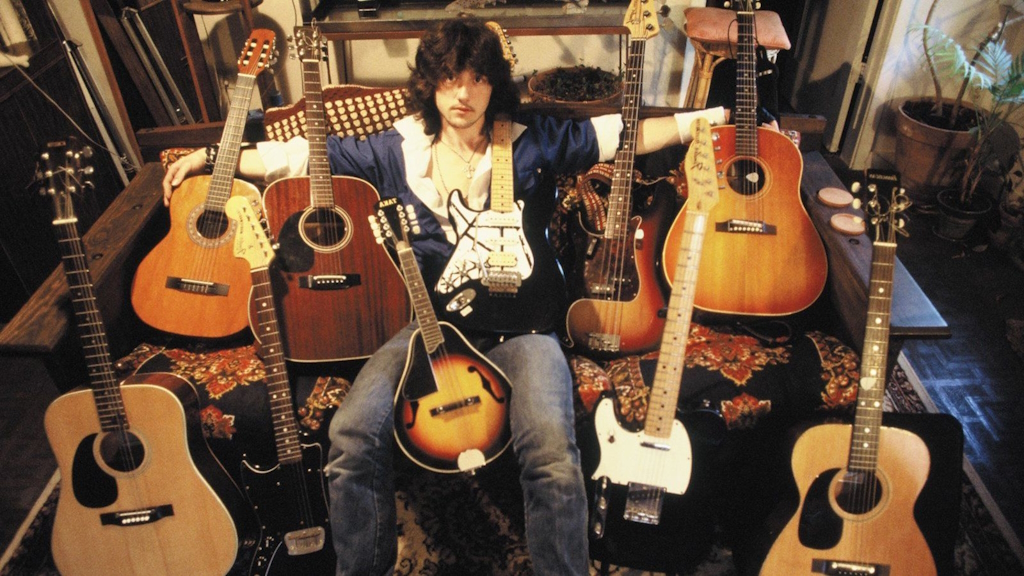
Jason Becker is an American guitarist and composer who became famous as a teenager through Cacophony and later earned the position of lead guitarist in David Lee Roth’s band.
His performing career was cut short by amyotrophic lateral sclerosis (ALS), but music did not end there. Becker lost the ability to play guitar and eventually almost all voluntary movement, yet he continued composing with the help of an eye-based communication system and computer tools.
In 2026, his archived music appeared again in the official release The Strawberry Jams.
The Story of Jason Becker’s Rise
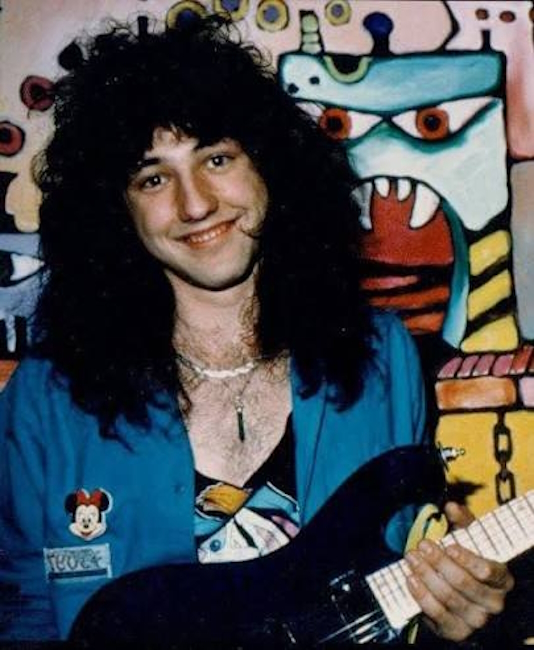
Jason Becker was born on July 22, 1969, in Richmond, California. His father Gary played classical guitar, while his uncle Ron played blues guitar, meaning that music surrounded Jason from an early age.
He received his first guitar at the age of five, although he became seriously interested in the instrument somewhat later.
According to Becker’s own memories, he began figuring out Bob Dylan songs by ear at around the age of eight and gradually expanded his musical interests. Among the musicians who influenced him, he mentioned Dylan, Eric Clapton*, Jimi Hendrix, Eddie Van Halen, Jeff Beck, and other artists, while also exploring classical music, jazz, Indian music, and Japanese music. By sixth grade, he was already performing at school events and small local venues.
Here I will make a brief personal aside and once again mention Fred the guitarist (fredguitarist on YouTube), who claims and explains why Eric Clapton cannot play guitar at a professional level. So how could young Jason Becker look up to Clapton? Or did he simply not understand at the time that Eric was not a technically exceptional player?
Let’s examine this point:
- Yes, even if we accept Fred’s assessment that Eric Clapton was not a guitarist of the highest technical level by professional instrumental standards, there is no contradiction in young Jason Becker being influenced by him. Becker did not learn only from musicians who could play faster or more complex material; he learned from artists who shaped his ear and musical thinking.
- Clapton was primarily a source of phrasing, blues feeling, melodic expression, and an understanding of how a few carefully chosen notes can be more powerful than a long technical sequence.
- A child listening to Clapton, Hendrix, Van Halen, and later Paganini at the age of eight to twelve does not need to perform a professional analysis of their technique. He chooses the music that connects with him emotionally.
- Moreover, comparing Clapton and Becker only through technical ability is fundamentally incorrect — they belong to different generations, traditions, and artistic goals.
- Becker may have eventually surpassed his early idol in speed and technical complexity, but that does not change the fact that Clapton could have been an important stage in developing his musical ear.
But let’s return to the main subject of this article.
Becker did practice with almost obsessive intensity, but the common statement that he practiced “8–10 hours every day” is an oversimplification.
In interviews, he explained that during school days he usually played for around two hours, while on weekends he could spend eight to ten hours with the instrument. During high school, his practice time increased even further. He was largely self-taught, spending many hours learning by ear and gradually transforming what he heard into his own musical language. This combination of technique, ear training, and curiosity toward different styles later became one of the defining characteristics of his playing.
At 16, Becker recorded a demo on a four-track recorder and sent it to Mike Varney, founder of Shrapnel Records. Varney suggested that the young guitarist meet Marty Friedman. At the time of their meeting, Friedman was around 24 years old, while Becker had not yet turned 17. Their meeting became the starting point of Cacophony.
However, saying that Becker already possessed a fully developed academic compositional background at 16 would be an exaggeration. Friedman later recalled that the young guitarist impressed him primarily with his natural technique and enormous potential, while Becker’s songwriting and arranging abilities developed rapidly in the following years.
Jason Becker’s Bands and Career Projects
Cacophony
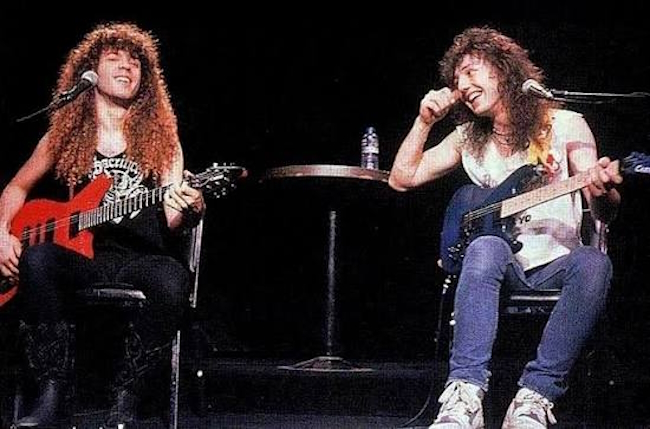
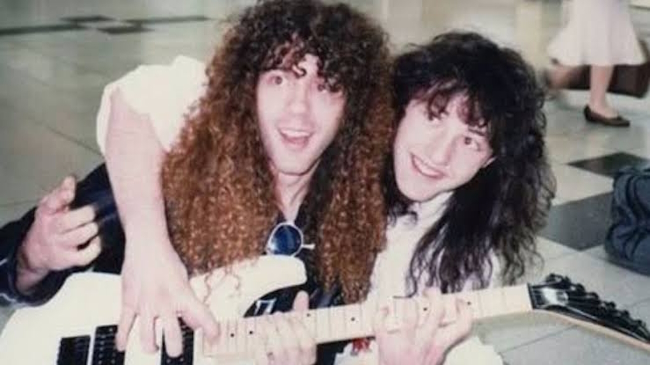
Cacophony was formed in 1986 around Becker and Friedman and became one of the most notable neoclassical speed metal bands of the late 1980s.
The debut album Speed Metal Symphony was released in 1987, followed by the second and final studio album Go Off! in 1988. Becker and Friedman did not simply trade guitar solos: their music was built around two guitars working simultaneously, counterpoint lines, complex passages, and unusual harmonic ideas.
The band performed in the United States and Japan and gained a strong reputation among fans of technically advanced guitar music.
In 1989, this chapter ended, and both musicians moved their focus toward separate projects.
Solo Work
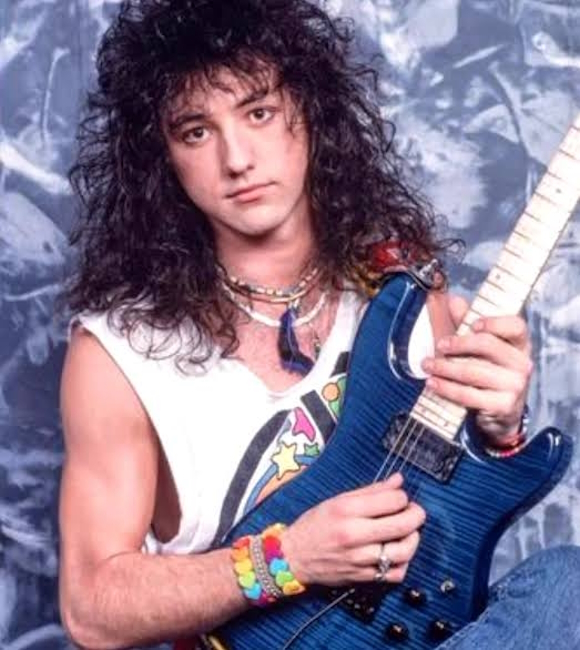
Becker’s first solo album, Perpetual Burn, was released in 1988 on Shrapnel Records.
It was not simply a collection of guitar exercises. The album showed that his interests extended beyond speed to melody, harmony, musical structure, and the contrast between virtuosic passages and more lyrical sections. Perpetual Burn ultimately established him as an independent composer and one of the most remarkable young guitarists of his generation.
After the onset of his illness, Becker did not stop working with music. In 1996, Perspective was released, followed by archival and compilation releases including The Raspberry Jams, The Blackberry Jams, and Collection.
In 2018, Triumphant Hearts was released — a full-scale project featuring a large number of guest musicians. On February 28, 2026, The Strawberry Jams was published. The release represents the third volume of previously unreleased guitar recordings that Becker made on four- and eight-track Tascam recorders between 1985 and 1992, when he was still able to play independently.
Therefore, describing all of these releases simply as “solo albums recorded after his diagnosis” would be inaccurate: some of the material was recorded before the disease took away his ability to perform on guitar.
David Lee Roth Band
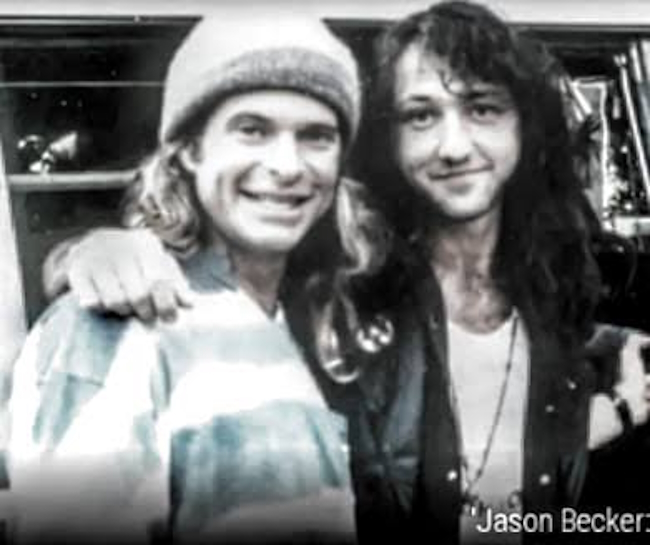
In 1989, at the age of 20, Becker became the lead guitarist in David Lee Roth’s band after Steve Vai’s departure.
Working with Roth represented the biggest commercial opportunity of his young career. Becker contributed to the recording of the album A Little Ain’t Enough, released in 1991 and certified gold. However, it was during this period that the first symptoms of ALS began to appear. Becker described experiencing weakness and a “lazy” feeling in his left leg, after which the weakness spread to his arms.
Despite his worsening condition, he completed the guitar parts for the album, but he was no longer able to join the band for a full tour.
Jason Becker’s Guitar Gear
Moridira Hurricane
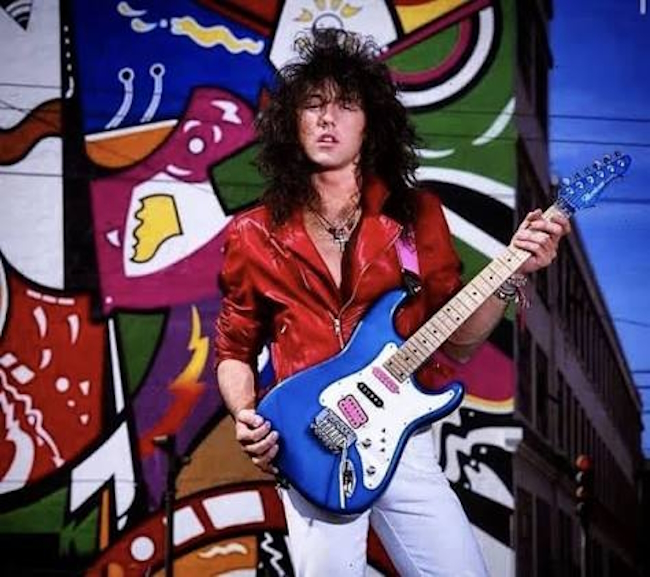
During the early Cacophony period, Becker played Moridira Hurricane guitars. This part of his history often creates confusion because of photographs used on album covers.
The white Hurricane that Becker used while recording Perpetual Burn was indeed one of his actual working instruments. However, the blue Hurricane that became one of the most recognizable images from the Perpetual Burn cover was not the same guitar used to record the album. Becker himself later specifically confirmed the story involving the white and black Hurricane guitars. Therefore, the cover photo cannot be directly connected to a specific studio instrument.
Another important detail: Becker stated that he recorded Speed Metal Symphony with his Stratocaster, and only after the first album was completed did Mike Varney secure Hurricane endorsement support for the duo.
Later, Becker used other Hurricane models before moving to Carvin. His early guitar collection therefore cannot be reduced to a single brand or model.
Carvin DC200
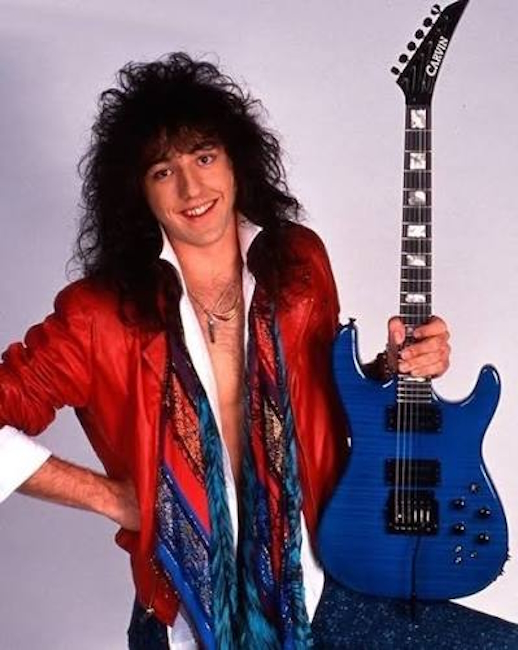
By the late 1980s, Becker had moved to Carvin and used at least two guitars from the DC200 series: one with a translucent blue finish and figured maple top, and another finished in burgundy.
These instruments featured Kahler double-locking tremolo systems and two Carvin humbuckers. The blue DC200 became especially well known through concert footage, including the famous video where Becker plays guitar while simultaneously controlling a yo-yo.
Becker later described this guitar as an instrument that felt “like butter” to him, meaning that he especially valued its comfort and playing feel.
Peavey Numbers and Modern Kiesel Models
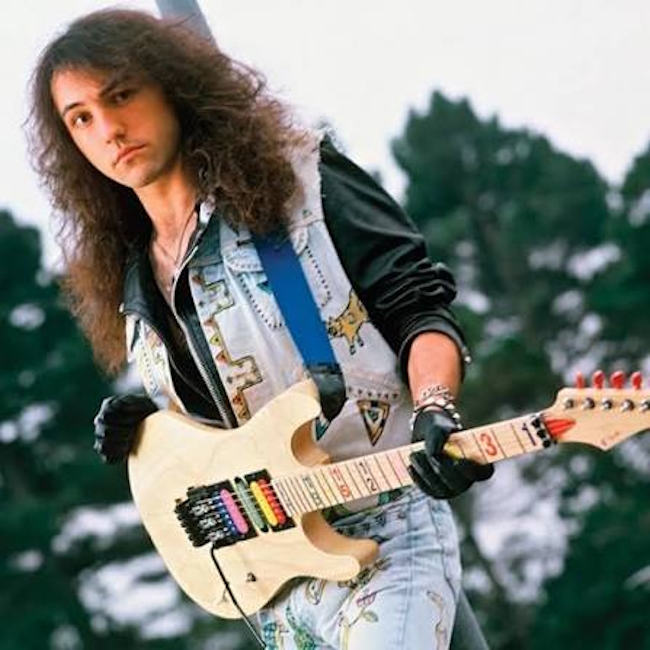
One of Becker’s most recognizable instruments was the custom Peavey Numbers.
The original prototype featured a maple neck, 24 frets, colored digital fret markers, and an HSH pickup configuration. It used a Schaller double-locking tremolo system. This instrument should not be confused with later production replicas. The original Peavey became the foundation for the later Numbers line, which was subsequently developed by Paradise Guitars and Kiesel.
Kiesel produces guitars inspired by Becker’s instruments, including the JB200 and JB24 models. The JB200 is based on his Carvin DC200, while the JB24 follows the Numbers concept. The modern JB24 features 24 frets, a maple neck, Floyd Rose tremolo, and an HSH configuration with Seymour Duncan pickups.
Therefore, the specifications of modern Kiesel guitars should not automatically be applied to Becker’s original 1980s instruments. They are related designs, but they are not identical guitars.
Musical Achievements and Playing Technique
The true value of Becker as a musician does not come from one specific “secret technique.”
He combined sweep picking, legato, tapping, alternate picking, and other approaches within the same musical phrase, with technique always serving melody and composition. For this reason, describing his style simply as ultra-fast shred would be inaccurate.
His compositions reveal classical influences, counterpoint, arpeggios, complex voice leading, and a desire to use technical skills as part of a larger musical structure. Becker also repeatedly spoke about the influence of classical music and different musical cultures.
The famous yo-yo episode was also primarily connected to instrument control rather than some separate “invented technique.” During live performances, Becker played complex guitar parts while controlling a yo-yo with one hand.
In interviews, he explained that the main challenge was muting unwanted strings so they would not produce noise. Therefore, the yo-yo story demonstrates the level of his motor control more than it proves the existence of a separate technical school.
How Jason Becker Continued Creating Music After Losing the Ability to Play
There is an important clarification here.
Vocal Eyes is not a computer system or software program. It is a low-tech communication system developed by Becker’s father Gary: a transparent panel containing groups of letters that the user selects through eye movements. A sequence of eye movements allows the user to choose symbols, after which an assistant speaks the selected letter or word aloud. Later, this system became part of Becker’s communication and musical workflow.
The musical side of the process works separately.
Becker described using Logic Pro: through his communication system, he explains to an assistant which notes and parameters should be entered, after which he can edit parts, harmonies, note lengths, volume levels, and other elements. Earlier, specialized computer solutions were also developed for him that allowed control through head and eye movements, but his current process relies on communication with another person and a standard digital music environment.
Therefore, the claim sometimes made by people unfamiliar with his situation that Becker “dictated scores directly into a computer only through eye movements” is an oversimplification of the actual process.
How Becker Stands Out Compared With Guitarists of His Generation
Becker is most often compared with Yngwie Malmsteen because both musicians are strongly associated with neoclassical metal and highly technical guitar playing.
However, their musical approaches are noticeably different:
- Malmsteen placed a strong emphasis on Baroque-inspired style, harmonic minor scales, and his own interpretation of classical structures.
- Becker also drew heavily from classical music but was more willing to combine it with a broader range of harmonic and melodic ideas.
This difference can already be heard in Cacophony and becomes especially clear on Perpetual Burn. Therefore, it is more accurate to discuss them not in terms of who was “more complex,” but as different directions within the same neoclassical movement.
Jason Becker on Yngwie: he called him his “main inspiration” during high school, studied his music, and specifically recorded a performance of Black Star as a tribute to his influence.
The comparison with Paul Gilbert looks different:
- Gilbert is known primarily for exceptional alternate picking accuracy and rhythmic articulation, while Becker more frequently combined alternate picking with legato, sweep picking, and tapping.
- This does not mean Becker was “technically better.” Both musicians built their virtuoso styles through different combinations of techniques.
What they share is the most important point: for both players, technique serves as a form of musical expression rather than simply a demonstration of speed.
Jason Becker on Paul Gilbert: Becker spoke about Gilbert’s playing briefly but meaningfully. He called it “frightening” and said he loved the aggressive approach that, in his opinion, many shredders lacked.
With Steve Vai, Becker shared an interest in unusual expression, unconventional compositional ideas, and the ability to make technically demanding material recognizable. The difference lies mainly in musical context.
Vai developed theatrical presentation, sound experimentation, and stage imagery much more actively, while Becker’s strongest identity emerged through neoclassical and instrumental music.
However, claiming that Becker unquestionably had “greater academic knowledge” or a higher harmonic level has no objective basis. That would be a matter of personal evaluation rather than a verifiable fact.
Steve Vai on Jason Becker: Vai publicly appeared in the documentary Jason Becker: Not Dead Yet and has repeatedly supported Becker’s work. He also performed on Becker’s later projects. Becker openly expressed his respect for Vai and called him one of his musical heroes. In 2018, he wrote that he especially valued Vai’s “adventurous musical spirit” and was grateful for their friendship.
Jason Becker’s Legacy Today
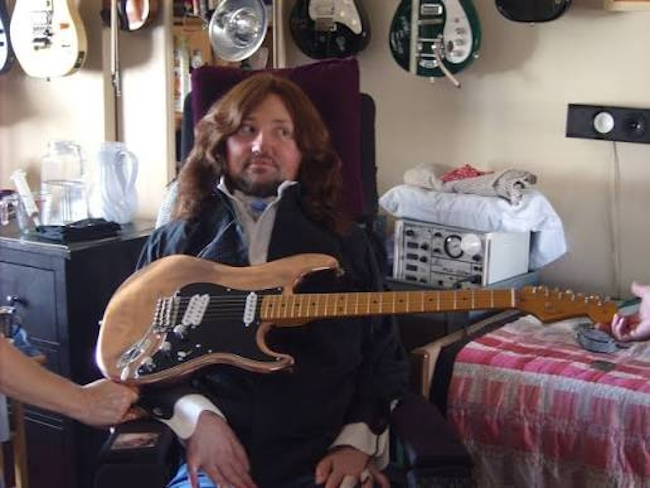
If illness had not interrupted his performing career at its peak, Jason Becker would undoubtedly have occupied a place among the major figures of progressive rock and instrumental guitar music in the modern era.
Alongside musicians such as John Petrucci, Guthrie Govan, and Tosin Abasi, he would likely have continued influencing the development of the electric guitar, evolving from traditional neoclassical shred toward complex fusion compositions and large-scale symphonic works.
Against the background of today’s explosion of self-taught guitarists on social media and platforms such as YouTube, where players showcase extremely refined technique and advanced fingerstyle approaches, Becker’s style would have stood out because of its compositional depth.
Many modern internet virtuosos focus on short, impressive riffs and technical tricks adapted to the format of vertical videos, while Becker thought in larger structures where every technical passage served the overall dramatic direction of the composition.
The emergence of newer guitar approaches, such as microtonal guitar techniques, serial tapping, and the use of extended-range instruments (7- and 8-string guitars), would undoubtedly have attracted his interest. With his constant curiosity and experimental mindset, Becker would likely have been among the first musicians to integrate 8-string guitars into a neoclassical counterpoint context, expanding the possibilities of combining bass and violin-like ranges on a single instrument.
Even while physically restricted, Becker remains one of the most important figures in the modern guitar community, demonstrating that true virtuosity begins in the mind and creative spirit of the composer, not only in the muscles of the hands.
His modern work continues to remind thousands of young guitarists that speed and technique are only tools, while the true value of music lies in its ability to communicate emotion and overcome physical limitations.
Facts and Key Information
- Years active: approximately 1985 to the present as a composer. As an active guitarist — approximately 1985–1991: after ALS progressed, he lost the ability to play guitar but continued composing music. His own early recordings cover roughly the period from 1985–1992.
- Main genres: neoclassical metal, speed metal, heavy metal, instrumental rock, neoclassical rock, shred. Becker’s compositions also include elements of Baroque classical music, blues, jazz, ethnic music, and other styles.
- Main bands and projects: Cacophony with Marty Friedman; solo project Jason Becker; David Lee Roth Band. With Cacophony, he helped create
Speed Metal SymphonyandGo Off!, then releasedPerpetual Burnand recordedA Little Ain’t Enoughwith David Lee Roth. - Instrumental ability: exceptional even by the standards of elite shred guitarists of his era. Becker combined sweep picking, alternate picking, legato, tapping, arpeggios, and high-speed passages while maintaining melody and compositional structure. His greatest strength was not only speed but the ability to integrate extreme technique into complete musical phrases.
- Speed and precision: he became especially known for performing complex five- and six-string sweep arpeggios, requiring control over multiple strings while keeping every note clear.
Perpetual Burnremains one of the strongest examples of his technique. - Musicality: Becker was never limited to shred. He used counterpoint, polyphonic voice leading, classical harmonic concepts, and melodic techniques, making his music feel like composition rather than a technical demonstration.
- Innovations: calling Becker the inventor of sweep picking or another fundamental guitar technique would be incorrect — these approaches existed before him. More accurately, he was one of the most influential pioneers and virtuoso popularizers of modern sweep picking in neoclassical shred, pushing multi-string arpeggios to an extraordinary level of execution.
- Main technical innovation: not a single “secret technique,” but the combination of existing methods. Becker could move between sweep picking, legato, tapping, and other approaches within one phrase without breaking the melodic line. This combination became one of the defining elements of his style.
- Compositional achievements:
Perpetual Burn(1988) became the strongest early evidence of Becker’s compositional ability. The piece Air is especially notable because it combines neoclassical guitar writing with a fully developed compositional approach. - Cacophony: together with Marty Friedman, Becker created one of the most recognizable guitar duos of the era. Their uniqueness was not simply based on having two fast soloists, but on two independent guitar lines, complex unison passages, harmonizations, and counterpoint.
- Professional achievements: at the age of 20, Becker earned the position of lead guitarist in David Lee Roth Band, replacing Steve Vai. In 1990, he won the readers’ poll for Best New Guitarist in Guitar Magazine. The album
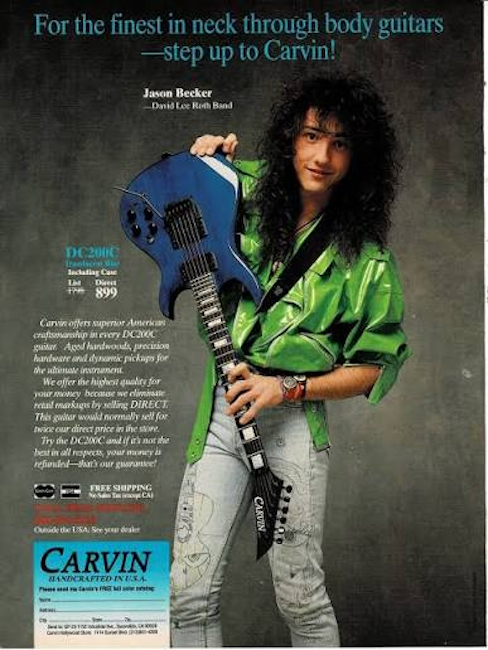
A Little Ain’t Enough, on which he worked, achieved gold status. - Guitars: among Becker’s most recognized instruments were Moridira Hurricane, various Carvin models including the DC200, and the custom Peavey Numbers guitar. Later, signature models Kiesel/Carvin JB200 and JB24 were developed based on his instruments.
- Moridira Hurricane: early Hurricane guitars played an important role in Becker’s history, but it cannot be stated that one specific Hurricane was used for all major recordings. In particular, the story of the blue guitar shown on the
Perpetual Burncover often creates confusion between a photographic/stage instrument and the guitar actually used during recording. - Peavey Numbers: one of Becker’s most recognizable instruments was a custom guitar featuring 24 frets and colored digital fret markers. Later JB24 models are modern instruments based on this concept, not literally the same guitar.
- After losing the ability to play: Becker continued working as a composer. He uses the Vocal Eyes communication system created by his father Gary, while musical ideas are developed through assistants and computer-based tools. Therefore, his career as a composer did not end in 1991.
- Overall assessment: Becker was not simply one of the fastest guitarists of the 1980s. He was one of the most technically advanced and compositionally developed representatives of neoclassical shred from his generation. His historical importance comes from three elements: extreme electric guitar mastery, serious compositional thinking, and the ability to combine virtuosity with melody and harmony.

Welcome to Poznayu.com!
My name is Alex, and I founded this project together with a team of like-minded professionals. At Poznayu.com, we create in-depth reviews, explore fascinating facts, and share well-researched, reliable knowledge that helps you navigate complex topics with confidence.
Our mission is simple: to explain complicated ideas in clear, accessible language. We believe that high-quality information should be available to everyone. Every article we publish is designed to provide practical value, actionable insights, and trustworthy analysis you can rely on.
Join our growing community of curious readers. Your feedback matters — share your thoughts in the comments, ask questions, and suggest topics you’d like us to cover next.