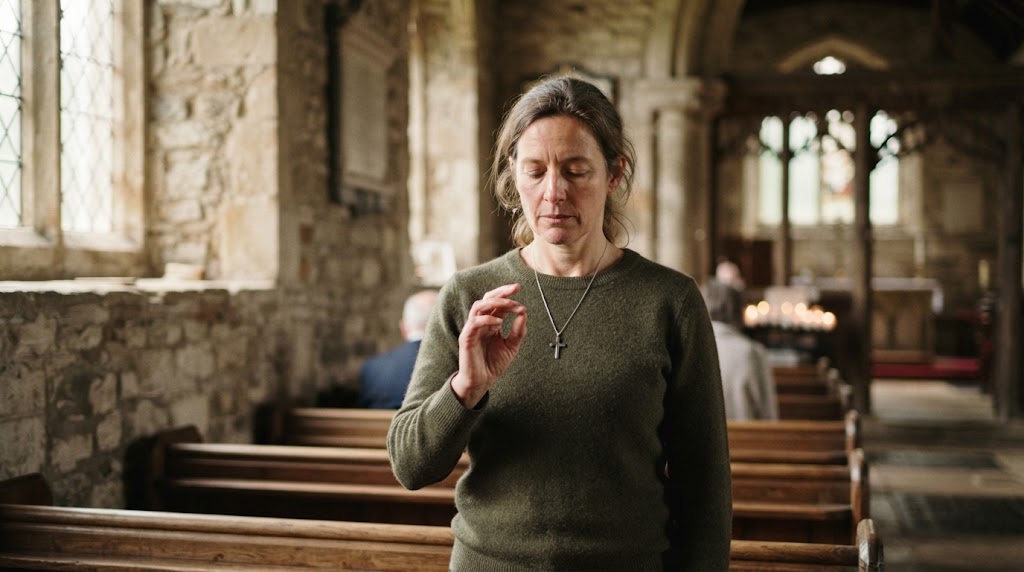
Recently, a speculative theory has been spreading across social media, claiming a connection between the Christian sign of the cross and the drawing of a pentagram.
Creators of these videos try to argue geometrically that a believer’s hand movements reproduce a five-pointed star — a symbol that popular culture often associates with Satanism, Baphomet, and evil forces.
This claim is a classic example of manipulating facts while ignoring basic knowledge of both geometry and the history of religious symbols. The purpose of such claims is to manufacture a sensation out of nothing, exploit people’s lack of knowledge, and discredit an ancient tradition.
We will examine this myth in detail using facts and logic.
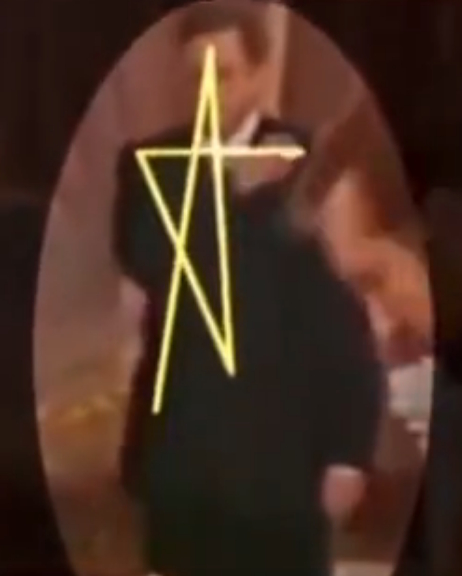
A geometric analysis of the hand movements used to make the sign of the cross completely disproves the pentagram theory:
- In the Orthodox tradition, a believer touches the forehead, abdomen (or lower chest), right shoulder, and then left shoulder.
- This movement creates two intersecting lines — one vertical and one horizontal — which geometrically form a straight cross.
- In the Catholic tradition, the order of the shoulders is reversed — first the left, then the right — which also creates a cross, with the horizontal line drawn in the opposite direction.
- A five-pointed star, by contrast, requires five points and a completely different pattern of intersecting lines: for example, moving from the left hip to the forehead, then to the right hip, left shoulder, right shoulder, and back again.
- Attempting to overlay the geometry of the sign of the cross onto the geometry of a pentagram is mathematically incorrect and possible only by drastically distorting the actual hand trajectories.
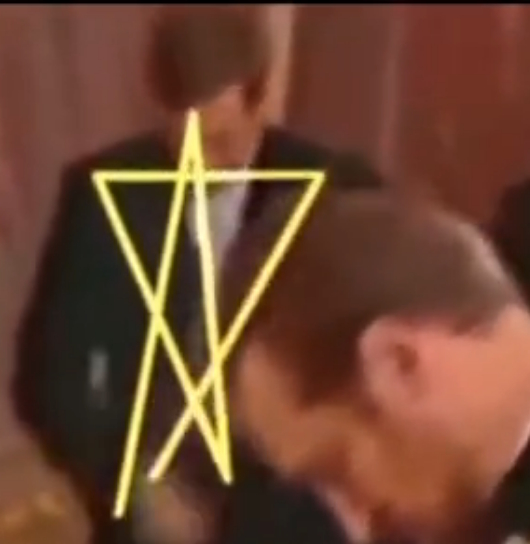
The manipulation also relies on a false claim about the number of points involved in the gesture.
The sign of the cross uses only four conceptual points: the forehead, lower point, one shoulder, and the other shoulder. Four points cannot geometrically form a five-pointed figure such as a pentagram. The claim that a believer’s hand “draws” a pentagram is a deliberate falsehood aimed at people who will not verify the information. During the gesture, the lines do not intersect in space in a way that creates a star; they simply connect four points on the body in sequence, forming the sacred Christian symbol of the cross.
It is also important to examine the semantic error made by video creators who claim that the pentagram was originally a “sign encouraging evil action.”
The historical reality is completely different:
- The five-pointed star is an ancient symbol that carried exclusively positive meanings among different peoples and in different periods: a symbol of health among the Pythagoreans, a symbol of the five senses and the five wounds of Christ among early Christians, a protective sign against demons, and even a symbol of Jerusalem.
- The association of the pentagram exclusively with Satanism and Baphomet is a relatively recent cultural construct, popularized by nineteenth-century occultists such as Éliphas Lévi and ultimately established by the “Church of Satan” only in the twentieth century.
Connecting a gesture that has existed for nearly two thousand years with the symbol’s modern Satanic meaning is a gross historical anachronism.
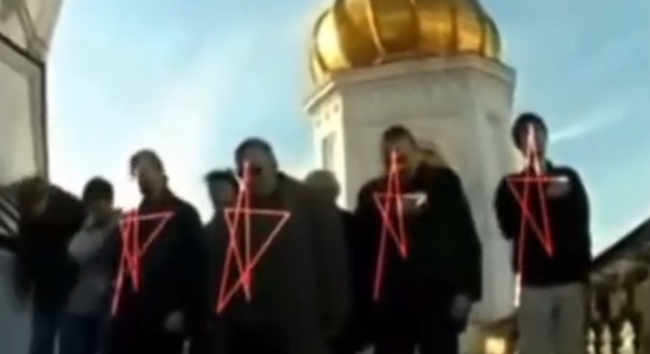
The supposed significance that the creators of these videos try to attach to celebrities or soccer players kissing crosses simply does not exist.
Public gestures by famous people are a matter of personal choice, cultural habit, or an expression of faith within their religious tradition. Interpreting them as secret worship of Baphomet or hidden Satanic symbolism is a typical form of conspiracy thinking that looks for hidden patterns and conspiracies where none exist. A soccer player making the sign of the cross before a match is asking God for help or giving thanks for success, using a familiar gesture from his religion rather than drawing a hidden occult symbol.
The theological meaning of the sign of the cross in Christianity is completely straightforward and contains no hidden “subtext.” It is a physical expression of faith in the redemptive sacrifice of Jesus Christ on the cross. By making the sign of the cross, a believer symbolically calls for God’s blessing, declares their belonging to Christianity, and expresses a willingness to follow its commandments. Assigning an opposite meaning to the gesture means ignoring centuries of theological tradition and replacing it with invented conspiracy theories.
The spread of such videos on social media benefits those seeking to create chaos, distrust, and division in society. By exploiting people’s fascination with everything “secret” and “hidden,” these theories do not promote deeper understanding; they simply spread ignorance and fear. Instead of examining the history and meaning of symbols, viewers are given a ready-made, frightening, but completely false explanation that is easy to absorb and share, creating a viral effect.
In conclusion, the theory that the sign of the cross and the pentagram are identical is completely fabricated. It fails on geometric, historical, and theological grounds alike. It is a classic example of “fake news” in the religious sphere, designed to trigger an emotional response and exploit a lack of critical thinking.
Christians making the sign of the cross are drawing a cross, the symbol of their faith and hope, and no conspiracy-based geometry can change that fundamental fact.
History of the Sign of the Cross
The history of the sign of the cross goes back to the earliest centuries of Christianity.
Originally, the gesture was much simpler: early Christians made the sign of the cross with a single finger, most often the thumb, across the forehead (signaculum). The gesture is already mentioned in the writings of Tertullian in the second century, where he wrote that Christians mark their foreheads with the cross in their every action, entering and leaving.
This act was believed to place the seal of Christ on the body, protecting the believer from evil forces and reminding them of their belonging to God.
Over time, the gesture evolved and became more elaborate. By the fourth century, the practice had expanded to other parts of the body: Cyril of Jerusalem mentions marking the forehead, eyes, and mouth.
During the Middle Ages, larger forms of the sign of the cross emerged and became established, extending across the entire body. Differences in finger positioning, including the use of two or three fingers, and in the direction of movement, from right to left among Orthodox Christians and from left to right among Catholics, developed through the historical divisions of the Church, including the Great Schism of 1054 and internal reforms such as the reforms of Patriarch Nikon in Russia. The fundamental meaning — invoking the power of the Cross — remained unchanged.
How Other Religions View the Sign of the Cross
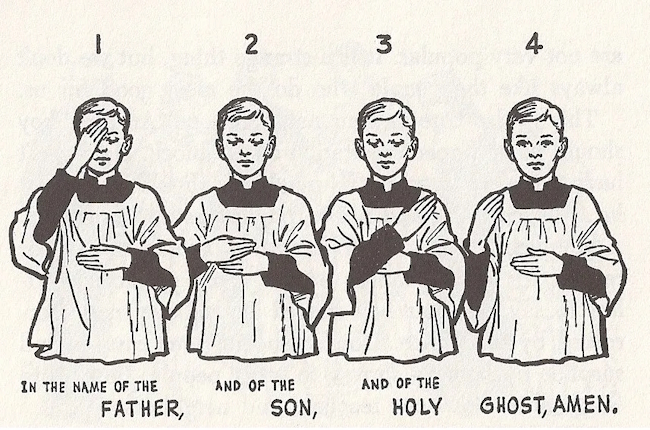
Different Christian denominations and other Abrahamic religions have their own views of the sign of the cross, shaped by their theological doctrines.
- In Catholicism, as in Orthodoxy, the sign of the cross is a fundamental part of liturgical life and private prayer and is used daily. Catholics make the sign from left to right, which according to their tradition symbolizes the movement from darkness (sin) to light (salvation) through Christ.
- Lutherans (pictured above) and many traditional Protestants, such as Anglicans, also retain the sign of the cross in worship and private practice, although they generally attach less mystical significance to it than Orthodox or Catholic Christians and view it more as a pious custom that recalls baptism.
For more radical branches of Protestantism, the sign of the cross is often considered unacceptable, viewed as a “human invention” without a direct basis in the Bible and therefore rejected as a ritual element that can overshadow a personal relationship with God.
Judaism and Islam, as independent monotheistic religions, do not use the sign of the cross because they do not accept the doctrine of the Trinity or the redemptive sacrifice of Christ on the cross as understood in Christianity. Their perspective on this Christian gesture is one of indifference; they regard it as neither beneficial nor Satanic because it is not part of their religious law.

Welcome to Poznayu.com!
My name is Alex, and I founded this project together with a team of like-minded professionals. At Poznayu.com, we create in-depth reviews, explore fascinating facts, and share well-researched, reliable knowledge that helps you navigate complex topics with confidence.
Our mission is simple: to explain complicated ideas in clear, accessible language. We believe that high-quality information should be available to everyone. Every article we publish is designed to provide practical value, actionable insights, and trustworthy analysis you can rely on.
Join our growing community of curious readers. Your feedback matters — share your thoughts in the comments, ask questions, and suggest topics you’d like us to cover next.