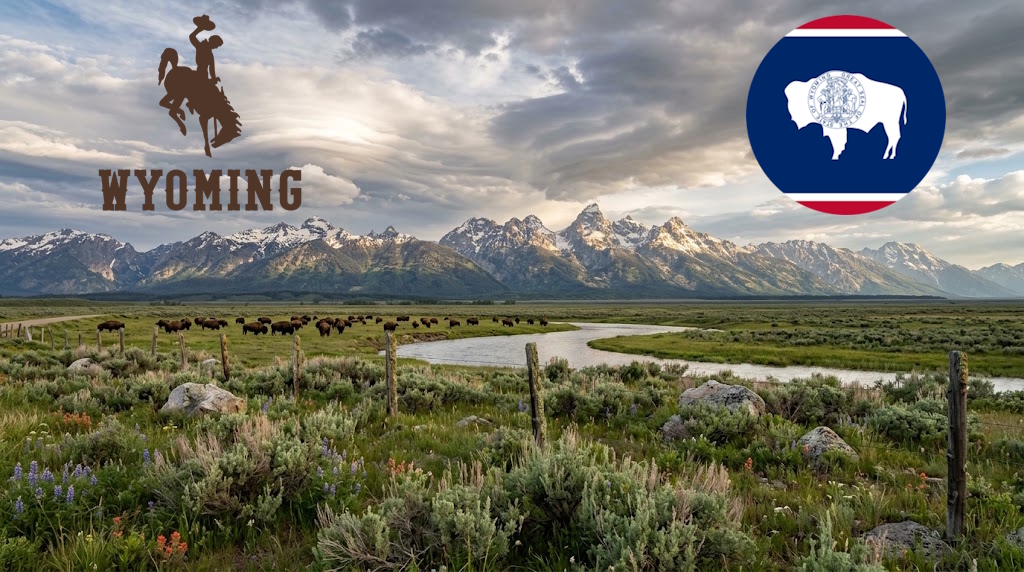
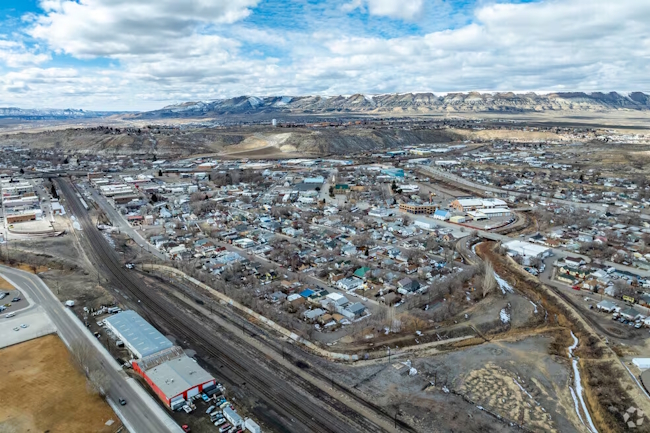
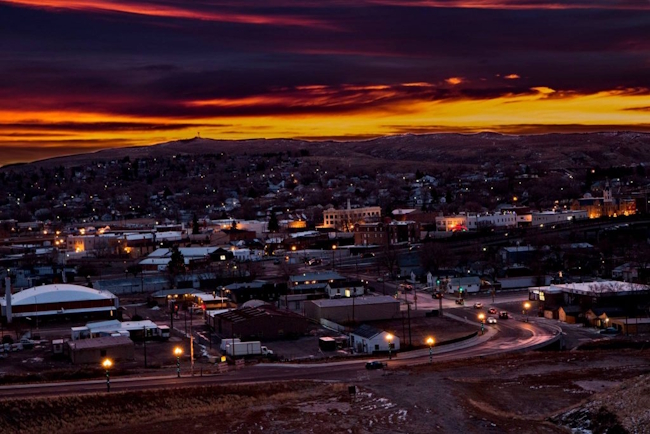
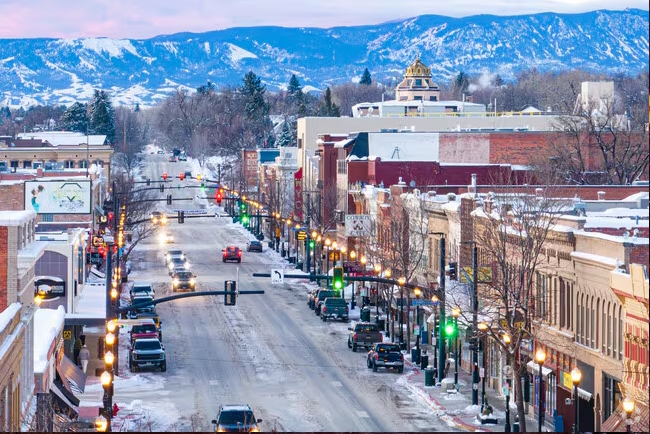
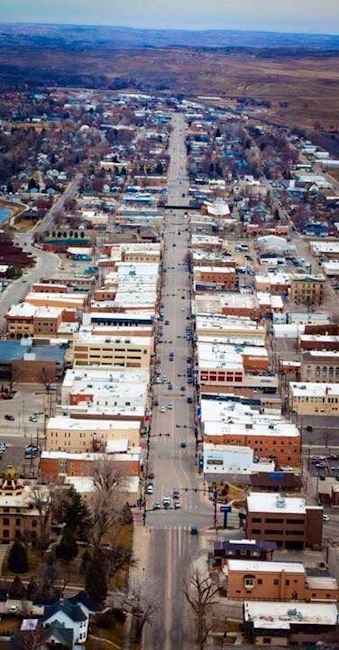
Wyoming in the minds of many Americans is the last stronghold of the real, untouched Old West, where a rugged spirit of individualism and personal freedom takes precedence over bureaucratic conventions.
For residents of the East Coast or major California cities, this region often appears to be an endless, sparsely populated wasteland, but for locals, vast open spaces are the state’s greatest asset. People here are not accustomed to relying on government assistance, and self-reliance has been elevated into an absolute philosophy, historically shaping a distinctive culture of independence. This is a place where farmers, miners, and energy workers have built a resilient economy for decades without following big-city trends, preserving a conservative and self-contained way of life.
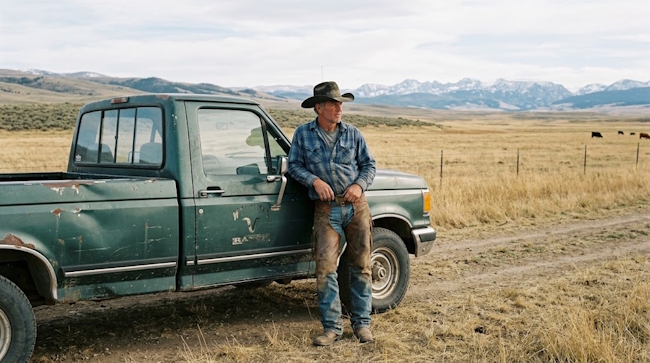
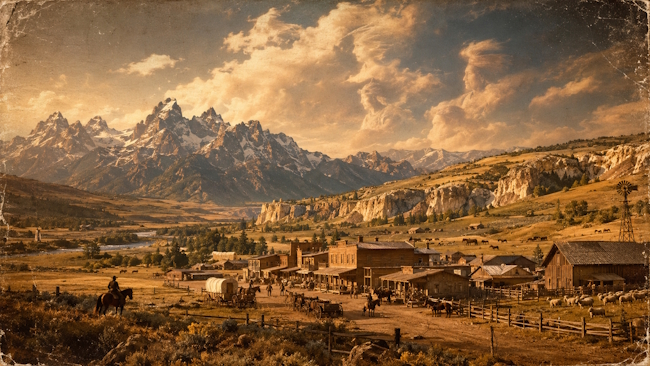
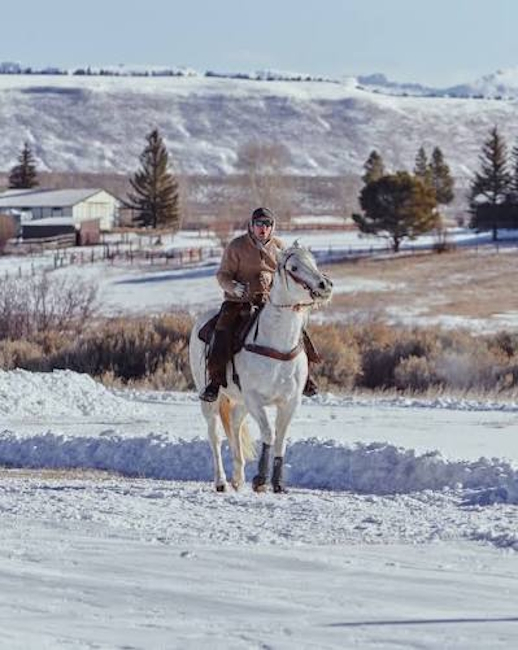
American culture strongly associates the state with classic cowboy heritage, which here is not tourist pageantry but an enduring part of everyday life.
On Wyoming’s roads, you are far more likely to see heavy-duty pickup trucks than economical sedans, while cowboy boots and hats are considered perfectly normal business attire, even among senior politicians and top business executives. Its distance from noisy federal centers and limited government involvement in private life attract people who are tired of high taxes and excessive regulation. The absence of a state individual income tax and corporate income tax has made Wyoming something of a domestic offshore haven, attracting capital from business owners who value financial independence and strict privacy.
Despite being one of the largest states in the country by land area, Wyoming has the smallest population of any U.S. state, creating a distinctive social dynamic.
Americans often joke that everyone in the state knows everyone else through one handshake, while the nearest neighbor on a ranch may be dozens of miles away. This demographic emptiness creates strong solidarity within small local communities: people are accustomed to helping one another during extreme weather rather than waiting for emergency services to arrive. As a result, Wyoming combines a strongly libertarian individualism with a deep sense of responsibility toward its relatively few neighbors.
Interesting historical and social facts about Wyoming reveal its unique role in the development of the United States and American society.
For example:
First recognition of women’s voting rights in the world. Wyoming established women’s right to vote and hold public office in 1869, half a century before the corresponding amendment to the U.S. Constitution, initially driven by the need to attract women to the harsh western territory.
Only two escalators in the entire state. Because Wyoming lacks large multistory shopping centers, dense high-rise development, and strict building regulations, only two escalators officially operate across the entire state, both in the city of Casper inside local bank buildings.
Creation of the world’s first national park system. In 1872, President Ulysses Grant established the first national park in history in this state, laying the foundation for the global environmental movement to protect unique biomes from industrial development.
Wildlife outnumbers the human population. Vast undeveloped areas and low development density mean that Wyoming’s pronghorn population significantly exceeds the number of residents, making the state one of the continent’s major wildlife centers.
A unique economy without an income tax. Wyoming is one of the few U.S. states with no state individual income tax, while its large budget surplus is generated mainly by extensive coal, oil, and natural gas extraction on federal lands.
State Technical Data
Abbreviation: WY
Name before joining the U.S.: Wyoming Territory
Languages used: English, Spanish
Length: 587 km
Width: 444 km
Area: 253,348 km²
Population density: 2.3 people/km²
Telephone area code: 307
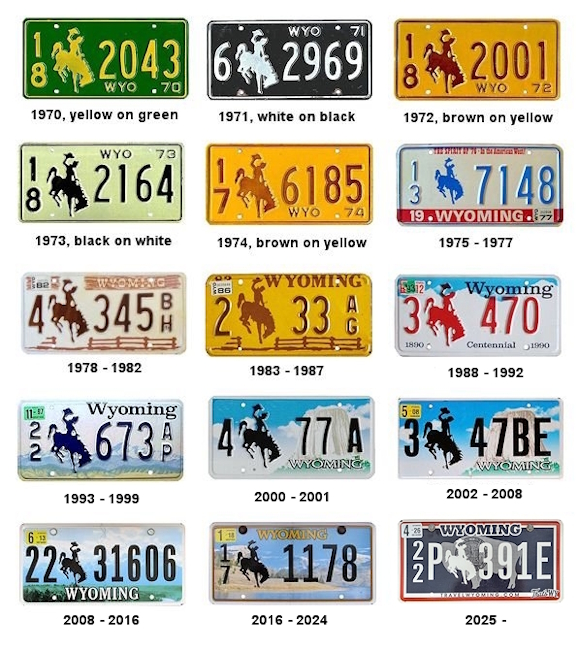
License plates: Issued with a unique Bucking Horse and Rider image, with the first digits traditionally indicating the registration county.
State ZIP codes: 82001–83128
Capital: Cheyenne
Capital GPS coordinates: 41°08′44″ N 104°48′07″ W
Largest city: Cheyenne
Time zones (UTC): UTC−7 (Mountain Standard Time, MST), UTC−6 (Mountain Daylight Time, MDT) in summer
And, as usual, here is a collage showing how Wyoming license plates have changed over time:
State Symbols
Wyoming’s official symbols reflect its rich historical heritage, rugged natural environment, and enduring respect for the traditional way of life of American pioneers.
Flag
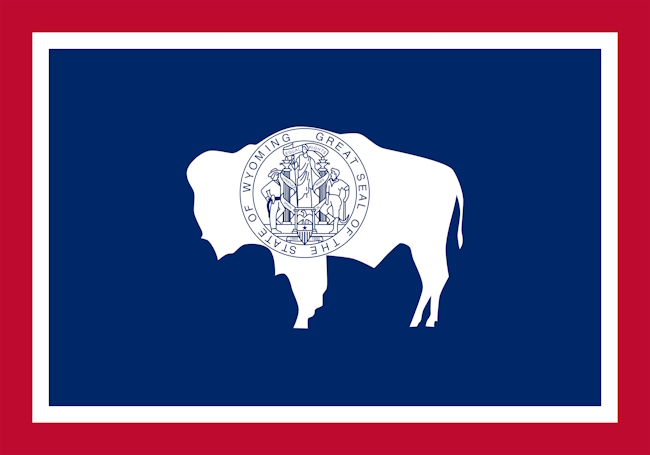
The flag features a dark blue field surrounded by inner white and outer red borders, symbolizing purity of purpose and the blood of the pioneers.
At the center of the stark design is a massive white silhouette of an American bison facing the hoist. Inside the animal is the state’s official seal, emphasizing the legal status of the symbol. The original design was created by artist Verna Keays in 1916 as part of an open national competition organized by the local chapter of the Daughters of the American Revolution.
Coat of Arms
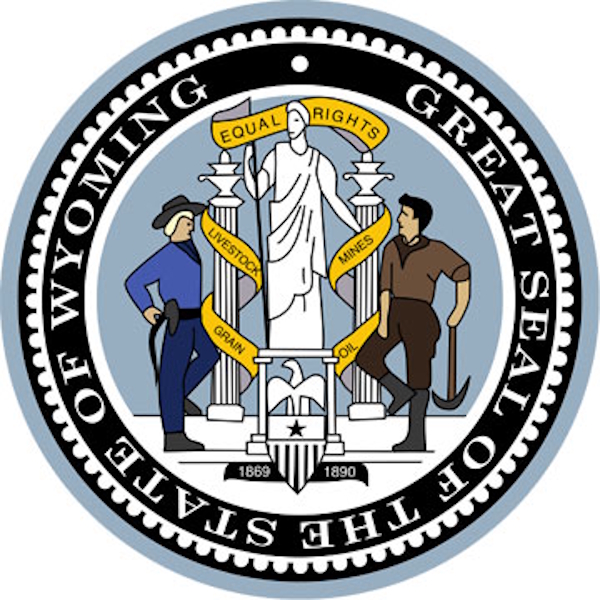
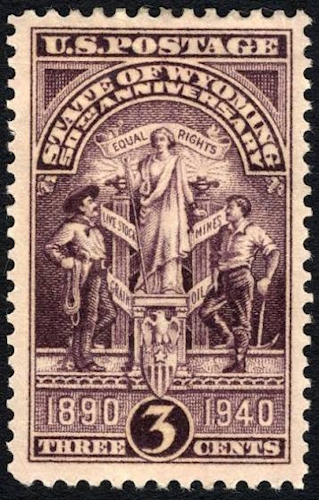
The central figure of the official state seal is a woman holding a classical staff and a banner reading “Equal Rights,” symbolizing the state’s historic leadership on women’s equality.
Standing on either side are an armed cowboy and a miner with tools, representing the main pillars of the local economy—livestock and large-scale mineral extraction. A five-pointed star with the number 44 appears on the shield between the figures, directly indicating Wyoming’s order of admission to the United States. A bald eagle proudly crowns the entire heraldic composition, while the official state motto appears below.
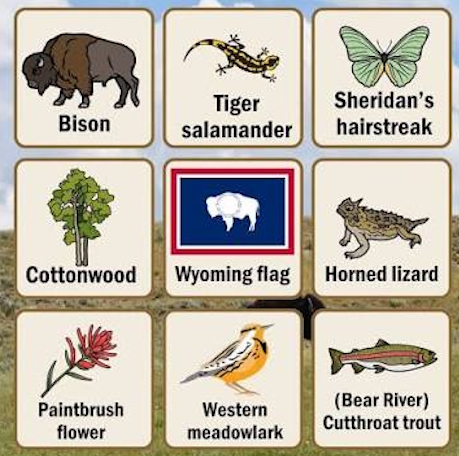
Bird: Western Meadowlark
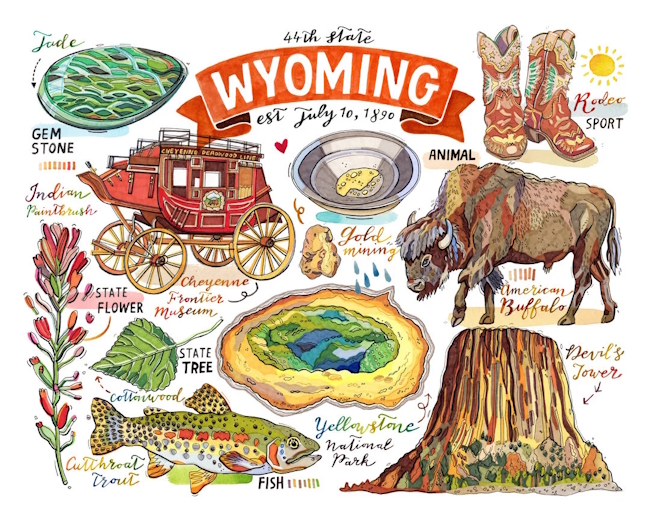
Flower: Indian Paintbrush (Castilleja linariifolia)
Tree: Plains Cottonwood
Nicknames: Equality State, Cowboy State, Big Wyoming
Here I’ll add my own explanation, since I recently visited this remarkable, sparsely populated state, and this is how locals themselves explain the nicknames:
Equality State: The nickname recognizes Wyoming as the first U.S. territory to grant women voting rights in 1869 and later elect the first woman governor in U.S. history, Nellie Tayloe Ross.
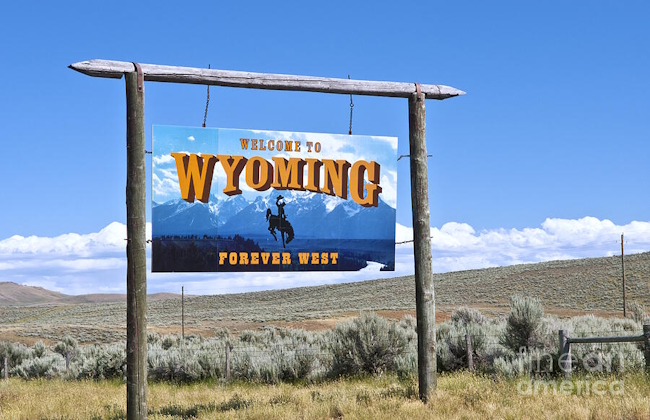
Cowboy State: The name reflects the deep ranching culture, rodeo tradition, and historical legacy of the Old West, while its main symbol is the silhouette of a cowboy on a rearing horse, the Bucking Horse and Rider.
Big Wyoming: The nickname comes from the state’s enormous land area, its rank as the tenth-largest state in the U.S., its vast undeveloped landscapes, and the feeling of immense open space combined with a very small population.
The Meaning of the Word “Wyoming”
The name Wyoming has an unusual geographic history: it originated not in the American West itself, but was transferred from the East Coast—from the Wyoming Valley in Pennsylvania.
In 1865, U.S. Representative James Mitchell Ashley proposed the name for the western territory being created. A native of Pennsylvania, he was inspired by the place-name’s poetic sound and believed its Native American roots and literal meaning perfectly described landscapes of broad plains and mountain valleys.
Linguistically, the place-name traces back to the language of the Delaware (Lenape), an Algonquian-speaking people.
The original expression was a compound word containing elements associated with size, landscape, and place. As European settlers developed the land, they adapted the Native pronunciation to English phonetics, changing earlier forms such as Wauwaumie and Wiwaume into the familiar Wyoming.
Etymologists and historians identify several interpretations of the name’s origin, associated with different dialects and ways of transcribing the Native language:
“At the large river flats” (from Munsee-Delaware chwewamink) — the most precise reconstruction from the standpoint of modern academic linguistics. The construction combines the element xw- (“large,” “great”), the stem -e:wam- (“floodplain meadow,” “river lowland”), and the locative suffix -enk (“at,” “in”).
“On the great plain” (from phonetic forms mecheweami-ing or maughwauwa-ma) — a historical interpretation recorded in official state documents. This version combines the Native words meche (“extensive,” “large”) and weami (“open, flat land”).
“Place of the extensive prairie” (from broader Algonquian roots) — a geographic interpretation widely used by nineteenth-century researchers to describe a landscape of grasslands and open spaces.
“End of the plain” (from dialect forms waumic or muchu-waumic) — an alternative historical interpretation suggesting that the Delaware used the term to describe a particular area where a flat valley gave way to mountainous terrain.
State History
Let’s look at the major periods in Wyoming’s history without making an already long overview even longer: from ancient nomads to industrial development
Pre-Columbian Era and the First European Expeditions
Human presence in what is now Wyoming dates back more than ten thousand years.
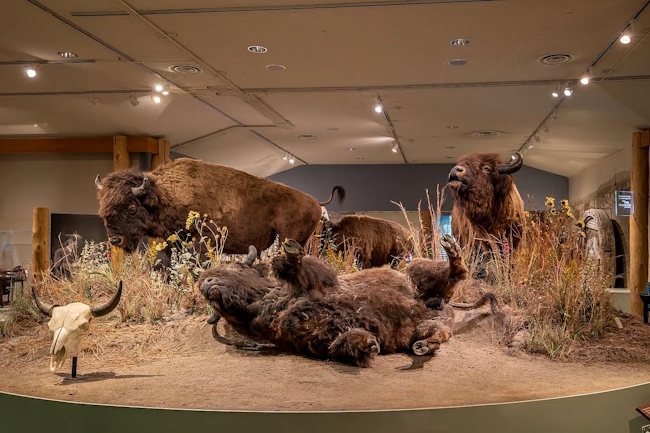
Archaeological finds associated with the Clovis culture confirm that early hunters pursued mammoths and giant bison here during the late Pleistocene. By the time Europeans arrived, the region was inhabited by nomadic Native American peoples including the Shoshone, Arapaho, Cheyenne, and Crow. Their way of life depended heavily on seasonal migrations of enormous American bison herds, while horses brought to the continent by the Spanish transformed these peoples into highly mobile and formidable warriors of the Great Plains.
John Colter, a member of the famous Lewis and Clark Expedition, is generally considered the first white person to enter this territory.
During the winter of 1807–1808, he explored the northwestern part of the region alone, including the Yellowstone River basin. His reports of geysers, boiling mud pots, and steaming fissures were dismissed by contemporaries as inventions, leading them to call the harsh area “Colter’s Hell.” In 1812, the expedition associated with John Astor, returning from the Pacific Coast, identified South Pass—a gradual route through the Rocky Mountains that later played a decisive role in the large-scale settlement of the American West.
The Fur Trade Era and the Great Migration Trails
During the 1820s and 1830s, the regional economy was driven by beaver trapping.
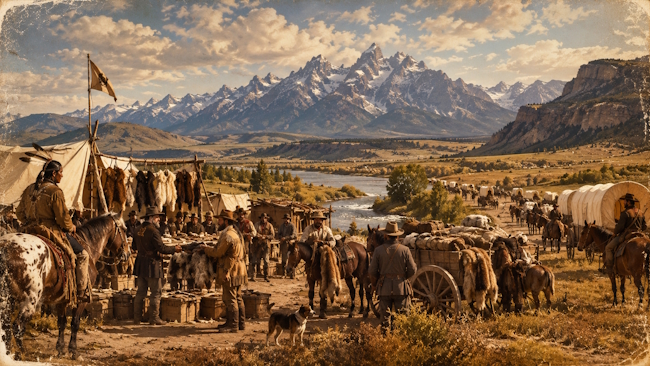
So-called mountain men roamed the Green River and Wind River valleys, independent hunters and trappers who helped lay the foundations of Rocky Mountain cartography. During this period, the annual rendezvous system took shape, where white trappers, Native Americans, and representatives of fur companies traded pelts for weapons, food, and tools. By the early 1840s, however, European demand for beaver hats had faded, animal populations had been depleted, and the fur empire went into decline.
Settlers replaced the trappers. By the middle of the nineteenth century, Wyoming had become a major transit corridor for American expansion: the Oregon, California, and Mormon trails crossed South Pass.
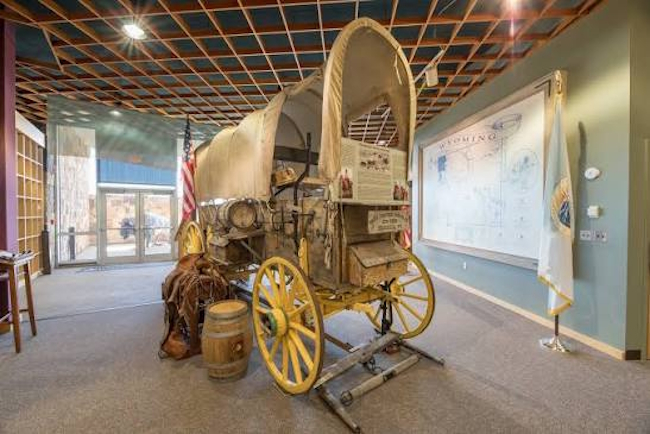
Hundreds of thousands of pioneers in covered wagons crossed these dry plains in search of fertile land and gold. To protect migrants from Native attacks and keep wagon trains supplied, the U.S. Army purchased and strengthened former fur-trading posts, turning them into strategic forts such as Fort Laramie and Fort Bridger.
The arrival of the transcontinental telegraph in 1861 and the operation of the Pony Express accelerated the region’s integration into the nation’s information network. At the same time, this massive flow of migrants disrupted traditional bison migration routes and deprived Native peoples of their food base, triggering a prolonged and bloody series of armed conflicts between Native tribes and federal troops.
Territorial Organization and the Indian Wars
The construction of the Union Pacific transcontinental railroad in the late 1860s became the catalyst for formalizing the region as a territory.
The railroad brought explosive population growth and led to the rapid emergence of towns such as Cheyenne, Laramie, and Evanston along the tracks. Rapid industrialization required administrative organization, and on July 25, 1868, the U.S. Congress officially carved land out of Dakota, Idaho, and Utah territories to create the independent Wyoming Territory.
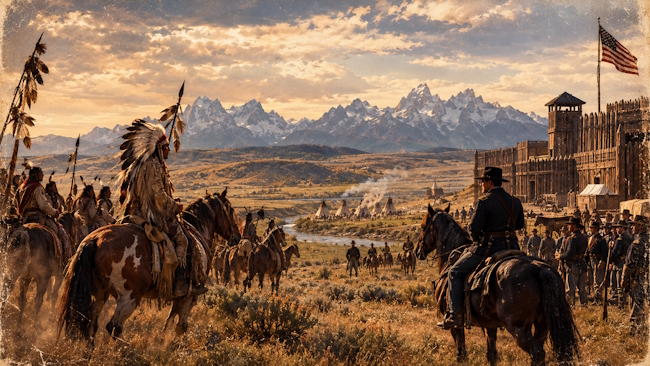
The same period was marked by fierce conflict with Native peoples over control of wildlife-rich northern lands. Red Cloud’s War (1866–1868), in which an alliance of Lakota, Cheyenne, and Arapaho tribes inflicted a series of tactical defeats on the U.S. Army, ended with the signing of the Fort Laramie Treaty. The agreement guaranteed Native Americans protection of lands around the Powder River, but the later discovery of gold in the Black Hills led to immediate treaty violations, renewed fighting, and the eventual displacement of the tribes to the Wind River Reservation.
The territorial period gave Wyoming international historical prominence through two unprecedented legislative acts.
In 1869, the territorial legislature became the first in modern history to grant women full voting rights, seeking to attract women to the harsh frontier and reach the population threshold required for statehood. In 1872, recognizing the uniqueness of the volcanic landscapes in the northwest, the federal government established Yellowstone—the first national park on the planet—helping launch the global concept of conservation.
Statehood and the Cattle Wars
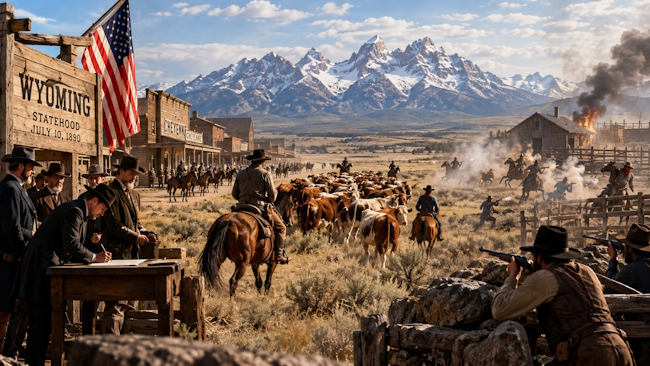
Wyoming officially joined the United States on July 10, 1890, becoming the 44th state. During this period, the economic foundation of the new state was open-range ranching. Powerful cattle barons financed by capital from Britain and the eastern United States controlled enormous areas of public grazing land, driving herds numbering in the hundreds of thousands. Their activities helped create the classic image of the tough American cowboy that Hollywood later popularized.
The monopoly of large cattle corporations inevitably collided with the interests of small homesteaders and sheep ranchers, who began legally acquiring land and fencing it with barbed wire, blocking access to watering sites. This class and economic conflict erupted in the famous Johnson County War of 1892.
Large landowners hired Texas gunmen to eliminate rebellious settlers physically under the pretext of fighting cattle theft. The armed conflict grew into a major siege and ultimately required direct intervention by federal cavalry on the personal order of President Benjamin Harrison.
The 20th Century and the Rise of a Resource-Extraction Economy
With the arrival of the twentieth century, Wyoming underwent a structural shift from an agricultural economy to industrial mineral extraction.
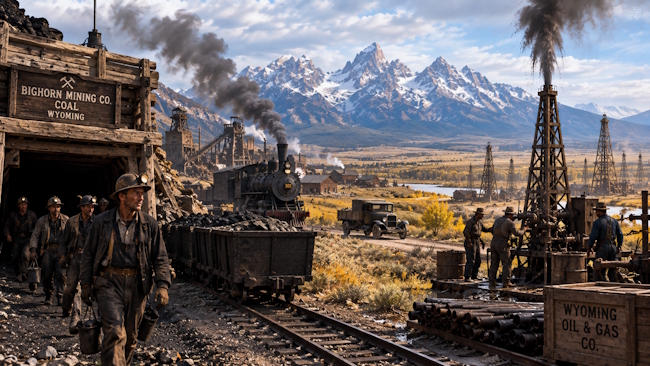
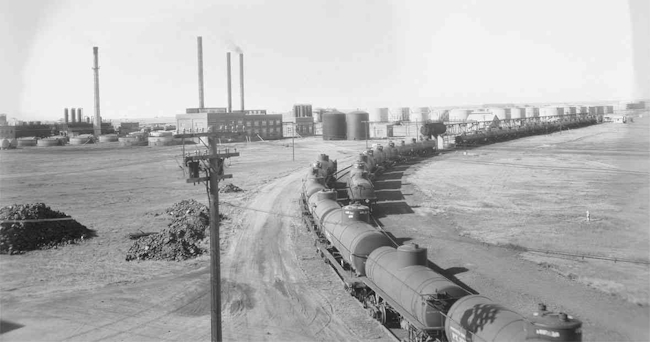
The discovery of the giant Salt Creek oil field triggered a genuine industrial boom in the 1910s and 1920s, turning Casper into the largest oil-refining center in the western states. In the following decades, large-scale development of coal seams in the Powder River Basin began, along with uranium, natural gas, and trona extraction, firmly establishing the region as America’s energy storehouse.
Alongside heavy industry, the state began monetizing its natural landscapes, making tourism a second economic pillar. The creation of Grand Teton National Park in 1929 and the subsequent development of ski infrastructure radically changed the character of some counties. Isolated farming settlements such as Jackson Hole evolved into prestigious resorts for millionaires and centers of luxury real estate, creating a sharp social contrast with working-class mining towns in eastern Wyoming.
In modern times, Wyoming has balanced the preservation of conservative frontier traditions with the challenges of the global commodity market. The region’s economic well-being still depends critically on global energy prices, forcing the state government to seek ways to diversify revenue.
At the same time, the state has consistently resisted efforts to tighten federal environmental regulation, defending its right to industrial development of its natural resources and maintaining an image of a place where business freedom takes priority over directives from Washington.
Founding and Joining the United States
The foundation for creating Wyoming as a separate administrative entity was the rapid construction of the Union Pacific First Transcontinental Railroad in the late 1860s.
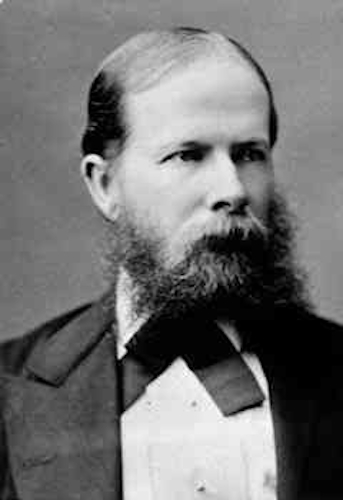
The arrival of the railroad instantly turned unincorporated land into a major transportation corridor, bringing a surge of workers, merchants, and settlers. The key architect of the territory’s legal formation was U.S. Representative James Mitchell Ashley, who had proposed the separation bill back in 1865 and gave the region the name of the Pennsylvania valley. As a result, on July 25, 1868, President Andrew Johnson signed the act establishing the Wyoming Territory, with Cheyenne as its capital, and General John Allen Campbell became its first governor.
In 1869, Campbell approved the historic law granting women equal voting rights, making it a key tool for attracting permanent residents to the harsh frontier.
By the late 1880s, Wyoming’s political and economic establishment, led by territorial delegate Joseph Carey and Governor Francis Warren, launched an active campaign for full statehood. The main reasons for seeking statehood were the need for full political autonomy from Washington, protection of local ranching and coal interests, and the right to control the state’s vast land resources independently while attracting major investment.
In 1889, a constitutional convention in Cheyenne drafted a progressive constitution preserving women’s voting rights, but this provision triggered fierce opposition from southern and conservative Democrats in Congress who did not want to establish a precedent for the entire country.
The political standoff ended with a display of determination by local leaders: in response to Washington’s threats to block the bill, the territorial legislature sent a famous telegram declaring that it would rather remain outside the United States for another hundred years than join the Union without its women.
Under public pressure and with strong Republican support, the House and Senate relented. On July 10, 1890, President Benjamin Harrison signed the act admitting Wyoming to the United States as the 44th state, officially establishing the region’s unique status, where the principle of equal citizenship had first become a government standard.
Founder and First Governor
Wyoming became a state and joined the United States on July 10, 1890, becoming the 44th state, although its legal history began in 1868 with the creation of the Wyoming Territory.
The main ideological and political architect behind Wyoming’s creation at the governmental level was U.S. Representative James Mitchell Ashley. In 1865, he introduced the first congressional bill to establish these lands as a separate administrative unit, proposing the name in honor of the Pennsylvania valley he had known since childhood.
General John Allen Campbell became the first leader of the newly created Wyoming Territory in 1869, appointed by President Ulysses Grant.
After taking office, Campbell established basic institutions of government and approved the historic law that, for the first time in modern world history, granted women full voting rights. His administrative determination strongly shaped the region’s political direction and attracted the first permanent settlers to the harsh western frontier.
Key figures in transforming the territory into a full state included congressional delegate Joseph Carey and cattle magnate Francis Enoch Warren.
Warren, who served as the last territorial governor, led the movement for sovereignty, overcame political opposition in Washington, and organized the drafting of the state constitution.
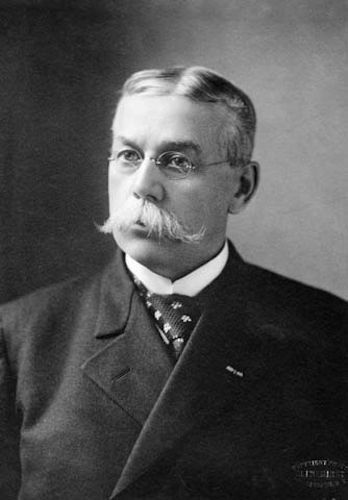
After President Benjamin Harrison signed the act admitting Wyoming to the Union, Francis Warren (Francis Warren, pictured above) won the statewide election and officially became the first governor of the state of Wyoming in the fall of 1890.
Geography and Climate
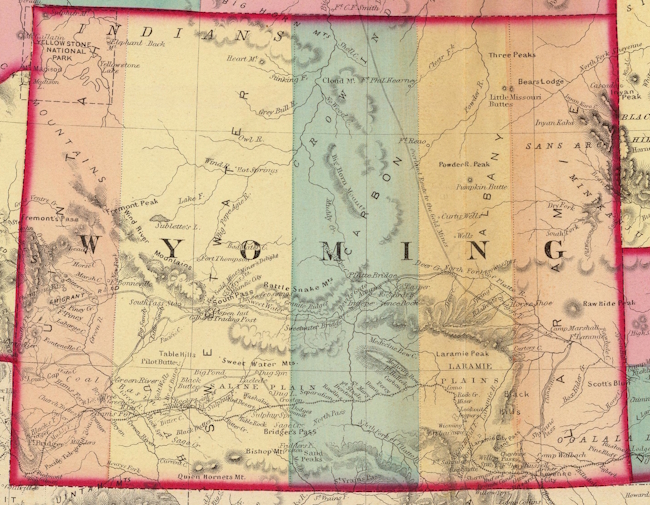
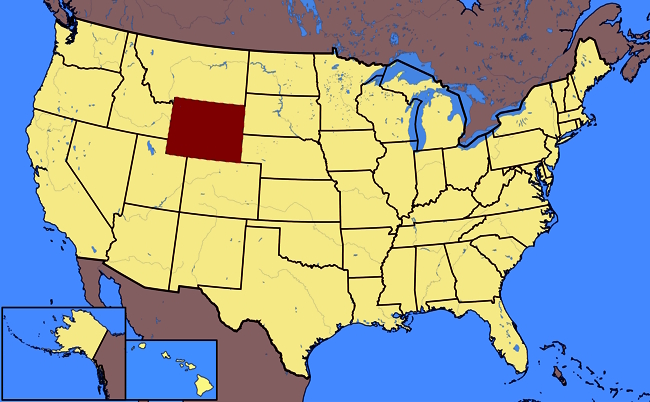
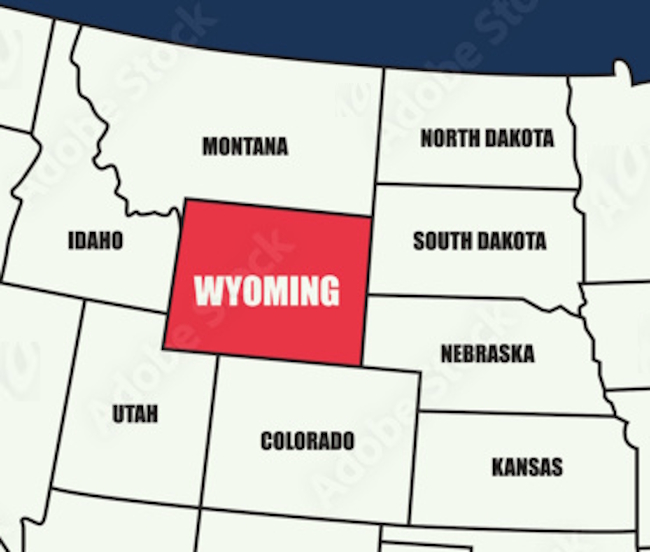
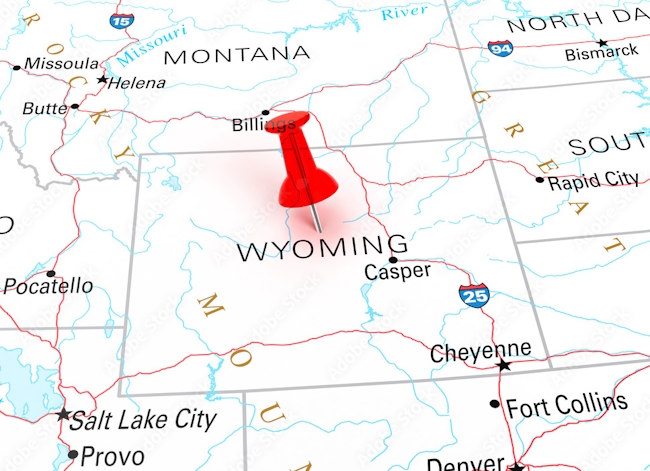
Wyoming is located in the northwestern United States in the intermountain Rocky Mountain region and is one of three U.S. states, along with Utah and Colorado, whose boundaries are drawn entirely along lines of latitude and longitude, creating an almost perfect rectangle.
The state is landlocked and completely surrounded by six other U.S. states:
To the north, Wyoming borders Montana,
To the east, it directly borders South Dakota and Nebraska,
To the south, it borders Colorado,
To the southwest lies Utah,
To the west, the state shares a border with Idaho.
This position in the heart of the continent makes Wyoming a natural geographic bridge between the Great Plains and the mountain systems of the Pacific West.
With an area of 253,348 square kilometers, Wyoming ranks tenth in size among all U.S. states, combining enormous expanses with considerable physical and geographic diversity.
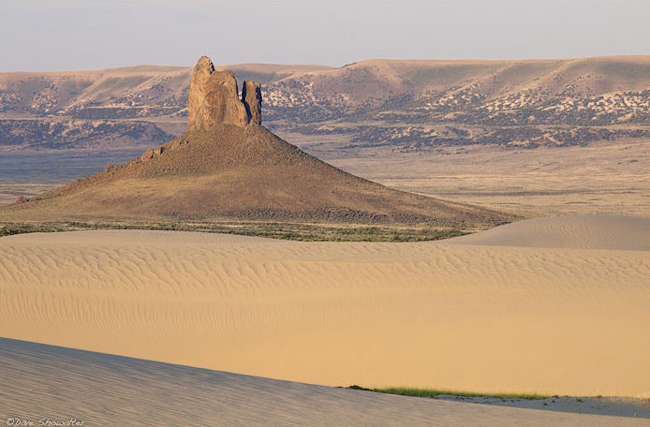
The state has a high average elevation of about 2,040 meters, making it the second-highest state in the country after Colorado. The eastern third of the territory consists of the High Plains—dry, grassy plateaus that gradually give way in the west to major Rocky Mountain ranges such as the Wind River, Teton, and Bighorn ranges. The highest point in the state is Gannett Peak at 4,207 meters, and the Continental Divide crosses Wyoming, determining the drainage direction of several of North America’s largest river systems.
Wyoming’s climate is classified as strongly continental and semiarid, shaped by high-elevation terrain and its great distance from oceanic currents that would otherwise moderate temperatures.
Wyoming experiences substantial daily and seasonal temperature swings, along with generally low precipitation:
In arid plains and intermountain basins, precipitation often totals around 150–350 mm per year, although wetter eastern plains can receive 500 mm or more.
Mountain ranges create a pronounced rain-shadow effect, making areas such as the Great Divide Basin and Red Desert dry and semidesert-like.
At higher elevations, precipitation increases: mountain areas receive substantial snowfall, which accumulates in snowpack and mountain glaciers and serves as a major source of water for the region.
Winters in Wyoming are long, severe, and extremely windy, with average January temperatures dropping below minus 10–15 degrees Celsius and, in some mountain areas, below minus 30 degrees.
The state is officially among the windiest regions in the United States: Arctic air masses move freely through mountain passes, producing powerful blizzards, snowdrifts, and so-called “chinook” winds—warm, dry winds that can raise temperatures sharply within hours. Summers are dry and moderately warm: on the plains, July daytime temperatures reach plus 28–32 degrees, while even at the height of summer the high country remains cool and comfortable.
Despite its generally dry character, Wyoming’s river network is critically important to ecosystems across the western part of the continent.
Major rivers such as the Yellowstone, Snake, Green River, and North Platte either originate in Wyoming or receive major contributions there, with their valleys creating unique microclimatic zones. Depending on elevation and slope exposure, the state’s natural conditions range from hot, dry grasslands in the east and high-altitude alpine meadows in the center to taiga and tundra in the northwest, giving Wyoming one of the most contrasting geographic and climatic profiles in North America.
Economic Profile: Key Industries and Budget Indicators
Wyoming’s financial indicators are paradoxical: in terms of absolute GDP and total state budget size, it traditionally ranks near the bottom—49th or 50th—among U.S. states. Yet this modest aggregate result is explained by the state’s very small population.
On a per-capita basis, GDP and government spending consistently rank among the twenty highest in the country. The state treasury is funded primarily by taxes on mineral extraction and federal transfers, allowing the government to forgo individual income taxes and corporate income taxes.
The mining industry is the economy’s undisputed engine and foundation.
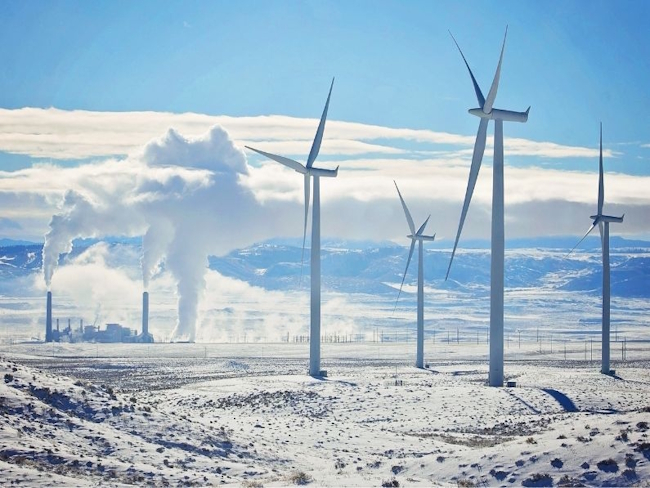
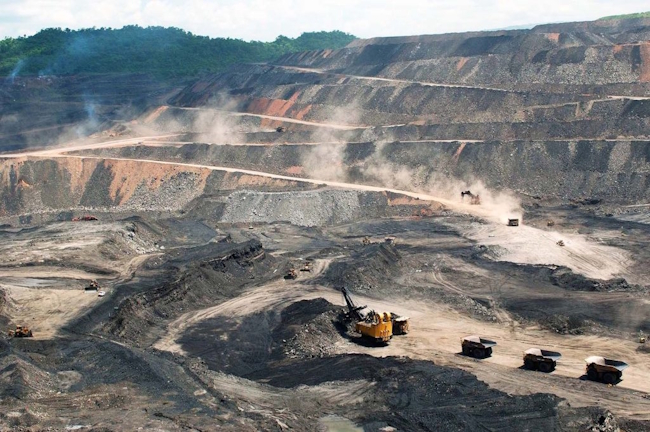
Wyoming is the leading coal producer in the United States, supplying the energy market with hundreds of millions of tons of coal from the giant open-pit mines of the Powder River Basin. In addition to coal, the state has intensive production of natural gas, crude oil, uranium, and trona—a valuable mineral used to produce soda ash, for which Wyoming has the world’s largest recoverable reserves.
The second-largest sector, providing stability and economic diversification, is tourism.
The presence of the world-famous Yellowstone and Grand Teton national parks attracts millions of travelers every year, generating about $4 billion in direct revenue. A steady tourist flow supports hospitality, outdoor recreation, transportation infrastructure, and retail, creating jobs for thousands of residents in remote counties.
Agriculture has lost its position as the financial dominant sector but retains its role as the cultural backbone of the “Cowboy State.”
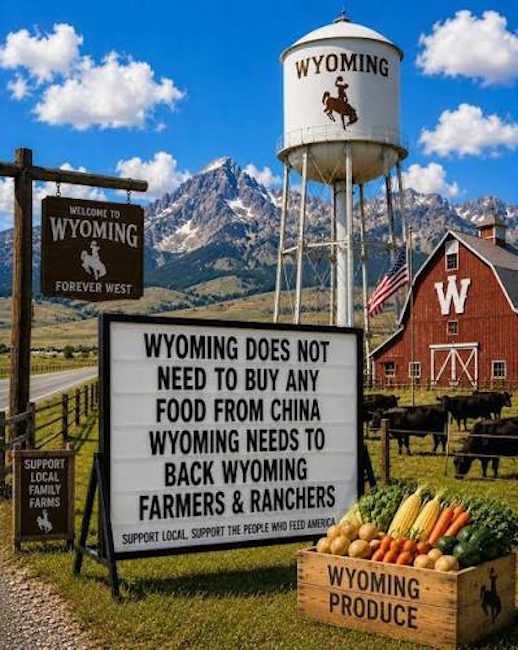
More than 80% of agricultural receipts come from extensive pasture livestock operations focused on beef cattle and sheep. Crop production is objectively constrained by the harsh, dry climate, but farmers successfully grow forage crops, barley, wheat, and sugar beets in irrigated valleys, providing the region’s food base.
Political Views and Electoral Preferences
In the political landscape of the United States, Wyoming has firmly established itself as one of the most conservative strongholds of the Republican Party. And in the editorial view, that is very good.
Since the late 1960s, Democratic presidential candidates have never won statewide here, while in recent election cycles Republicans have consistently received more than 70% of the vote. The state legislature and an overwhelming majority of key executive offices, including the governor’s office, are controlled by conservatives, effectively reducing two-party competition in general elections to a minimum.
The ideological outlook of local residents is rooted in frontier individualism and classical Western libertarianism.
Wyoming voters favor sharply limiting federal intervention in state affairs, uncompromising protection of the Second Amendment and the right to carry firearms, and minimizing the tax burden. This commitment to business and personal sovereignty is especially apparent in resistance to federal environmental initiatives, which local residents view as a direct threat to the extraction industry and their traditional way of life.
At the same time, modern uncompromising conservatism coexists with a historical paradox: Wyoming proudly carries the official nickname “Equality State,” because women received full voting rights here in 1869, for the first time in American history. We already discussed this above in the section on state symbols.
Despite one-party dominance, local politics often operates on practical considerations, with voters placing the interests of small, isolated communities and candidates’ personal reputations significantly above strict ideological doctrine handed down from Washington.
Living Conditions
Life in Wyoming is a compromise between absolute spatial freedom and everyday isolation.
The state completely exempts residents from income tax, offers very low population density and clean nature, but its harsh climate and prolonged freezing winds require serious adaptation. The cost of living varies widely: while larger cities such as Cheyenne and Casper remain financially accessible to the middle class, enclaves such as Jackson have astronomical real estate prices because of an influx of affluent resort visitors.
Access to high-quality healthcare and specialized services is often limited, while daily life is difficult to imagine without a personal vehicle and a willingness to drive dozens of miles along empty highways to the nearest shopping center.
Crime Situation
Wyoming traditionally ranks among the safest states in America.
Its violent crime rate is more than 40% below the national average, while the number of serious offenses per 100,000 residents keeps the state among the five calmest regions in the United States. In small towns and rural communities, high levels of social trust still exist, with residents sometimes leaving their homes unlocked at night.
Nevertheless, the state’s crime profile has its own specifics. More than 80% of all reported crime consists of property offenses, including vehicle break-ins, theft from construction sites, and petty theft. Geographic isolation and harsh winters also contribute to hidden social problems: high levels of domestic violence, alcohol and psychoactive substance abuse, and distressingly high rates of suicide in the home environment.
In certain industrial areas, such as Riverton, crime levels are noticeably higher than the state average, contrasting with more prosperous suburban communities.
Job Availability
The foundation of the local labor market remains the extraction sector, which offers some of the highest wages in the region. The Powder River Basin and dry plains provide steady demand for engineers, heavy-equipment operators, and maintenance technicians working at coal mines, oil wells, and trona deposits. However, this segment is tightly tied to global energy prices: periods of rapid hiring and high bonuses are inevitably followed by waves of layoffs.
Tourism and services form the second-largest pool of jobs, concentrated around Yellowstone and Grand Teton national parks. Hotels need managers, guides, cooks, seasonal workers, and recreation staff, although most of these positions are strongly seasonal, with peaks in summer and winter. Agriculture also remains active: traditional ranching requires physical labor, veterinarians, and logistics specialists, supporting employment in rural areas.
The public sector, healthcare, with major employers concentrated in Cheyenne, and digital technologies are also expanding. Low taxes and inexpensive energy attract the construction of large data centers, including Microsoft facilities, as well as innovative energy projects such as TerraPower’s commercial nuclear reactor in Kemmerer.
Attitudes Toward Immigrants and Immigration Conditions
The foreign-born share of Wyoming’s population remains one of the lowest in the United States, at just over 3.5% of all residents.
Because the population is predominantly conservative and rural, attitudes toward newcomers tend to be pragmatic but cautious. Immigrants are expected to integrate quickly into the local language and culture, respect the traditions of the cowboy West, and remain fully self-supporting rather than relying on public assistance.
At the same time, local businesses have an acute structural need for foreign labor.
Agriculture, construction, and the resort hospitality industry depend heavily on workers holding employment visas, including H-2A for farm workers and H-2B for service jobs. At the same time, the state’s political agenda is firmly focused on limiting illegal immigration, supporting federal deportation measures, and strengthening employment verification, creating a clear distinction between legal workers and undocumented migrants.
At present, Wyoming does not offer special regional programs for easier legalization or humanitarian settlement.
Immigration to Wyoming is possible only through standard federal U.S. channels, including employer sponsorship, family reunification, or investment visas. The state has no so-called sanctuary cities, and local police actively cooperate with federal immigration authorities, so living without legal status carries a high level of risk.
Wyoming Attractions and Nature
Wyoming is one of the least populated states in the United States and the classic “Cowboy State,” where the culture of the Old West, settler history, ranches, and rodeos remain particularly strong.
At the same time, much of its fame comes from vast protected areas, mountains, geysers, and landscapes that are almost untouched.
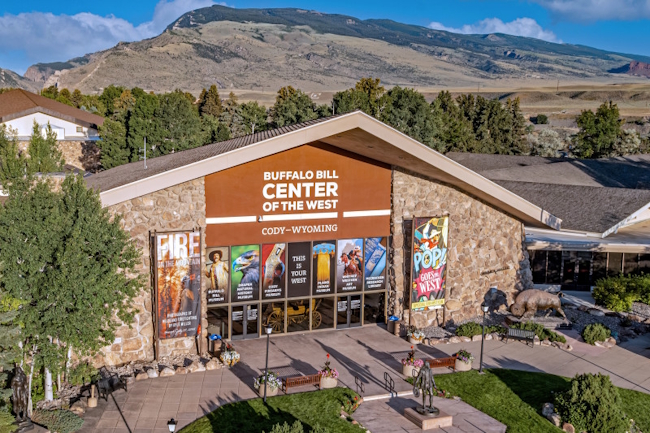
Buffalo Bill Center of the West
The city of Cody is home to a museum complex containing five museums under one roof.
The exhibits cover Buffalo Bill and the history of the American West, art, the culture of Native peoples of the Great Plains, Yellowstone’s natural environment, and the history of firearms. It is one of Wyoming’s main destinations for learning specifically about Western history and culture.
Wyoming State Capitol
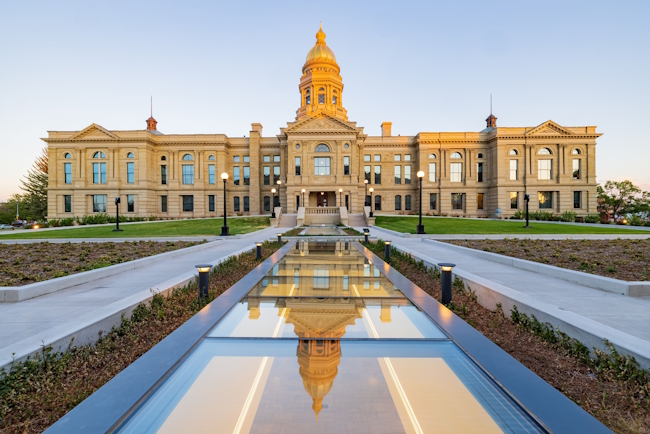
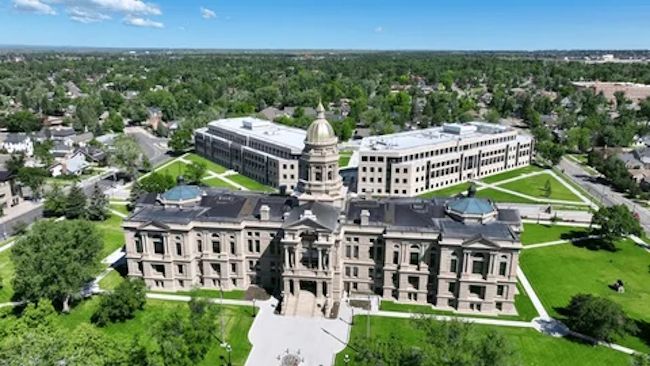
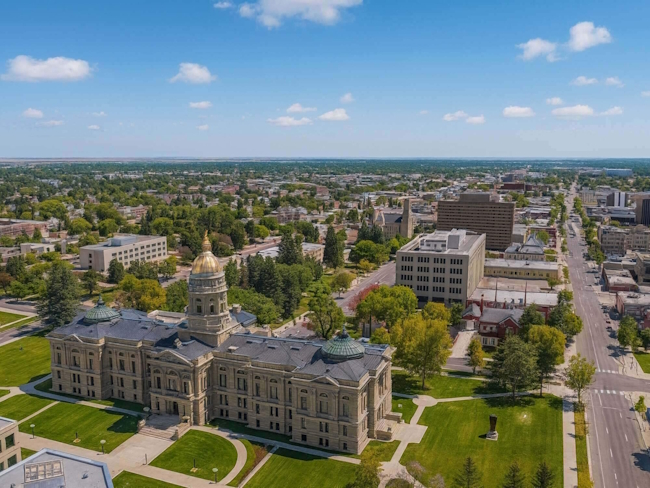
The building in Cheyenne dates to the late nineteenth century and is a U.S. National Historic Landmark. It features classical architecture, carved stone, mosaic floors, and a large stained-glass dome, while historic legislative chambers have been preserved inside. The Capitol remains an active center of state government.
Cheyenne Frontier Days
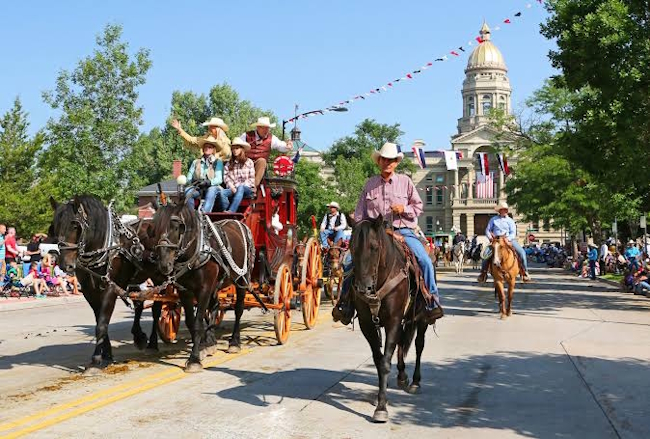
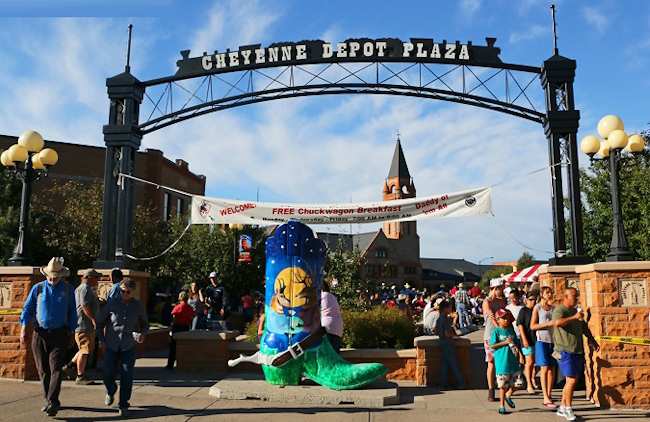
The annual ten-day celebration in the state capital has been held since 1897 and is considered the world’s largest outdoor rodeo. In addition to cowboy competitions, the program includes concerts, parades, a carnival, a Western art show, Native American Village, and Old West Museum. The event played a major role in establishing Cheyenne as one of the symbols of American cowboy culture.
Wyoming Territorial Prison State Historic Site
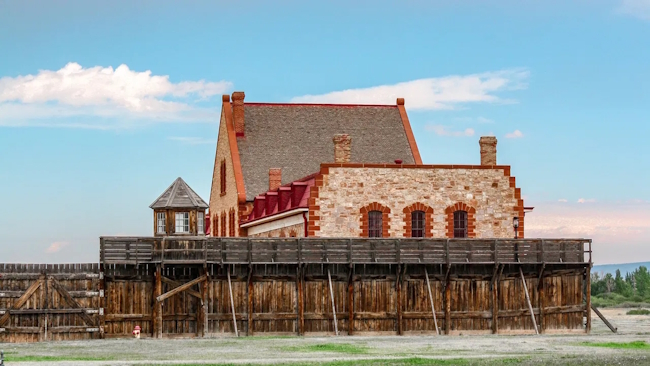
The historic prison near Laramie was built in 1872 and was initially used by the federal government before being transferred to the state. After the prison closed, the complex was used for many years by the University of Wyoming, and today it operates as a historical museum. Exhibits tell the story of the nineteenth-century prison system and criminals of the Old West era.
National Historic Trails Interpretive Center
Casper is home to a large interactive museum dedicated to American migration westward. It presents the Oregon, Mormon Pioneer, California, and Pony Express trails, with exhibits showing the lives of emigrants and Native peoples of the region. Through modern multimedia presentation, the center explains how these routes changed the history of the American West.
Old Trail Town
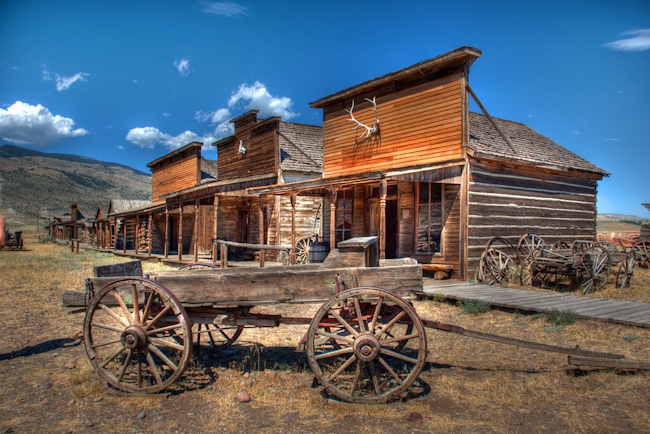
Cody is home to a collection of dozens of historic buildings from the late nineteenth and early twentieth centuries that were moved here from different parts of Wyoming and Montana. They include old homes, saloons, a store, a blacksmith shop, and cabins connected with the frontier era; the site also contains a museum of everyday objects and Western history. In effect, it preserves a small Old West settlement as a museum complex.
Yellowstone National Park
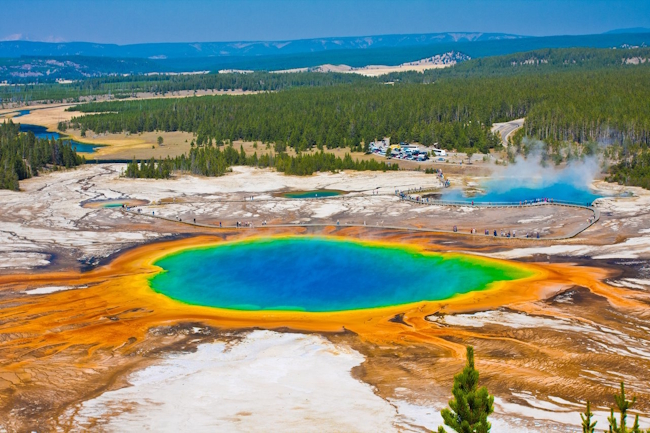
Yellowstone is Wyoming’s principal natural symbol, with geysers, hot springs, mud volcanoes, waterfalls, and vast wilderness areas. The park covers about 2.2 million acres and contains more than 10,000 hydrothermal features, including roughly half of the world’s active geysers. Old Faithful and Grand Prismatic Spring have effectively become state icons.
Grand Teton National Park
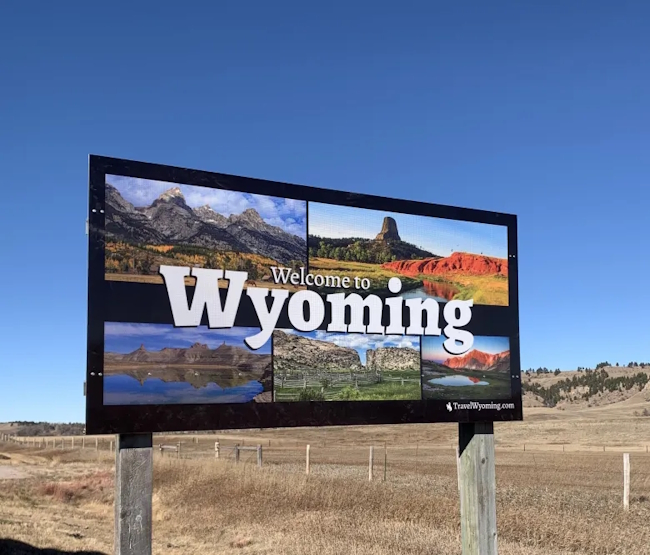
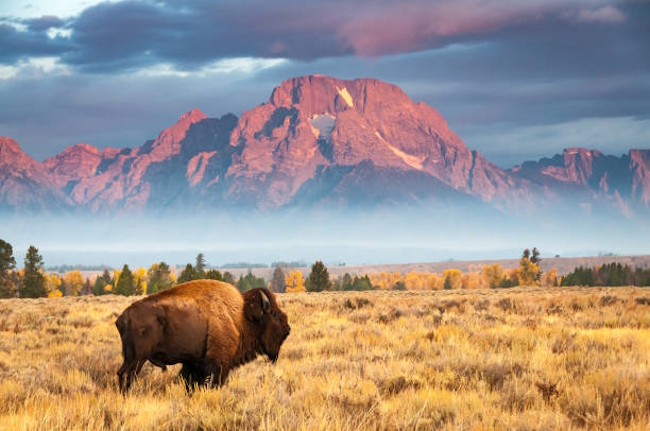
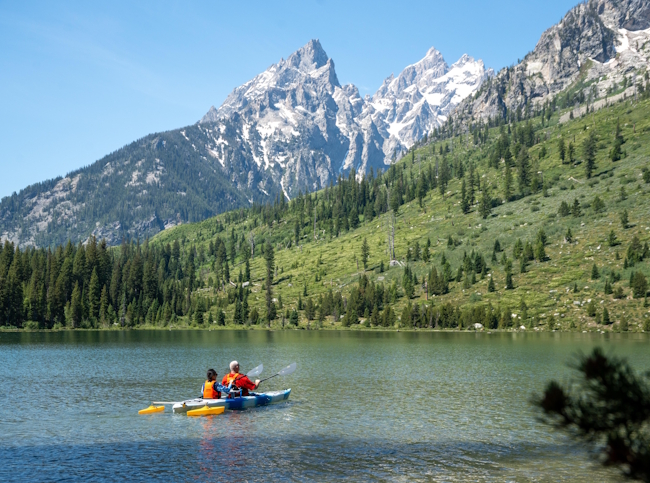
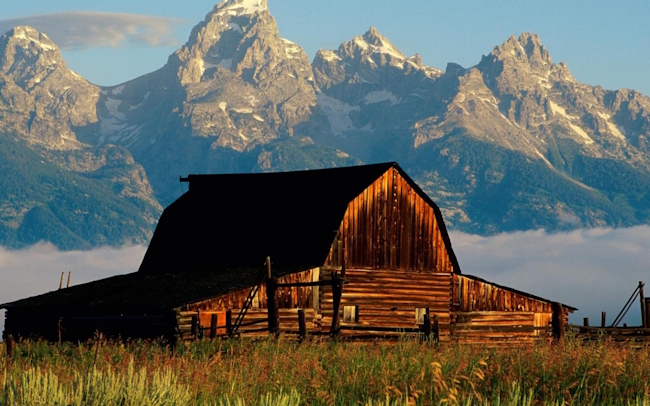
The defining feature of Grand Teton is its sharply rising mountain range with distinctive jagged peaks towering over the valley. The park covers about 310,000 acres and includes Jackson Hole, the Snake River, lakes, and habitats for elk, bison, bears, wolves, and other wildlife. The combination of high mountains, water, and open valleys makes Grand Teton’s landscapes among the most recognizable in the American Rockies.
Devils Tower — Devils Tower
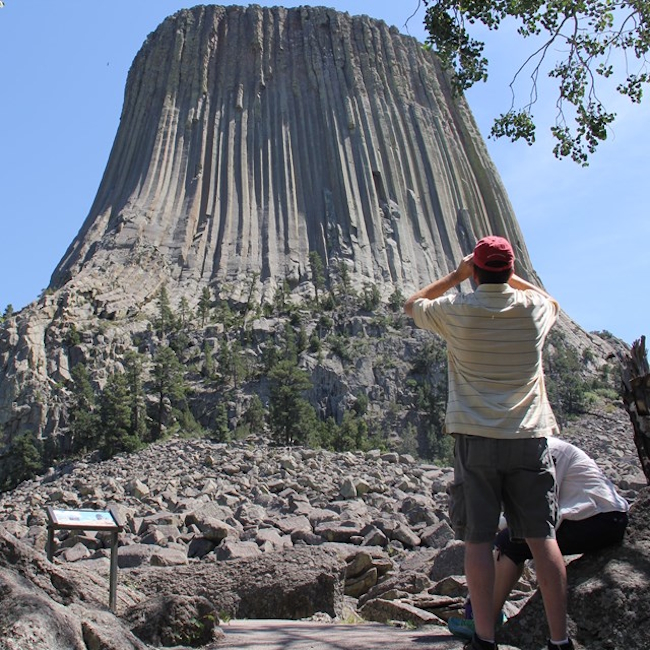
The monumental rock tower rises about 867 feet above the prairies of northeastern Wyoming and is covered with distinctive vertical columns. In 1906, Theodore Roosevelt declared Devils Tower the first U.S. national monument; the site also has major cultural importance for Native peoples of the Great Plains. Geologists consider it an ancient igneous intrusion, although the exact history of its formation remains under study.
Bighorn Mountains
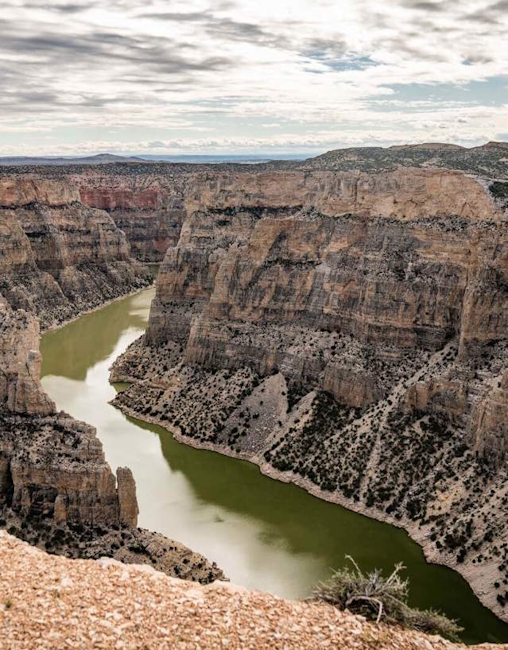
The Bighorn mountain system rises in north-central Wyoming, with forests, alpine meadows, lakes, deep valleys, and high-elevation areas. Several scenic driving routes cross the region, while the highest peak, Cloud Peak, reaches about 13,171 feet. The Bighorns are especially interesting because they offer a view of mountainous Wyoming away from the state’s best-known national parks.
Wyoming’s Capital — Cheyenne
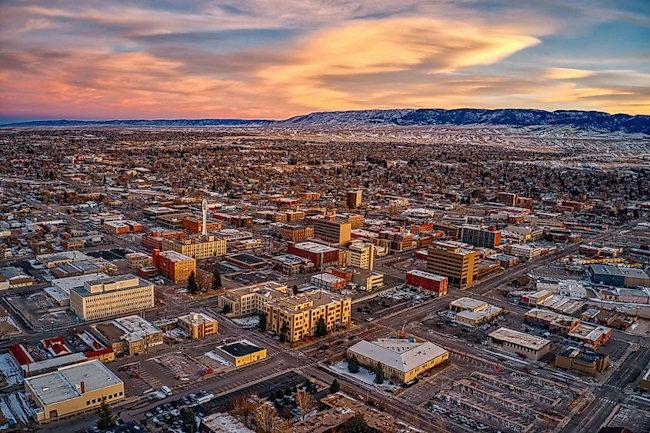
Cheyenne was born in the summer of 1867 as a tent-based railroad workers’ settlement during construction of the Union Pacific Transcontinental Railroad and was named after the local Native American tribe.
Its rapid growth and sudden influx of money earned the city the nickname “Magic City of the Plains,” and by 1869 it had become the official capital of the Wyoming Territory. Today, the city is home to the State Capitol with its distinctive gilded dome, while Cheyenne serves as the region’s main administrative, political, and legal center.
Cheyenne’s cultural identity is inseparable from the heritage of the Old West, whose main expression is the annual Cheyenne Frontier Days festival, held since 1897.
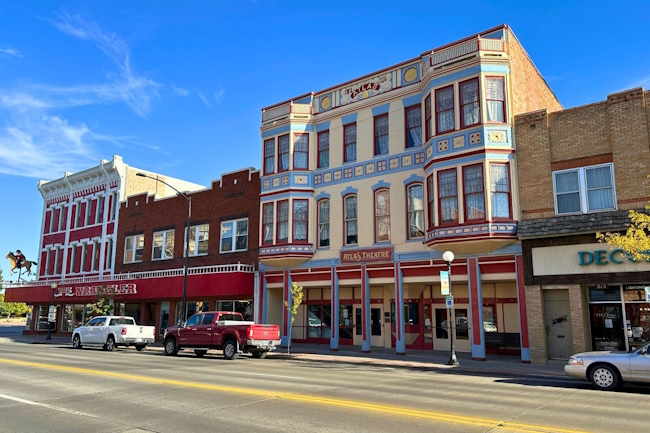
Hundreds of thousands of tourists, cowboys, and country culture enthusiasts travel each year to the world’s largest outdoor rodeo. At the same time, the city’s historic atmosphere, with its old railroad depot and traditional saloons, exists alongside strategic military infrastructure: Francis E. Warren Air Force Base on the edge of the city is a key site for Minuteman III intercontinental ballistic missiles.
In the twenty-first century, Wyoming’s capital has gradually evolved from a closed government center into a modern hub for digital infrastructure and logistics. Low tax rates, a cool climate, and affordable electricity have attracted technology giants, including Microsoft, to build large data centers in the surrounding area.
Even as the state’s largest population center, Cheyenne remains compact, with about 65,000 residents, combining the quiet pace of a high-altitude provincial city with proximity to the major metropolitan area of Denver.
A 4K Walk Through Cheyenne
Largest Cities
Beyond Cheyenne, Wyoming’s population is concentrated mainly in several cities that developed around railroads, mineral extraction, higher education, trade, and agriculture.
According to the latest completed Census Bureau estimates for 2026, the largest after the capital are Casper, Gillette, Laramie, Rock Springs, and Sheridan. Their histories show how different Wyoming’s cities developed—from oil and coal centers to university and historic communities.
Casper
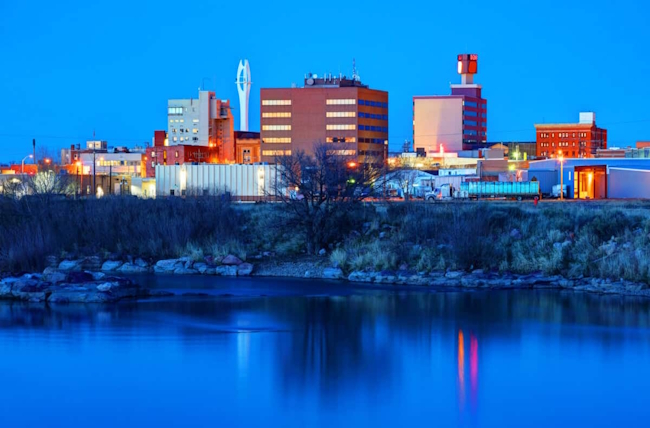
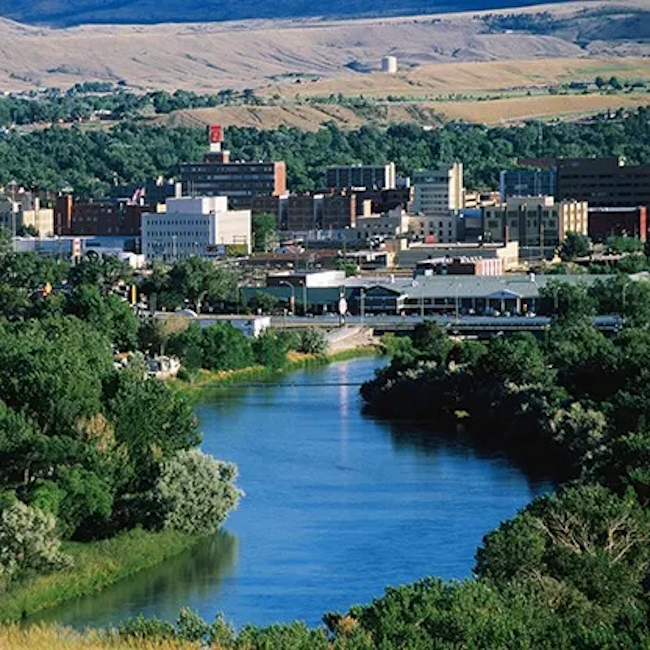
Casper is Wyoming’s second-largest city by population after the capital, with an estimated 58.8 thousand residents as of July 1, 2025. The city emerged in 1888 along the Union Pacific Railroad near the North Platte River. The railroad and its favorable location quickly turned Casper into one of the most important population centers in central Wyoming.
Casper’s main historic breakthrough was tied less to the railroad than to oil. In the early twentieth century, development of fields around Salt Creek and the construction of pipelines and refining facilities made the city a major oil industry center; by the 1920s it was known as “Oil City.” The oil boom brought rapid construction of residential neighborhoods, hotels, and commercial buildings.
Today, Casper combines its industrial past with tourism and cultural significance. Among its best-known attractions are Fort Caspar Museum, the National Historic Trails Interpretive Center, Tate Geological Museum, and Nicolaysen Art Museum. The city is also known for fishing on the North Platte River, recreation on Casper Mountain, hiking trails, and other outdoor activities.
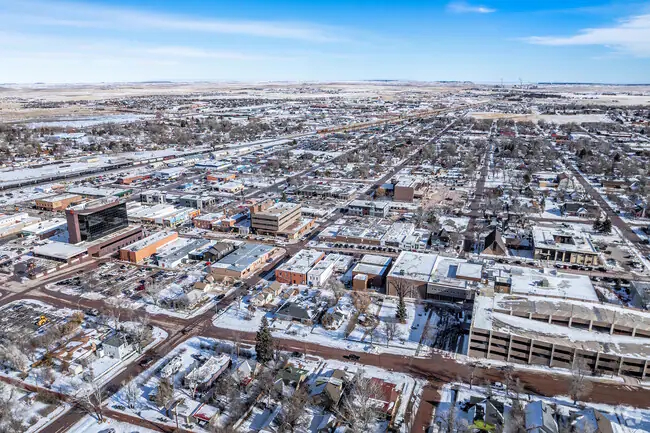
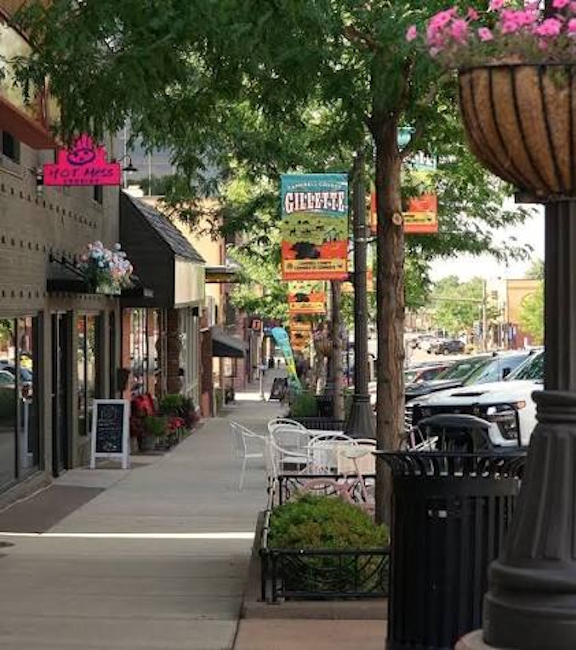
Gillette
Gillette is Wyoming’s third-largest city by population, with about 34.0 thousand residents as of July 1, 2025. Its history began in 1891, when the Chicago, Burlington and Quincy Railroad arrived. The city was associated with engineer and surveyor Edward Gillette, who worked on the railroad route.
During its early decades, Gillette remained a small railroad and ranching center, but over time its development became increasingly shaped by the energy resources of the surrounding region. The enormous coal deposits of the Powder River Basin became especially important, followed later by the oil and gas industry. Energy helped transform Gillette from a small railroad settlement into a modern regional center.
Today, the city is the administrative center of Campbell County and an important energy hub in northeastern Wyoming. At the same time, Gillette has expanded its economic and civic infrastructure through retail, services, healthcare, education, and local cultural institutions. For visitors interested in the region’s history, notable sites include the Rockpile Museum, the historic downtown, and attractions covering railroads, mineral extraction, and the development of northeastern Wyoming.
The city of Gillette, Wyoming has nothing to do with the razor company or its founder, King Gillette. It was named after Edward Gillette, the railroad’s senior engineering surveyor, who designed the route through the area in 1891.
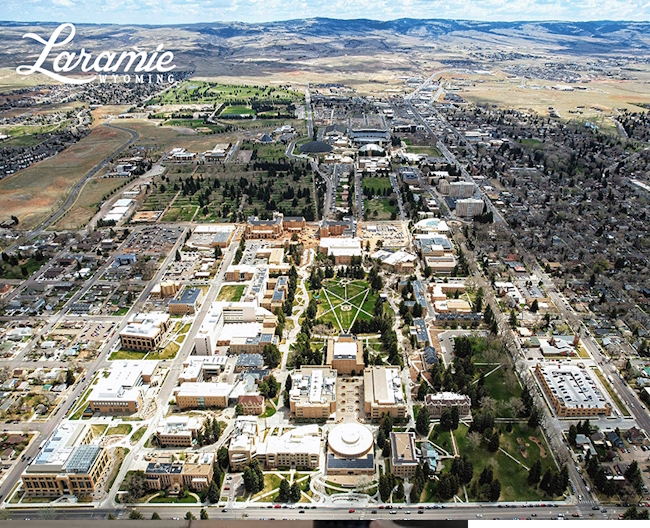
Laramie
Laramie ranks third among Wyoming’s largest cities after Casper and Gillette, with about 32.3 thousand residents as of July 1, 2025. The city emerged in the 1860s as a Union Pacific railroad settlement and quickly became an important stop on the transcontinental line. Its early history is closely tied to the railroad, the development of the Old West, and the rapid growth of communities along new transportation routes.
The modern character of Laramie is shaped largely by the University of Wyoming, the state’s only university with land-grant university status. It was founded in 1886, while Wyoming was still a territory, and eventually became the city’s main educational and cultural institution. The university significantly influences Laramie’s demographics, economy, sports, and cultural life.
Laramie also retains a notable historic legacy. The city is home to Historic Downtown Laramie, Wyoming Territorial Prison State Historic Site, and numerous buildings associated with the railroad era. It also serves as a convenient base for trips to the Snowy Range, Vedauwoo, and other natural areas of southeastern Wyoming, giving the city a mix of university town, historic center, and outdoor destination.
Rock Springs
Rock Springs is the fourth-most-populous city among Wyoming’s largest cities after the capital, Casper, Gillette, and Laramie. In 2025, the Census Bureau estimated its population at about 22.9 thousand. The city began as a stop on routes through the Bitter Creek Valley, with its real growth coming after the opening of coal mines and the arrival of the Union Pacific in the 1860s.
Rock Springs’ mines attracted workers from around the world, making the city one of the most ethnically diverse communities in Wyoming at the time. The Chinese community was especially prominent: by 1870, Chinese workers formed the largest ethnic group among miners. The city’s development was accompanied by severe conflict, culminating in the 1885 massacre of Chinese miners, one of the best-known tragic events in Wyoming history.
Today, Rock Springs remains an industrial city in western Wyoming and the seat of Sweetwater County. Its history is visible in its architecture and museums, while the surrounding area is known for desert landscapes, mountain regions, and proximity to major natural areas in the southwestern part of the state. The city is also an important transportation point between Salt Lake City and other parts of the Rocky Mountains.
Sheridan
Sheridan is Wyoming’s fifth-largest city, with about 20.0 thousand residents according to the Census Bureau estimate for July 1, 2025. It is located at the eastern foot of the Bighorn Mountains, near the Montana border. The city was founded by John D. Loucks in 1882 and named after General Philip Sheridan; Sheridan was officially incorporated as a city in 1884.
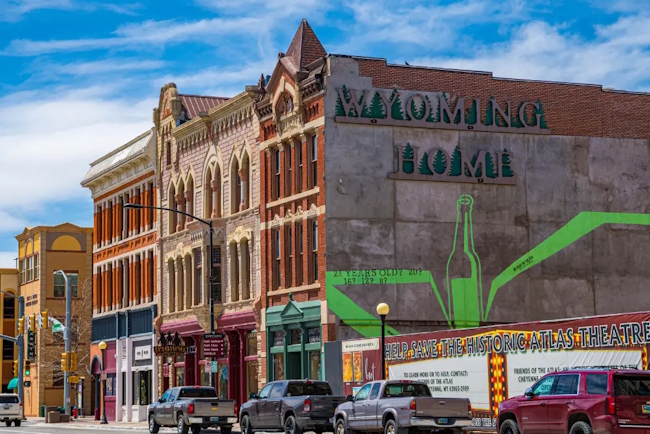
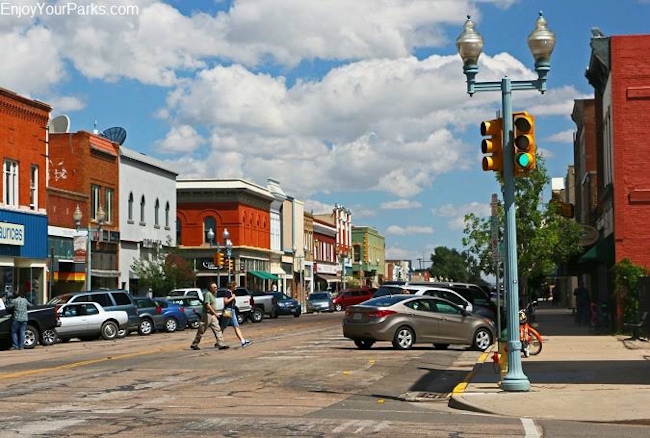
Sheridan’s growth accelerated sharply after the railroad arrived in the 1890s. Coal mines, logging, ranching, and other industries supporting the railroad and rapidly growing population developed around the city. Today, Sheridan’s historic downtown preserves numerous buildings from the late nineteenth and early twentieth centuries, many connected to the city’s formative period.
Sheridan’s distinctive feature is its combination of American West history and proximity to the Bighorn Mountains. Well-known sites in the city and surrounding area include Historic Main Street, Sheridan Inn, Trail End State Historic Site, WYO Theater, and numerous museums. Its mountain location also makes Sheridan a gateway for trips into Bighorn National Forest, historic frontier sites, and natural attractions in northern Wyoming.
Conclusion
Wyoming remains a rare example of a region where the spirit of the pioneers and almost unlimited physical freedom have prevailed over urbanization.
It is a land of stark contrasts: from Yellowstone’s monumental landscapes to the industrial coal mines of the Powder River Basin. The high-elevation climate and endless prairies have shaped a distinctive local society in which individualism, self-reliance, and neighborly support mean far more than government directives.
A pragmatic economic model makes the state a unique financial haven within the United States. The absence of an income tax and minimal corporate regulation attract capital and IT infrastructure, while revenue from exports of hydrocarbons, uranium, and trona supports the stability of the state budget. Yet the financial appeal and low crime rate come with permanent dependence on cars, severe winds, physical isolation from global cities, and a narrow labor market.
Wyoming is unlikely to suit people who prefer noisy metropolitan areas and mild climates, but for those seeking a low tax burden, a safe environment, and a secluded life surrounded by wilderness, it offers nearly ideal conditions. The “Equality State” and home of cowboy traditions continues to preserve its distinctive identity, demonstrating that economic stability and respect for personal freedoms can coexist in the twenty-first century without losing a unique historical character.
Welcome to Poznayu.com!
My name is Alex, and I founded this project together with a team of like-minded professionals. At Poznayu.com, we create in-depth reviews, explore fascinating facts, and share well-researched, reliable knowledge that helps you navigate complex topics with confidence.
Our mission is simple: to explain complicated ideas in clear, accessible language. We believe that high-quality information should be available to everyone. Every article we publish is designed to provide practical value, actionable insights, and trustworthy analysis you can rely on.
Join our growing community of curious readers. Your feedback matters — share your thoughts in the comments, ask questions, and suggest topics you’d like us to cover next.