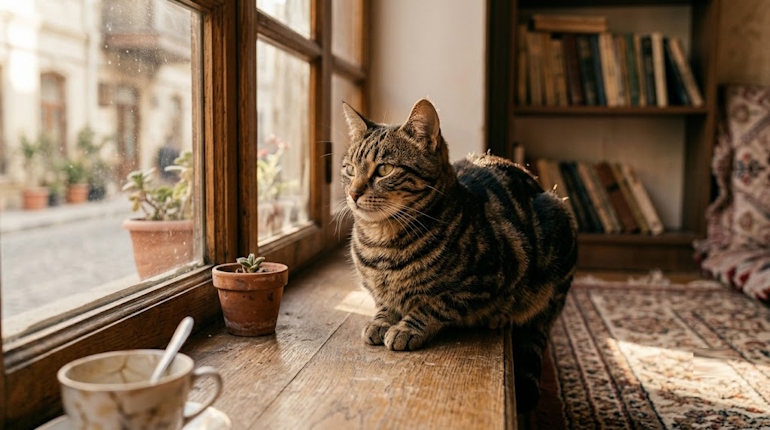
The famous striped tabby coat is often mistaken for an actual cat breed, even though it’s simply a unique, natural fur pattern. Let’s break down the history behind these recognizable patterns, how genetics shape your pet’s looks, and the main differences between classic, mackerel, and spotted cats.
What Is a Tabby?
If you look at a regular alley cat with stripes running down its back, spots on its belly, and that distinct “M” on its forehead, you’re looking at a textbook example of a tabby coat.
A lot of people mistake the name for an individual breed, but it’s really just a specific coat pattern.
Think of it like a fabric print—you can use that same print to make any style of clothing. In the exact same way, a striped pattern can pop up on a regular street cat or an elite Maine Coon, Scottish Fold, or British Shorthair.
History and Origins of Nature’s Pattern
The pattern traces its roots right back to the wild ancestors of today’s house cats—African wildcats and European wildcats.
In the wild, survival depended entirely on a cat’s ability to blend in seamlessly with its surroundings, like dry grass, fallen leaves, and tree branches. This patterned camouflage became locked in genetically as the ultimate cloaking mechanism against predators and a massive advantage while hunting.
The word itself has a fascinating etymology, originating from the Attabiyah district in Baghdad. The area was famous for manufacturing a wavy-patterned silk cloth that looked strikingly similar to a cat’s fur.
The Genetic Baseline
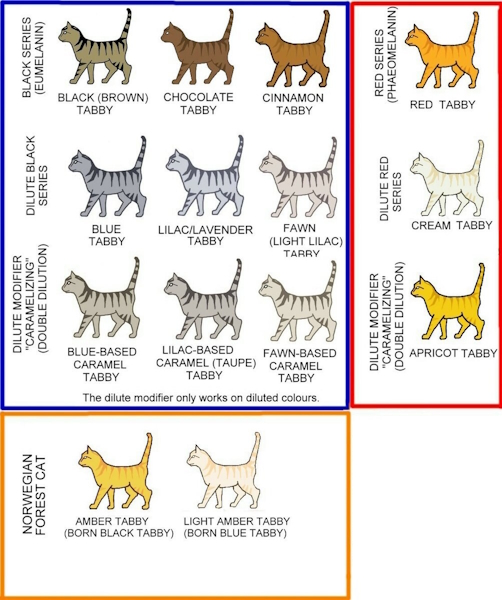
The primary culprit behind these spots and stripes is the Agouti gene, which controls how pigment is distributed down every single hair strand.
Because of this gene, each hair is banded with alternating light and dark sections of pigment—a phenomenon known as ticking. If a cat carries this dominant gene, it is guaranteed to show some variation of this wild pattern.
Interestingly, the Agouti gene is present even in solid black cats, but its expression is suppressed by other genetic traits. Even so, if you catch a solid black cat under direct sunlight, you can often spot a faint, ghostly pattern along its sides.
Pattern Variations
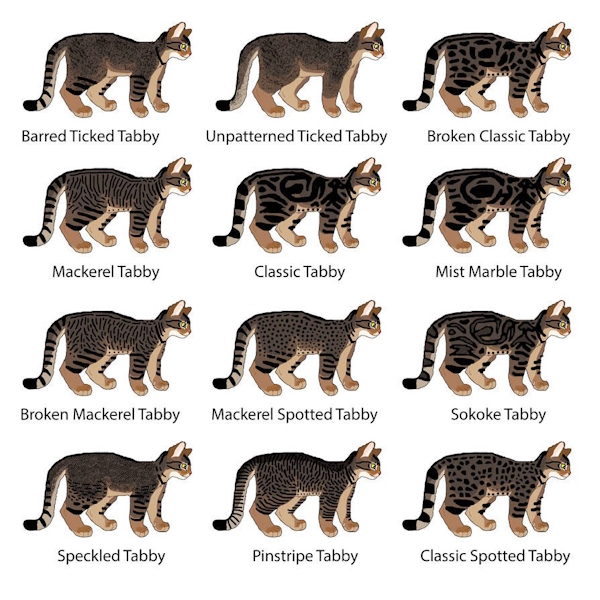
Nature didn’t stop at just one template, dreaming up several variations of how pigment spreads across the body. Depending on the mix of modifier genes, a cat’s final look can vary wildly.
In modern feline science and breeding registries, tabbies are broken down into these primary pattern types:
-
Mackerel (striped): The most common variation, featuring vertical, solid, or slightly broken stripes running down the sides, resembling a fish skeleton.
-
Classic (blotched/marbled): A complex arrangement of wide swirls and whorls, creating a pattern on the sides that looks like polished marble or an oyster shell.
-
Spotted: The stripes are broken into distinct, well-defined spots of varying shapes and sizes, giving the house cat the look of a miniature leopard or cheetah.
-
Ticked: There are no obvious stripes or spots on the body; instead, the coat looks evenly speckled because every single hair is banded, though faint facial markings might still linger.
Shared Physical Traits
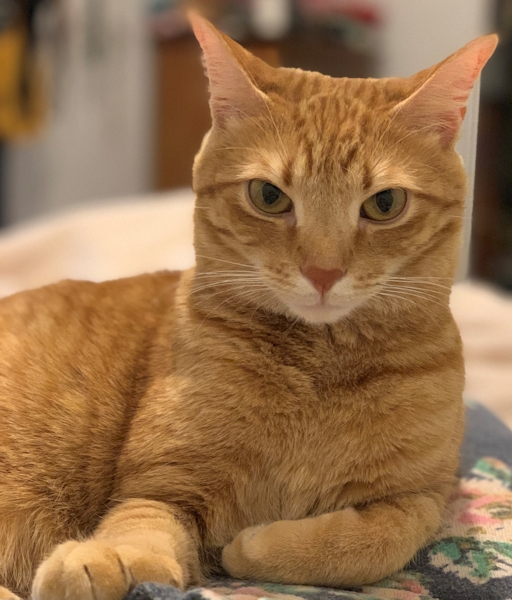
Whether a cat is mackerel, spotted, or classic, all carriers of this coat share a set of non-negotiable physical markers.
These markers make it easy to identify a cat’s wild-type lineage. To quickly spot a true carrier of the Agouti gene, look for these signature details:
-
A crisp, distinct “M” on the forehead, formed by dark lines meeting right above the brows.
-
A pale spot resembling a thumbprint on the back of the ears.
-
Dark “eyeliner” outlining the eyes and the nose leather, contrasting sharply against the lighter background fur.
-
Visible ring-like bands around the tail and legs, looking like stacked bracelets.
Does Coat Pattern Affect Personality?
Many owners wonder if there is a concrete link between a cat’s coat color and its overall temperament.
Strictly speaking, personality is shaped by breed, upbringing, socialization, and living conditions, rather than how pigment is distributed. However, years of observation show that cats carrying this natural pattern often exhibit high energy levels and robust immune systems. They are widely regarded as excellent mousers, display high curiosity, and adapt effortlessly to new environments, perfectly retaining the agility of their wild forest ancestors.
Tabbies Across Cat Breeds
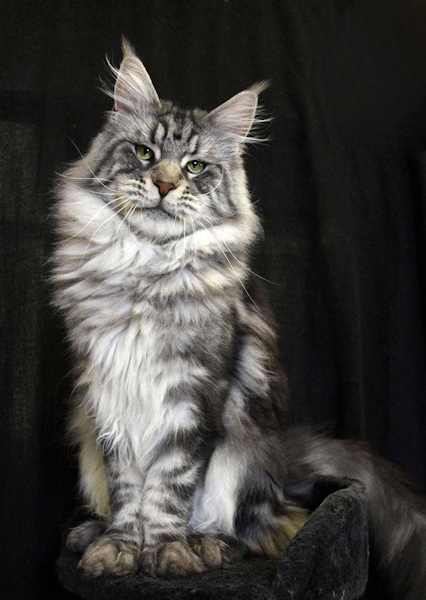
Since the term describes nothing but fur color and pattern, it helps to know which specific breeds officially recognize it.
In certain cases, the wild pattern is the only acceptable standard; in others, it’s just one of many possible variations. Check out this table showing how this coat pattern is distributed among popular purebred cats.
| Breed Name | Tabby Pattern Allowance | Dominant Pattern Type |
| Bengal | Only acceptable standard | Spotted (large rosettes) and marbled |
| Abyssinian | Only acceptable standard | Exclusively ticked with no body stripes |
| Maine Coon | Allowed by breed standard | Mackerel and classic marble |
| British Shorthair | Allowed by breed standard | Classic, spotted, mackerel |
| Siamese | Allowed (Lynx Point) | Stripes appear only on the face, legs, and tail |
Conclusion
Striped cats are the living embodiment of natural harmony and evolutionary perfection. Their striking looks serve as a direct bridge connecting cozy domestic comfort with the untamed wilderness.
When you bring home a pet with this coat, you aren’t just getting a beautiful animal with a pattern as unique as a human fingerprint—you are getting a direct carrier of the feline family’s oldest genetic history.
No matter the breed, the tabby will always remain the most natural and universally recognized symbol of a beloved household pet.

Welcome to Poznayu.com!
My name is Alex, and I founded this project together with a team of like-minded professionals. At Poznayu.com, we create in-depth reviews, explore fascinating facts, and share well-researched, reliable knowledge that helps you navigate complex topics with confidence.
Our mission is simple: to explain complicated ideas in clear, accessible language. We believe that high-quality information should be available to everyone. Every article we publish is designed to provide practical value, actionable insights, and trustworthy analysis you can rely on.
Join our growing community of curious readers. Your feedback matters — share your thoughts in the comments, ask questions, and suggest topics you’d like us to cover next.