
The announcement of Diablo V at BlizzCon 2026 has radically changed the conversation around the franchise, prompting players to question whether continuing to invest time in the fourth game still makes sense.
The original concept of a long-running project supported by regular large-scale expansions is now being substantially revised. Developers are not hiding the shift in direction, but they firmly reject rumors that the servers will soon be shut down or that content support will end.
Diablo IV game director Brent Gibson laid out the studio’s new priorities in an interview with PC Gamer.
The team no longer plans to release full-scale expansions comparable in scope to Lord of Hatred. Most production resources are being redirected toward dense seasonal content and development of the fifth mainline entry. At the same time, Gibson emphasized that the current game will continue to be supported for a very long time, calling talk of the project entering maintenance mode premature.
In practice, the game’s release model is being transformed.
Canceling future full-scale expansions does not mean the content pipeline is stopping, but it does change how the developers approach monetization and player retention. The focus is shifting toward seasonal mechanics, deeper reworks of existing systems, and targeted paid class releases in the form of standalone packs.
Roadmap Details and the Amazon Release
Lead encounters designer Owen Leach confirmed in a conversation with PureDiablo that the studio has a clear development plan through at least Season 18.
The team is moving away from a rigid 90-day cycle, adjusting release timing to match the scale of upcoming changes. Future updates are expected to deliver more than cosmetic rewards or temporary events, including major reworks to gear, the Paragon system, and Mythic item balance.
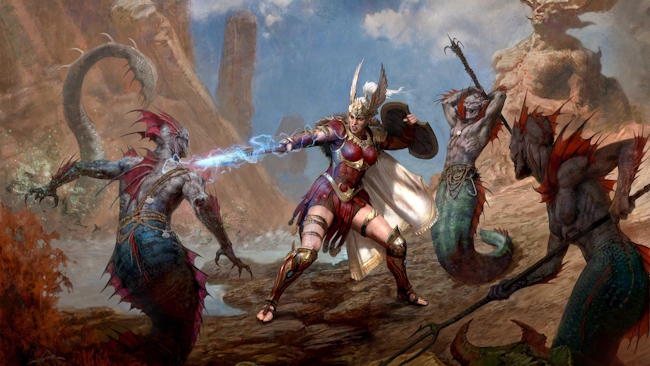
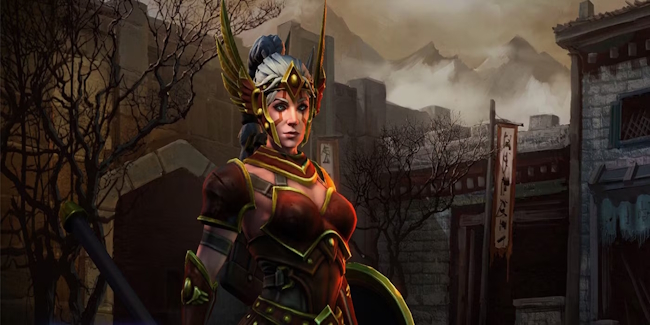
The first major paid release under the new strategy will be the Amazon, planned for the first half of 2027. The key difference is the distribution model: it will be a standalone Class Pack rather than part of a story expansion. The Amazon will also introduce a unique weapon type to the game — the javelin.
To fit the new hero naturally into the current meta, the developers have prepared four development branches:
- Champion — close-range combat with a sword and shield, focused on powerful defensive buffs for herself and her allies.
- Skirmisher — a highly mobile melee playstyle built around the spear.
- Ranger — classic ranged combat using a bow and positioning.
- Commander — tactical control of the battlefield through the summoning of Valkyries.
There is one crucial clarification here. These are not four new classes in D4.
Blizzard officially describes them as four archetypes within the new Amazon class — the Amazon. That means Diablo IV will add one new class — the Amazon, while Champion / Skirmisher / Ranger / Commander describe different gameplay directions, skill setups, and build approaches. Blizzard explicitly refers to them as “Four archetypes for the Amazon” and then lists the four options.
This release will serve as a kind of test of whether the audience is willing to buy content outside major story expansions. If the Class Pack performs well financially, the game will move fully toward alternating free seasons and paid heroes.
Story Transformation and the Age of Terror
The game’s narrative structure is also moving away from its traditional format.
The release of Lord of Hatred officially concluded the broader Age of Hatred story arc, meaning the two DLCs. Writers are now shifting the focus to the Age of Terror, with its events unfolding exclusively through seasonal quests rather than being packaged as separate large-scale campaigns.
The developers have a huge amount of room to maneuver because the confirmed chronological gap between the fourth and fifth games is roughly 100 years. That gives them room to resolve current local conflicts and introduce new antagonists without risking contradictions with the future game’s canon. The studio is deliberately avoiding a rigid ending for the storyline and plans to adjust its development based on player reactions.
Season 15, Season of Hell’s Legacy, became a clear example of this approach. It demonstrated the team’s ability to integrate genuinely epic content into the game’s regular free updates.
During the season, several major elements of the series returned:
- Classic versions of Baal, Mephisto, and Diablo himself.
- Iconic bosses from previous games, adapted to the new mechanics.
- Deckard Cain, integrated through the Waking Nightmares system.
- Nostalgic locations and unique items (Legacy Uniques).
Despite the large number of iconic bosses, the developers position the season as a nostalgic bridge rather than the definitive ending of the Sanctuary storyline within the fourth game.
Community Expectations: Between Hope and Skepticism
On community hubs such as Reddit and the official Blizzard forums, reactions to the announced changes are sharply divided:
- A noticeable portion of the audience believes Diablo IV will inevitably drift toward the cyclical support model used for the third game.
- In their view, canceling paid expansions will gradually lead to weaker seasons.
Skeptics expect fewer fundamental reworks in favor of simpler temporary mechanics. They argue that without the financial incentive provided by major DLC sales, the studio will have less motivation to invest resources in complex systemic redesigns. Players worry that the project could become a testing ground where old mechanics are endlessly shuffled around and presented as fresh content.
However, there is also an opposing view, actively promoted by popular content creators including Rhykker:
- With almost three years remaining before the release of the fifth game in spring 2029, freezing development of the current flagship would make little financial sense for Blizzard itself.
- Optimists point to developer promises to bring back cut content and deepen the progression system (War Plans) in upcoming updates.
Another major point of discussion is the hypothetical monetization model.
Players speculate that more heroes could follow the Amazon using a “Season — Class Pack — Season” structure. The studio has not announced any subsequent characters, but the community already sees this model as the most likely way the game could continue.
The Fate of In-Game Cosmetics and Progression
The most sensitive issue for the game’s active core audience is what will happen to purchased cosmetic items.
The Diablo IV in-game store offers expensive armor bundles, and the prospect of losing an entire digital wardrobe when moving to the next game has triggered widespread frustration on community forums.
Users are strongly calling for a carry-over system that would allow at least some purchased looks, mounts, and Battle Pass rewards to be transferred to Diablo V. So far, the developers have remained completely silent about cross-game progression and account inheritance.
That information vacuum is already fueling isolated protests.
Many long-time franchise players are refusing to buy new skins, preferring to wait for the fifth game instead. Blizzard’s response to this financial concern will become a major test of audience loyalty in the years ahead.
How Diablo V Could Shape Diablo IV’s Architecture
Development of the fifth game is clearly taking lessons from the fundamental mistakes of its predecessor.
More on D5 here:
Blizzard promises an unprecedented level of transparency, with plans to share production details starting in 2027. Joe Shely also specifically stated that the level-scaling system will be radically reconsidered, as it reduced the feeling of meaningful character power growth in the fourth game.
The announced mechanics for the new game sound like direct responses to the biggest complaints about the current project. Moving away from a static world toward procedural generation is intended to bring back the series’ classic replayability.
Key features announced for the fifth game include:
- Procedurally generated open-world areas (overworld) and dungeons.
- The return of full set items (sets) and the runeword system (runewords).
- A major itemization overhaul introducing items of different sizes that require careful inventory management.
- Greater gameplay value attached to every piece of gear that drops.
Paradoxically, the early sequel announcement genuinely pleased the part of the community that had grown tired of endless systemic overhauls in Diablo IV.
For players unhappy with the open-world structure and basic endgame, the decision not to release new expansions became a sign that the studio is stopping its attempts to repair a broken foundation and moving on to a new, more carefully designed architecture.
Ultimately, Diablo IV remains important, but it is no longer the company’s primary priority. The game will continue receiving story chapters, new classes, and system patches, serving as a testing ground for ideas ahead of the next numbered release. The scale of that support will depend directly on online activity and the commercial performance of the new class packs.
The Bottom Line: The Future of Diablo 4
Let’s sum it up.
Diablo IV is not shutting down, but major expansions are no longer planned.
The most important fact after BlizzCon 2026 is that new DLC for Diablo IV is not currently planned. At the same time, Blizzard has not announced that D4 support is ending. On the contrary, Gibson said the game will be supported for “a very long time.”
So the current model looks like this:
- Amazon — the next major paid Class Pack, planned for the first half of 2027;
- Diablo IV’s continued development will focus primarily on Seasons and system changes;
- Blizzard is not currently planning new full-scale DLC.
This is a major shift from the original concept of Diablo IV as a long-running live-service game supported by regular major expansions.
At the same time, the statement that “Diablo IV is entering maintenance mode” is not a statement from Blizzard. It is an interpretation held by part of the community.
The official wording is much more cautious: support continues, but the format of future content has changed.
Blizzard Already Has Seasons Planned Through at Least Season 18
This is one of the clearest elements of the future roadmap.
The lead designer told PureDiablo that the team has already planned content through Season 18. At the same time, the developers do not intend to return to the old 90-day cycle — the current seasonal model remains in place.
However, Blizzard has not released a complete public roadmap detailing every future season. Therefore, it is not possible to say with certainty what exactly will be included in Seasons 16, 17, and 18.
The developers’ comments do make the direction clear:
- individual seasons may rework specific systems more deeply;
- developers are considering major changes to Mythic items;
- Paragon changes are possible;
- individual parts of the game may receive their own systemic overhauls;
- previously cut content may return later.
The last point is especially interesting. The game designer said there were too many major characters and villains from older Diablo games to fit into Season 15, so some material was left “in the background” as potential content for future seasons — potentially as far out as a hypothetical Season 20. This is not a promise of Season 20, but an example of how the developers are currently distributing accumulated material.
Diablo IV’s Story Continues, but It Is Now the Age of Terror
After Lord of Hatred, Blizzard considers the Age of Hatred storyline complete, referring to the two DLCs — Vessel of Hatred + Lord of Hatred.
Blizzard explained that Diablo IV is now moving into the Age of Terror. The developers want to continue the story through seasons and other content formats rather than another full-scale expansion.
There is an important nuance here.
Diablo V takes place roughly 100 years after the events of Diablo IV. That leaves a huge amount of time between the two games. Blizzard explicitly says this gives the team plenty of room to continue the Diablo IV storyline without directly conflicting with the future fifth game.
At the same time, Blizzard acknowledged that the team does not yet have a fully defined picture of exactly where the story will go.
The developers want to watch player reactions from season to season and adjust the direction accordingly.
What Players and Community Sources Expect From Diablo IV After Diablo V Launches
The picture here is much less clear.
Reddit, the official Blizzard forums, YouTube, and community sites have effectively split into several camps.
- Main expectation: Diablo IV will gradually move toward the Diablo III model. This is the most common comparison in community discussions.
Some players believe the absence of new expansions means D4 will shift into a cycle of:
- season → small system update → next season → repeat.
On the official Blizzard forum, users explicitly describe this as a future “maintenance mode,” although that is the players’ wording rather than a Blizzard term. Others argue that with content planned through Season 18, it is still too early to describe the game as being in a full maintenance state.
Notably, even dissatisfied players acknowledge one point: D4 is not disappearing in 2026–2027. The disagreement is mainly about how substantial the changes will be.
- Some players expect “thin” seasons instead of major system updates.
On Reddit, one of the most repeated complaints is that seasons could previously be viewed as part of a larger cycle, with the next expansion waiting ahead.
Now there is no major DLC in the roadmap.
As a result, some players expect:
- fewer fundamental reworks;
- more temporary seasonal mechanics;
- smaller-scale changes to existing systems;
- more reuse of older mechanics;
- more nostalgic content.
This is a community expectation. It has not been confirmed by Blizzard.
At the same time, Blizzard’s own comments point in part in the opposite direction: developers intend to use future seasons for changes to Mythic items, Paragon, War Plans, itemization, and other systems.
So it is more accurate to say that:
After future expansions were canceled, players expect Seasons to become the main tool for delivering major changes to D4.
- Another part of the community believes D4 can still receive substantial amounts of content
There is an entirely different view as well.
After BlizzCon, Rhykker released an analysis emphasizing that Diablo IV is not shutting down and that a significant amount of content still lies ahead. The video description specifically highlights the Amazon, Season 15, and long-term D4 support.
The reason for this perspective is fairly obvious:
- nearly three years remain before Diablo V.
Blizzard is unlikely to simply leave the current game unchanged for that entire period. More importantly, the team has already announced plans through Season 18 and continued system development.
So the most cautious interpretation is: D4 will continue to receive active support until Diablo V arrives, but the nature of that support will differ from a model based on “a new DLC every year.”

My name is Alex Morrison — a gaming analyst and author from the Dallas–Fort Worth region. I specialize in analyzing game mechanics, technologies, and the dynamics of modern video games. I graduated from the University of Texas at Arlington with a degree in game design and interactive media, and I have spent more than ten years studying the development and evolution of game worlds.
In my work, I combine technical expertise with hands-on experience to explain complex processes in a clear, structured, and professional way.