The debate over whether branched-chain amino acids actually work has been raging in the fitness community for years. Critics often rely on outdated data or look at BCAA in isolation, forgetting that in modern formulas, they’re just one part of a multi-ingredient blend. When you add energizers, electrolytes, and buffering agents to aminos, you get an entirely different product designed not just for muscle growth, but for supporting performance during training.
EVLution Nutrition BCAA Energy Plus Electrolytes Breakdown
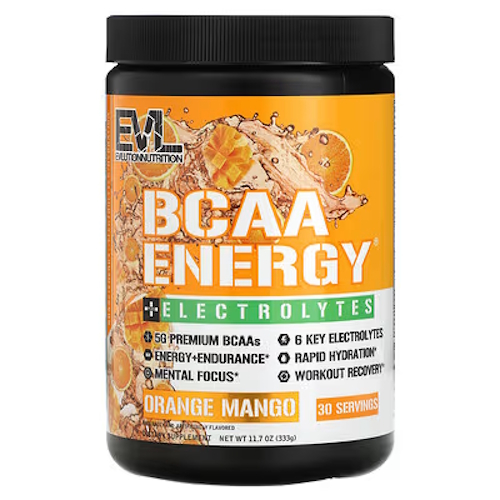
EVLution Nutrition markets their BCAA Energy Plus Electrolytes as more than just another amino acid product. The label states that this formula can be used before, during, or after training to support electrolyte levels, energy, endurance, performance, mental focus, and muscle building.
This claim deserves a detailed breakdown of every ingredient to determine whether there’s actual science behind it or if it’s just marketing hype. So that’s exactly what we’re doing in this chapter.
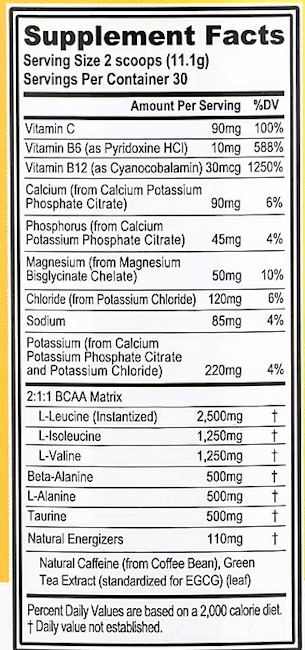
The Core Matrix: 5g of 2:1:1 BCAA. At the heart of this formula is 5 grams of branched-chain amino acids in the classic 2:1:1 ratio of leucine, isoleucine, and valine. Leucine plays the key role here, since it’s the one that can directly activate the mTOR signaling pathway, which kicks off muscle protein synthesis. Isoleucine is involved in glucose uptake and improving endurance, while valine helps repair damaged muscle fibers and serves as an extra energy source.
Context matters: during a workout, your body is in a catabolic state, and having free amino acids circulating in your bloodstream can prevent muscle tissue breakdown. This is especially relevant when you’re training fasted or running a low-calorie diet, where protein intake from food is limited. Five grams of BCAA per serving is enough to create a noticeable amino acid pool and support anabolic processes.
Energy Support: Caffeine, Green Tea, and B Vitamins. The formula packs 110 mg of natural energizers, including caffeine from coffee beans and green tea extract standardized for EGCG content. Caffeine is the most studied ergogenic aid in sports nutrition—it blocks adenosine receptors, lowering your perception of fatigue and sharpening focus. Adding EGCG doesn’t just boost the thermogenic effect; it also provides antioxidant protection, which matters during intense training.
The vitamin profile is solid: 90 mg vitamin C (100% DV), 10 mg vitamin B6 (588% DV), and 30 mcg methylcobalamin (1250% DV). B vitamins are critical for energy metabolism since they help convert carbs, fats, and proteins into usable fuel. Vitamin C, beyond immune support, is needed for carnitine synthesis, which shuttles fatty acids into mitochondria. With this level of vitamin fortification, you’re looking at legit pre-workout support, not just an amino supplement.
Electrolytes and Hydration: The Mineral Complex. The electrolyte profile deserves attention: calcium, phosphorus, magnesium, chloride, sodium, and potassium adding up to around 610 mg per serving. During intense training, you sweat out not just water but minerals too—and running low on these can cause cramping, performance drops, and just feeling off. Magnesium in bisglycinate chelate form means good bioavailability and helps with muscle relaxation, while potassium and sodium handle nerve signaling and fluid balance.
The “rapid hydration” claim isn’t just marketing fluff. Having a full electrolyte spectrum with fluid genuinely helps restore hydration better than plain water. This matters most during long cardio sessions or workouts in hot conditions where fluid loss hits hard.
Specialized Additives: Beta-Alanine, Taurine, and L-Alanine. The formula includes 500 mg beta-alanine, 500 mg taurine, and 500 mg L-alanine. Beta-alanine is one of the most researched supplements for endurance. It combines with histidine to form carnosine, which buffers acid in muscles during high-intensity work. The label warns about possible skin tingling—that’s harmless paresthesia, a sign you’re at an effective dose, and it fades with continued use.
Taurine pulls multiple duty: stabilizing cell membranes, improving heart muscle contraction, and regulating calcium levels in cells.
L-alanine gets involved in gluconeogenesis and can serve as an extra energy source during longer efforts.
Together, these three create legit support for muscular endurance and performance, turning this into a real pre-workout formula, not just an amino product.
Ingredient Synergy: Why This Works Better
The main mistake BCAA critics make is looking at aminos in isolation from context.
When we’re talking about a pre-workout formula, we’re dealing with synergy between multiple ingredients. Caffeine enhances mental focus and reduces fatigue perception, beta-alanine delays muscle acidification, electrolytes support contractile function, and BCAA provide an immediate substrate for protein synthesis while preventing catabolism.
Studies show that consuming BCAA before training can actually improve endurance performance, especially when carbohydrate availability is low.
In combination with carbs, the effect might be diminished, but this product is virtually carb-free, making it ideal for those watching their calorie intake or following a ketogenic diet.
Collectively, all these ingredients create conditions for a more intense, longer, and more productive workout, with faster recovery afterward.
Conclusion: Who Needs This Product and Why
EVL BCAA Energy isn’t “just another useless amino product”—it’s a thoughtfully designed multi-purpose formula for people who take their training seriously. It’s especially relevant for those who train fasted in the morning and need a quick energy source without calories, for athletes in a cutting phase where every gram of carbs counts, and for anyone looking to maximize every set.
The manufacturer honestly recommends it for healthy adults over 18. This is a reasonable precaution to keep in mind. If you’re sensitive to caffeine or have cardiovascular issues, start with a minimum dose or choose a stimulant-free version. For everyone else, BCAA Energy might just be that missing piece that turns a good workout into a great one.
How BCAA Works for Fasted Training
When you train fasted in the morning after a night’s sleep, your body is in what physiologists call the post-absorptive state—glycogen stores are depleted, insulin levels are at a minimum, and cortisol is naturally elevated. In these conditions, the body starts looking for alternative energy sources, and if you don’t provide protection, it will break down muscle proteins to convert amino acids into glucose through gluconeogenesis.
This is the classic catabolic scenario where muscle breaks down faster than it can repair.
Two servings of BCAA (around 10 grams) in the morning completely change this picture.
Leucine, isoleucine, and valine are the only amino acids metabolized directly in muscle tissue, bypassing the liver.
When they hit your bloodstream on an empty stomach, they create an amino acid pool that the body can use as a ready energy substrate without touching your own muscle fibers.
Research shows that BCAA in a fasted state suppress signals from the ubiquitin-proteasome system—the main mechanism for muscle breakdown—while simultaneously enhancing phosphorylation of translation initiation factors, preserving the capacity for protein synthesis even without other food intake.
So why do skeptics claim BCAA doesn’t work ?
Because they look at aminos in isolation and ignore the context of use.
Yes, if you’re getting enough protein throughout the day, BCAA before a workout might not provide additional benefit. But fasted training is a special case where there’s simply no alternative.
The skeptics’ main mistake is forgetting the key condition: BCAA must be pure, with no sugar or carbs added.
Any product with fillers will negate the effect, because even a small amount of carbs will shift metabolism.
This is why experienced athletes choose unsweetened BCAA and take them strictly before their first meal—they get muscle protection where skeptics see nothing but wasted money.
Dmitry Volkov – is the author of our bodybuilding section is a practicing sports medicine physician based in Dallas, Texas, with 21 years of hands‑on experience in sports pharmacology. At 42, he combines deep academic knowledge with real‑world expertise gained from coaching athletes of all levels — from amateurs to seasoned competitors. He earned his medical degree from a leading Texas institution and spent years working in sports medicine clinics and private practice.
His primary focus is hormonal regulation of muscle growth, the use of anabolic steroids and peptides, and post‑cycle recovery. He understands modern protocols inside out because he consults real people every day, helping them avoid side effects and achieve safe results. His approach is rooted in evidence‑based medicine, yet remains grounded in the realities of both amateur and professional sports.
In his articles, he aims to debunk myths and deliver clear, scientifically sound recommendations. Every piece of content is vetted not only by medical knowledge but also by years of clinical observation. He firmly believes that responsible pharmacology requires a solid grasp of biochemistry, respect for one’s body, and regular medical monitoring — and he works hard to convey these principles in a way that is both accessible and actionable for his readers.