Choosing a monitor today has become a real quest for the unprepared buyer.
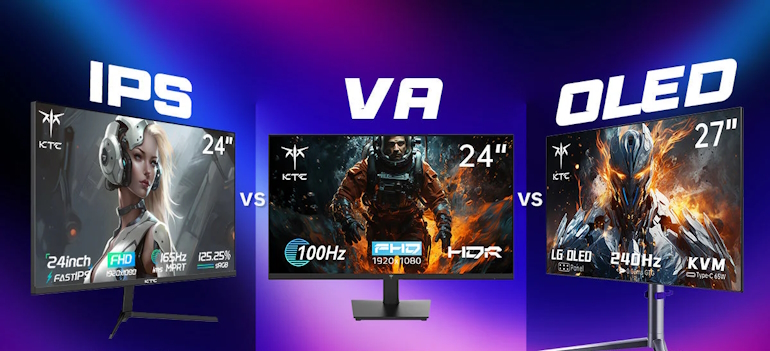
Dozens of acronyms—TN, VA, IPS, OLED, Mini-LED, Micro-LED—flash in the specs, promising incredible contrast, lightning-fast response, or vibrant colors. To navigate this variety and choose a screen that truly fits your needs, you need to understand not just the marketing names but the physical principles behind each technology.
Knowing how a panel is built, its history, and its engineering trade-offs will help you make an informed choice between a gaming beast, a professional color-grading studio, and a versatile work tool.
TN (Twisted Nematic): The Grandfather of Gaming Monitors
The abbreviation TN stands for Twisted Nematic, describing the type of liquid crystals used. In their off state, these crystals twist, allowing light to pass through; when voltage is applied, they untwist and block the light. This was one of the first LCD technologies and remained a standard for a long time due to its simplicity and low manufacturing cost. Historically, TN panels were intended for mass-market devices where perfect color reproduction wasn’t critical, but a low price and acceptable speed were. The subsequent development of TN+film technology added an extra layer to improve viewing angles, somewhat expanding its capabilities.
The operating principle of TN is based on controlling light polarization. With no voltage, the crystals rotate the plane of polarization by 90 degrees, allowing light to pass through the second polarizer. When voltage is applied, the crystals align vertically, blocking the light. This simple design results in the fastest response times—just 1-2 milliseconds—making TN panels favorites in the world of competitive gaming where every millisecond counts. However, this simplicity has a downside: the crystals act as light shutters but can’t perfectly block light at an angle.
The key disadvantages of TN panels are well-known: poor viewing angles where even a slight tilt causes color inversion (black becomes white, and vice versa), and mediocre color reproduction. The maximum viewing angles for TN panels are around 170 degrees horizontally and 160 degrees vertically, but colors shift even within these limits.
Modern TN panels for monitors are not what they were ten years ago; manufacturers have made them brighter and more contrasty, but the fundamental limitations remain. Today, TN is either for ultra-budget models or specialized esports screens with refresh rates of 240Hz and above, where response speed trumps everything else.
VA (Vertical Alignment): The King of Contrast
VA (Vertical Alignment) is a technology where the liquid crystals, in their off state, align perpendicular to the substrate, effectively blocking light from the backlight. It’s this vertical alignment that gives VA its main advantage: high native contrast ratio. While in IPS and TN, light always leaks a little even through closed crystals, VA can produce a much deeper black, which is especially noticeable in dark movie and game scenes.
Historically, VA panels emerged as a response to the need for better image quality than TN could offer, while maintaining a reasonable cost. Unlike the more expensive IPS, which required complex manufacturing, VA offered excellent contrast, good colors, and decent viewing angles for a moderate price. In televisions, VA became the standard, as black depth is critical for watching movies in a dark room. The technology is also widespread in monitors, particularly in models for versatile use where both a cinematic experience and gaming are desired.
However, VA has its Achilles’ heel: response time, especially when switching between dark shades. The crystals need time to rotate from a vertical to a horizontal position, which can cause “ghosting” or “smearing” in fast-moving scenes.
Modern VA panels with overdrive technology manage this fairly well, but they still lag behind TN and fast IPS in speed. Viewing angles on VA fall between TN and IPS: contrast drops when viewed from the side, but colors don’t invert as catastrophically as on TN. Ultimately, VA is the choice for those seeking a balance between price, rich image quality, and versatility.
IPS (In-Plane Switching): The Standard for Color Accuracy and Viewing Angles
IPS, which stands for In-Plane Switching, was developed by Hitachi in 1996 as an evolutionary solution to the problems of TN panels. The core engineering idea was to have the crystals rotate parallel to the screen plane, which dramatically improved viewing angles and color reproduction. While on a TN screen, colors would distort beyond recognition when viewed from the side, an IPS panel kept the image virtually unchanged up to 178 degrees. This was a true revolution for designers, photographers, and anyone for whom color accuracy is paramount.
Technically, the operating principle of IPS is more complex than TN or VA. Electrodes are placed on the same substrate, and the electric field causes the crystals to rotate in the horizontal plane. Light always passes through the crystals, but the direction of its polarization changes. This design requires more energy and a more powerful backlight, as light has a harder time penetrating the crystal layer. This leads to the traditional downsides of IPS: higher power consumption and the characteristic “IPS Glow”—a hazy, often purplish, glow of the black field when viewed from an angle, especially noticeable in a dark room.
Despite the emergence of newer technologies, IPS remains the gold standard for professional color work and is widely used in mid-range and high-end monitors. Over time, many IPS subtypes have appeared: S-IPS, H-IPS, E-IPS, AH-IPS, and others, each improving certain parameters like contrast, response time, or efficiency.
Modern Fast IPS panels have practically caught up with TN in speed while maintaining excellent viewing angles and color reproduction, making them ideal for premium gaming monitors.
OLED: Self-Emitting Pixels and Infinite Contrast
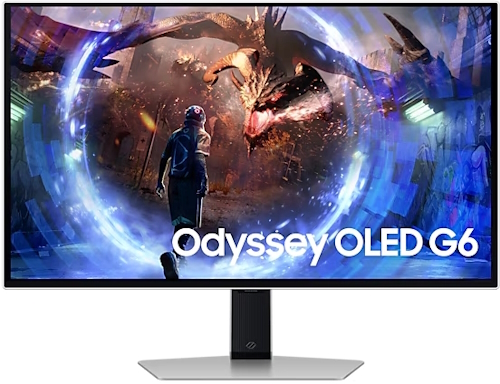
OLED (Organic Light Emitting Diode) is a technology fundamentally different from all LCD solutions. There are no liquid crystals and no separate backlight here: each pixel is an organic light-emitting diode that produces light on its own when current passes through it. This means that to display black, the pixel simply turns off, and there is no light emission at all, resulting in truly infinite contrast and perfect black.
The history of OLED dates back to the 1980s in the laboratories of Eastman Kodak, where scientists Ching W. Tang and Steven Van Slyke made a breakthrough by creating the first device based on organic materials. For this achievement, they were later included in the shortlist for the Nobel Prize in Chemistry. For a long time, the technology remained exclusive to expensive smartphones and TVs due to manufacturing complexity and durability issues with organic materials, particularly blue, which degrades faster than red and green.
The operating principle of OLED is based on the phenomenon of electroluminescence in organic films. Between two electrodes (anode and cathode) lies a multilayer organic structure. When voltage is applied, electrons and holes move towards each other, recombine in the emissive layer, and release energy in the form of photons. The absence of a backlight allows for incredibly thin, flexible, and even transparent screens, and also provides instant response times and wide viewing angles without distortion.
The downsides of OLED are potential pixel burn-in when static images are displayed for long periods, and a comparatively lower maximum brightness compared to the best LCD solutions. Although manufacturers are constantly improving protection and compensation technologies, users of monitors with many static interface elements should be cautious. Nevertheless, in 2026, OLED monitors are becoming more accessible and popular, offering image quality unattainable by any LCD technology.
At CES 2026, ASUS introduced new gaming OLED monitors with an improved RGB Stripe pixel structure, which eliminates text clarity issues, making them suitable not just for entertainment but also for work.
Mini-LED: The Evolution of Backlighting for LCD Panels
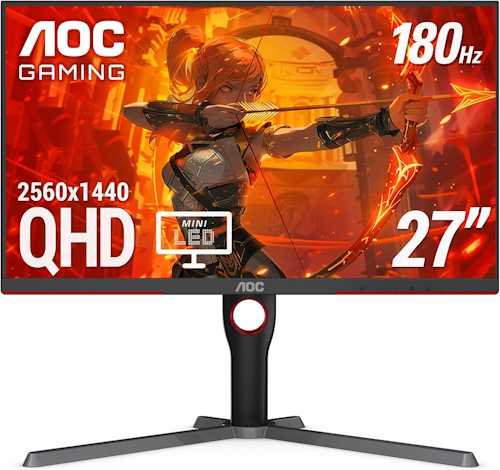
Mini-LED is not a standalone panel type, but an advanced backlight technology for LCD screens (usually VA or IPS). The name speaks for itself: these displays use LEDs that are 5 times smaller or more than traditional ones. Their miniature size allows for placing thousands (or in some implementations, tens of thousands) of LEDs behind the panel, enabling much more precise local dimming control.
The working principle of mini-LED involves dividing the screen into hundreds or thousands of local dimming zones. Each zone is controlled independently: in dark scenes, the LEDs in that zone can be completely turned off, and in bright scenes, they operate at full power. This allows for achieving contrast ratios approaching OLED (1,000,000:1 and higher), without the risk of burn-in and with a much higher peak brightness that can reach 1600 nits or more. The first commercial products with mini-LED, such as the iPad Pro 12.9″ (2021) and TCL TVs, demonstrated the technology’s huge potential.
The main advantages of mini-LED over OLED are the absence of burn-in, higher available brightness for HDR content, and better energy efficiency compared to traditional LCD panels. However, mini-LED does not deliver the perfect black of OLED: a halo effect (blooming) can be observed around bright objects on a black background because the dimming zone is still larger than a single pixel.
Nevertheless, mini-LED is currently seen as an optimal compromise between the “infinite” contrast of OLED and the practicality, brightness, and longevity of LCDs, especially in high-end monitors and TVs.
Micro-LED: The Ideal Display of the Future
Micro-LED is a technology that many experts call the “ideal display” and the main long-term competitor to OLED. Like OLED, Micro-LED is an emissive technology: each pixel consists of microscopic inorganic LEDs that emit light on their own and don’t require a backlight. However, unlike the organic materials in OLED, inorganic LEDs (typically made of gallium nitride) are not subject to degradation or burn-in, promising a virtually unlimited lifespan.
The operating principle of Micro-LED is based on forming an array of millions of tiny LEDs—red, green, and blue—each acting as an individual pixel or sub-pixel. They are mounted on a substrate, and control electronics light them up as needed. Theoretically, this provides all the advantages of OLED (absolute black, infinite contrast, instant response, wide viewing angles) but without the drawbacks: no burn-in, potentially much higher brightness (up to 10,000 nits in the future), and better efficiency.
Historically, the concept of Micro-LED has been around for a while, but the technology has faced colossal manufacturing hurdles.
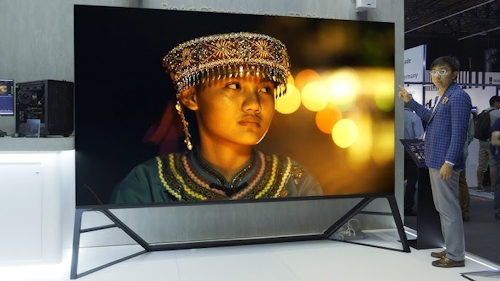
The main challenge is the need to precisely transfer and secure millions of microscopic diodes (smaller than 100 microns) onto a substrate. Even one dead pixel can be a problem, and the defect rate in such production is currently very high. Companies like Sony and Samsung have demonstrated impressive prototypes and commercial products, like the giant “The Wall” and “Crystal LED” displays, but their cost runs into hundreds of thousands of dollars, making the technology currently inaccessible to the mass consumer.
Micro-LED will likely be used in premium, very large-diagonal TVs in the foreseeable future, and its arrival in monitors and smartphones is still years away.
Other Technologies and Terms: QLED, QD-OLED, and More
In modern monitors and TVs, you’ll often encounter terms that are worth explaining separately so they aren’t confused with the main panel types.
QLED (Quantum Dot LED) is not a standalone display technology, but Samsung’s marketing name for LCD screens (usually VA) that incorporate a layer of quantum dots between the backlight and the liquid crystals. These nanoparticles, when hit by light, emit very pure colors, significantly expanding the color gamut. Essentially, QLED is an enhanced LED TV that inherits all the pros and cons of its base technology (backlight dependency, inability to achieve perfect black), but with better color reproduction and higher brightness.
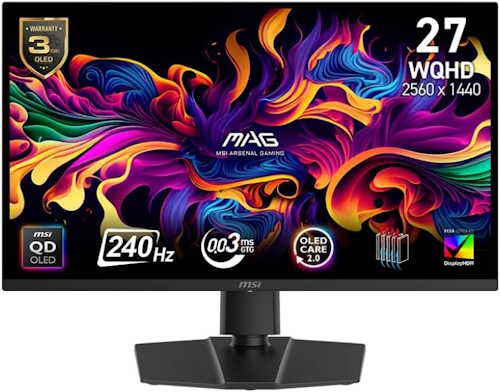
Another rapidly evolving hybrid technology is QD-OLED, championed by Samsung Display. It uses a blue OLED backplane, and red and green colors are generated by converting part of the blue light through a quantum dot layer. This combines the self‑emissive nature of OLED with the improved brightness and color volume of quantum dots, while also potentially mitigating blue subpixel burn‑in. Such panels are already appearing in premium TVs and monitors, offering the deep blacks of OLED with enhanced color performance.
LG’s NanoCell is another example of an enhanced LCD (typically IPS) that uses nanoparticles to absorb unwanted light wavelengths, filtering impure colors and expanding the achievable color spectrum. While it improves color purity, it doesn’t solve the fundamental contrast limitations of IPS. All these technologies are essentially variations on the themes of IPS, VA, or OLED, each striving to squeeze the maximum performance out of the basic panel construction through advanced materials and light management.
IPS vs OLED: What’s Better for Gaming
The debate between IPS and OLED for gaming isn’t settled by a single winner—it depends on your genre preferences and how you use the monitor.
Both technologies have reached impressive heights by 2026, but their approaches to creating an image are fundamentally different.
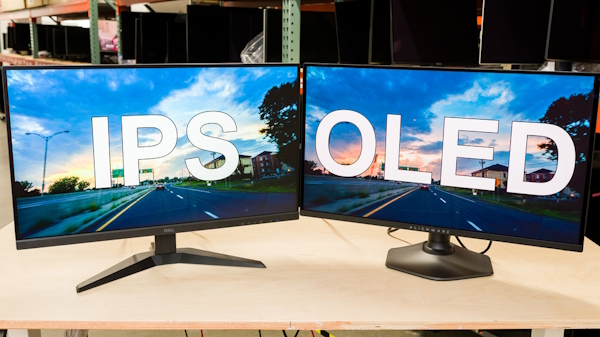
IPS remains a mature liquid crystal technology with a separate backlight, while OLED features self-emissive pixels that can turn on and off individually. This fundamental difference creates the main fork in the road for buyers.
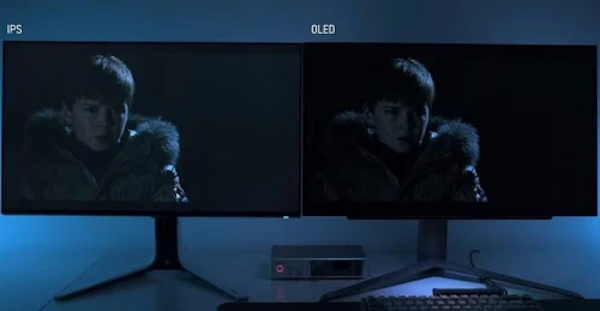
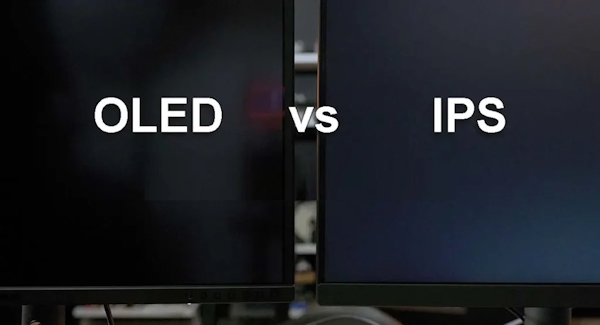
In terms of visual quality and immersion, OLED pulls ahead significantly. Thanks to the absence of a backlight and the ability of pixels to completely turn off, OLED delivers infinite contrast and perfect black levels. In dark horror scenes or gloomy dungeons, this creates an image quality unattainable for IPS.
Modern OLED panels also offer wider color gamuts and perfect viewing angles without any loss of brightness or color shift. HDR content on OLED looks exactly as creators intended, because per‑pixel lighting allows for incredible depth in scenes with explosions and neon. For games where atmosphere matters—single‑player story‑driven titles and pure aesthetic pleasure—OLED is unbeatable.
However, when it comes to competitive disciplines where maximum refresh rates and uncompromising motion clarity are critical, both technologies now stand toe‑to‑toe, and nuances come into play.
Modern Fast IPS panels have reached 360 Hz and beyond, and new technologies like G‑Sync Pulsar can achieve motion clarity comparable to 1000 Hz. Response times on IPS are traditionally higher (5‑12 ms real‑world), but this is offset by a familiar image without OLED‑specific artifacts.
OLED boasts instant response (under 0.03 ms), which is an advantage in fast‑paced shooters, but its sample‑and‑hold nature can affect motion perception differently. At CES 2026, OLED monitors with up to 500 Hz and Dual Mode (switching between 4K 240 Hz for RPGs and 1080p 480 Hz for shooters) were showcased, blurring the lines even further.
Practical considerations also play a role. OLED monitors are still more expensive and require some caution due to the risk of burn‑in from static interface elements, though modern compensation algorithms have minimized this issue.
IPS lacks this drawback, offers higher sustained full‑screen brightness, and is significantly more affordable at comparable specs. Additionally, until recently, OLED suffered from text clarity issues due to non‑standard subpixel layouts. In late 2025, LG introduced 27‑inch 4K OLED panels with RGB stripe structure, solving this problem for users who also work with text. Summary: For pure esports and mixed use on a budget, a quality Fast IPS remains the best choice. For maximum visual impact, single‑player games, and total immersion, OLED is the upgrade you won’t want to leave.
I’m Irina Petrova-Levin, a graduate of the Moscow Technical University of Communications and Informatics (MTUCI), where I earned my degree in Information Technology. My professional journey has been deeply rooted in JavaScript, PHP, and Python, driven by a profound fascination with how modern technology shapes our everyday lives. I strive to explain complex processes in a clear and accessible way without ever sacrificing accuracy or missing the core of the matter.
Now based in Dallas since 2019, my work reflects a unique synthesis of Eastern European engineering depth and the dynamic American tech mindset. This blend allows me to bridge two distinct technological traditions.
My goal is to deconstruct the real mechanisms behind the devices and systems we use daily. In my articles, I aim to deliver information that is not only practical and structured but also reveals the hidden logic of how our world actually works.