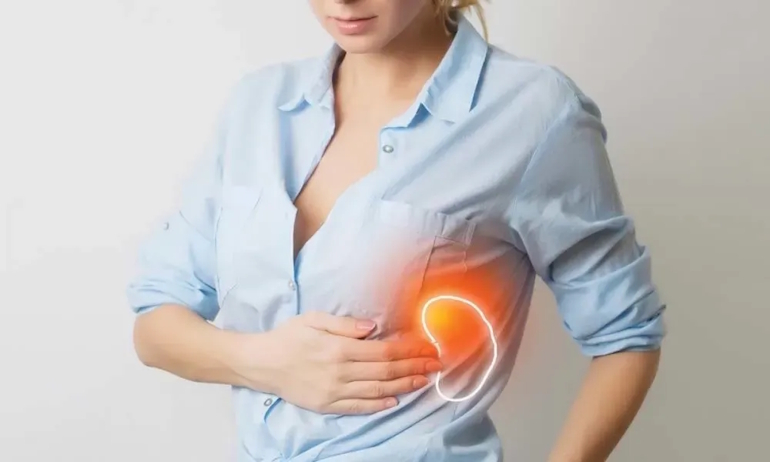
The spleen is one of those organs most people only think about when a doctor says, “Your spleen is enlarged,” or when news breaks about a spleen rupture after an удар. But this small, highly blood-rich organ works around the clock, even when we are not thinking about it.
Understanding what it does and how people live without it helps not only spot problems in time, but also appreciate how well designed the human body really is.
What Is the Spleen?
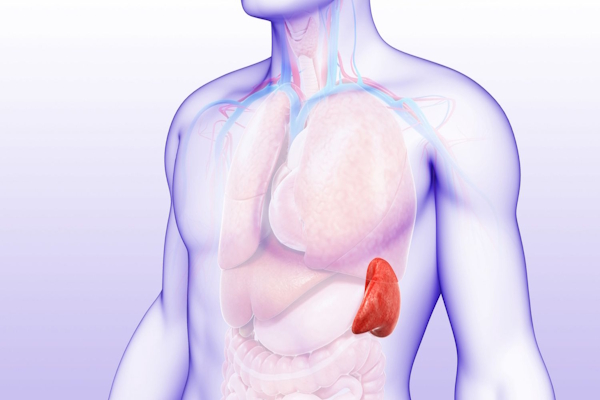
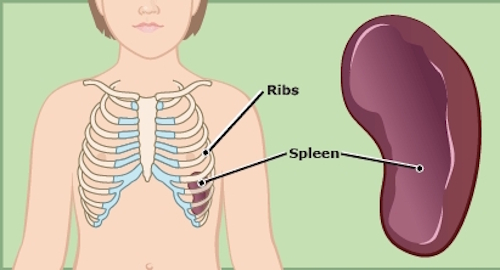
Put simply, the spleen is a lymphoid organ located in the left upper abdomen, and it looks a bit like a coffee bean, only dark red. It is about the size of a fist, and in adults it usually weighs around 150 to 200 grams. But size is not the main thing. What matters is what it does.
By nature, the spleen is both a blood filter, a cell reservoir, and a training ground for the immune system. It does not have internal cavities like the stomach, and it does not produce digestive juices. Its entire structure is threaded with blood vessels and specialized tissue called red pulp and white pulp, each with its own job.
From a biological point of view, the spleen is a peripheral organ of the immune system.
That means it works on the front line: this is where some types of lymphocytes mature, and where foreign agents are recognized and destroyed. It is sometimes called “the largest lymph node,” and that comparison is pretty accurate, even if the scale is obviously different.
The spleen primarily protects against encapsulated bacteria — pathogens that are harder for the immune system to detect and clear without it:
- This includes infections like pneumococcus (which can cause pneumonia, meningitis, and sepsis), meningococcus (meningitis and severe systemic infections), Haemophilus influenzae type b, as well as, to a lesser extent, salmonella and certain parasitic infections such as malaria.
- The spleen filters the blood, removes infected cells, and helps rapidly produce antibodies, so without it, the risk of severe, fast-progressing infections increases significantly.
Where Is the Spleen?
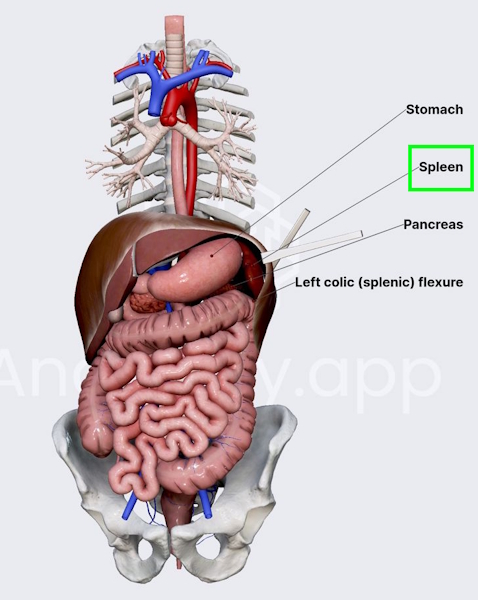
The spleen sits under the diaphragm in the upper left side of the abdomen, roughly at the level of the ninth, tenth, and eleventh ribs. If you imagine a line from the center of the left upper abdomen going inward, that is where it is. The rib cage covers it from the outside, so under normal conditions it is almost impossible to feel by hand.
Its location is not random. It is close to the stomach and pancreas, although it is not functionally connected to them. It is suspended by ligaments, surrounded by its own capsule, and has excellent blood supply: through the splenic artery, it receives up to 5 to 6 percent of all circulating blood every minute.
What Is the Spleen For?
- The first and best-known job is blood filtration. Every minute, about 200 to 250 milliliters of blood pass through the spleen, and during that time it is effectively inspecting everything. It traps and destroys old, damaged, or misshapen red blood cells, extracting iron from them and sending it back to the bone marrow to help build new blood cells.
- The second major function is blood storage. The spleen can hold about 30 to 50 milliliters of blood in reserve. In an emergency, such as blood loss or sudden physical strain, it releases that reserve back into circulation, helping the body mobilize quickly. It is like an internal emergency kit that opens without us noticing.
- The third function is immune defense. In the white pulp of the spleen, clusters of lymphocytes detect bacteria, viruses, and other foreign particles that enter the blood. This is where the first response to bloodstream infections begins. If you compare it to an army, the spleen is at once a patrol unit, a checkpoint, and a communications hub.
- The fourth role is antibody production. Plasma cells mature in the spleen and then begin producing immunoglobulins in large amounts. Without this mechanism, the body has a much harder time dealing with encapsulated bacteria such as pneumococci, meningococci, and Haemophilus influenzae. That is why people without a spleen are usually advised to get vaccinated against these infections.
And finally, during fetal development, the spleen works as a blood-forming organ. In the fetus, it produces red blood cells and lymphocytes, but after birth that role shifts to the bone marrow. Still, in critical situations such as severe blood disorders, the spleen can partially “remember” its blood-forming role and take it back on.
What Happens If You Live Without a Spleen?
Spleen removal, or splenectomy, is done for injuries, ruptures, certain forms of anemia, tumors, or when the organ starts destroying its own blood cells nonstop. People living without a spleen usually feel fine, but their bodies become more vulnerable to certain infections. Without the main filter, bacteria get into the bloodstream faster, and the immune response is not able to react as quickly as before.
Doctors call this postsplenectomy syndrome. The most serious concern is the risk of fulminant, or rapidly fatal, sepsis, which can develop within hours. That is why anyone who has had their spleen removed is vaccinated against pneumococcus, meningococcus, and Haemophilus influenzae, and in some cases doctors also recommend preventive antibiotics at the first sign of a possible bacterial infection.
Over time, other organs take over some of the lost functions. The liver handles part of blood filtration, and lymph nodes take on more of the immune control. But the blood reserve the spleen used to hold is gone for good — the body no longer has that internal storage depot. That is why people without a spleen may get tired faster during physical activity and may recover more slowly after illness, even if in everyday life it is not always obvious.

I’m Dr. Michael Carter, a 43-year-old American physician and medical researcher. I earned my MD from the University of Michigan Medical School and later completed an MPH at the Johns Hopkins Bloomberg School of Public Health, with a focus on public health and clinical research.
I began my medical career at University of Michigan Health, where I worked in clinical practice and contributed to research on chronic disease prevention and the effectiveness of medical interventions. I later continued in academic medicine, focusing on internal medicine, metabolic health, preventive care, and the analysis of clinical data.
My research interests include chronic disease, cardiovascular risk factors, metabolic disorders, disease prevention, and the evaluation of medical evidence. I’m particularly interested in the quality of clinical research, the evidence behind treatment approaches, and how medical findings are interpreted and applied in real-world practice.