The process of turning carbohydrates into body fat is a core physiological mechanism that explains weight gain and metabolic issues. Although your body can make fat from sugar, this biochemical pathway doesn’t start the moment you eat—it only switches on under specific energy conditions.
Understanding exactly when glucose and fructose get converted into triglycerides helps clarify why overeating carbs doesn’t always mean instant belly fat, yet under the right (or wrong) circumstances it reliably leads to obesity and fatty liver.
Introduction

When you eat more sugar and sweets than your body needs for immediate energy, it doesn’t waste the excess. It quietly converts it into fat and stores it on your belly, hips, and love handles.
Picture your body as a smart factory and the sugar from your food as its primary fuel. You bite into a candy bar or sip a sweet soda—the sugar hits your bloodstream and gives you quick energy to move, think, and function. But once you’ve had more than you need right now, the factory flips into “storage mode.” It turns the surplus sugar into fat droplets and packs them away in specialized cells.
That fat sits in reserve on your midsection and sides, ready to be burned later if food ever runs short. This is exactly why chronic overconsumption of sweets shows up on your waistline—extra inches appear because of straightforward biochemistry.
- First, dietary sugar breaks down in the blood into simple glucose molecules to fuel your daily activities.
- When energy supply exceeds demand, the liver switches to storage mode and turns excess glucose into tiny fat droplets.
- Those droplets travel straight to fat cells on your belly and sides, where they sit as long-term reserves.
The main pathway that converts carbs into fat is called de novo* lipogenesis—literally “new fat creation” from non-fat sources.
*- De novo in this context means the fat is synthesized brand-new from carbohydrates rather than simply stored from dietary fats.
It begins when complex carbs break down into simple sugars, mostly glucose, which enters the bloodstream and reaches cells. Inside the cell, glucose goes through glycolysis to become pyruvate, which enters the mitochondria and turns into acetyl-CoA—the key building block for fatty acids.
However, for acetyl-CoA to leave the mitochondria and be used for fat synthesis, it first converts into citrate, which is shuttled back to the cytoplasm. The enzyme ATP-citrate lyase then splits the citrate, releasing acetyl-CoA to enter the cascade that produces palmitate and other saturated fatty acids.
This process needs not only carbon raw material but also plenty of NADPH, supplied mainly by the pentose phosphate pathway, which also ramps up when glucose is abundant.
The Role of Insulin and the Necessity of Glucose
Insulin is the central regulator of this anabolic process. Its secretion rises in direct proportion to blood glucose levels.
Insulin triggers a signaling cascade that phosphorylates key proteins and boosts expression of lipogenic enzymes such as pyruvate kinase and acetyl-CoA carboxylase. Yet modern research shows insulin alone is not enough for full fat synthesis—you also need glucose present.
Studies on adipocyte cultures prove glucose is not merely a substrate but an essential co-factor for insulin’s anabolic effects. Without glucose, even high insulin levels cannot stimulate fatty-acid or glycerol-3-phosphate synthesis, both required to form triglycerides.
Metabolic tracing confirms glucose supplies the carbon skeleton, generates NADPH, and suppresses fatty-acid oxidation, flipping the cell from burning to storing lipids.
If your fasting insulin sits at the low end of normal, it usually signals excellent insulin sensitivity and no early insulin resistance.
- At normal glucose levels this is often just normal physiology, not a problem.
- Always interpret it together with glucose, HbA1c, and your overall clinical picture—low-normal insulin by itself is not a diagnosis.
Conversely, if fasting insulin is at the high end of normal or elevated despite normal glucose, it can point to early insulin resistance:
- The pancreas pumps out extra insulin to keep blood sugar stable.
- Evaluate it alongside glucose, HOMA-IR, triglycerides, and full metabolic profile—one marker never tells the whole story.
Differences in Glucose and Fructose Metabolism
It’s critical to distinguish how the two main dietary sugars—glucose and fructose—affect lipogenesis.
- Glucose is metabolized in nearly every tissue, and its conversion to fat is tightly controlled by insulin and cellular energy status.
- Fructose is metabolized almost exclusively in the liver, where fructokinase phosphorylates it and feeds it into glycolysis, bypassing the main regulatory step—phosphofructokinase.
This bypass is crucial because fructose metabolism ignores energy feedback signals like ATP and citrate, allowing a near-unlimited flow of carbon into the hepatic lipogenesis pool. Excess fructose and sucrose, especially in liquid form, are now recognized as primary drivers of non-alcoholic fatty liver disease.
Moreover, research shows excess glucose tends to build subcutaneous fat, while fructose preferentially drives visceral fat and hepatic steatosis.
Threshold Conditions for Lipogenesis Activation
Older textbooks claimed de novo lipogenesis in humans is inefficient and contributes little to total fat balance. Recent studies challenge that view.
On a typical mixed diet (>30 % calories from fat) and in energy balance, hepatic lipogenesis stays suppressed and accounts for less than 10 % of fatty acids secreted by the liver.
The picture changes dramatically under two conditions: lowering dietary fat while raising carbs, and—more importantly—consuming more total calories than you burn.
Stable-isotope studies show that when carb intake exceeds total daily energy expenditure, both liver and adipose tissue actively convert surplus carbs into fat. Roughly 475 g of glucose are needed to produce about 150 g of fat, reflecting the unavoidable thermodynamic losses in the pathway.
Interaction with Fatty Acid Oxidation
Lipogenesis and fat oxidation are tightly linked and work in reciprocal fashion, controlled by carb availability.
When plenty of glucose enters the blood, the insulin-to-glucagon ratio rises, increasing fructose-2,6-bisphosphate—a powerful allosteric activator of phosphofructokinase and inhibitor of fructose-1,6-bisphosphatase. This switches the liver from gluconeogenesis and fat burning to glycolysis and fatty-acid synthesis.
A key part of that switch is glucose-dependent suppression of fatty-acid oxidation. Studies show glucose is required to inhibit β-oxidation in adipocytes, directing both newly made and dietary fatty acids toward esterification and storage.
Without glucose, even with intact insulin signaling, cells continue to burn fat rather than store it.
Clinical Significance and Tissue Specificity
The physiological role of de novo lipogenesis goes far beyond pathological fat accumulation in obesity.
In adipose tissue it serves as an important buffer, capturing excess carbs and preventing their toxic effects on other organs. Interestingly, obese individuals show paradoxically lower lipogenic gene expression in subcutaneous fat but higher activity in the liver. This redistribution promotes insulin resistance and hepatic steatosis.
Clinically, de novo lipogenesis contributes significantly to the pool of fatty acids stored in adipose tissue—on average about 20 % of total triglycerides, with wide individual variation.
Although direct carb-to-fat conversion is less efficient than storing dietary fat, it becomes a meaningful factor during chronic overeating and high intake of simple sugars, especially fructose. This supports today’s view of de novo lipogenesis as a full-fledged biochemical process that cannot be ignored when designing prevention and treatment strategies for obesity and metabolic syndrome.
The Impact of Anabolic Steroids on Lipogenesis
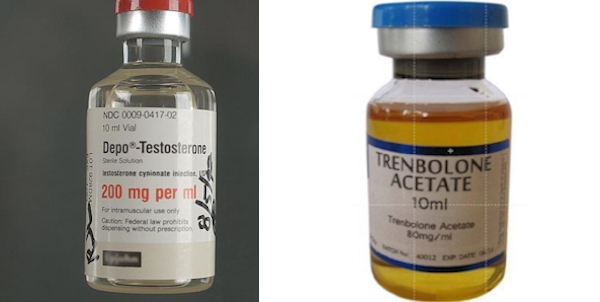
Let’s look at what many consider the best AAS synergy for lipogenesis and body recomposition.
Testosterone + trenbolone creates unique conditions for simultaneous muscle gain and fat loss.
- Testosterone provides a stable anabolic background and supports libido, which can drop on trenbolone alone due to its progestin activity.
- Trenbolone adds a powerful “cutting” and muscle-hardening effect, delivering a more aesthetic, shredded look. This stack is especially prized during contest prep when athletes must preserve maximum muscle on a strict diet.
Keep in mind these mechanisms only operate within a context of serious health risks.
Years of our practical experience with athletes show that anabolic-androgenic steroids negatively affect blood lipids: they sharply lower HDL (“good”) cholesterol and raise LDL. This creates long-term cardiovascular risk, including atherosclerosis and hypertension.
Trenbolone can also cause irritability, aggression, the notorious “tren cough,” and suppression of natural testosterone production, requiring proper post-cycle therapy.
Conclusions for Everyday People
In short: your body is a thrifty manager—it never throws anything away.
- When you eat sweets, baked goods, or simply overeat, it first takes whatever energy it needs right now, then sends the rest to processing.
- Through the liver, excess sugar turns into fat and gets stored on your belly, sides, and elsewhere. The more often you supply extra fuel, the busier this storage factory becomes.
The takeaway is simple: you don’t need to eliminate carbs completely—just don’t exceed your personal energy needs. If you move little and eat a lot of sweets, your body will honestly turn the surplus into fat. Fructose from sodas and juices heads straight to the liver and hits your waistline harder than regular sugar.
So the best practical advice is this: watch your total intake of sweets and refined carbs more than dietary fat. They are the ones that quietly become the extra weight that’s so hard to lose later.

Welcome to Poznayu.com!
My name is Alex, and I founded this project together with a team of like-minded professionals. At Poznayu.com, we create in-depth reviews, explore fascinating facts, and share well-researched, reliable knowledge that helps you navigate complex topics with confidence.
Our mission is simple: to explain complicated ideas in clear, accessible language. We believe that high-quality information should be available to everyone. Every article we publish is designed to provide practical value, actionable insights, and trustworthy analysis you can rely on.
Join our growing community of curious readers. Your feedback matters — share your thoughts in the comments, ask questions, and suggest topics you’d like us to cover next.