An air fryer is a compact countertop appliance that crisps food by circulating hot air rapidly around it, delivering a fried-like texture with far less oil. It’s a time-saving, space-saving alternative to traditional frying and can produce a consistent, crunchy finish that many home cooks like.
History and origin

The air fryer grew out of attempts in the late 20th century to bring convection cooking and the effects of deep frying into a smaller, safer home format.
Engineers and appliance makers experimented with combining a concentrated heating element and a high-speed fan so hot air could emulate the surface browning of oil frying while using minimal fat. Early models targeted urban households and small kitchens where people wanted the taste and texture of fried foods without the hassle or mess of large fryers.
Commercial adoption accelerated as manufacturers refined chamber shapes, fan power and heat distribution to reduce hot spots and improve crisping. Transparent bowls and simple controls made the device approachable for consumers who wanted a fast, visible cooking process; that accessibility helped the air fryer move from a niche gadget to mainstream kitchen gear. Over time, digital controls and preset programs further broadened appeal, turning a once-experimental appliance into a common solution for quick, lower-oil cooking.
Regional naming and marketing varied—some companies pitched the device as a compact convection oven, others as a “healthier fryer”—but the core idea stayed the same: use rapid convection to create crust and texture with less oil. That positioning made the appliance especially attractive to people balancing taste, convenience and a desire to reduce added fats in everyday meals.
Design and how it works
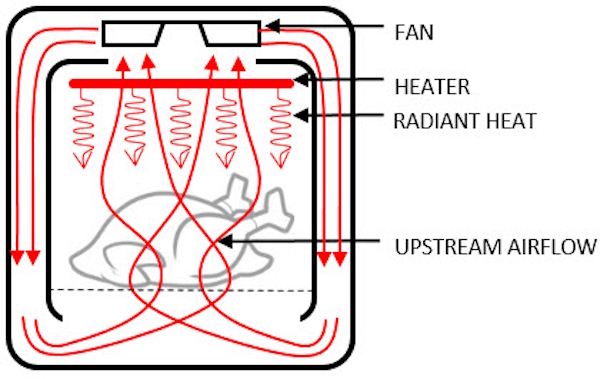
An air fryer consists of a sealed cooking chamber, a heating element and a powerful fan that forces air across the element and around the food.
That fast, directed airflow accelerates heat transfer to the food’s surface, producing Maillard browning and a crisp exterior without submerging the item in oil. Many models also pair radiant heat from the element with convection, so you get both surface searing and deep, even heating.
Food is typically placed on a raised rack or tray so the air can circulate underneath as well as above, preventing soggy bottoms and encouraging even crust development. A removable bowl or drawer collects drips and crumbs, and transparent walls on some units let you monitor progress without interrupting the cycle. Accessories broaden functionality, but the basic mechanical principle—speedy, turbulent air exchange—remains the deciding factor in results.
- The faster and more uniform the circulation, the quicker a crispy shell forms and the less oil is required to achieve a fried-like texture.
That’s why layout, spacing and avoiding overcrowding are important: blocking the airflow reduces efficiency and leads to uneven cooking.
Pros and Cons of Air Fryers

The advantages are obvious:
- Speed and convenience rank high: air fryers heat up fast and the strong airflow reduces overall cook time compared with a conventional oven for many small, portioned dishes. For weeknight cooking or quick lunches, that translates into less waiting and a predictable, repeatable outcome. The compact chamber also means less energy wasted heating a large oven for a small meal.
- The appliance significantly lowers the amount of added oil needed to get a crunchy exterior, which can reduce calories and grease while retaining a desirable texture. For people trying to cut back on frying without sacrificing mouthfeel, the air fryer offers a practical compromise. The resulting dishes often taste “cleaner” and feel less oily than deep-fried counterparts.
- Compact footprint and multi-functionality matter in small kitchens: an air fryer can take on toasting, reheating, roasting and light baking jobs without occupying the same space or energy as a full oven. That versatility makes it attractive to apartment dwellers, students and anyone with limited counter space. Removable, washable parts and simple maintenance further reduce friction in everyday use.
- Finally, air fryers deliver consistent exterior browning for many foods, which helps with texture contrast and presentation. When used correctly—right spacing, modest oil spray and attention to timing—results are reliable, making the appliance a dependable tool for busy cooks seeking crispness without deep frying.
But there are downsides too — that’s unavoidable:
- Capacity is a practical limitation: the typical air fryer chamber is small, so cooking for a crowd or handling large cuts of meat requires multiple batches or a different appliance. That batching negates some speed advantages and can be awkward when you need to coordinate several components of a meal. For families or gatherings, the oven often remains the more efficient choice.
- Thicker or denser items can cook unevenly: because the device emphasizes surface heat and airflow, the exterior may brown before the center reaches the desired temperature. That mismatch demands smaller, uniform pieces or more attentive flipping and checking, which raises the skill and time required compared with a single oven cycle. Novice users may find this aspect frustrating until they learn how to size and space food properly.
- Certain recipes that rely on moist, slow heat tend to fare worse: custards, layered casseroles and large roasts that benefit from gradual, even heat distribution can dry out or finish unevenly in the high-air environment. The appliance tends to “dry out” the surface more aggressively, which is great for crisping but less ideal when sustained internal moisture is the goal.
- Cleanup can be an issue with messy or highly sauced foods: drips and sticky marinades can accumulate on the bottom of the bowl and char, affecting flavor and requiring disassembly and scrubbing. While many parts are dishwasher-safe, persistent residue from sugary glazes or heavy batters may need soaking and more intensive cleaning to avoid smoke and carryover flavors.
What you cannot (or should not) cook in an air fryer and why

Battered foods that depend on wet batters—think beer batter, tempura or thick dredges—perform poorly because there isn’t enough hot oil to instantly set the batter. In an air fryer, the wet coating tends to run, pool and become doughy or gluey rather than forming a crisp shell, leaving the finished product greasy or undertextured. The absence of full immersion frying changes the chemistry of batter setting and leads to disappointing results.
Large, liquid-heavy items such as soups, stews and sauces are unsuitable because the appliance is engineered for dry hot-air circulation, not for holding and simmering liquids. Attempting to cook high-liquid dishes produces steam and splatter, which soils the appliance, undermines crisping and can even trigger smoke or safety cutouts. For those preparations, stovetop or oven braising remains the right tool.
Delicate leafy greens and small, lightweight items can be blown around by the strong airflow or char quickly because of their thin structure. They either get airborne and unevenly cooked or burn before developing the right texture; for those ingredients, gentler methods like sautéing or quick roasting in an oven may be preferable. Similarly, classic baked goods that require long, humid baking and gentle rise often come out too dry or uneven when forced into a rapid-air environment.
Can you cook in an air fryer without oil?

Yes — for many foods an air fryer can cook with little or no added oil. Rapid hot-air circulation promotes surface browning (the Maillard reaction) on vegetables, lean proteins and many frozen items, so you get a crispy exterior without submerging food in fat.
That said, totally oil-free cooking changes texture and flavor: very lean pieces can finish dry or stick to surfaces, and wet batters or heavy marinades won’t set properly in a dry-air environment.
A light coating or quick spritz of oil often solves those issues while keeping calories far below deep frying; it helps heat transfer, improves browning and reduces sticking. For best results, choose items with some intrinsic fat, pat proteins dry before cooking, avoid overcrowding the basket and expect slight differences from traditional frying — some recipes will need small adjustments to time or preparation to work well oil-free.
Air fryer vs oven

A full-sized oven wins on capacity and evenness for large roasts, multi-dish meals and traditional baking: its larger thermal mass and gentler circulation produce steadier internal temperatures over extended periods. For holiday meals, big casseroles and bakery items that need controlled humidity and slow, even heat, the oven remains the superior choice. The oven’s space lets you cook multiple trays at once without repeated batches.
The air fryer, by contrast, excels at quick, portioned cooking with a focus on crisp exterior texture and reduced oil usage. It’s ideal for single-tray tasks—roasting vegetables, reheating leftovers to restore crunch, or crisping small cuts of meat—where speed, convenience and lower energy consumption matter. For everyday weeknight routines, the air fryer can be faster and easier.
Ultimately the choice is pragmatic: pick an oven for volume and delicate, even baking tasks; pick an air fryer for fast, crispy, lower-oil results and small-batch convenience. Many kitchens benefit from both—use the oven when scale and control matter, and reach for the air fryer when speed and texture are the priority.

Welcome to Poznayu.com!
My name is Alex, and I founded this project together with a team of like-minded professionals. At Poznayu.com, we create in-depth reviews, explore fascinating facts, and share well-researched, reliable knowledge that helps you navigate complex topics with confidence.
Our mission is simple: to explain complicated ideas in clear, accessible language. We believe that high-quality information should be available to everyone. Every article we publish is designed to provide practical value, actionable insights, and trustworthy analysis you can rely on.
Join our growing community of curious readers. Your feedback matters — share your thoughts in the comments, ask questions, and suggest topics you’d like us to cover next.