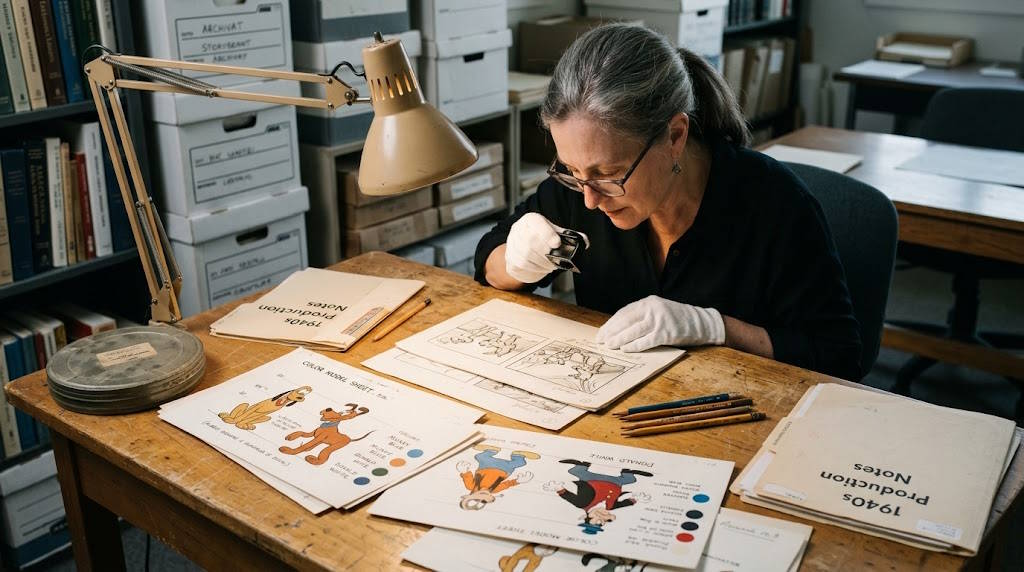
The classic American cartoons of animation’s Golden Age may look simple and seem aimed at children, but their creators often drew on complex social and psychological themes.
Behind the endless chases, falling anvils, and cartoon violence, animators tucked away subtle satire, philosophical ideas, and strict rules governing how characters interact. These underlying themes can completely change how viewers interpret the action on screen.
A closer look at production archives, creator interviews, and writers’ bibles reveals that iconic cats, mice, and birds do more than act out the instincts of predators and prey. Their stories revolve around deeply codependent relationships and complex metaphorical conflicts.
Hidden Meanings and the Real Stories Behind Classic Cartoons
Beneath the bright surface of children’s slapstick and seemingly simple jokes, classic animation conceals complex social and psychological themes.
The creators of legendary animated series wove sharp satire, philosophical subtext, and unexpected character dynamics into their stories, turning ordinary cartoon chases into deeper explorations of human nature.
Wile E. Coyote and the Road Runner
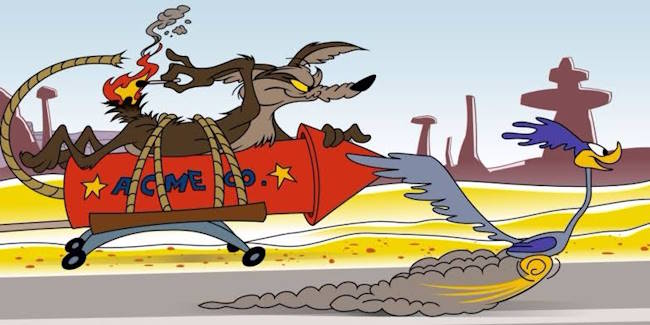
At first glance, the premise seems simple: a predator wants to catch its prey. Director Chuck Jones, however, built the series around a very different motivation.
According to the official Warner Bros. production rules, which Jones strictly enforced, the coyote isn’t actually driven by physical hunger. His endless attempts to catch the elusive bird stem from wounded pride, obsessive fixation, and an inability to admit defeat. In this dynamic, the Road Runner isn’t so much a living target as an unattainable goal. Every so often, the bird lets out a beep, bringing its pursuer back to reality.
The coyote’s true—and only—enemy is not the bird but the merciless ACME Corporation and the laws of physics. This is a subtle satire of rampant consumerism and society’s blind faith in technology as a solution to every problem. The predator repeatedly spends enormous resources ordering elaborate contraptions, giant slingshots, and rockets, even though he could simply buy food at the supermarket. The absurdity of his behavior is unmistakable. He has willingly become a prisoner of his own pride and dependence on corporate products that fail at the worst possible moment.
The relationship between these two characters follows a strict karmic logic and a peculiar code of honor in which physical violence is simply the consequence of the pursuer’s own incompetence.
The bird never deliberately hurts the coyote; it simply follows its route, while the antagonist falls victim to his own overengineered schemes. This hidden dynamic turns a children’s cartoon into a philosophical parable about Sisyphean labor, with the protagonist doomed to repeat the same mistakes because he refuses to change his approach.
Tom and Jerry
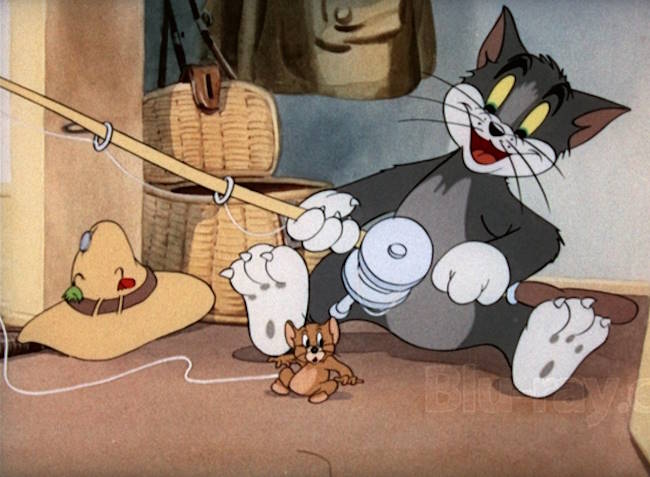
The classic rivalry between a house cat and a barn mouse, created by William Hanna and Joseph Barbera, has long been regarded as the epitome of pointless cartoon violence. Yet the relationship between these characters goes well beyond a simple blood feud.
A closer look at their stories reveals a deeply codependent relationship in which Tom and Jerry effectively act as partners forced to play the roles of predator and pest. Tom regularly stages elaborate hunts to make it look as though he’s protecting the house, hoping to keep his strict owners from kicking him out and replacing him with a genuinely aggressive mouser. This unspoken arrangement allows both characters to enjoy comfortable lives under the same roof, with room and board taken care of.
Evidence of this hidden friendship appears repeatedly when a genuine outside threat emerges or one character seems close to death. If Tom believes Jerry has been seriously injured, he panics and does everything he can to save the mouse, grabbing a first-aid kit and breaking down in tears. Jerry, meanwhile, often sabotages other cats’ attempts to take Tom’s place in the house and helps his supposed enemy escape harsh punishment from their owner. Their destructive chases aren’t really a fight for survival. They’re more like a rehearsed sport and a brutal but mutually understood ritual for keeping boredom at bay.
Beyond staging hunts to fool their owners, the duo illustrates the psychology of maintaining a balance of power within a closed social environment. Whenever one character wins outright and drives the other out of the house, the victor immediately loses his purpose and sinks into a deep depression.
Both characters need the conflict to stay emotionally engaged. Tom gives Jerry a sense of importance and a source of adrenaline, while Jerry saves Tom from the suffocating routine of domestic life. Their rivalry ultimately becomes their strongest form of attachment.
Sylvester and Tweety
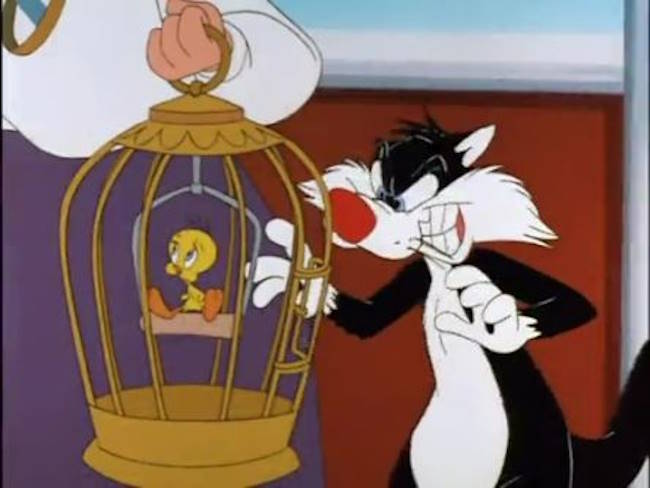
Animator Friz Freleng built this pair’s dynamic around a sharp deconstruction of the idea of innocence, repeatedly turning audience expectations upside down.
In popular culture, small characters are often portrayed as innocent victims. Tweety, however, embodies calculated sadism. Behind the adorable yellow canary’s charming lisp is a cold-blooded manipulator who knows he can get away with almost anything under his owner’s protection. Tweety doesn’t merely evade Sylvester’s claws. He deliberately provokes the cat, lures him into deadly traps, and takes obvious pleasure in his physical suffering.
Within this framework, Sylvester becomes a tragic figure who deserves some sympathy. Unlike other animated villains, he isn’t motivated by cunning or malice so much as basic natural instincts he cannot physically suppress. He also faces glaring injustice: society, represented by Granny and the guard bulldog, immediately judges him by his appearance as a predator. Sylvester gets brutally punished for intentions he often hasn’t even had the chance to act on, while the real aggressor remains above suspicion.
This conflict functions as sharp social satire of a society easily fooled by attractive appearances and willing to overlook the toxic behavior of those who seem defenseless. Tweety skillfully manipulates the justice system of his little world, turning an unsuspecting bulldog into a personal weapon against Sylvester.
Viewers may initially laugh at the black cat’s misfortunes, but a closer look reveals a story of psychological abuse in which the real monster is the adorable canary sitting safely in a gilded cage.
The Pink Panther
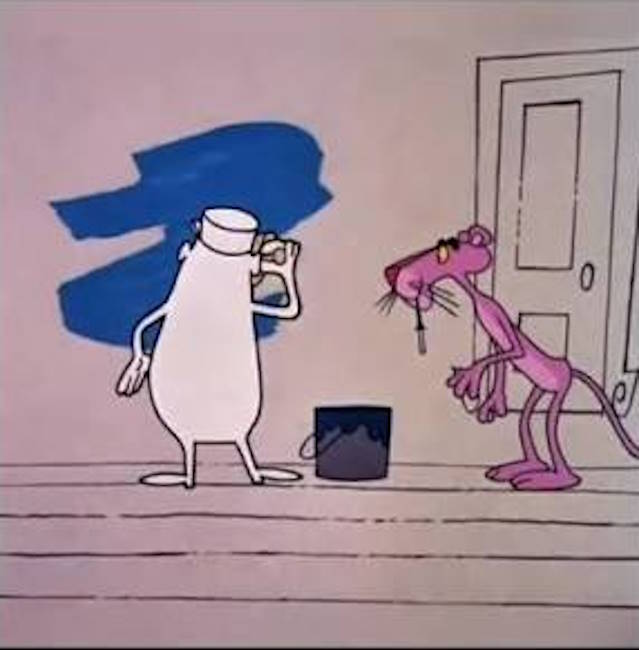
Unlike most animated characters born out of children’s stories, the Pink Panther was originally conceived as an abstract symbol for the opening credits of Blake Edwards’s crime film of the same name, representing the stolen diamond.
Animators Friz Freleng and Hawley Pratt later gave the character a deeper philosophical dimension in the standalone series, turning the Panther into an embodiment of the countercultural spirit of the 1960s. The character has no home, pays no taxes, ignores social norms, and exists outside the rigid structures of capitalism. The Panther represents jazz improvisation and surrealism in their purest forms, gracefully disrupting the orderly world of ordinary people.
The central conflict in the classic episodes revolves around the Panther and a nameless, big-nosed man known as the Little Man, who represents the conservative establishment and bureaucracy. The Little Man is always trying to impose order, build a house according to blueprints, obey traffic laws, or carry out routine tasks. The Panther, by contrast, methodically and elegantly dismantles his reality, turning the world pink. Their rivalry pits rigid social structures against the free-thinking spirit of the Beat Generation, with creativity consistently outmaneuvering strict logic.
One defining feature of the series is the Panther’s complete lack of direct physical aggression. The character never attacks first. All the destruction and trouble that befall the Little Man result from his own rigidity, inability to adapt to unexpected situations, or blind obedience to instructions.
The Panther operates as a trickster, holding up a mirror to the absurdity of social conventions. The series plays like a silent, psychedelic poem that champions individuality over an impersonal system.
Popeye the Sailor
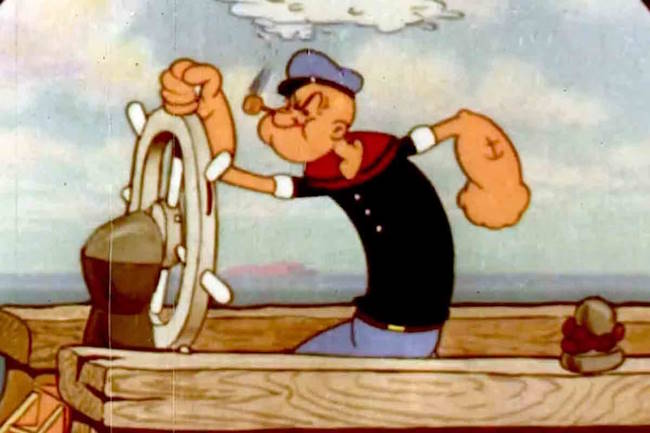
Popeye the Sailor, created by Elzie Crisler Segar for newspaper comics during the Great Depression, carries a powerful message about social class that has largely faded behind the character’s association with eating spinach.
Popeye didn’t originally rely on canned greens for his strength. Instead, he drew his power from luck by patting a magical chicken on the head. Spinach became a defining part of his character later, serving as a way to promote healthy eating among the American public. At his core, Popeye represented the working class of the 1930s: an uneducated, impoverished, one-eyed sailor with an unwavering moral compass who stood as the sole defender of the vulnerable in a corrupt world.
A closer examination of the love triangle between Popeye, Olive Oyl, and the giant Bluto reveals a cycle of toxic manipulation. Olive Oyl is far from a helpless damsel in distress. She’s calculating and materialistic, regularly provoking conflict by openly flirting with the aggressive Bluto to gain attention or some other advantage. Bluto represents brute force, arbitrary power, and the impunity of monopolists. Popeye repeatedly finds himself rescuing a woman who knowingly created a dangerous situation, overlooking her manipulation because of his old-fashioned chivalrous devotion.
The story’s central message is that character matters more than appearance or social status. Bluto is physically stronger and more appealing to a society that values force, while Olive chooses him until she faces a genuine threat. Popeye, meanwhile, lives by his enduring creed: “I am what I am, and that’s all I am.” His words express a powerful philosophy of accepting oneself without pretense. His ultimate victory represents honest work and moral resilience triumphing over social hypocrisy and brute oppression.
A closer examination of classic American animation’s Golden Age reveals that its enduring appeal rests on complex psychological storytelling, not just simple slapstick. Behind the cartoon violence lie familiar human conflicts involving friendship disguised as rivalry, social inequality, rebellion against consumerism, and the dismantling of conservative stereotypes. This depth allows classic cartoons to remain relevant for decades, offering adult audiences an entirely new way to understand characters they have known since childhood.

Welcome to Poznayu.com!
My name is Alex, and I founded this project together with a team of like-minded professionals. At Poznayu.com, we create in-depth reviews, explore fascinating facts, and share well-researched, reliable knowledge that helps you navigate complex topics with confidence.
Our mission is simple: to explain complicated ideas in clear, accessible language. We believe that high-quality information should be available to everyone. Every article we publish is designed to provide practical value, actionable insights, and trustworthy analysis you can rely on.
Join our growing community of curious readers. Your feedback matters — share your thoughts in the comments, ask questions, and suggest topics you’d like us to cover next.