The United States is often defined by the 1776 Declaration of Independence, but the story of the European presence on this land began nearly two centuries earlier.
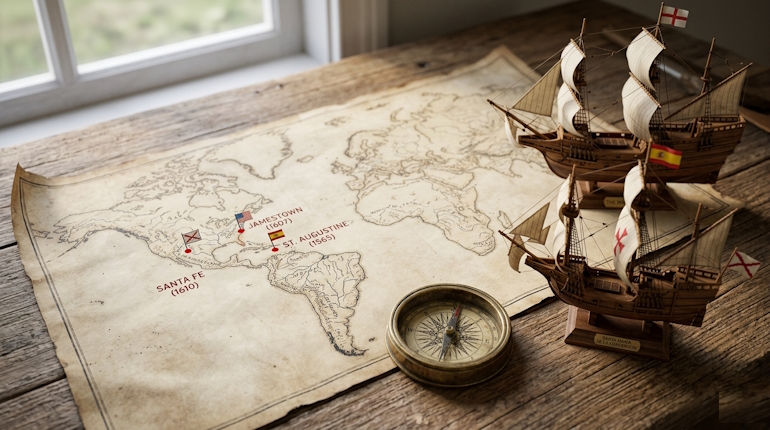
Long before the signing of the Constitution or the inauguration of the first presidents, Spanish conquistadors and English colonists were laying the foundations for cities intended to be the outposts of a new civilization. Some of these grew into major metropolises, others became open-air museums, and some vanished from the face of the earth entirely.
As someone born and raised in the U.S. with a background in the field, I want to take you through the three original cities that spearheaded the settlement of the modern United States, as well as a few early settlements that were never destined to become cities at all.
How It All Started ?
If you think American history officially kicked off with the Mayflower and the Pilgrim Fathers, think again—the Spanish beat the English to the punch by a good half-century.
The earliest settlements weren’t established by the British, but by Spaniards who sailed to the New World in search of gold and converts. These weren’t just tiny villages; they were fully functional administrative hubs complete with churches, garrisons, and governors.
St. Augustine, Florida — The Oldest City in the U.S.
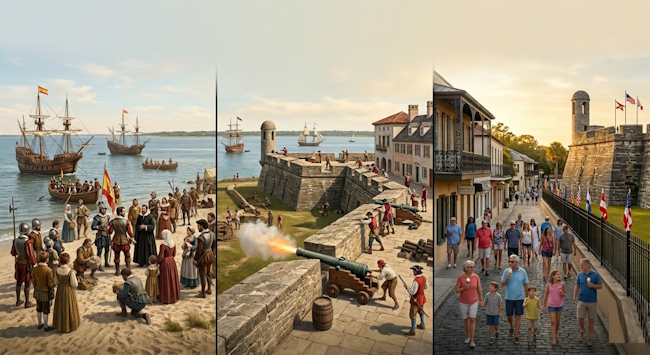
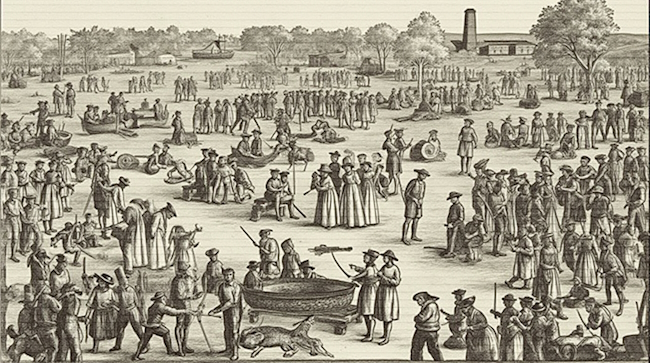
On September 8, 1565, Spanish Admiral Pedro Menéndez de Avilés made landfall on the northeast coast of Florida. Since it was the feast day of St. Augustine, he founded a city and named it in the saint’s honor. He arrived with a company of 800 people, including soldiers, sailors, priests, and several dozen families with women and children. The location was no accident: the Spanish needed a strategic base to protect their fleet from French rivals and to secure the maritime trade routes from Mexico back to Europe. A few months after its founding, a conflict with the Timucua Indians forced the settlers to move the town from the mainland to Anastasia Island.
The Spanish Stronghold.
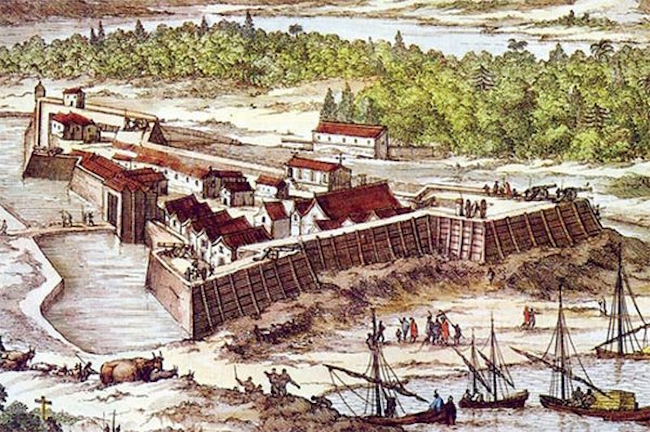
St. Augustine quickly evolved into the military and administrative heart of Spanish Florida. The city’s most iconic landmark is the Castillo de San Marcos. Construction began in 1672 and spanned over twenty years; it remains the only 17th-century fortification still standing in the U.S. today. The city survived countless raids by the British, pirates, and indigenous tribes, but thanks to its massive walls and tactical defense, the Spanish held it for over two hundred years. Interestingly, in 1696, the famous French explorer Robert de La Salle—who mapped the mouth of the Mississippi—was actually imprisoned here.
Changing Hands.
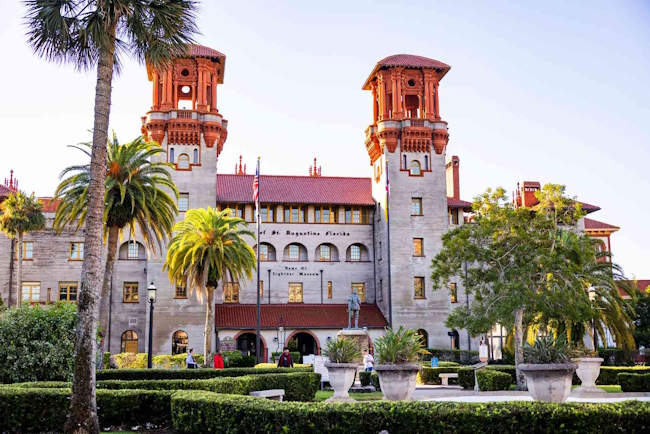
Following the Seven Years’ War, Spain ceded Florida to Great Britain, and St. Augustine fell under British rule in 1763. However, British control was short-lived. After the American Revolutionary War, Florida returned to Spain, and eventually, under the 1819 Adams-Onís Treaty, the Spanish officially turned the peninsula over to the Americans. The city changed hands so frequently that today you can see a unique architectural blend of all three eras—Spanish, British, and American.
Modern-Day St. Augustine.
Today, St. Augustine isn’t a sprawling metropolis, but a charming historic town with a population of about 14,000. Its primary draw is the Old Spanish Quarter, featuring cobblestone streets, balconies, and secluded courtyards, along with the Castillo de San Marcos National Monument. The city thrives on tourism, with millions of travelers visiting annually to walk down America’s oldest street, Avenida Menendez, and stand atop the walls of a fort built back in the 1600s.
Jamestown, Virginia — The First Permanent English Settlement
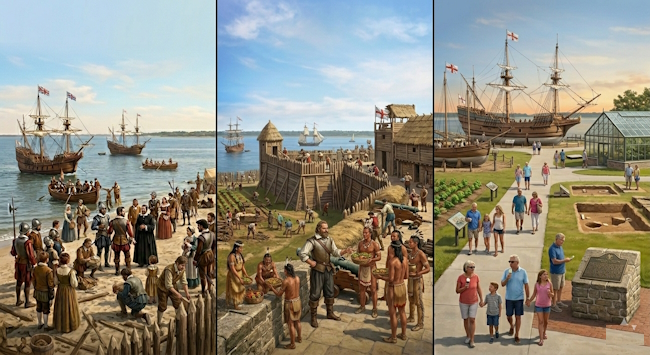
On May 14, 1607, three ships belonging to the English Virginia Company—the Susan Constant, the Godspeed, and the Discovery—delivered 104 colonists to the shores of North America. They chose a spot on a marshy peninsula jutting into the James River and named the settlement Jamestown in honor of King James I. The choice was disastrous: the swampy soil was a breeding ground for malaria, the well water was brackish, and the local tribes were hostile. Within a year, only 38 of the original 104 settlers were still alive. Despite the hardships, this fourth English attempt to establish a foothold in America ultimately succeeded.
Captain Smith and Princess Pocahontas.
The tide turned when John Smith, an adventurer and diplomat, took charge of the colony. He implemented what was perhaps the harshest law in colonial history: “He who will not work shall not eat.” Through his strict discipline and ability to negotiate with the natives, the colonists not only survived but received vital food supplies from the Powhatan tribe. Smith saved Jamestown from starvation, and the story of his capture and subsequent rescue by the chief’s daughter, Pocahontas, became one of America’s most romanticized legends.
Tobacco Wealth.
True prosperity hit Jamestown in 1612 when settler John Rolfe introduced a strain of tobacco that became a sensation in Europe. Exporting tobacco to England transformed the small outpost into a major regional trade hub, turning its residents into wealthy planters. In 1619, the House of Burgesses met here for the first time—the first elected legislative body in the New World and a precursor to American democracy. That same year, the first ship carrying enslaved Africans arrived in Jamestown, marking the grim beginning of American slavery.
The Decline and the Legacy.
Jamestown ceased to be the colonial capital in 1699 when the governor’s residence moved to Williamsburg. The town fell into decay, and by the mid-18th century, only ruins remained. Today, the site is home to “Historic Jamestowne,” an open-air museum where visitors can see a reconstructed fort, replicas of the three original ships, and ongoing archaeological digs of the original 1607 settlement.
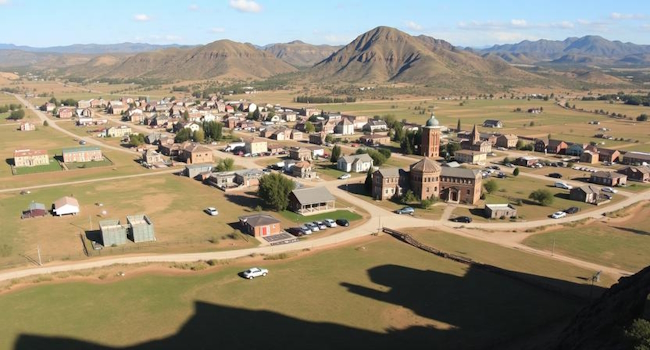
Santa Fe, New Mexico — The Oldest Capital City in the U.S.
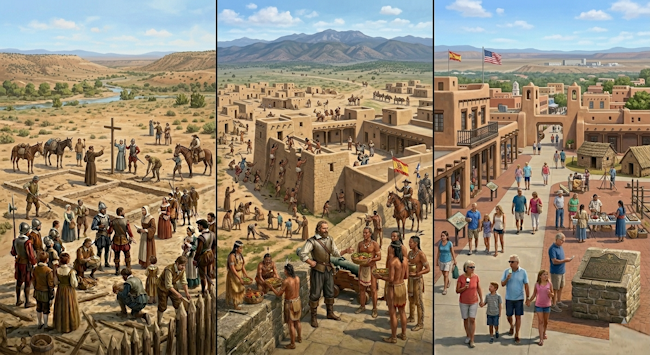
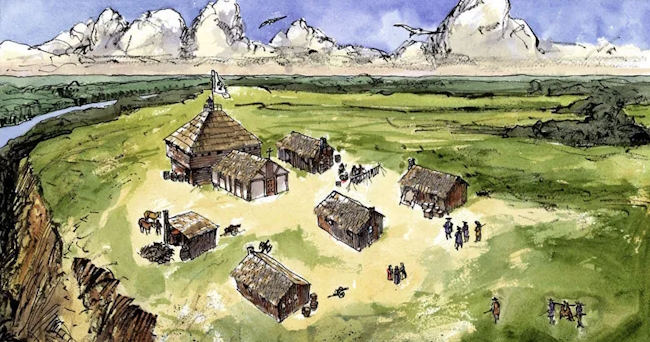
In 1609, Spanish Governor Pedro de Peralta founded a settlement in the Santa Fe River valley. A year later, it was designated a city and became the capital of the province of Santa Fe de Nuevo México. Unlike the coastal outposts of St. Augustine and Jamestown, Santa Fe was a frontier hub in the heart of the continent, a thousand miles from the nearest port. The city was built according to the standard Spanish layout: a central plaza surrounded by the Palace of the Governors, a church, and military barracks.
The Blood of Christ and the Pueblos.
The city’s full original name was La Villa Real de la Santa Fe de San Francisco de Asís (“The Royal City of the Holy Faith of St. Francis of Assisi”)—one of the longest city names in history. Its location was chosen strategically; it was near established Pueblo Indian settlements and sat at the intersection of major north-south trade routes. The Spanish used the Pueblo people as a labor force, exploiting them heavily while aggressively imposing Christianity. This led to the Pueblo Revolt of 1680, which drove the Spanish out of the city for 12 years. However, in 1692, Don Diego de Vargas reclaimed Santa Fe for the Spanish Crown.
The American Era.
Following the Mexican-American War and the 1848 Treaty of Guadalupe Hidalgo, Santa Fe and the rest of New Mexico were ceded to the United States. The city became the capital of the New Mexico Territory in 1851 and the state capital in 1912. Today, Santa Fe stands as the only state capital founded by Europeans before the American Revolution.
A Cradle of Art and Science.
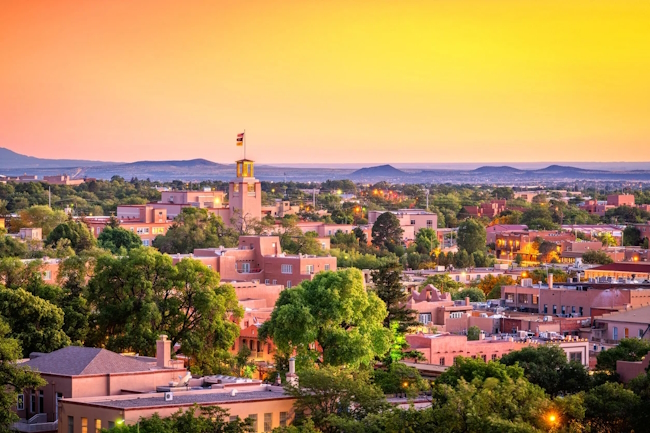
Modern Santa Fe is a small but incredibly vibrant city. Known as “The City Different,” it is famous for its unique Pueblo-style architecture—a blend of Spanish and Native American traditions. It serves as the cultural heart of the American Southwest, a world-class center for indigenous arts and crafts, and, surprisingly, a birthplace of nuclear science; the nearby Los Alamos National Laboratory is where the first atomic bomb was developed.
The Early Settlements That Didn’t Make It
Beyond these three major cities, there were other settlements founded even earlier that either vanished or failed to grow into cities. Here are the most notable:
San Miguel de Gualdape (1526, South Carolina)
This was the very first European settlement in what would become the United States. In September 1526, Spanish colonizer Lucas Vázquez de Ayllón landed on the coast of modern-day South Carolina with about 600 people, including women, children, priests, and enslaved Africans. They built homes and a church, but famine, disease, and racial conflict caused the colony to collapse in just three months. Ayllón died within weeks of arrival, and only 150 participants survived to return home. It was Spain’s first, failed experiment in American colonization.
Fort Caroline (1564, Florida)
A year before St. Augustine was founded, French Huguenots (Protestants) established Fort Caroline on the St. Johns River (modern-day Jacksonville). This was a direct challenge to Spanish dominance. The Spanish, led by Menéndez de Avilés, attacked the fort, executed most of its defenders, and established their own presence. The fate of this settlement serves as a stark reminder of the bloody and brutal nature of early colonization.
The Roanoke Colony (1587, North Carolina)
This was England’s first attempt at a permanent American settlement. In 1587, John White led a group to Roanoke Island (modern North Carolina). Among them was his daughter Eleanor, who soon gave birth to Virginia Dare—the first English child born in America. When White sailed back to England for supplies, the war with Spain delayed his return for three years. By the time he got back, the colony had vanished, leaving only the word “Croatoan” carved into a post. The fate of the 117 colonists remains one of the greatest mysteries in American history.
Conclusion
The settlement of what would become the United States is a story of intense competition between European empires that eventually gave birth to a new nation.
The Spanish, English, and French fought over land, built forts, and laid out cities, while indigenous tribes became either vital allies or the victims of expansion.
Today, America’s first cities—St. Augustine, Santa Fe, and Jamestown—are more than just tourist stops; they are living monuments to the events that shaped the modern United States. Visiting them allows you to touch a history that began over four hundred years ago.
Welcome to Poznayu.com!
My name is Alex, and I founded this project together with a team of like-minded professionals. At Poznayu.com, we create in-depth reviews, explore fascinating facts, and share well-researched, reliable knowledge that helps you navigate complex topics with confidence.
Our mission is simple: to explain complicated ideas in clear, accessible language. We believe that high-quality information should be available to everyone. Every article we publish is designed to provide practical value, actionable insights, and trustworthy analysis you can rely on.
Join our growing community of curious readers. Your feedback matters — share your thoughts in the comments, ask questions, and suggest topics you’d like us to cover next.








Greetings from Chicago)