Do you know what the highest-performance production cars in the US are for 2026, blowing minds with their unbelievable performance?
We’re diving deep into five top-tier American production models from GM, Ford, and Dodge, stacking them up against cutting-edge European supercars. This breakdown will give you a clear look at how modern sports cars have evolved and help you pick the perfect champion of American engineering.
And I know a thing or two about this firsthand: my garage currently holds a tuned 2013 Cadillac CTS-V pushing 650 hp and a bone-stock 2015 Chevrolet Camaro Z/28.
The Philosophy of American Muscle
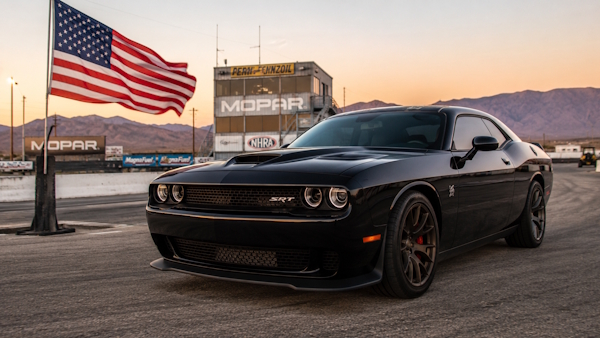
The American automotive dream has always been built around blistering speeds, roaring engines, and aggressive styling that instantly grabs everyone’s attention on the road.
Put simply, high-performance American cars are literal land rockets engineered to give drivers raw adrenaline and pure emotion every time the light turns green.
Today, engineers have mastered the art of blending raw, mechanical muscle with smart electronics. As a result, modern muscle cars and sports cars don’t just dominate the drag strip—they carve up corners with surgical precision. You no longer have to compromise between a comfortable cabin and track-ready dynamics; modern tech gives you a premium interior and record-breaking lap times all in one package.
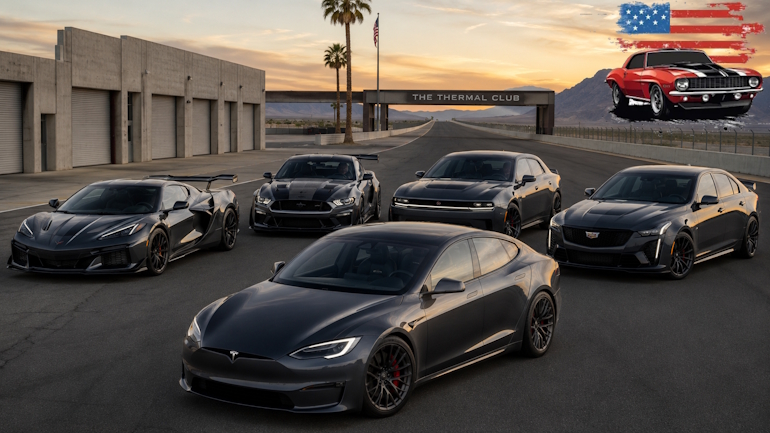
Before we dive into the technical teardown of each machine, check out the heavy hitters of American automotive engineering featured in our review:
- Chevrolet Corvette ZR1
- Ford Mustang GTD
- Dodge Charger Daytona SRT Banshee
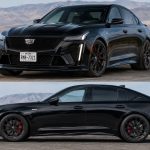
- Cadillac CT5-V Blackwing
- Tesla Model S Plaid
To give you a clear picture of what these beasts are packing, here is a quick summary table of their peak power outputs:
| Model | Engine Type | Stated Output |
| Chevrolet Corvette ZR1 | Gas Twin-Turbo V8 | 1,064 hp |
| Ford Mustang GTD | Supercharged Gas V8 | Over 800 hp |
| Dodge Charger Banshee | Electric (800V) | 807 hp |
| Cadillac CT5-V Blackwing | Supercharged Gas V8 | 668 hp |
| Tesla Model S Plaid | Tri-Motor Electric | 1,020 hp |
Chevrolet Corvette ZR1
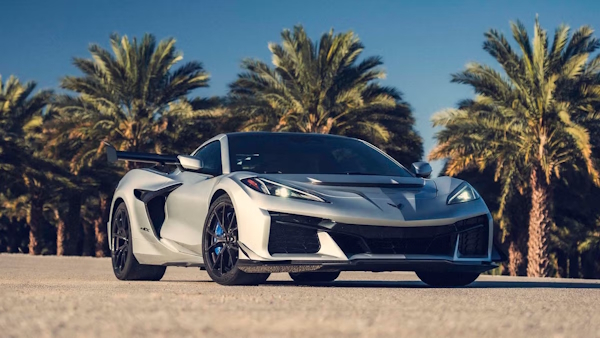
The spec sheet for GM’s current flagship forces a complete rewrite of the laws of automotive physics:
- 0–60 mph: 2.6 seconds
- Peak Power: 1,064 horsepower
- Torque: 1,123 Nm
- Curb Weight: 1,665 kg
A quick clarification on why it’s not supercharged. The modern Chevrolet Corvette ZR1 (the C8 generation, current for 2026) actually features a twin-turbo V8. To be exact:
- New School: The current ZR1 packs a 5.5-liter engine (designated LT7) with a flat-plane crank and two turbochargers, which are exactly what pumps out an insane 1,064 horsepower.
- Where the confusion comes from: Previous high-performance generations of the Corvette (like the C7 ZR1 or the famous C7 Z06) did indeed rely on massive belt-driven superchargers.
However, with the shift to the new mid-engine platform, General Motors engineers completely ditched superchargers in favor of a twin-turbo setup.
The history of America’s sports car dates back to the 1950s, when it debuted as a light, elegant fiberglass cruiser. But with each passing generation, Chevy engineers packed on more muscle, evolving it over time into an ultimate weapon built for total domination on global racetracks.
For 2026, the ZR1 stands as the absolute pinnacle of American automotive engineering, utilizing a mid-engine layout that revolutionized the model. The car gets a unique 5.5-liter twin-turbo flat-plane crank V8, allowing it to rev to crazy heights with zero turbo lag. A carbon fiber aero kit generates massive downforce, while the smart Magnetic Ride Control adaptive suspension reads the road a thousand times a second to ensure perfect mechanical grip.
- In a direct comparison with high-end European rivals like the Ferrari 296 GTB or McLaren 750S, the new Corvette ZR1 acts as a ruthless price-cut aggressor.
- It offers comparable, if not superior, track performance for half the price. While the Europeans lean on the elegance of hybrid tech and refined road manners, the American wins with raw, yet technologically flawless, pure internal combustion power.
Ford Mustang GTD
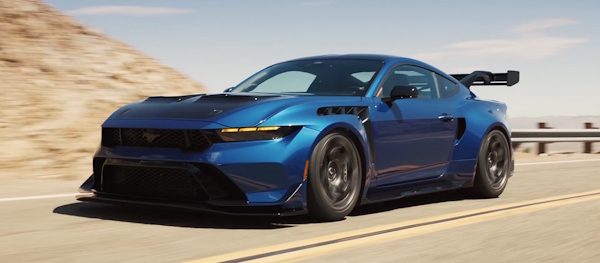
Check out the mind-blowing specs of this street monster cooked up by Ford Performance:
- 0–60 mph: 2.8 seconds
- Peak Power: Over 800 horsepower
- Torque: Around 900 Nm
- Curb Weight: Around 1,600 kg
The legendary Mustang was born in 1964, instantly birthing a whole new class of affordable cars geared toward younger drivers—the pony car. For decades, it remained the ultimate symbol of American automotive freedom, serving up plenty of style and loud exhaust notes for a modest price tag, though it rarely bragged about surgical handling on twisty canyon roads.
The 2026 GTD variant completely shatters those old stereotypes, serving as a street-legal homologation special born straight from the GT3 race car. The 5.2-liter V8 engine is pushed as far back into the firewall as possible, while the gearbox is moved to the rear axle in a transaxle layout to achieve near-perfect weight distribution. Innovative active aero featuring a hydraulically controlled rear wing and magnesium wheels make this the most complex, high-tech Mustang ever built.
- When stacked up against the European track elite—most notably the Porsche 911 GT3 RS—the Ford Mustang GTD shares a similar philosophy of uncompromising mechanical grip.
- However, the American counters Porsche’s high-revving naturally aspirated engine with a screaming supercharged V8 that demands aggressive, physically involving driving input from the pilot. It’s a thrilling duel of pure American visual brutality versus German surgical precision.
Dodge Charger Daytona SRT Banshee
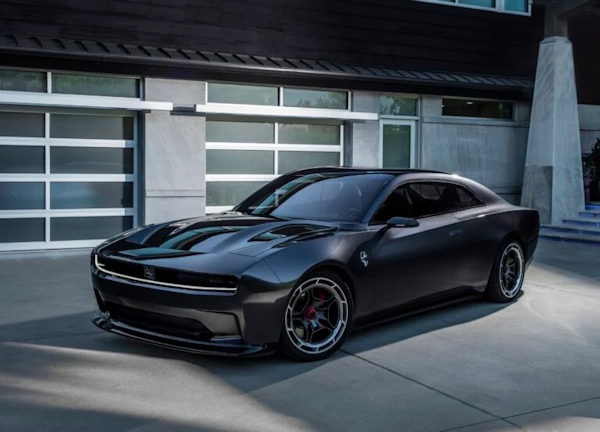
The iconic brand’s leap into a brave new electric era shows the following estimated figures:
- 0–60 mph: 3.0 seconds
- Peak Power: 807 horsepower
- Torque: Over 1,000 Nm
- Curb Weight: Around 2,650 kg
For decades, the Charger name was bound to the smell of burning rubber and the deafening whine of superchargers down the drag strip. Traditional Hemi V8 powerplants made this full-size heavyweight the undisputed king of street racing and a permanent symbol of unapologetic American muscle in an increasingly sterile automotive world.
Today, the Daytona SRT Banshee carries that classic muscle car DNA into the zero-emissions era, utilizing an advanced 800-volt architecture for instant power delivery. To keep die-hard fans emotionally engaged, Dodge engineers cooked up the unique Fratzonic Chambered Exhaust system, which literally generates a physical, pneumatic roar matching electric motor outputs up to 126 decibels. On top of that, the car features an eRupt multi-speed transmission that realistically mimics hard mechanical gear shifts.
- Comparing the high-performance Banshee to European electric heavyweights like the Porsche Taycan Turbo S or Audi RS e-tron GT reveals a massive cultural divide in the approach to electrification.
- The Europeans build silent, futuristic, and perfectly balanced speed capsules. Dodge, on the other hand, intentionally makes its EV loud, visceral, and theatrically aggressive, preserving that old-school rebel soul inside a high-tech package.
Cadillac CT5-V Blackwing
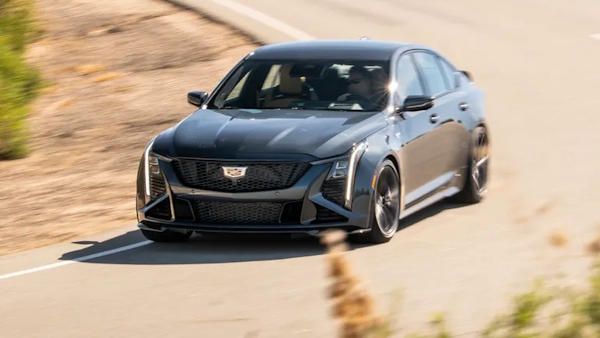
This insanely luxurious yet track-stiff sedan packs the following hardware specs under the hood:
- 0–60 mph: 3.4 seconds
- Peak Power: 668 horsepower
- Torque: 893 Nm
- Curb Weight: 1,870 kg
A quick note for the true car nerds out there. The Cadillac CT5-V Blackwing is actively rolling off assembly lines in 2026. However, 2026 officially marks the final model year for the current generation of CT5 and CT4 sedans, including their high-performance Blackwing variants. Cadillac has confirmed that production for this current run wraps up in 2026, making these current cars a “final edition” of sorts before the CT5 moniker returns later on a next-generation platform.
The premium Cadillac brand was long pigeonholed by buyers as a provider of floaty, comfortable highway cruisers for older generations. But launching the high-performance V-Series line in the early 2000s completely flipped the brand’s image on its head, proving to the world that General Motors engineers can build razor-sharp chassis capable of going toe-to-toe with Bavaria’s finest sport sedans.
Today, the 2026 model year CT5-V Blackwing stands as one of the very last bastions of old-school driver engagement, still offering a row-your-own 6-speed manual transmission. Under the hood rumbles a hand-built 6.2-liter V8 paired with a massive roots-style supercharger. All that immense power gets routed exclusively to the rear wheels, making the driving experience a true art form that won’t forgive sloppy footwork or reckless throttle inputs.
- Going up against European luxury heavyweights like the BMW M5 or the hybrid Mercedes-AMG E63, the ultra-powerful Cadillac delivers a completely different, visceral driving experience.
- While the Europeans pivot toward complex, all-wheel-drive hybrid setups pushing a three-ton curb weight, the Blackwing stays relatively light, analog, and unhinged for automotive purists. This is a car that demands real skill behind the wheel, not just stomping the gas pedal while computers do the heavy lifting.
Tesla Model S Plaid
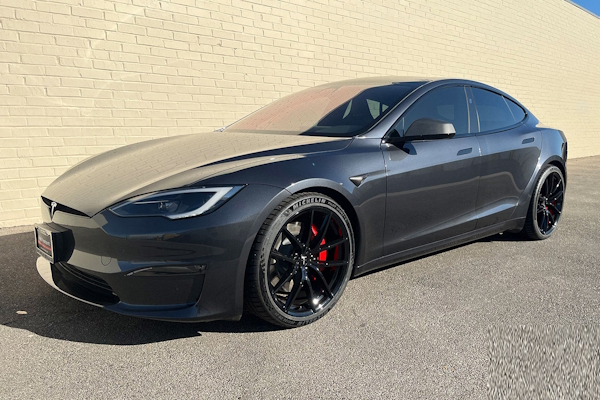
The electric pioneer out of Silicon Valley delivers outright phenomenal performance numbers:
- 0–60 mph: 2.1 seconds
- Peak Power: 1,020 horsepower
- Torque: 1,420 Nm
- Curb Weight: 2,162 kg
Elon Musk’s company permanently changed the automotive game, showing the world that an EV could be a highly desirable luxury object and a symbol of tech supremacy. Arriving over a decade ago, the original Model S proved battery-powered cars were viable, steadily pushing gas flagships out of executive parking spots all over the globe.
The current 2026 Plaid model securely holds onto its crown as one of the quickest production vehicles on Earth, driven by a tri-motor setup. An intelligent torque-vectoring system channels massive torque between the rear wheels with millisecond precision, while carbon-sleeved rotors allow the motors to safely spin up past 200 mph without breaking a sweat or flying apart.
- Squaring off against Europe’s electric counter-punches, like the high-speed versions of the Mercedes-AMG EQS, Tesla bets big on raw digital output and a completely minimalist interior.
- The European alternatives traditionally bring richer materials, better sound insulation, and gold-standard premium comfort. However, the Model S Plaid completely blows them out of the water with hypercar-tier acceleration at the price point of a standard executive sedan, proving every single day the absolute dominance of American software over traditional automotive hardware.
Results from Real Runs at Firebird Motorsports Park
To gather the most accurate data for this feature, our team headed out to Arizona while on vacation in May, hitting the iconic track at Firebird Motorsports Park in Chandler for a full day of testing under the brutal desert sun.
The blazing hot asphalt served as the perfect proving ground to see how modern high-performance cars manage to put massive power down to the ground in extreme track temperatures. Watching right from the grandstands and the hot pits, we clocked real acceleration figures, took notes on how electronic launch control systems behaved, and saw exactly how these top-tier American models handle extreme stress testing you could never replicate on public streets.
We absolutely love the smell of burning rubber and the sound of the tree dropping!
Let’s take it to a real drag strip and see how these new American monsters stack up across a classic quarter-mile against the undisputed king of straight-line speed—a bone-stock Tesla Model S Plaid. The laws of physics are unforgiving: all-wheel drive and instant electric torque give it a massive head start off the line, forcing the gas-powered cars to heroically play catch-up at the top end.
To give you an exact look at how things shook out on the quarter-mile, check out our track slip data table below. It features real-world times clocked on a solid but un-prepped track surface, along with whether they lived up to factory spec sheet claims.
| Car Model (Stock) | 1/4-Mile Time | Trap Speed | Hits Factory Spec? (Real World vs. Claimed) |
| Tesla Model S Plaid | 9.35 sec | 244 km/h | No (The claimed 9.23 sec requires a prepped VHT surface and a long warm-up routine) |
| Chevrolet Corvette ZR1 | 9.85 sec | 241 km/h | Almost (Factory claims 9.7 sec, but the rear-wheel-drive setup spins even on warm asphalt) |
| Ford Mustang GTD | 10.40 sec | 225 km/h | No (That massive rear wing creates wild aero drag once you pass 150 km/h) |
| Dodge Charger Banshee | 10.65 sec | 215 km/h | Yes (Consistently runs 10.5–10.6 sec thanks to AWD, though the curb weight holds it back) |
| Cadillac CT5-V Blackwing | 11.50 sec | 201 km/h | Yes (Factory 11.4 sec is doable with perfect throttle modulation and warm tires) |
Tesla Plaid vs. Corvette ZR1
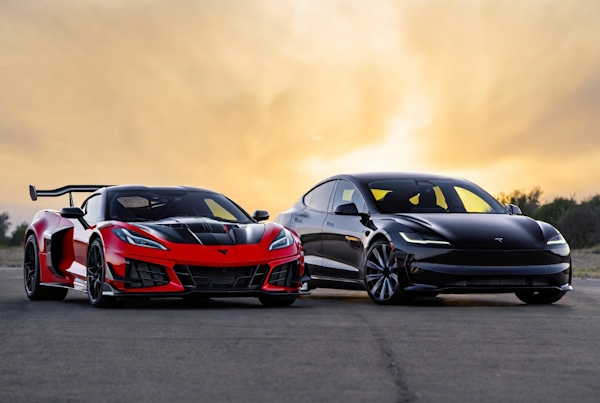
This was epic, though completely predictable off the line. The moment the light turned green, the Tesla literally catapulted forward in total silence, leaving the Corvette to furiously roast its rear tires. The 1,064-hp ZR1 sounds like a jet fighter on takeoff, but it desperately claws for traction during the first two seconds. But past the eighth-mile mark, magic happens: the Corvette starts reeling in the EV at a scary pace. If we were running a half-mile, the ZR1 would have eaten the Tesla alive, but on the quarter-mile, the Chevy only manages to close in on the leader’s rear bumper.
Tesla Plaid vs. Ford Mustang GTD
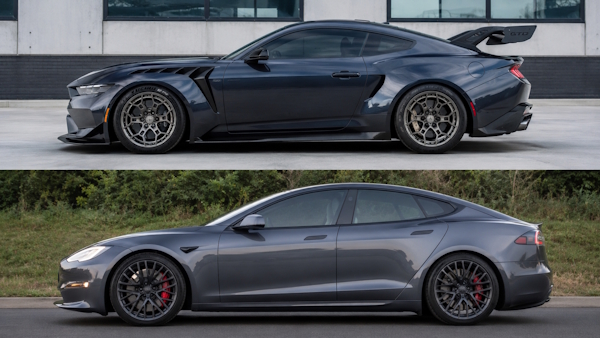
This was a textbook clash of engineering priorities. The Mustang GTD looks like it escaped straight from Le Mans, its supercharged V8 screaming down the track. But in drag racing, its primary weapon—aerodynamics—became its worst enemy. The Tesla gapped it by several car lengths off the line. Towards the finish line, right when the Mustang should have unleashed the full fury of its 800+ horses, its massive wing and diffusers began acting like a parachute, catching thick air. Bottom line: the Plaid put a bus length on the Mustang, because a track monster doesn’t belong on a straight drag strip.
Tesla Plaid vs. Dodge Charger Banshee
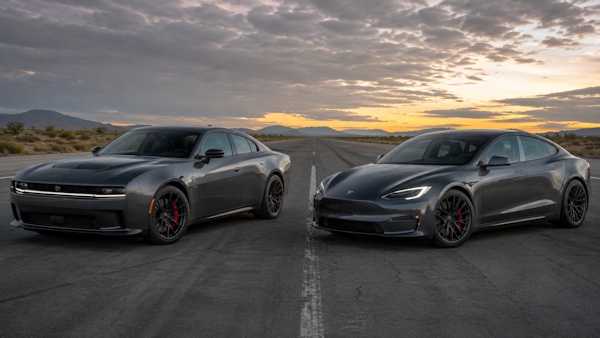
An all-electric showdown, and it felt a bit surreal. The Banshee screamed with its simulated Fratzonic exhaust, faking gear shifts and V8 roar, while the Plaid sat next to it in dead silence. They jumped out nearly neck-and-neck off the line thanks to all-wheel drive on both sides, but the illusion of a close race didn’t last long. The Charger weighs nearly as much as a light tank (around 2.6 tons), and its 807 horses just couldn’t stack up against Tesla’s 1,020 hp. The Plaid smoothly pulled away into the distance, proving fake noise doesn’t buy real speed.
Tesla Plaid vs. Cadillac CT5-V Blackwing
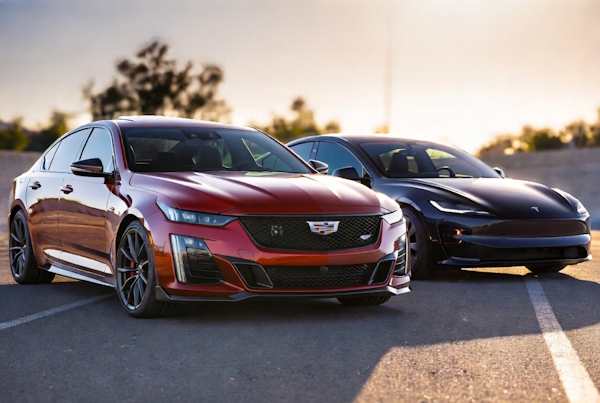
A race that was over before it even started. The Cadillac is an incredible machine built for pure driving pleasure; it dances beautifully from the rear and wails with its mechanical supercharger. But running against a 9-second EV is pure lunchtime bullying. While the CT5-V driver wrestled for grip through first and second gear, trying to hook up 668 horses on rear-wheel drive, the Tesla owner was already sipping coffee at the timing booth. The luxury sedan crossed the line nearly two seconds later—an absolute eternity in drag racing.
Outlaw Runs: Tuned vs. Stock
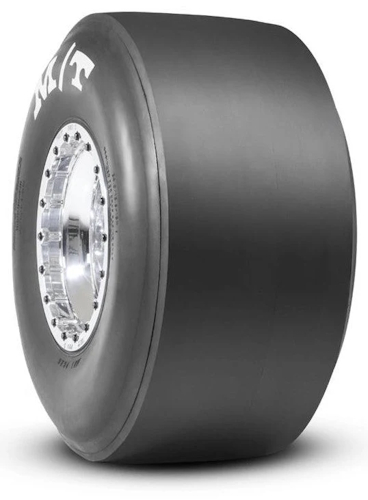
Bone stock is fine, but real American drag racing has always been built on garage-grown builds.
What happens when we pit heavily modified versions of our gas-powered heroes—shod in drag slicks and running race fuel—against a factory-spec Tesla Model S Plaid?
Basically, local gearheads rely on a few common mods. The setups below are no exception: here is the breakdown of modifications thrown at our internal combustion contenders before the final showdown:
-
Upgraded performance clutches and built gearboxes to handle hard launches (High-Performance Transmission Rebuild Kit).
-
Switching to E85 fuel paired with an aggressive ECU tune.
-
Swapping out factory rubber for professional Mickey Thompson drag slicks.
-
Stripping off track aero (for the Mustang) and installing bigger turbos (for the Corvette).
Tuned Corvette ZR1 (1,300+ hp) vs. Stock Tesla Plaid
Now we’re talking on equal terms!
The guys threw bigger turbochargers on the ZR1, filled it up with E85, and wrapped the rear axle in fat slicks. Off the line, the Tesla still jumped out ahead by half a car length—there’s no cheating all-wheel-drive physics. But thanks to the slicks, the Corvette hooked up hard by the middle of first gear. Right around 100 km/h, the ZR1 pulled even with the Tesla, and from there on out, it was pure terror. Under the wild scream of turbos, the gas-powered monster absolutely gapped the EV on the back half, flying across the finish line with an elapsed time of roughly 8.9 seconds. The Tesla was left far behind in a cloud of exhaust fumes.
Tuned Ford Mustang GTD (1,000+ hp) vs. Stock Tesla Plaid
The mechanics made the only logical call for a drag strip: they ripped the massive rear wing off the Mustang to kill the drag, swapped in a smaller supercharger pulley to ramp up the boost, and threw on a set of slicks.
The launch was a heart-stopper: the Mustang pulled its front wheels clean off the ground from the sheer torque, losing a bit of time in the process, and the Tesla gapped it again. But without that aerodynamic brake holding it back, the Mustang started building speed like a rocket, hammering through gears. It was a battle for every single inch. Right at the stripe, the roaring Ford V8 reeled in the silent EV, crossing the finish line bumper-to-bumper with a 9.3-second time. The photo finish handed the win to the Tesla by just a couple of inches due to a quicker reaction time off the tree, but the tuned GTD proved that internal combustion is nowhere near dead.
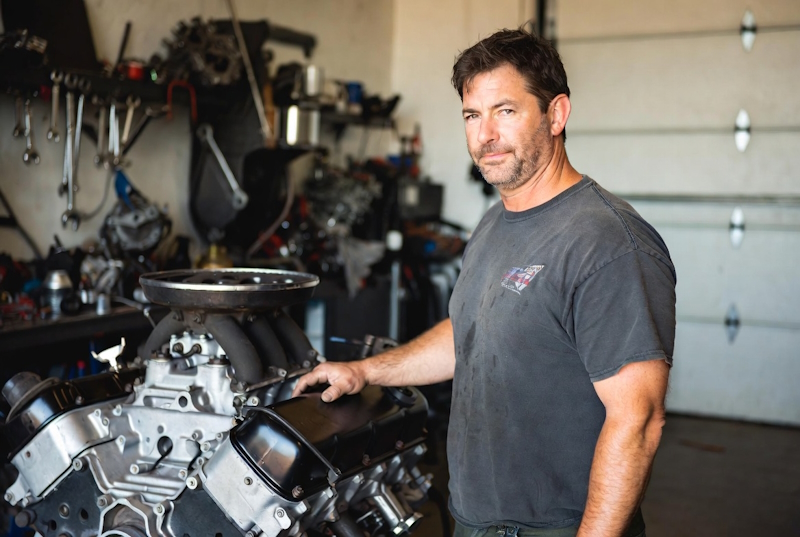
I’m Kevin Harper, an American automotive expert and tuner with more than 20 years of hands-on experience.
I graduated from Texas A&M University with a degree in Mechanical Engineering, with a focus on engine development. I started my professional career working in Texas garages, specializing in tuning classic American V8s and modern pushrod engines, including GM LS-series engines, Chrysler HEMI, Ford Coyote, as well as Modular and Big Block platforms.
I’ve worked on the restoration and extensive modernization of 1960s and 1970s Muscle Cars, built high-output LS swaps for daily-driven pickups and track projects, optimized HEMI engines for forced induction, and worked through the technical details of pushrod engine design — from selecting the right camshafts and cylinder heads to dialing in fuel systems and engine cooling.
I now live in Dallas, Texas, where I continue to work hands-on with performance builds, tuning and testing. In my articles, I explain how American and other engines actually work, which modifications genuinely improve power and reliability, and which ideas are nothing more than garage folklore. I keep the language straightforward without leaving out the technical details that matter, so owners of classic cars and modern V8s can make informed decisions.