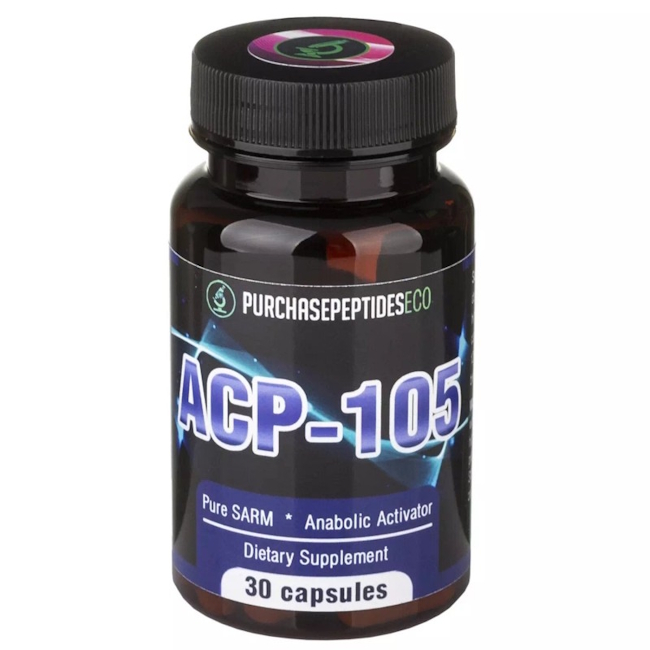
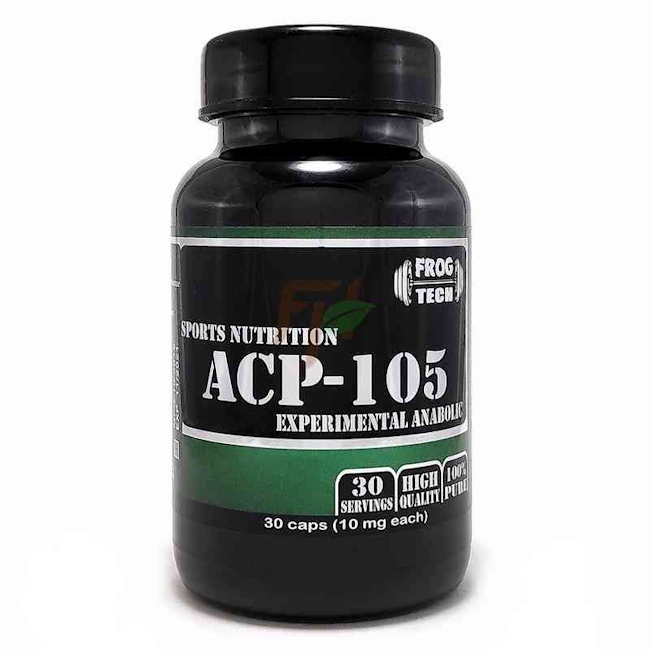
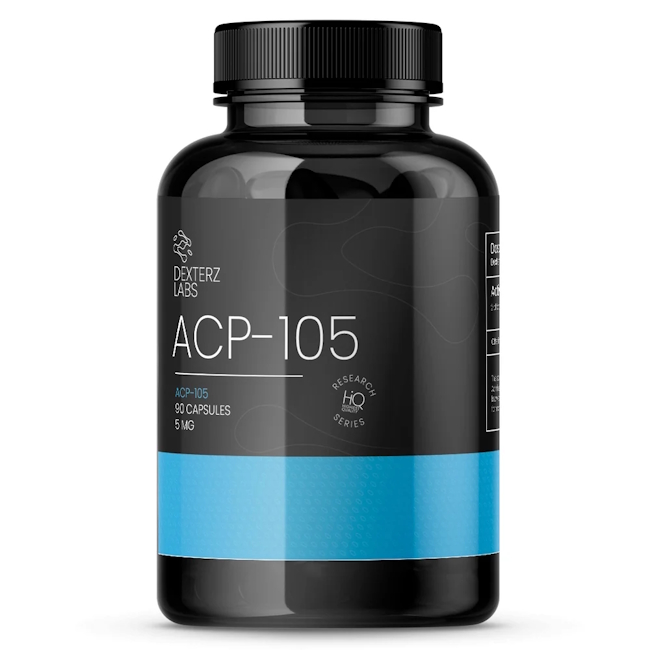
ACP-105 — one of those compounds that gets plenty of attention in enthusiast circles despite having very little confirmed data behind it. First developed as an experimental selective androgen receptor modulator, it eventually moved beyond laboratory research and began appearing in sports and illicit-use circles.
Here’s where the compound came from, what is known about it today, and why so much controversy surrounds it.
Selective androgen receptor modulators (SARMs) were not originally developed for sports. Researchers were looking for compounds that could target anabolic tissues, especially muscle and bone, while having less effect on other androgen-dependent organs than testosterone. This approach was considered, among other things, for treating conditions associated with loss of muscle and bone tissue.
ACP-105 was developed by ACADIA Pharmaceuticals. It is a nonsteroidal selective androgen receptor agonist and a member of the SARM class. In 2006, ACADIA identified it as a promising candidate for further development, and in 2009, the main findings on its discovery and pharmacology were published in the Journal of Medicinal Chemistry.
In preclinical studies, ACP-105 showed anabolic activity. In the 2009 study, it improved anabolic measures in castrated male rats after two weeks of use. ACADIA also reported pronounced effects on muscle and bone with minimal effects on the prostate in preclinical models. These findings came from animal studies and laboratory testing and do not confirm the same effects in humans.
Based on the available published data, ACP-105 did not advance to clinical trials designed to assess its efficacy and safety in humans.
However, a later metabolism study analyzed human urine after a single 100 mcg dose of ACP-105. This was an analytical study for doping-control purposes, not a clinical trial evaluating the drug’s efficacy or safety.
Pros and Cons: Theoretical Expectations vs. Reality
Based on its mechanism of action and preclinical data, ACP-105 has several potential characteristics.
As a nonsteroidal SARM, it does not serve as a source of estrogen through the aromatization process associated with testosterone. However, this does not mean gynecomastia or fluid retention are guaranteed to be absent in humans: there are no controlled clinical data on ACP-105.
Another characteristic is oral bioavailability demonstrated in preclinical studies, meaning the compound was developed for oral use rather than injection.
The key drawback is the near-total lack of clinical data. There are no published controlled studies that allow researchers to assess its effectiveness, long-term safety, effects on the hormonal system, lipid profile, or liver function in humans. As a result, claims about a specific degree of testosterone suppression, the compound being “mild,” or its advantages over other SARMs cannot be treated as established facts.
Another issue concerns the quality of illegally marketed products. The FDA warns that products containing SARMs may have unknown ingredients and can be potentially dangerous; risks described for the class include liver injury, sexual dysfunction, and cardiovascular complications. However, these findings cannot be directly applied to ACP-105 or used to state a specific rate of side effects because there are no dedicated clinical studies of this compound.
From a sports-regulation standpoint, the situation is clearer. SARMs have been prohibited by WADA since January 1, 2008, and in WADA’s current 2026 Prohibited List, they are classified under S1.2, “Other Anabolic Agents,” and are prohibited both in and out of competition.
Use in Bodybuilding and Real-World Effects
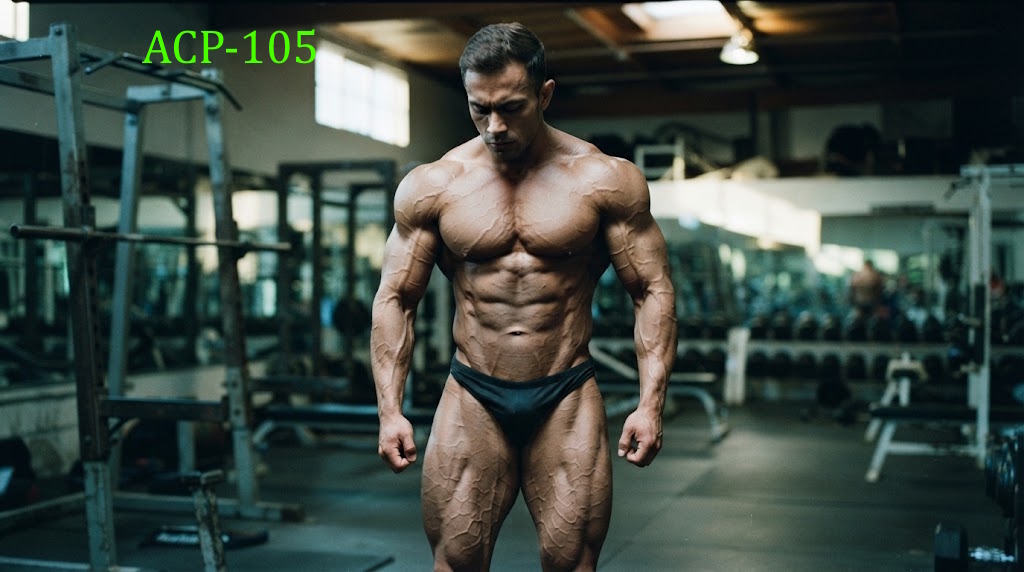
Among bodybuilders, ACP-105 is described as a compound for gaining muscle mass and increasing strength while causing less pronounced water retention than some anabolic steroids.
Users also associate it with improved visual muscle density and definition. However, these are primarily anecdotal reports rather than findings from controlled studies. There is no reliable human evidence allowing ACP-105 to be compared with Ostarine, LGD-4033, or other SARMs for effectiveness.
The degree to which ACP-105 suppresses endogenous testosterone production in humans has not been established. Therefore, the claim that it suppresses the hormonal system less than anabolic steroids cannot be considered proven. Reports of fatigue, reduced libido, or mood changes appear in user reviews, but they do not establish their frequency or directly link them to ACP-105.
The same applies to the liver and blood lipids. There is evidence and regulatory concern regarding potential liver-function abnormalities and unfavorable changes in certain markers for SARMs as a class, but ACP-105 does not have enough clinical evidence to establish its own risk profile.
ACP-105 has not gone through a full human clinical trial program to evaluate its use in medicine or bodybuilding. Its anabolic properties have been demonstrated in preclinical models, while the human studies identified in the scientific literature primarily concern metabolism and doping control rather than efficacy or safety.
Therefore, presenting ACP-105 as a well-studied alternative to testosterone or other drugs does not match the available evidence.
Now let’s discuss how ACP-105 is taken and how long it is used.
5–10 mg/day — a low range seen among users. It is usually taken in 2–3 doses throughout the day. Goals include a modest increase in strength, recovery, and muscle retention during a calorie deficit.
10 mg/day — a common user protocol. It is often split into 5 mg in the morning + 5 mg later, because users believe ACP-105 works better when the dose is divided. It is used for strength, recomposition, and maintaining lean mass.
15 mg/day — one of the most frequently reported doses in our bodybuilding circles. It is usually taken as 7.5 mg + 7.5 mg or two similarly sized doses. Goals include strength gains, lean muscle mass, and recomposition.
17 mg/day — in my experience, I have seen a self-directed 8-week user protocol with the dose split throughout the day. The goal was muscle gain and increasing working weights.
18 mg/day — a recent 2026 user report from a local athlete: three 6 mg doses, each taken with food. The goal was lean bulk / lean mass gain; the athlete reported pronounced increases in muscle size and strength.
20 mg/day — a very commonly mentioned protocol in our community. It is usually 10 mg in the morning + 10 mg 4–6 hours later or two equal doses. It is used primarily for strength, lean mass gain, and recomposition.
20 mg/day — as a “pre-workout”: some users deliberately place one of the split doses before training, reporting a rapid subjective increase in strength, pump, and aggression/drive during the workout. These are user reports, not a pharmacologically validated protocol.
30 mg/day — used as a high user dose, associated with a more pronounced effect on lean bulk and muscle gain.
6–8 weeks — the most commonly reported period of ACP-105 use.
8–10 weeks — also appears in user bodybuilding protocols; one example is 15–17 mg/day.
And one more thing:
The main goal of ACP-105 among bodybuilders is not maximum overall mass gain, but a combination of strength + lean muscle mass + muscle retention during cutting/a calorie deficit. That is why it is more often described as a compound for recomp/cut/lean bulk rather than as an equivalent to powerful mass-gaining SARMs.
Why users split the daily dose: experienced athletes consider ACP-105 a compound with a relatively short duration of action and therefore use 2–3 doses instead of one larger dose.
If user protocols are reduced to ranges: 10 mg/day is low/moderate; 15–20 mg/day is the most commonly used range; 30 mg/day is a high user level.
As for stacking, if you are doing SARM cycles, and looking specifically at the combination of effects, I would use them as follows: ACP-105 + RAD-140 + LGD-4033 — mass + strength + density
Main goal: an aggressively lean bulk / muscle and strength gain, rather than cutting. The logic behind the stack is that LGD-4033 and RAD-140 are viewed as the main mass/strength components, while ACP-105 serves as an additional anabolic AR agonist. ACP-105 increased anabolic parameters in castrated rats in a preclinical study, LGD-4033 increased lean body mass in a controlled study in men in a dose-dependent manner, and RAD-140 has preclinical data showing increased muscle mass.
ACP-105: theoretically contributes additional anabolic effects, density, and a strength component. The compound itself has been studied far less extensively than LGD-4033; there are no human efficacy trials for bodybuilding.
RAD-140: the main emphasis is strength and hypertrophy. In a 2025 preclinical study, RAD-140 increased muscle fiber cross-sectional area and muscle mass under certain experimental conditions.
LGD-4033: the primary mass component. In a randomized study involving 76 men, even 21 days of use produced a dose-dependent increase in lean body mass; at the same time, total testosterone, SHBG, and HDL decreased, while at 1 mg/day free testosterone and FSH were also suppressed.
Why these three: based on their presumed profiles, they cover three areas — LGD-4033 → mass, RAD-140 → strength/hypertrophy, ACP-105 → an additional anabolic component. But this is a pharmacological rationale for the combination, not proven synergy: there are no clinical studies of this triple stack.
In terms of results: among the combinations you’re considering, this is already the most aggressive mass + strength stack. It is much more focused on gaining mass than the ACP-105 + S-23 option, which makes more sense to view as a hardening/androgenic profile.
The main problem: all three act on the androgen receptor, so this is not “three independent mechanisms” but substantial overlap in AR signaling. In practice, that means potentially greater overall suppression of the endogenous hormonal axis and worsening of the lipid profile. Changes of this kind have already been documented for LGD-4033 alone in a controlled study.
Bottom line on the roles:LGD-4033 — mass, RAD-140 — strength + mass, ACP-105 — additional anabolic load/density. From a purely bodybuilding perspective, this is a stack aimed at maximizing lean mass and strength, but it is not an option with a favorable risk-to-benefit ratio.
Dmitry Volkov – is the author of our bodybuilding section is a practicing sports medicine physician based in Dallas, Texas, with 21 years of hands‑on experience in sports pharmacology. At 42, he combines deep academic knowledge with real‑world expertise gained from coaching athletes of all levels — from amateurs to seasoned competitors. He earned his medical degree from a leading Texas institution and spent years working in sports medicine clinics and private practice.
His primary focus is hormonal regulation of muscle growth, the use of anabolic steroids and peptides, and post‑cycle recovery. He understands modern protocols inside out because he consults real people every day, helping them avoid side effects and achieve safe results. His approach is rooted in evidence‑based medicine, yet remains grounded in the realities of both amateur and professional sports.
In his articles, he aims to debunk myths and deliver clear, scientifically sound recommendations. Every piece of content is vetted not only by medical knowledge but also by years of clinical observation. He firmly believes that responsible pharmacology requires a solid grasp of biochemistry, respect for one’s body, and regular medical monitoring — and he works hard to convey these principles in a way that is both accessible and actionable for his readers.