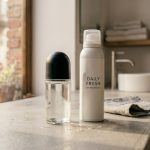
Until the beginning of the twentieth century, people were not trying to stop sweating itself; they were focused entirely on dealing with its consequences. The deodorants available at the time, the first examples of which appeared in the late nineteenth century, were fairly primitive zinc-based antibacterial pastes.
They only suppressed bacterial growth and masked natural body odor with heavy fragrances, doing nothing to protect clothing from becoming wet. The need for a product that could physically block sweat glands emerged not from cosmetics, but from surgery, where a surgeon’s sweaty hands posed a serious threat to precise movements during complex procedures.
The first effectively working formula was created by Cincinnati surgeon Abraham Murphy. In the early 1910s, he developed a special liquid solution for his own use, designed to keep his palms completely dry during lengthy surgical procedures and provide a reliable grip on a scalpel.
Edna Murphy, the inventor’s daughter, quickly recognized the commercial potential of her father’s invention and decided to test the surgical liquid on the underarms.
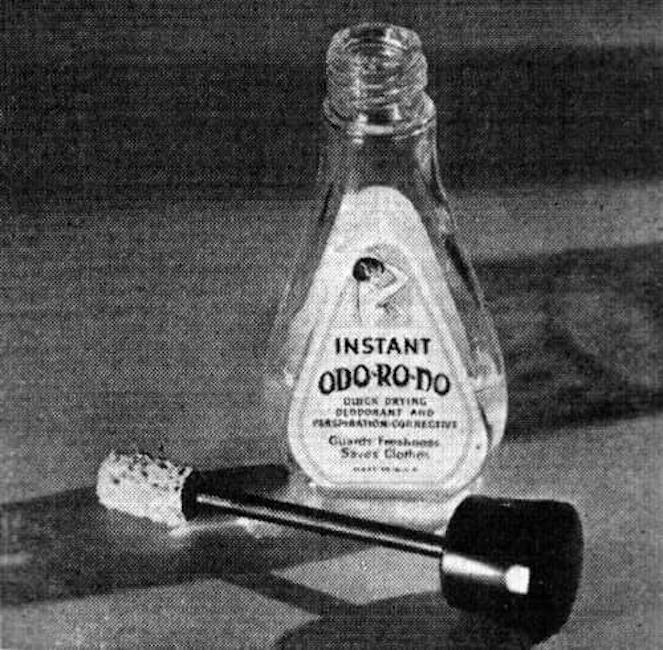
After confirming that the product could completely block moisture, she founded a company to produce the world’s first antiperspirant, ironically named Odorono. At first, the business faced strong public resistance: blocking the sweat glands artificially was considered unnatural and potentially harmful to the body.
- You may also be interested in: Deodorant vs. Antiperspirant: What’s the Real Difference?
How the Product Worked: Technology and Chemical Composition
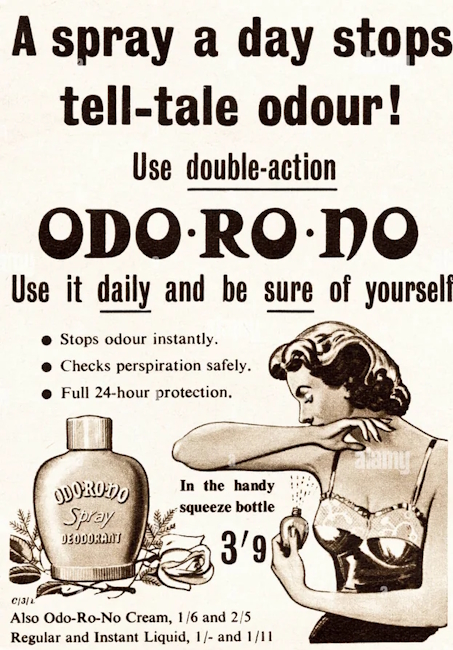
Technically, the first commercially successful antiperspirant was a concentrated aqueous solution of aluminum chloride with an extremely high level of acidity.
The mechanism of this inorganic compound was based on free aluminum ions penetrating deep into the ducts of the eccrine sweat glands. When they interacted with the proteins in sweat, coagulation occurred, creating dense polymer plugs that physically blocked the channels and prevented fluid from reaching the surface of the skin. The product appeared as a deep red liquid and was poured into small glass bottles with tightly fitted caps to prevent premature oxidation of the active ingredients.
Using the formula was radically different from applying modern roll-ons or sticks and required strict discipline. Because of its high acidity, the liquid was carefully applied to the skin with a cotton swab exclusively before bedtime, giving it time to work during the body’s period of minimal physical activity.
Users were strictly forbidden from getting dressed until the formula had completely dried. Wet aluminum chloride immediately triggered a destructive chemical reaction with fabric, leaving permanent crimson stains and literally burning through thin cotton or silk. Despite the risk of severe skin irritation if the instructions were not followed precisely, a single application provided complete dryness for up to three days, representing a genuine engineering and chemical breakthrough for its time.
The Atlantic City Breakthrough and the Marketing Revolution
For a long time, sales remained critically low and the company was on the verge of bankruptcy until a fortunate turn of events changed its prospects.
In the summer of 1912, Edna Murphy rented an exhibition booth at the popular resort of Atlantic City, hoping to attract wealthy customers. At first, vacationers ignored the strange medical product, but an unusually hot season made sweat-damaged expensive clothing such an immediate problem that women began trying the product out of desperation right at the exhibition.
The effect was extraordinary: word of the miraculous red liquid that kept dresses dry in 86-degree heat spread rapidly along the Atlantic Coast. By the end of the exhibition, Edna had sold every available unit and built a large base of loyal customers who began ordering the product by mail.
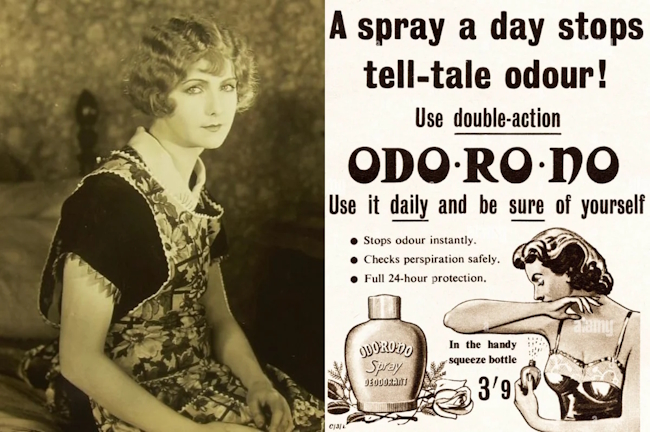
The final step that transformed antiperspirant from a niche emergency product into an everyday necessity came with a revolutionary 1919 advertising campaign created by the J. Walter Thompson agency. For the first time in the history of the American beauty industry, copywriters openly presented female sweating as a serious social taboo capable of quietly damaging romantic relationships and hurting a woman’s reputation. This harsh but effective marketing strategy finally broke through medical prejudices and permanently changed social norms, making control over a normal bodily function a basic standard of personal hygiene.
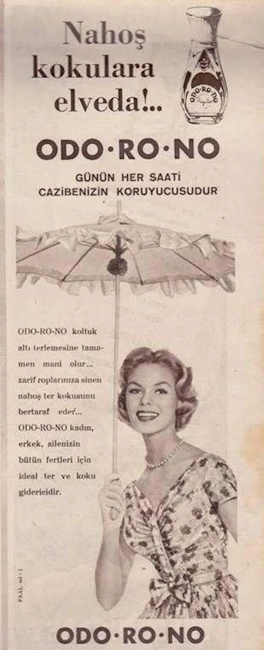
The publication of the provocative advertisement caused a major scandal in conservative American society.
Hundreds of outraged female readers canceled their subscriptions to the popular Ladies’ Home Journal, considering the direct discussion of body odor in print an unforgivable insult to their dignity. Paradoxically, however, the public shock triggered an unprecedented commercial boom, more than doubling the company’s profits in a single year. Copywriter James Webb Young, who created the text, demonstrated in practice that fear of social rejection sells a product far more effectively than simply describing its technical advantages, opening the door to an era of marketing built around exploiting hidden personal insecurities.
The rapid expansion of the customer base predictably exposed the product’s biggest weakness — its aggressive acidity, mentioned earlier.
As more women began using concentrated aluminum chloride regularly, the manufacturer faced a growing wave of complaints about permanently damaged clothing and severe chemical burns. To avoid losing the market it had just created, the company’s chemists had to urgently modify the original medical formula, introducing buffering agents to reduce the risk of irritation. This need gave a powerful push to the evolution of the product’s format: harsh liquid solutions were gradually replaced by gentler creams and emulsions that acted more mildly and did not require strict nighttime application.
The final transformation of antiperspirant from a product marketed primarily to women into a universal hygiene standard came with the expansion into the male market.
For a long time, society viewed heavy sweating as a natural sign of masculinity and hard physical work, so men strongly rejected such products as ridiculous women’s cosmetics. The industry broke that stereotype during the Great Depression by launching campaigns that directly linked body odor with professional incompetence, poor business instincts, and the risk of immediate dismissal. Once sweat stains on a shirt became associated with nervousness and business failure, the men’s segment began growing rapidly, establishing antiperspirant as an essential part of everyday life for the modern person.

Welcome to Poznayu.com!
My name is Alex, and I founded this project together with a team of like-minded professionals. At Poznayu.com, we create in-depth reviews, explore fascinating facts, and share well-researched, reliable knowledge that helps you navigate complex topics with confidence.
Our mission is simple: to explain complicated ideas in clear, accessible language. We believe that high-quality information should be available to everyone. Every article we publish is designed to provide practical value, actionable insights, and trustworthy analysis you can rely on.
Join our growing community of curious readers. Your feedback matters — share your thoughts in the comments, ask questions, and suggest topics you’d like us to cover next.