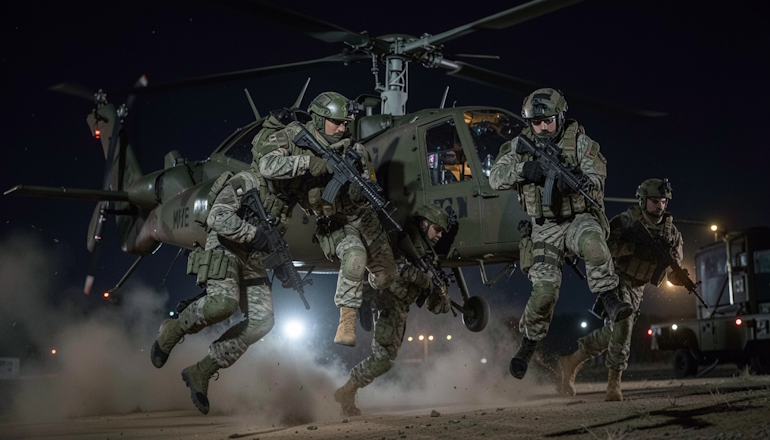
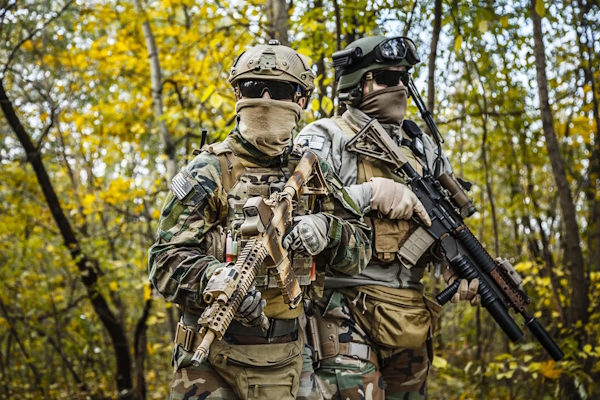
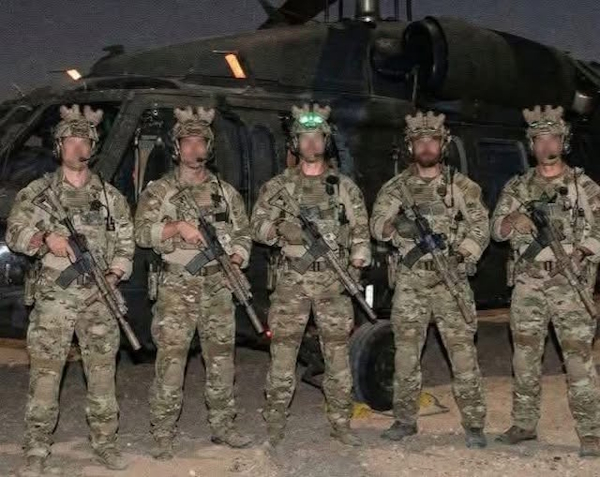
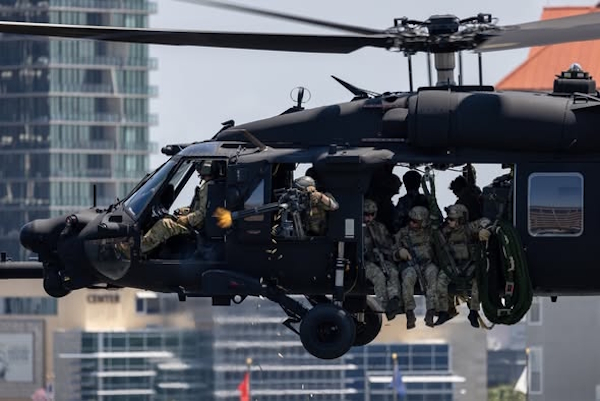
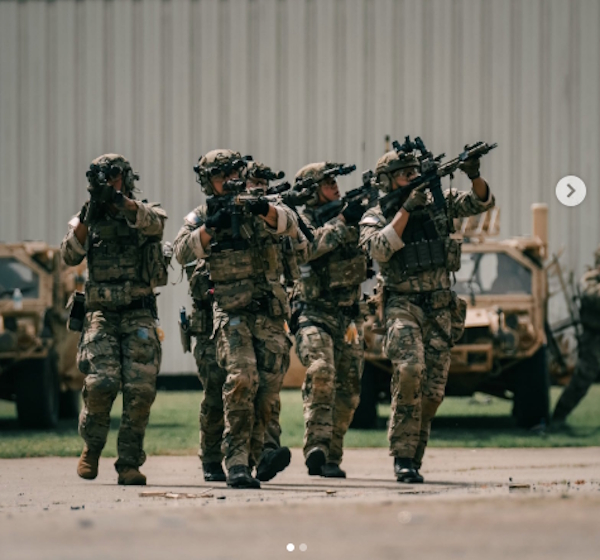
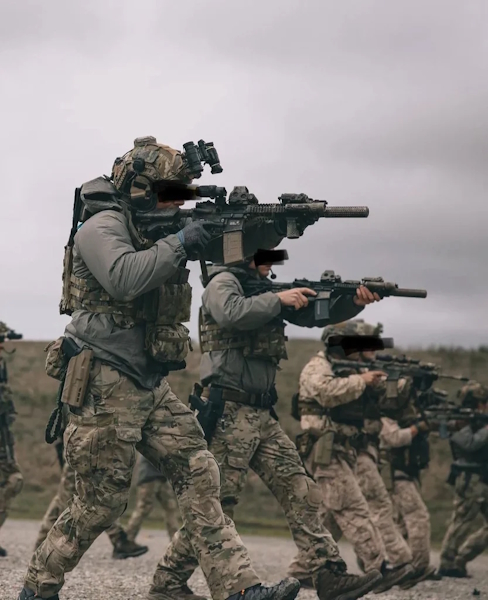
U.S. Special Operations Forces are the elite of the military, handling missions that regular troops simply cannot. They carry out counterterrorism operations, capture high-value targets, and provide support in the toughest conditions. Delta Force, Night Stalkers, the 75th Ranger Regiment, and other units work like one machine, where every part fits the others perfectly.
That is what makes American special operations forces among the most effective in the world.
What U.S. Special Forces Are, in Simple Terms for Anyone Just Getting Started
Think of the regular army as a big truck hauling everything at once. Special operations forces are more like a surgical instrument, built to work only where needed, fast and without unnecessary noise. They are not standing in parade formation. They are carrying out missions that later show up in the news, or that no one ever talks about at all.
In the United States, these units are grouped under one command: SOCOM. That is where the guys who passed a selection process that weeds out 90 percent of volunteers end up. They train for years: parachuting at night, swimming in freezing water, learning to break into any lock, and speaking the enemy’s language.
The main difference from regular soldiers is that they work in very small teams. Not by the thousands, but in groups of four or five. One such team can do what would otherwise take an entire unit.
And one more thing: they are always ready. While regular troops are waiting for orders, special operators are already in the air or on the water. That is their style — move first, disappear without a trace.
Delta Force (1st Special Forces Operational Detachment-Delta)
Delta Force was created in 1977 specifically to fight terrorism and rescue hostages. The selection process is tougher than for any other unit: candidates live under constant stress for months, and in the end fewer than ten percent make it through. It is not just a test of physical fitness. It is a test of whether someone can handle the psychological pressure when every day could be the last.
They operate in complete secrecy. Their main missions are capturing high-value targets, reconnaissance behind enemy lines, and operations where a mistake costs lives. Delta often works alongside other units, but it always remains the main strike force. That is why they are called the first response to the hardest threats.
In real conflicts, Delta operators have proven themselves in Iraq, Afghanistan, and in the takedowns of terrorist leaders. Their tactics are built on surprise and a very small number of people. They show up quietly, do the job, and leave so fast the enemy does not even know who hit them.
To this day, Delta Force remains one of the most secretive units. They do not give interviews, they do not appear in movies, and they keep training as if war could start tomorrow. For them, this is not a job. It is a way of life that does not end when they leave the base.
Night Stalkers (160th Special Operations Aviation Regiment)
The Night Stalkers are the pilots who go where others will not even try. They deliver special operations forces into the most inaccessible places at night, without lights and with minimal noise. One wrong move, and the whole team could be dead before the mission even begins.
Their helicopters — the MH-6 Little Bird, MH-60 Black Hawk, and MH-47 Chinook — are modified for special operations. Pilots train to fly at extremely low altitude while avoiding radar and anti-aircraft fire. They know how to land and take off in places where regular aviation would not even think about going near.
The Night Stalkers have taken part in almost every major U.S. operation over the last forty years. They provided support during the raid on bin Laden and in thousands of other missions. Without their skill, many operations simply would not have happened.
Without them, the rest of the special operations community could not function. They are the eyes, ears, and legs of the whole system, and their skill often decides whether a team comes home or not. That is why pilots in the Night Stalkers are respected by everyone who has ever gone into battle with them.
75th Ranger Regiment
The Rangers are the assault infantry of special operations forces. They seize airfields, conduct raids, and clear terrain faster than anyone else. When speed and aggression are required, this is who gets called.
Selection for the regiment happens in several stages, and the physical demand is extreme. Rangers have to run, swim, shoot, and think at the same time. Many candidates break down in the first few weeks because the pressure never lets up.
They act like the heavy artillery of special operations: when the job has to be done fast and hard. In Afghanistan and Iraq, the 75th often went in first and opened the way for everyone else. Their style is speed and momentum.
Today, the Rangers remain the largest elite unit in U.S. special operations. They are the fist that hits first and does not let the enemy recover. Even after leaving the regiment, many go on to serve as instructors or in other elite units.
Navy SEALs (United States Navy SEALs)
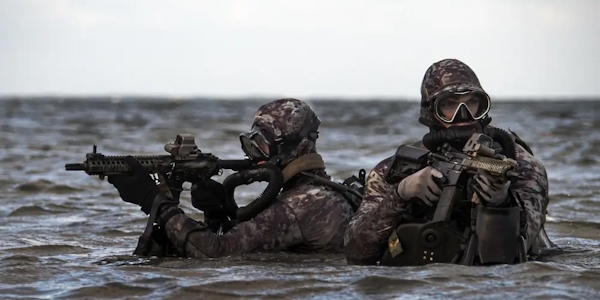
The SEALs are masters of operating on and under water. They can come out of the ocean, seize a target, and vanish as if they were never there. That is their signature style — silence and surprise.
SEALs train in the most extreme conditions: cold, heat, pressure. Their specialty is maritime assaults, sabotage, and coastal reconnaissance. Where a regular soldier would simply not survive, they feel at home.
They have taken part in hundreds of operations around the world, including the famous raid on bin Laden. The SEALs combine strength, endurance, and the ability to work as a team. Every operator knows that equally skilled professionals are covering him from behind.
Today, the Navy SEALs remain one of the most well-known units. Their experience is passed on to the next generation, and they continue to be ready for any scenario. For them, it makes no difference whether the environment is the ocean, the jungle, or city slums.
Green Berets (United States Army Special Forces)
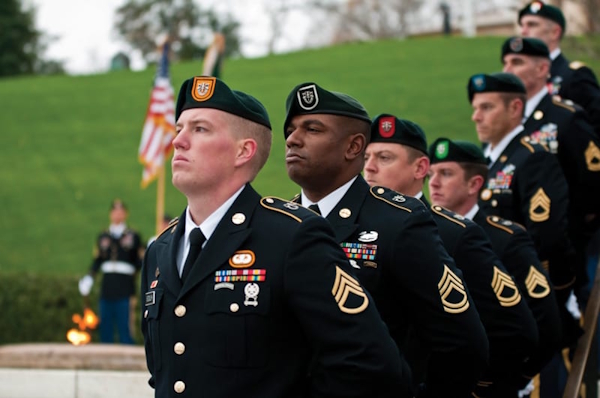
The Green Berets are the ones who fight with both weapons and brains. They train local allies, organize guerrilla units, and carry out long-term operations deep inside enemy territory. Their war often lasts months, not hours.
Every Green Beret speaks several languages and understands multiple cultures. They live among local populations for months to learn how to operate effectively. They are not just soldiers — they are diplomats in uniform.
Their style is not the quick strike. It is patient, intelligent work. The Green Berets were instrumental in building resistance movements in various conflicts of the last century. They change the situation from within instead of just destroying a target.
Today, they remain specialists in unconventional warfare. When strategy matters more than brute force, this is who gets the call. That is exactly why they are respected even by people who have never seen them in combat.
MARSOC (United States Marine Corps Forces Special Operations Command, Marine Raiders)
The Marine Raiders are a relatively young unit, created in 2006. They combine Marine training with special operations tactics and work wherever speed and precision are needed. For them, there is no real boundary between sea and land.
MARSOC carries out direct action, reconnaissance, and partner training. Its operators go through a selection process shaped by the realities of maritime operations. That is why they are equally comfortable on the water and in the mountains.
They have already proven themselves in Afghanistan and other hot spots. The Raiders are the fresh blood of the U.S. special operations system. They learn quickly and apply what they learn even faster.
Today, MARSOC continues to grow and show that Marines can be more than just an assault force — they can also be the elite of special operations. Their time is only beginning, and they are already showing what they can do.
Other Units
Beyond Delta Force, Night Stalkers, Rangers, SEALs, Green Berets, and MARSOC, U.S. special operations still include several highly classified units that rarely come up in public discussion—but the system doesn’t function without them.
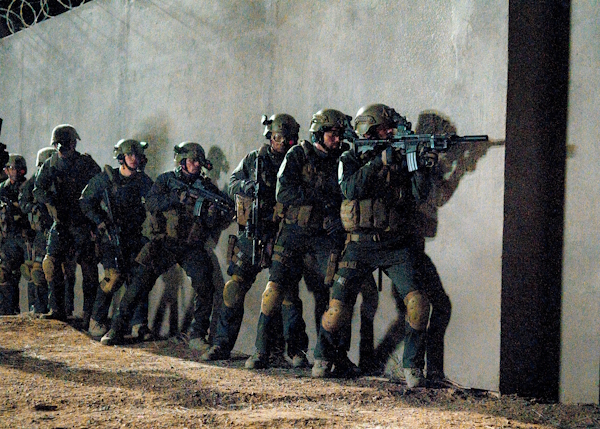
The most well-known is DEVGRU (Naval Special Warfare Development Group), also known as SEAL Team 6 (shown above), an ultra-elite unit within the SEALs that handles the most complex and politically sensitive missions. Another is the Air Force’s 24th Special Tactics Squadron, which includes pararescuemen, combat controllers, and reconnaissance specialists who provide precise, real-time support to Tier 1 units during operations.
There’s also the Intelligence Support Activity (ISA)—a deeply covert intelligence unit that gathers critical data and operates behind enemy lines, feeding actionable intelligence to other teams. These units operate in the shadows, but they’re often the deciding factor when conventional special operations forces reach their limits.
Comparison With Similar Units in Russia
There are no direct copies of U.S. special operations forces in Russia. The systems for recruitment, training, and mission sets are very different. But the closest equivalents in function are Spetsnaz GRU, FSB Alpha, Vympel, and naval special forces. Here is a table for clarity.
U.S. Unit
Closest Russian Counterpart
Main Tasks
Key Differences
Delta Force
FSB Alpha Group
Counterterrorism, target capture, hostage rescue
Delta is more focused on overseas operations, while Alpha is more focused on domestic and counterterror missions
Night Stalkers
Russian special aviation and army aviation
Night insertions, air support
Night Stalkers are more narrowly specialized for SOF, while Russian counterparts are broader in scope
75th Ranger Regiment
45th Guards Spetsnaz Brigade, GRU
Raids, objective seizure, light infantry
Rangers act more like an assault force, while the Russian equivalent is closer to reconnaissance and sabotage
Navy SEALs
Naval special forces, Russian Navy
Maritime assaults, underwater sabotage
SEALs have more experience with global operations, while Russian units are strong in coastal areas
Green Berets
GRU Spetsnaz units
Guerrilla training, unconventional warfare
Green Berets focus more on working with local populations, while GRU is more centered on reconnaissance and strikes
MARSOC (Marine Raiders)
Marine infantry special units and special forces
Direct action, reconnaissance in coastal areas
MARSOC is younger and more tightly integrated into SOCOM, while Russian equivalents are spread across different agencies
In the end, U.S. special operations forces are built as one system under a single command, and that gives them an advantage in coordination.
Russian units are strong in experience and the harshness of their training, but they operate in a more fragmented structure.
Each unit handles its own missions in its own way, and that is what makes the special forces of both countries worthy of professional respect.
Welcome to Poznayu.com!
My name is Alex, and I founded this project together with a team of like-minded professionals. At Poznayu.com, we create in-depth reviews, explore fascinating facts, and share well-researched, reliable knowledge that helps you navigate complex topics with confidence.
Our mission is simple: to explain complicated ideas in clear, accessible language. We believe that high-quality information should be available to everyone. Every article we publish is designed to provide practical value, actionable insights, and trustworthy analysis you can rely on.
Join our growing community of curious readers. Your feedback matters — share your thoughts in the comments, ask questions, and suggest topics you’d like us to cover next.