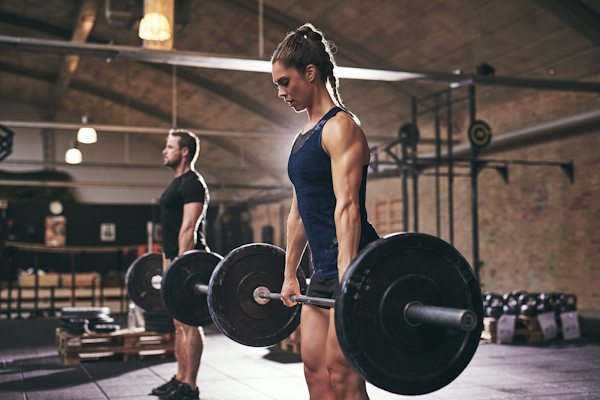
Free weights are a foundational tool for building strength and adding mass, because they demand more from stabilizers and allow fuller ranges of motion. Below I explain why free-weight training tends to produce greater overall muscle mass and give practical, indirect-exercise examples for specific muscles so you can program them into compound work.
Free weights allow a fuller, more natural range of motion than most machines, so muscles move and load through their true movement paths. That expanded range recruits more motor units across prime movers and assisting muscles, increasing the total stimulus for hypertrophy when compared with constrained machine paths.
Working with barbells and dumbbells forces stabilizer muscles to engage to control the bar path or balance the load, creating additional tension and metabolic demand beyond what the target muscle alone experiences. That broader recruitment contributes to systemic anabolic signaling and helps explain why trainees often gain more mass using compound, free-weight patterns.
Progression is straightforward with free weights: you can add small increments of load, change leverage, or vary the eccentric and concentric emphasis to keep the growth stimulus climbing. Those clear, scalable progression paths are essential for long-term hypertrophy because they let you increase mechanical tension reliably over months and years.
Free-weight compound exercises also improve intermuscular coordination and functional strength, which increases the amount of weight you can safely move in big lifts. As your capacity in heavy, multi-joint movements goes up, so does the absolute stimulus delivered to the muscles that contribute to those lifts, accelerating mass gains.
Finally, free weights permit a wide variety of variations and loading schemes—heavy low reps, moderate reps with pauses, tempo manipulation—that let you target both mechanical tension and metabolic stress without switching to machines. That flexibility makes it easier to design blocks that alternate between strength focus and hypertrophy volume while still relying on the same core movements.
When and in which free-weight exercises a target muscle is engaged indirectly
We won’t cover everything—there’s too much—so we’ll focus on the major muscle groups. Below is a breakdown of muscle groups with free weight exercises that engage the target muscle not as the primary mover, but as a stabilizer or secondary muscle.
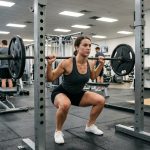
And yes, the photo above is real. The athlete has been training for three years from scratch using only free weights. His “blast and cruise” approach (one year of experience) consists of: testosterone enanthate at 250 mg per week as a base, plus Anavar (50 mg) and Turinabol (25 mg per day). This combination adds dry muscle mass and helps improve strength without significant water retention.
This stack is generally considered moderate and suitable for a “blast and cruise” approach. It’s oriented toward quality mass gains while maintaining definition, provided diet is strictly controlled.
Back to the article’s topic. For each muscle group, we’ll list one or two exercises—again, we won’t cover every possible option:
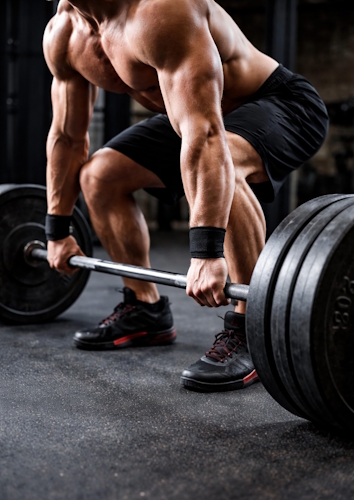
Biceps — Bent-Over Barbell Row (Reverse Grip) Targeting the Lats. In this movement, the biceps act as elbow flexors and bear isometric load while pulling the bar toward the torso, especially with a supinated grip. The primary work hits the lats, but the biceps receive significant indirect stimulation. Also, the deadlift (conventional or sumo). In the deadlift, the biceps and forearms take on heavy isometric load while gripping the bar throughout the movement, particularly if you use an underhand (supinated) grip—palms facing upward.
Medial Delt — Surprisingly, the Two-Hand Overhead Dumbbell French Press. While holding the dumbbell overhead, the medial delt stabilizes the shoulder joint and helps control arm position. Although the movement targets elbow extension (triceps), the shoulder girdle works hard as a stabilizer. Pay attention to the pump in the medial delts after this exercise, especially when using full range of motion. Also, the upright row: during this exercise, the medial delt acts as an assisting muscle alongside the traps, lifting and controlling the shoulder joint.
Rear Delts — Seated Behind-the-Neck Barbell Press. In the top phase, the rear delt helps stabilize the shoulder and control the path of the bar, especially with strict technique. The primary load hits the front and medial delts, but the rear delt gets additional activation as a secondary muscle. We can also add the bent-over barbell row and wide-grip pull-ups. In the bent-over row, the rear delts pick up extra work during scapular retraction and holding the elbows at the top, even though the main focus is the back. In wide-grip pull-ups, the rear delt assists in scapular retraction, particularly if you emphasize the horizontal pulling component.
Front Delt — Dumbbell Bench Press (Flat or Incline) and Standing Barbell Overhead Press. In the bench press, the front delt helps drive the weight up from the chest, especially on an incline where the angle increases its involvement. In the standing overhead press, the front delt is active at the start and in the top phase, keeping the shoulder joint stable.
Traps — Dumbbell Lateral Raises. As you raise your arms, the traps stabilize the shoulder blades and shoulder girdle, holding them in proper position. The movement targets the delts, but the traps work as supporting muscles. The deadlift also contributes: the upper traps stabilize the shoulder girdle under heavy loads and activate maximally in the top phase of the deadlift.
Middle Traps and Rhomboids — Bent-Over Barbell Row. During scapular retraction, these muscles engage as primary stabilizers. They work indirectly, providing scapular retraction throughout the row. The middle traps, together with the rhomboids, function as the main scapular retractors in pulling movements.
Forearms — Bent-Over Barbell Row to Chest. While gripping the bar, the forearms work isometrically, ensuring a strong hold. Additional stress comes from stabilizing the wrist and controlling the weight. And again, the deadlift: both the deadlift and farmer’s walks demand powerful, sustained gripping, forcing the forearms to work isometrically throughout the set. This provides excellent overall stimulus for forearm growth without needing isolation exercises.
Chest — Close-Grip Bench Press (Triceps Focus). Despite the emphasis on triceps, the chest muscles help press the weight and stabilize the shoulder. Their contribution is especially noticeable in the initial phase of the movement. There’s also a rarer exercise: the lat pullover (distinct from the chest pullover)—it stretches the ribcage and simultaneously engages the lats, putting the chest under load in a stretched position.
Triceps — Bent-Over Dumbbell Rear Delt Raises. Although this exercise targets the rear delt, the triceps may engage as stabilizers during the lockout phase. The main work stays with the rear delts, but the triceps receive secondary activation. Of course, the regular bench press also loads the triceps well. In the bench press, the triceps act as assisting elbow extensors in the final phase. In the standing overhead press, they stabilize arm extension at the top, especially with full elbow extension.
Abs — Deadlift and Back Squat. In these heavy compound movements, the core muscles work statically: the abs hold the spine and transfer force between the upper and lower body. The isometric tension in the abs under heavy weight provides a powerful stimulus for developing abdominal mass and the deep core musculature.
Conclusion and practical recommendations
If your primary goal is total-body mass, center your program on heavy, multi-joint free-weight movements with progressive overload and adequate volume. Compound lifts produce both direct and indirect loading of almost every major muscle group, so including them as the training spine will maximize the cumulative hypertrophic effect.
Structure training blocks with phases of heavier loads and lower reps for strength, alternating with higher-volume blocks to promote sarcoplasmic and muscular hypertrophy; in each block include the indirect compound movements listed above to stimulate targeted muscles without excessive isolation.
Prioritize technique and gradual loading progression—free weights demand stability and motor control, and those qualities are what allow you to increase weight safely and reliably, which ultimately drives greater overall mass.
Dmitry Volkov – is the author of our bodybuilding section is a practicing sports medicine physician based in Dallas, Texas, with 21 years of hands‑on experience in sports pharmacology. At 42, he combines deep academic knowledge with real‑world expertise gained from coaching athletes of all levels — from amateurs to seasoned competitors. He earned his medical degree from a leading Texas institution and spent years working in sports medicine clinics and private practice.
His primary focus is hormonal regulation of muscle growth, the use of anabolic steroids and peptides, and post‑cycle recovery. He understands modern protocols inside out because he consults real people every day, helping them avoid side effects and achieve safe results. His approach is rooted in evidence‑based medicine, yet remains grounded in the realities of both amateur and professional sports.
In his articles, he aims to debunk myths and deliver clear, scientifically sound recommendations. Every piece of content is vetted not only by medical knowledge but also by years of clinical observation. He firmly believes that responsible pharmacology requires a solid grasp of biochemistry, respect for one’s body, and regular medical monitoring — and he works hard to convey these principles in a way that is both accessible and actionable for his readers.