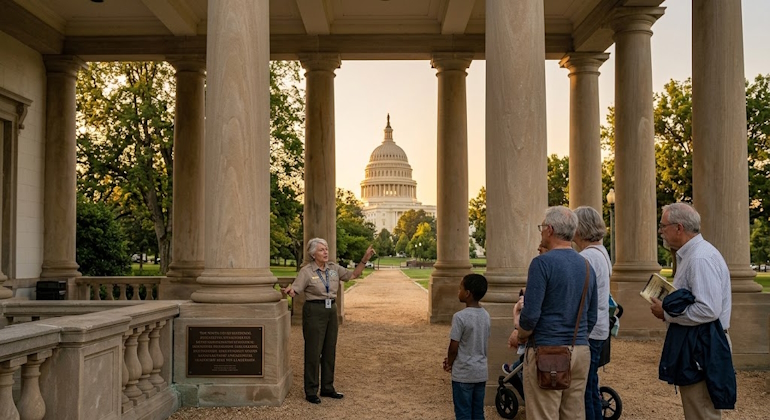
The history of the United States is inseparably connected with national leaders whose political decisions shaped not only the country’s domestic structure but also the global world order.
Evaluating the historical significance of a president depends on their ability to overcome major crises, drive economic development, and protect constitutional principles during defining moments. It is during periods of deep national upheaval — whether civil conflict, economic depression, or geopolitical instability — that the true scale of a leader’s impact becomes clear.
A detailed analysis of five key figures in American history reveals the evolution of the presidency from the founding of the republic to the realities of the modern global economy.
George Washington (1789–1797)
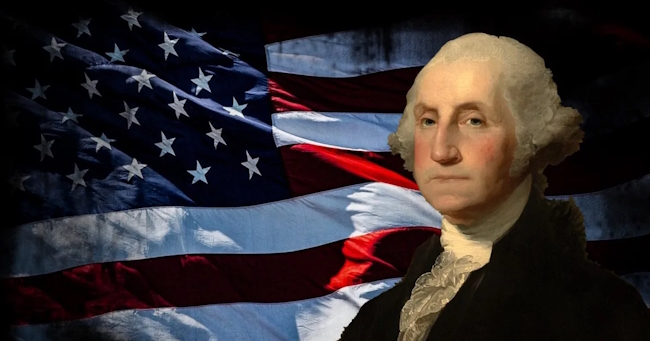
The first president of the United States established the fundamental principles of executive power, transforming abstract constitutional concepts into functioning government institutions.
Washington voluntarily rejected royal titles and lifetime rule, establishing the address “Mr. President” as a symbol of the new republic’s democratic character. His cautious but decisive leadership allowed the young nation to survive its most unstable early years of independence, avoiding fragmentation into a loose collection of competing territories.
In economic and foreign policy, his administration demonstrated remarkable foresight. By supporting Alexander Hamilton’s financial program, Washington helped establish a national bank, consolidate state debts, and create a stable credit system. Internationally, he firmly followed the Neutrality Proclamation, protecting the young United States from being drawn into destructive European conflicts between Great Britain and revolutionary France.
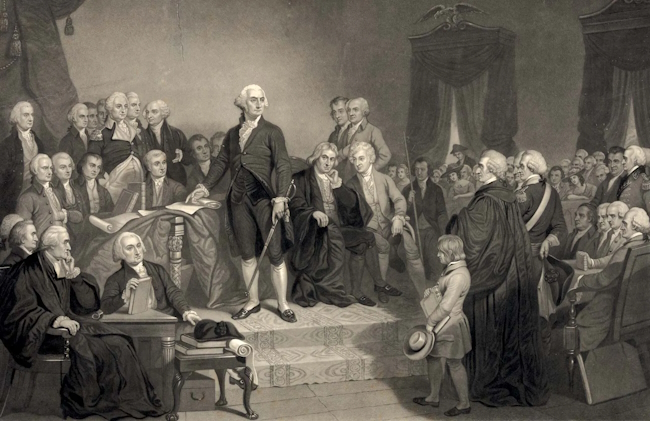
Washington’s historical legacy was permanently secured by his decision to leave office after two terms. This unprecedented act of peaceful power transfer at the end of the eighteenth century established an informal standard that lasted for more than a century. In his famous Farewell Address, he left the nation a political warning against the dangers of excessive partisan division and permanent foreign alliances.
George Washington appears on the $1 bill, as well as on coins: the 25-cent quarter and a commemorative $1 coin.
Abraham Lincoln (1861–1865)
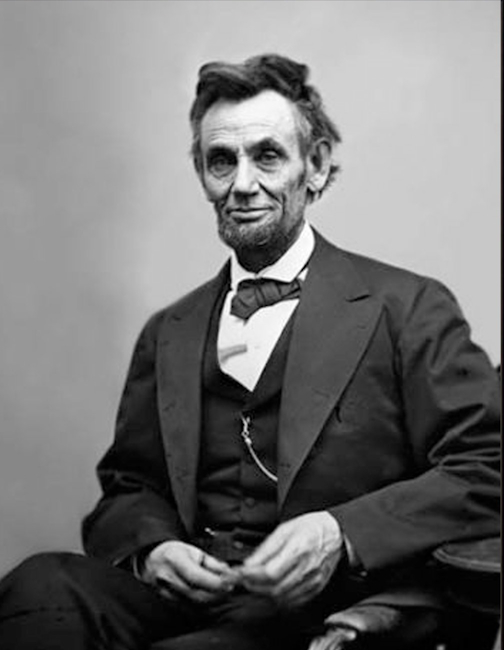
The sixteenth president took leadership of the country during its most severe existential crisis — the beginning of the Civil War.
Lincoln’s greatest achievement was his unwavering determination to preserve the Union at any cost despite early military failures, enormous human losses, and intense political opposition. He skillfully balanced between radical abolitionists and conservative Union supporters, keeping loyal slave states from leaving the nation.
The Emancipation Proclamation fundamentally changed the strategic and moral nature of the conflict. What began as a struggle to preserve territorial unity became a larger battle for human freedom, eliminating any possibility that European powers would diplomatically recognize the Confederacy. This decision created the legal foundation for the Thirteenth Amendment to the Constitution, which permanently abolished slavery throughout the United States.
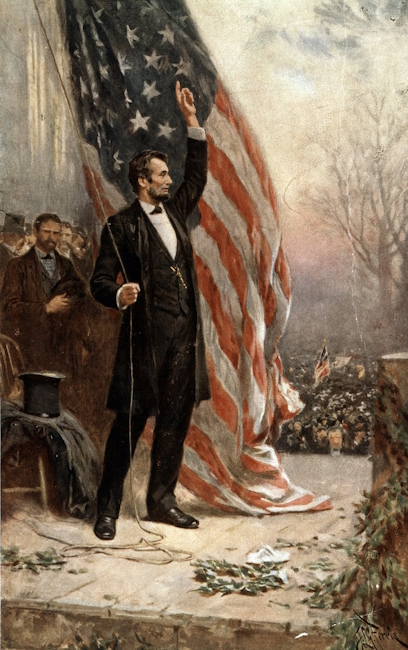
Beyond his military leadership, Lincoln introduced a series of economic reforms that shaped the direction of American capitalism for decades. The signing of the Homestead Act encouraged the large-scale settlement of western lands by independent farmers. At the same time, the Pacific Railway Acts launched construction of the transcontinental railroad, connecting previously separated regions into a unified national economy.
Abraham Lincoln appears on the $5 bill, as well as on coins: the 1-cent penny and a commemorative $1 coin.
Franklin D. Roosevelt (1933–1945)
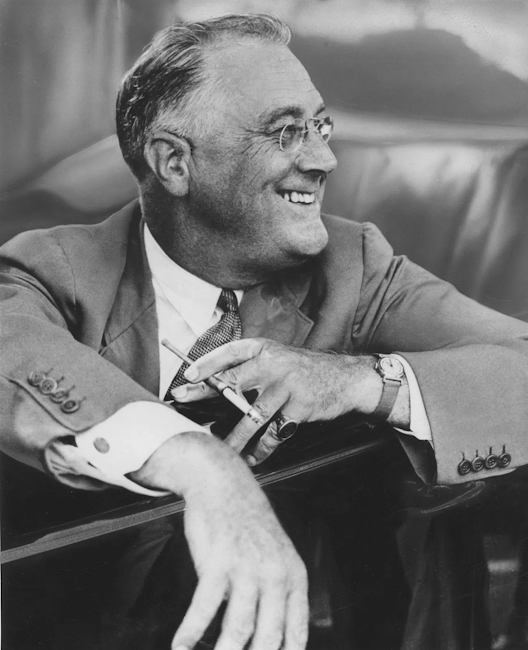
The thirty-second president took office when the United States was at the lowest point of the Great Depression, with unemployment reaching twenty-five percent and the banking system facing complete collapse.
His New Deal program transformed the approach to macroeconomic management by dramatically expanding the role of the federal government. During his first hundred days in office, the administration introduced emergency banking measures, restored public confidence in financial institutions, and launched large-scale public works programs that provided jobs for millions of Americans.
Roosevelt’s domestic policies shaped the modern American welfare system. The creation of Social Security guaranteed retirement benefits for older Americans and unemployment assistance, establishing the foundation of the country’s social safety net. The Glass–Steagall Act separated investment banking from commercial banking, reducing speculative risks involving depositors’ money, while federal electrification programs transformed daily life in underdeveloped rural areas.
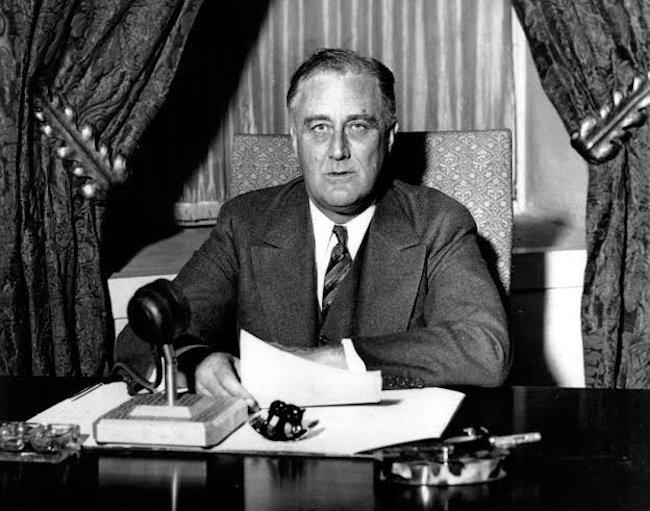
During World War II, Roosevelt transformed the United States into the global “arsenal of democracy,” mobilizing enormous industrial resources without turning the country into a totalitarian state. His diplomatic leadership at the conferences of the Allied powers helped coordinate efforts to defeat the Axis nations. At the same time, he helped establish the framework of the postwar international order by initiating the creation of the United Nations and the Bretton Woods financial system.
Franklin D. Roosevelt appears on the 10-cent dime and a commemorative $1 coin.
Ronald Reagan (1981–1989)
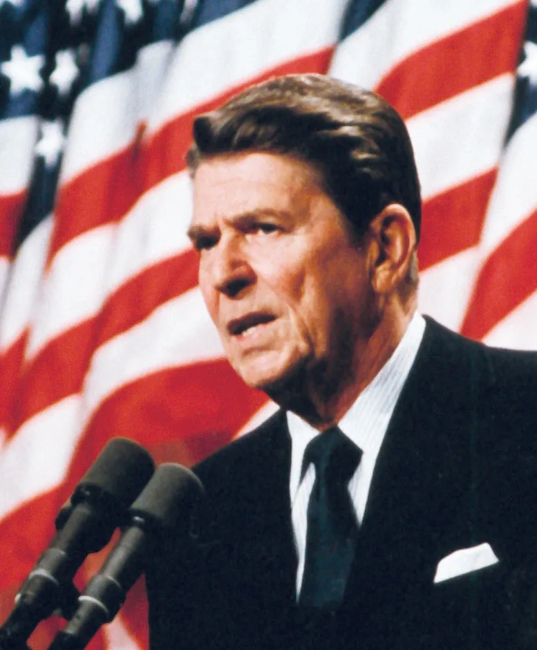
The fortieth president entered the White House during a period of deep systemic crisis marked by double-digit inflation, economic stagnation, and declining national confidence following the Vietnam War.
The implementation of “Reaganomics,” based on supply-side economics, fundamentally changed the country’s fiscal policy. Major tax reductions, business deregulation, and strict control over monetary policy helped break the cycle of stagflation and triggered one of the longest periods of economic expansion in U.S. history.
The Reagan administration carried out a major tax reform that reduced the top marginal income tax rate from seventy percent to twenty-eight percent. This released significant amounts of private capital, encouraging investment in high-tech industries and creating millions of new jobs. The economic recovery was accompanied by a powerful ideological revival — Reagan restored public confidence in American exceptionalism and the effectiveness of free-market principles.
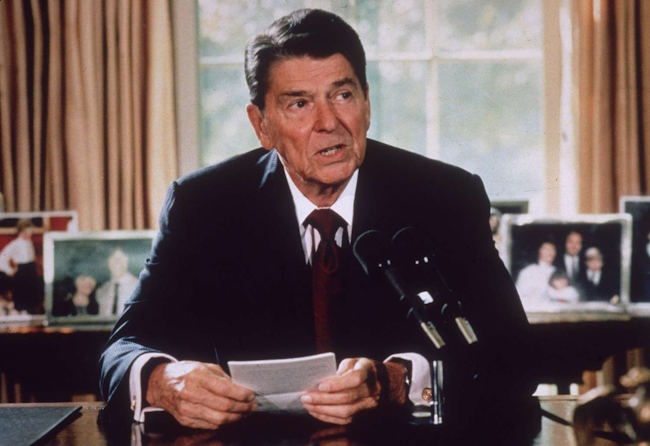
The foreign policy doctrine of “peace through strength” played a decisive role in ending the Cold War. A massive increase in defense spending and the launch of the Strategic Defense Initiative placed additional pressure on the Soviet Union during an expensive arms race. This strategy, combined with later diplomacy and direct negotiations with Mikhail Gorbachev, contributed to historic agreements on nuclear arms reductions and the collapse of the Soviet bloc.
Ronald Reagan appears on the “Presidents” series collectible $1 coin (2016).
Donald Trump (2017–2021, 2025–)
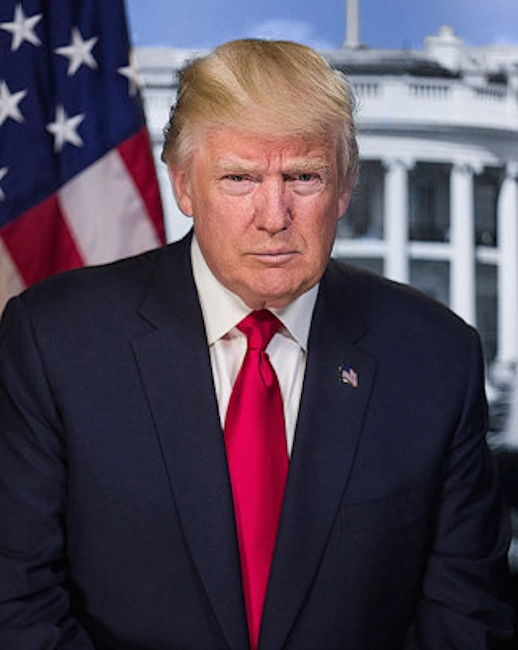
The forty-fifth president became a catalyst for a broad reassessment of traditional political elites and economic approaches.
His “America First” agenda challenged established globalization policies by emphasizing domestic manufacturing, national economic interests, and the renegotiation of international agreements considered unfavorable to the United States. The Trump administration replaced the previous NAFTA agreement with the new USMCA trade deal, which prioritized American industry and strengthened intellectual property protections.
A major domestic economic achievement was the signing of the Tax Cuts and Jobs Act of 2017. The significant reduction in the corporate tax rate encouraged companies to bring capital back into the United States and contributed to historically low unemployment levels across demographic groups before the pandemic. At the same time, a broad campaign to remove regulatory barriers helped the United States achieve energy independence after decades, becoming the world’s largest exporter of oil and natural gas.
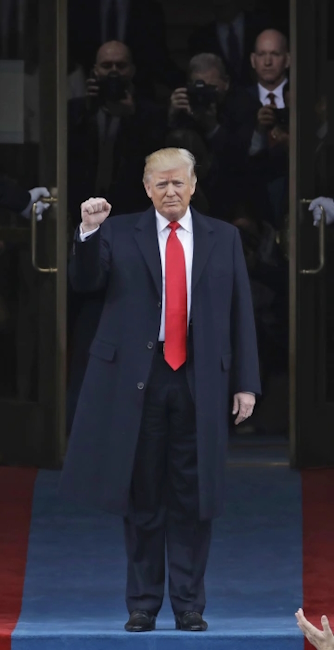
On the foreign policy stage, Trump pursued an unconventional pragmatic strategy:
- He became the first modern leader to launch a major tariff confrontation with China, highlighting concerns over technology theft and trade imbalances.
- His administration helped establish the Abraham Accords, normalizing relations between Israel and several Arab nations without military intervention.
- His pressure on NATO members to increase defense spending toward the agreed two percent of GDP significantly changed the financial dynamics of the alliance.
The contribution of Donald Trump and the MAGA movement in the United States is reflected in a significant shift in the country’s political direction: stronger emphasis on the “America First” approach, greater focus on protecting domestic industries, stricter immigration enforcement, reduced business regulation, and a more aggressive stance on international trade.
MAGA also fundamentally reshaped the Republican Party, created a new electoral coalition, and moved political debate toward issues of national sovereignty, border security, and cultural identity. Supporters view this as a restoration of control and a stronger focus on the interests of American citizens, while critics point to increased political polarization and controversial policy decisions.
Donald Trump appears on the “250th Anniversary of the United States” commemorative $1 coin (2026).
The existence of banknotes featuring Donald Trump’s portrait is explained by the fact that such items are only private souvenirs, collectible products, or political merchandise, and are not official U.S. currency. U.S. law (31 U.S. Code § 5114) prohibits placing portraits of living individuals on government-issued dollar bills — only deceased historical figures may appear on federal currency.
Historical Significance and Political Legacy
Evaluating the greatness of U.S. presidents requires understanding the historical circumstances surrounding their administrations.
The tools and strategies that helped preserve the nation in the eighteenth or nineteenth centuries are fundamentally different from the methods of leadership required in the era of global markets and digital technology. Each of the leaders discussed made difficult, and often highly unpopular decisions at the time, based on their vision of long-term national interests.
Washington and Lincoln established and preserved the physical and legal foundations of the United States. Roosevelt and Reagan modernized the economic model, adapting capitalism to the challenges of the twentieth century and strengthening America’s global influence. Trump, in turn, restarted the debate over the limits of globalization, forcing political and economic systems to focus more heavily on domestic resources and a pragmatic defense of national interests.
Ultimately, a great leader is not simply a politician who responds to immediate challenges, but one who changes the country’s broader direction of development. Their political legacies continue to influence modern legislation, foreign policy doctrines, and economic strategies, demonstrating that decisions made by strong executive leadership can shape the course of world history.

Welcome to Poznayu.com!
My name is Alex, and I founded this project together with a team of like-minded professionals. At Poznayu.com, we create in-depth reviews, explore fascinating facts, and share well-researched, reliable knowledge that helps you navigate complex topics with confidence.
Our mission is simple: to explain complicated ideas in clear, accessible language. We believe that high-quality information should be available to everyone. Every article we publish is designed to provide practical value, actionable insights, and trustworthy analysis you can rely on.
Join our growing community of curious readers. Your feedback matters — share your thoughts in the comments, ask questions, and suggest topics you’d like us to cover next.