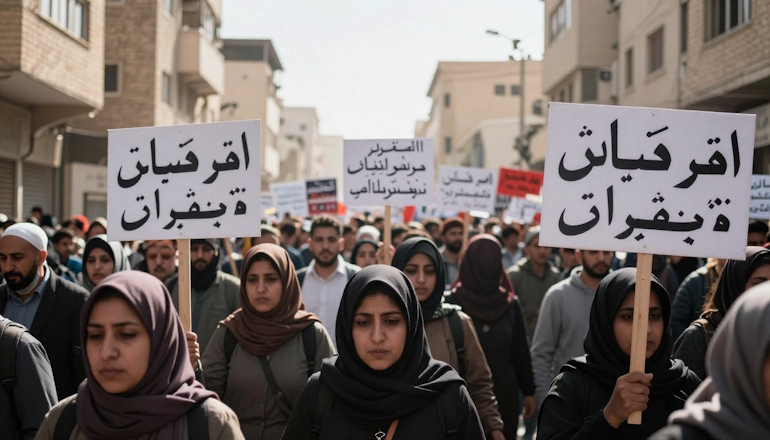
The Iranian regime has been one of the main sources of instability in the Middle East for decades. Its rule is built not on the will of the people, but on fear, repression, and violence. When the United States and Israel launched a military operation against Tehran in February 2026, many people asked the same question: was it justified?
A review of the Iranian regime’s crimes shows that this threat could not go on forever, and Trump’s actions were not an act of aggression, but a necessary step to prevent a far greater disaster.
What is the Iranian regime, really?
Do not let the words “Islamic Republic” fool you. This is not a republic in any normal sense:
- It is a theocratic dictatorship, where all power belongs to the Supreme Leader, the ayatollah, not the people.
- Elections are held, but only among candidates approved by the regime, and they offer no real alternative.
- Civil society is crushed, and any criticism of the government is punished with prison or death.
- It is a system where the interests of a small group of clerics and commanders of the Islamic Revolutionary Guard Corps (IRGC) are placed above the lives of 90 million people.
And this system has no moral right to exist.
Mass terror and executions
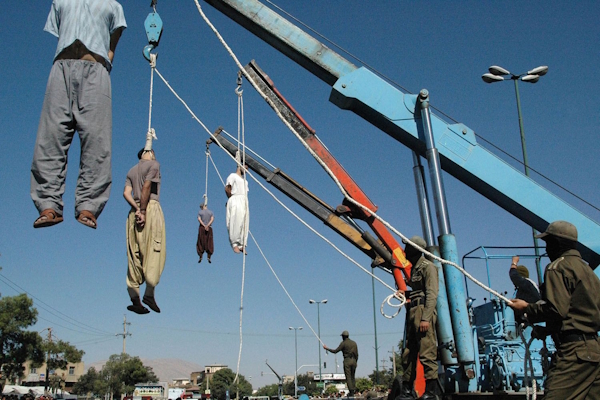
The regime in Tehran is one of the bloodiest in the modern world.
- In 2025, the Iranian authorities executed at least 1,639 people, almost twice as many as in 2024.
- In just the first three months of 2026, 145 executions were confirmed, and more than 400 more were unconfirmed.
- Among those killed were women convicted on fabricated charges, political activists, and even minors.
And the executions continued even during the military conflict, when the regime claimed to be focused on an external threat. That number of death sentences has nothing to do with justice — it is state terror designed to intimidate the population.
Oppression of women by law
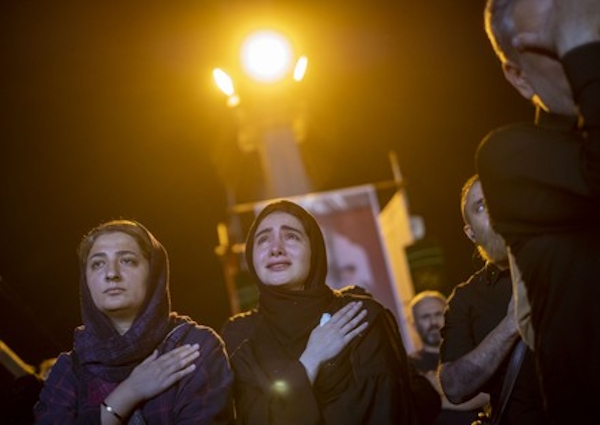
Women in Iran are officially treated as second-class citizens:
- they are forbidden from going outside without a hijab
- they receive half as much inheritance as men
- and their testimony in court counts for only half as much.
Female activists who fight for their rights face arrest, torture, and even death sentences. In 2025, at least 47 women were executed — the highest number in the last two decades. Among them were victims of forced marriages and simply women who dared to speak out against abuse.
The regime physically destroys those who demand freedom — and if that is not proof of its absolute immorality, what is?
Executions of homosexuals and dissidents
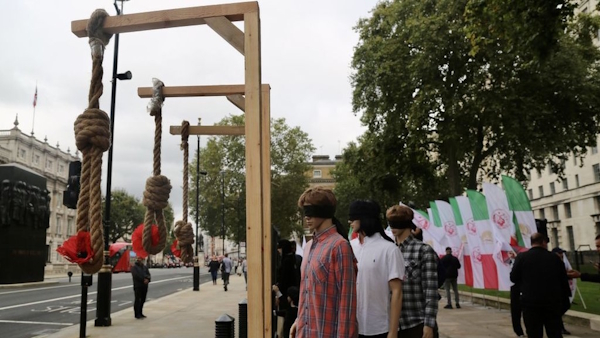
In Iran, homosexuality is punishable by death.
- People are hanged for their orientation, for blasphemy, for leaving religion, and for taking part in peaceful protests.
- The courts there are not independent — they are tools of repression, where verdicts are handed down on the orders of the ayatollahs.
- Lawyers who try to defend dissidents end up in prison themselves.
For example, human rights defender Nasrin Sotoudeh was arrested in 2026 for defending women who removed their hijabs. Justice in Iran is a joke, and “law” is just another word for punishment.
Torture and disappearances
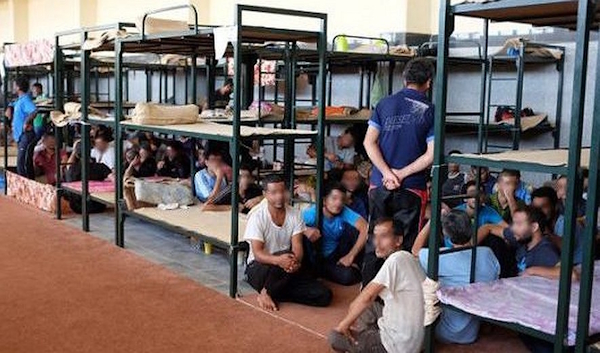
Iran’s prisons, such as the notorious Evin Prison in Tehran, have become symbols of cruelty. Detainees are tortured into giving false confessions, kept in solitary confinement for months, and their relatives are not told where they are. The practice of “forced disappearances” has become a routine tool of intimidation. Thousands of people have gone missing after taking part in protests, and the authorities provide no information about what happened to them.
The regime deliberately uses fear of the unknown to paralyze the public’s will to resist.
Financing terrorism around the world
Iran is the world’s leading state sponsor of terrorism. For decades it has funded, armed, and trained groups such as Hezbollah in Lebanon and Hamas in the Gaza Strip, both of which are recognized as terrorist organizations in many countries.
These organizations kill civilians, start wars, and destabilize entire regions. Iran’s so-called “axis of resistance” is a network of proxies serving Tehran’s interests and bringing death to thousands. Every dollar the ayatollahs spend on weapons for terrorists is blood on their hands.
Exporting revolution and destabilizing neighbors
Since the Islamic Revolution of 1979, Iran has tried to impose its model of rule on neighboring countries. Through proxy forces in Iraq, Syria, Yemen, and Bahrain, Tehran spreads chaos, fuels civil wars, and brings down governments it does not like.
- The Houthi movement in Yemen, armed with Iranian missiles, attacks civilian ships in the Red Sea and threatens global trade.
- Iran is not looking for peace — it is looking for domination at any cost.
- A neighbor like that will never be a partner, and only strength and resolve can keep it from acting aggressively.
Nuclear weapons development
While the world looked the other way, Iran spent years enriching uranium in violation of every international agreement.
On the eve of the strikes in June 2025, it had 440.9 kilograms of uranium enriched to 60% — just one technical step away from weapons-grade level, 90%. If the regime had gotten the bomb, it would not just threaten Israel, it would gain immunity from outside intervention and could support terrorism around the world with impunity. It had to be stopped before it was too late.
Diplomacy with this regime did not work — only pressure did.
Support for regime change from the Iranian people themselves
One thing has to be understood: war on the regime is not war on the Iranian people.
Polls show that 89% of Iranians support a democratic political system and want a change in power. By some estimates, up to 80% of the population has lost trust in the current government. The 2022 “Woman, Life, Freedom” protests and the new wave of demonstrations in 2025–2026 were brutally suppressed, but they showed that the people no longer want to live under the ayatollahs’ rule.
American and Israeli strikes destroyed key figures of the regime, including Supreme Leader Ali Khamenei, and gave Iranians a chance they had waited decades for. Trump did not bomb civilians — he destroyed the oppressors.
Why did negotiations fail?
With a regime that hangs gay people and women for refusing to wear a head covering, you cannot negotiate as if it were an equal partner.
Previous administrations tried to make deals, but every time Iran used the pause to enrich uranium and expand its missile arsenal.
Trump understood the key point: weakness only encourages the aggressor. His “maximum pressure” strategy is the only language the ayatollahs understand.
The military operation became the inevitable end of a years-long confrontation, because diplomacy with a theocratic dictatorship that rejects human rights is a dead end.
Creating the conditions for democracy
Destroying Iran’s nuclear and military infrastructure is not the goal — it is the means.
- The real goal is to give the Iranian people a chance to choose their own future. Without outside pressure and without the nuclear threat, the democratic opposition gets a chance to organize.
- There is already a monarchist movement in the country around Crown Prince Reza Pahlavi, and it is growing in popularity. But as long as the IRGC holds power, no reforms are possible.
That is why the military operation is not occupation — it is liberation. It creates a vacuum that can be filled by freedom, not by yet another dictator.
Conclusion: Trump did the right thing
For decades, the Iranian regime strangled its own people, funded killers, and raced for the nuclear bomb. Diplomacy and sanctions did not stop it.
When it became clear that time was working against freedom, Trump made the only right decision. He struck the center of a terrorist empire and gave millions of Iranians hope.
This is not an act of aggression. It is an act of self-defense — and defense of the entire civilized world from an ideology that has no right to exist.
Those who condemn Trump either do not know the truth about Iran or choose to ignore it. And the truth is this: this regime deserved to fall, and Trump helped speed that up. Now the next word belongs to the Iranian people.

Welcome to Poznayu.com!
My name is Alex, and I founded this project together with a team of like-minded professionals. At Poznayu.com, we create in-depth reviews, explore fascinating facts, and share well-researched, reliable knowledge that helps you navigate complex topics with confidence.
Our mission is simple: to explain complicated ideas in clear, accessible language. We believe that high-quality information should be available to everyone. Every article we publish is designed to provide practical value, actionable insights, and trustworthy analysis you can rely on.
Join our growing community of curious readers. Your feedback matters — share your thoughts in the comments, ask questions, and suggest topics you’d like us to cover next.