The evolution of our planet has produced millions of unique biological species, yet some of them look like genuine genetic anomalies.
This overview takes an in-depth look at ten of the strangest animals in the world, whose survival mechanisms challenge the conventional rules of zoology. You will learn about the hidden abilities of deep-sea creatures, the remarkable anatomical features of land predators, and the paradoxical paths of natural selection.
Viewed without complicated scientific terminology, the animal kingdom resembles a vast laboratory where nature is constantly running extraordinary experiments.
Every strange creature exists for a reason, driven by one overriding goal — survival under specific and often brutally harsh conditions. When food is scarce, the climate is too hot, or predators are everywhere, ordinary claws and fangs are no longer enough. Animals may then develop long tentacles, alter the composition of their blood, learn to breathe underwater, or cover their bodies with virtually impenetrable armor.
What looks frightening or absurd to us is actually an effective solution to a survival problem, refined over millions of years.
In the wild, there is no concept of beauty or correctness. The winner is the animal that adapts best to its environment, even if that adaptation makes it look like something from another planet.
Platypus
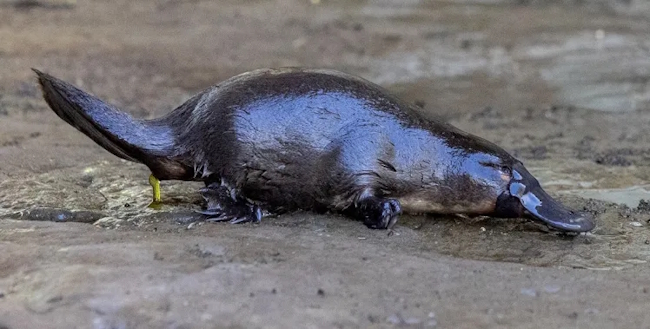
This small Australian endemic became a genuine challenge for early European zoologists, who for a long time believed someone had created a taxidermy specimen by stitching together parts from different animals.
The platypus belongs to the rare monotreme group: it is a warm-blooded mammal that lays eggs instead of giving birth to live young, much like reptiles or birds. Its digestive system completely lacks a conventional stomach, so food passes directly from the esophagus into the intestines, while females feed their young with milk that seeps through enlarged pores on the abdomen because they lack conventional nipples.
Beyond its paradoxical anatomy, the platypus carries a hidden arsenal of defenses and sophisticated sensory systems. Males have sharp keratinous spurs on their hind legs connected to venom glands, and the toxin can kill a small animal or cause severe pain in humans.
Underwater, the animal tightly closes its eyes, ears, and nostrils, relying entirely on electroreception: its broad, leathery bill detects the faint electrical fields generated by muscle contractions of small crustaceans on the riverbed.
Narwhal
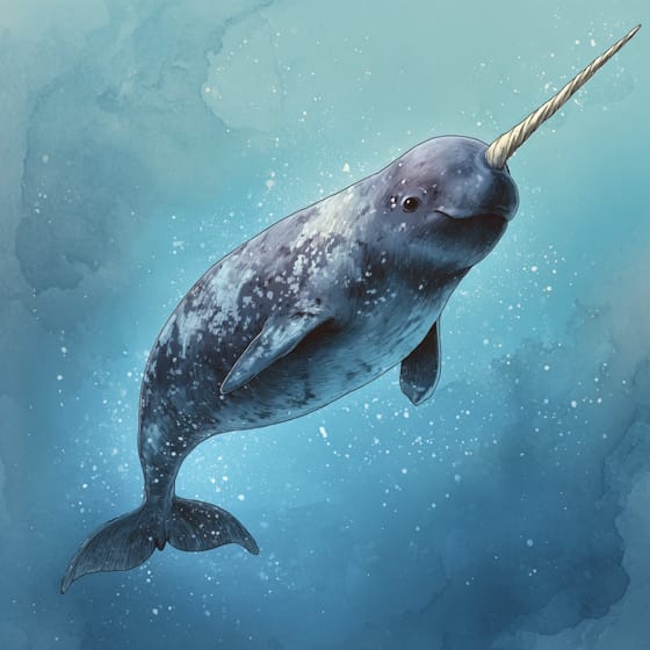
This large marine mammal from the Arctic toothed whale family is instantly recognizable because of its enormous spiral tusk, which has earned it the nickname “sea unicorn.”
In reality, the tusk is a hypertrophied left front tooth that grows directly through the male’s upper lip and can reach three meters in length. The right tooth usually remains concealed inside the gum, while the remaining teeth are absent altogether, forcing narwhals to suck down their prey, including fish and squid, whole without chewing.
For a long time, the exact purpose of the tusk remained a mystery, but modern biological research has shown that it is an extraordinarily complex sensory organ.
The surface of the tooth is penetrated by millions of microscopic nerve endings that are not protected by enamel, allowing the whale to analyze the chemical composition of seawater with great precision. Using this sensory system, the narwhal can detect subtle changes in temperature, salinity, pressure, and the presence of biological markers associated with potential prey in the dark waters of the Arctic Ocean.
Axolotl
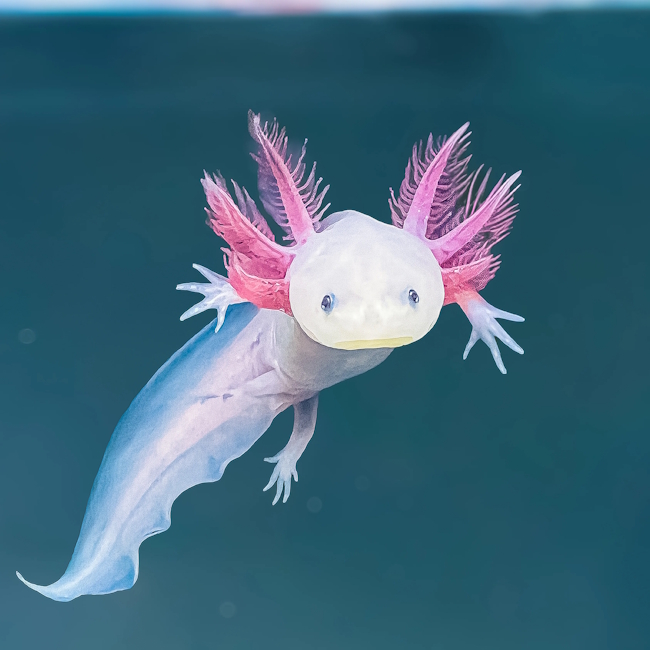
This Mexican amphibian is a living example of neoteny, a biological phenomenon in which an animal reaches sexual maturity and spends its entire life in the larval stage.
Unlike most amphibians, the axolotl does not undergo metamorphosis. It retains its external gills as feathery structures along the sides of its head and remains capable of breathing underwater throughout its life. Only in extremely rare cases, following a drastic change in the chemical composition of its habitat or severe stress, can it lose its gills, move onto land, and transform into an adult salamander.
The main reason geneticists pay such close attention to this species is its extraordinary ability to regenerate virtually any tissue in the body. An axolotl can regrow lost limbs complete with bones and muscles without obvious lasting effects, while also repairing damaged sections of the spinal cord, heart, and even parts of the brain. Cells at the site of an injury return to a primitive stem-cell state and rebuild a precise replica of the lost structure without forming scars.
Aye-aye
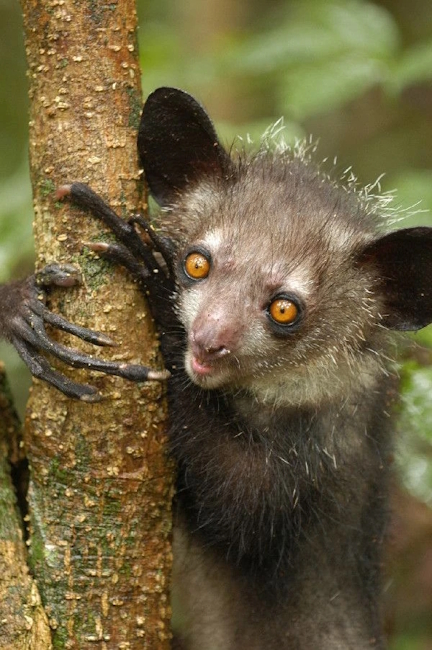
This nocturnal primate is endemic to Madagascar’s forests and has long inspired superstitious fear among local residents because of its eccentric appearance.
The aye-aye has enormous locator-like ears, round yellow eyes, and sparse, coarse fur. Its most unsettling feature is an abnormally long, slender middle finger that can rotate 360 degrees and contains virtually no muscle tissue, consisting essentially of bone covered with skin.
This bizarre tool performs a highly specialized feeding function, effectively turning the animal into the mammalian equivalent of a woodpecker. The aye-aye uses echolocation-like tapping: it rapidly knocks on tree trunks with its elongated finger and listens for the returning sound. After detecting a hollow resonance that indicates a larva, the primate gnaws through the bark with powerful incisors and sends its finger deep into the wood to hook the prey with remarkable precision.
Shoebill
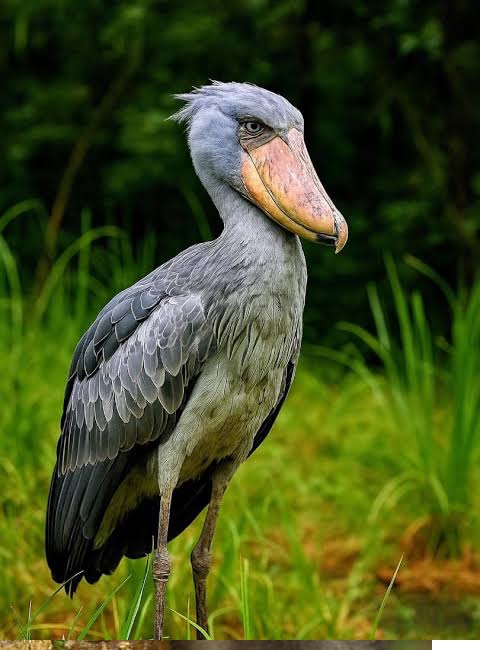
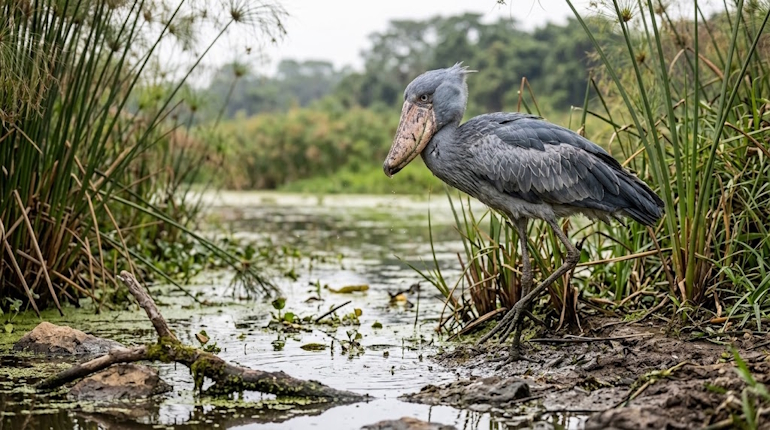
This large African bird can grow to about five feet tall and looks like a relic from the age of dinosaurs, creating an instinctive sense of unease with its piercing yellow eyes and massive profile.
The shape of its enormous bill, resembling a wooden shoe with a sharp hook at the tip, is perfectly adapted for grabbing large, slippery prey in swampy wetlands. Despite its intimidating appearance and wingspan of more than two meters, shoebills are completely nonaggressive toward humans and lead solitary, secretive lives among dense papyrus vegetation.
The bird’s hunting strategy is based on extraordinary patience and a technique that resembles a controlled collapse onto its prey. A shoebill can stand motionless in swamp water for hours, almost like a statue, avoiding ripples that could alert its target. As soon as a fish, large snake, or young crocodile swims past, the bird throws its full weight forward, clamps down with its massive bill, and immediately decapitates the prey before swallowing it.
Blue Dragon (Glaucus atlanticus)
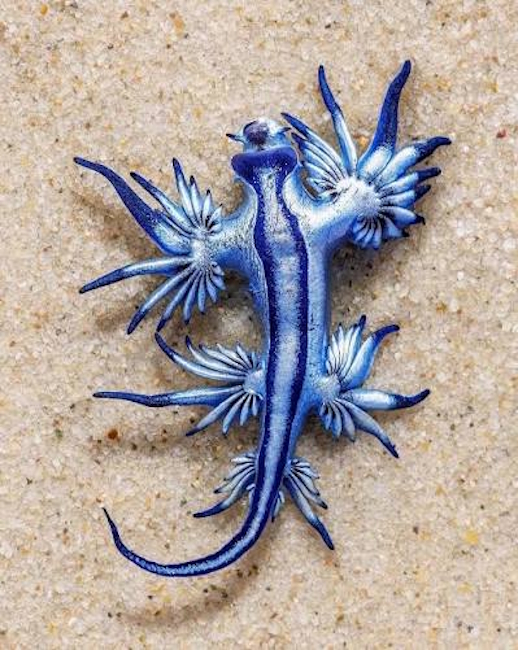
This tiny pelagic nudibranch rarely exceeds three centimeters in length, but its vivid appearance fully lives up to its fantastical name.
The sea slug’s body is decorated with an intricate pattern of dark blue, silver, and light blue tones, while finger-like appendages along its sides help it remain afloat. The blue dragon swims upside down, using an air bubble stored in its stomach for balance, making it difficult to spot both for birds above and fish below.
Despite its small size, this mollusk is one of the most ingenious predators in the microscopic ocean world. It feeds exclusively on venomous cnidarians, including the notorious and deadly Portuguese man o’ war. The slug’s digestive system selectively captures venomous stinging cells and transports them to the tips of its lateral appendages, allowing the blue dragon to accumulate toxins from its prey and become several times more venomous than the animals it consumes.
Pangolin
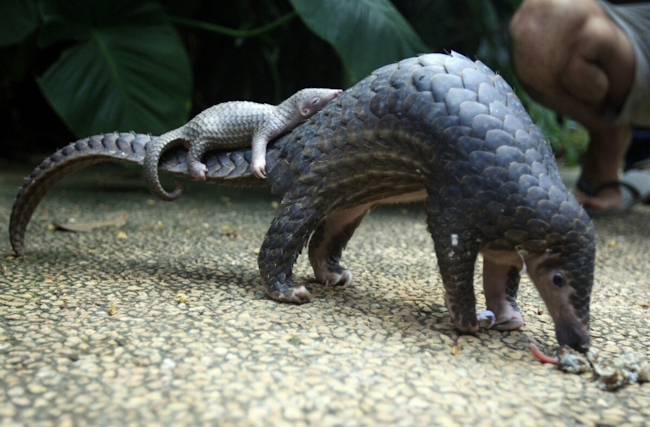
The only mammal on the planet whose body is almost entirely covered in large keratin scales looks more like a living pinecone than a conventional animal.
These powerful protective plates are made of keratin and form a reliable, flexible shell that can account for up to one-quarter of the animal’s total body weight. At the slightest sign of danger, a pangolin instantly curls into a tight ball that even lions or leopards cannot easily open, while the sharp edges of its scales inflict deep cuts on predators attempting to bite through its armor.
The animal’s diet is strictly limited to ants and termites, and virtually its entire anatomy is specialized for feeding on them. Without teeth, the pangolin tears apart sturdy termite mounds with powerful front claws and sends in its sticky tongue, which when fully extended can often exceed the animal’s own body length. To compensate for the lack of chewing teeth, the pangolin’s stomach contains hardened keratinous structures and works on a principle similar to a bird’s gizzard, grinding insects with the help of swallowed stones.
Bigfin Squid (Magnapinna)
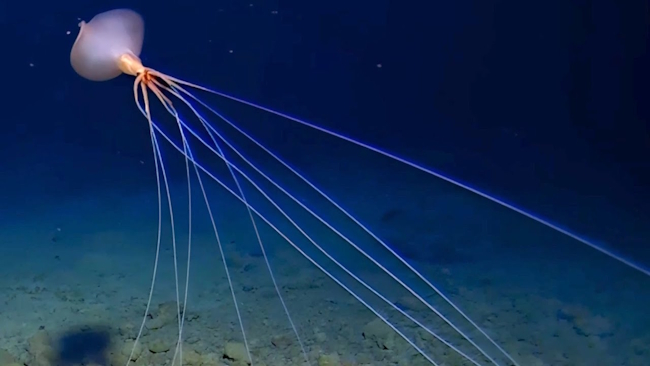
The deep ocean conceals creatures whose body shapes challenge the imagination, and squid of the Magnapinna genus occupy a special place among them.
These cephalopods live at extreme depths of two to five kilometers, where not a single photon of sunlight reaches. Their defining features are disproportionately large fins and extremely thin tentacles that bend at sharp right angles, resembling elbow joints.
The true size of adult specimens remains a subject of scientific debate because deep-sea submersibles have mostly captured young individuals on camera. Even so, their tentacles can exceed mantle length by twenty times, allowing the animal to reach an astonishing eight meters in total length. Biologists suggest that the squid may use its threadlike appendages as a giant sticky net, drifting slowly above the seafloor and collecting plankton directly from the surrounding water.
Mantis Shrimp
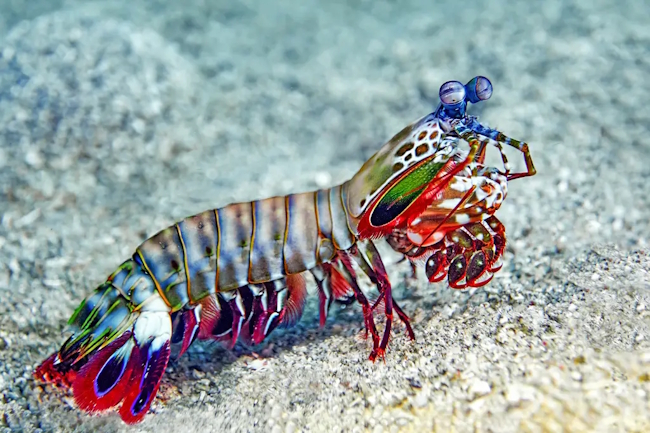
This inhabitant of warm coral reefs destroys every stereotype about harmless crustaceans, ranking among the most technically sophisticated predators on the planet.
At first glance, it looks like a hybrid of a shrimp and a praying mantis covered in a bright neon shell. The mantis shrimp has an extraordinarily complex visual system: its eyes can distinguish up to 16 basic colors and can also detect ultraviolet radiation and polarized light, allowing it to track well-camouflaged prey with remarkable accuracy.
Its main weapon is a pair of front appendages that operate like a loaded striking spring. During an attack, the mantis shrimp launches its club-like appendage at a speed exceeding 80 kilometers per hour. The force of the strike can do more than crack thick mollusk shells; it can also produce cavitation, causing the water around the appendage to boil from the sudden pressure change and generating a secondary shock wave that can kill prey even when the strike itself misses.
Maned Wolf
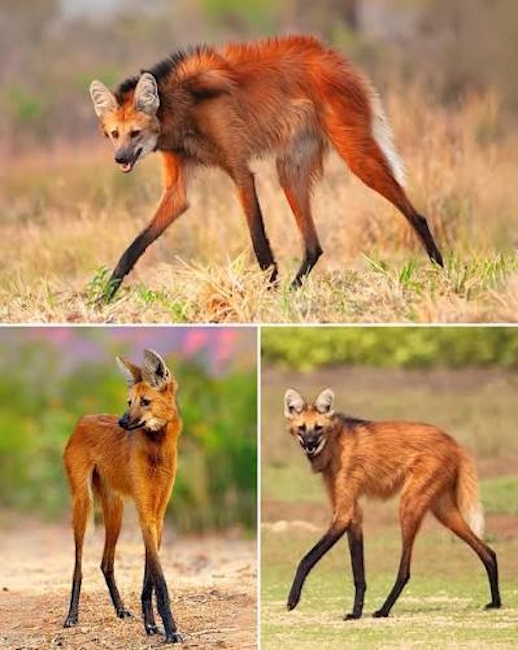
The largest member of the canid family in South America breaks virtually every stereotype about its relatives, resembling a giant fox balanced on disproportionately long legs.
This unusual anatomy is not designed for high-speed running; it is an adaptation for survival in dense pampas grasslands. The elongated legs allow the animal to see over its surroundings and spot danger above tall savanna vegetation, while the dense black mane along its neck rises when threatened, making the animal appear larger.
The maned wolf differs fundamentally from gray wolves not only in body structure but also in diet. It never forms packs, preferring a strictly solitary lifestyle and feeding on small rodents, birds, and reptiles. Nearly half of its diet consists of plant matter, including tubers, bananas, and a distinctive fruit known as the “wolf apple,” which the predator needs as a natural defense against dangerous intestinal parasites.

Welcome to Poznayu.com!
My name is Alex, and I founded this project together with a team of like-minded professionals. At Poznayu.com, we create in-depth reviews, explore fascinating facts, and share well-researched, reliable knowledge that helps you navigate complex topics with confidence.
Our mission is simple: to explain complicated ideas in clear, accessible language. We believe that high-quality information should be available to everyone. Every article we publish is designed to provide practical value, actionable insights, and trustworthy analysis you can rely on.
Join our growing community of curious readers. Your feedback matters — share your thoughts in the comments, ask questions, and suggest topics you’d like us to cover next.