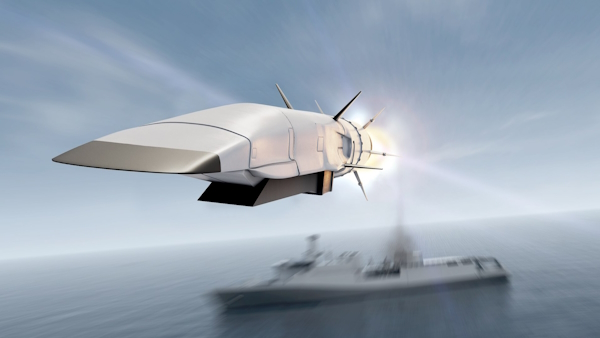
Before 2026, American hypersonic weapons existed primarily as high-priced prototypes and perpetually delayed deadlines. However, with the onset of the conflict with Iran, the U.S. defense industrial base was forced to shift from testing to mass production and active combat deployment.
Today, three distinct classes of systems are deployed or entering service: ground-based and shipboard glide vehicles, along with resurrected air-launched missiles.
Let’s break down each of these systems and compare them directly to what Russia has stockpiled as of 2026.
This is the most widely deployed U.S. hypersonic weapon.
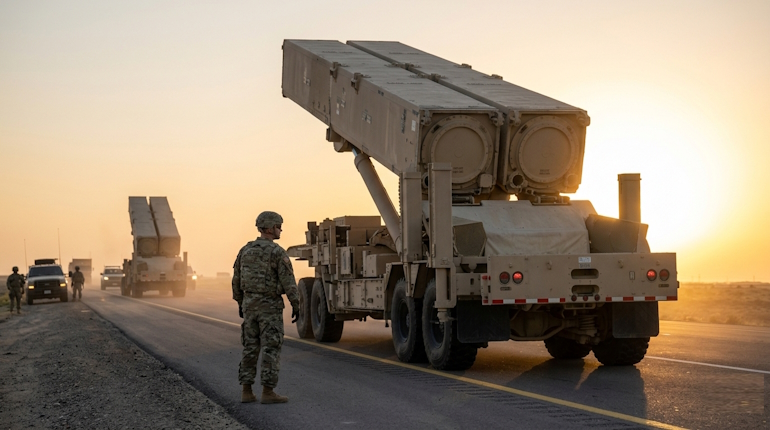
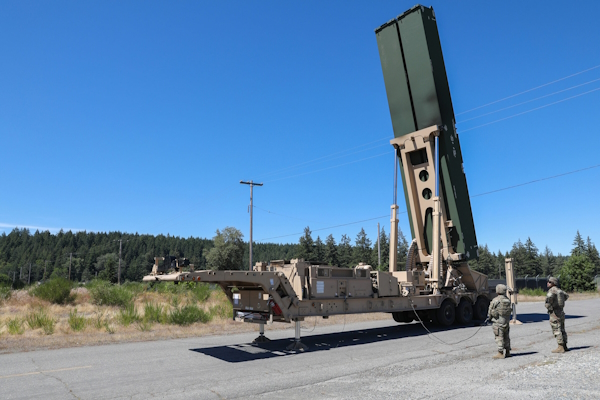
The LRHW (Long-Range Hypersonic Weapon) is a mobile missile system mounted on heavy wheeled transporters. Each battery includes four launchers carrying two missiles each. Today, the U.S. Army has fully deployed one battery at Joint Base Lewis-McChord in Washington State, with a second battery scheduled to arrive by the end of 2026.
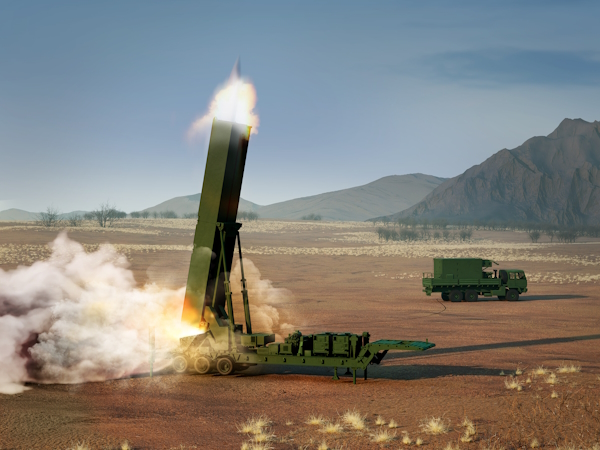
The core component is the C-HGB (Common Hypersonic Glide Body). It launches via a booster rocket, accelerates to speeds up to Mach 17, and maneuvers through the upper atmosphere. The warhead is high-explosive, providing destructive power comparable to bunker-busting Tomahawk missiles. Range estimates vary from 1,725 to 2,175 miles depending on the source.
By May 2026, reports emerged that U.S. Central Command requested the deployment of the Dark Eagle to the Middle East—marking the first operational deployment of American hypersonic weapons.
The reason is straightforward: Iran moved its launch platforms beyond the reach of standard tactical missiles. The Dark Eagle is meant to bridge this gap. However, challenges remain—fewer than eight missiles have been produced so far, each costing roughly $15 million. The system is officially in its early operational phase, making its combat deployment both high-risk and politically significant.
Another defining characteristic of the Dark Eagle is its lack of a nuclear payload. Unlike Russian counterparts, the Americans are intentionally betting on high-speed kinetic and conventional strikes rather than nuclear detonations. This allows the system to be utilized at a tactical level without the immediate risk of nuclear escalation. However, the Pentagon already admits that to fully meet regional demand, production must be scaled up significantly.
Sea-Based Shield and Sword: CPS on Zumwalt Destroyers
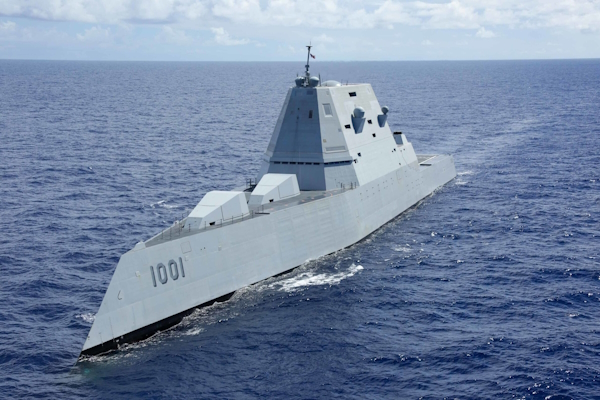
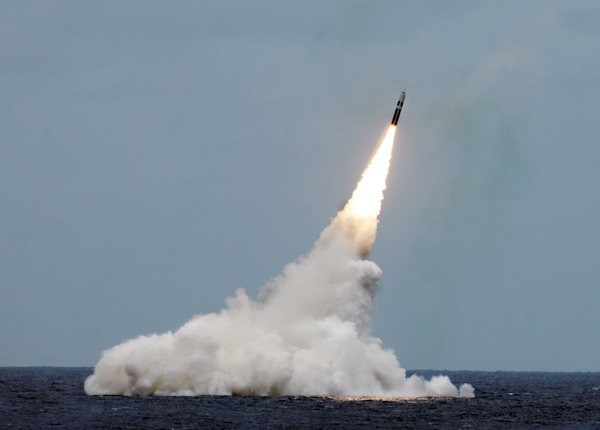
Conventional Prompt Strike (CPS) is the naval counterpart to the Dark Eagle, utilizing the exact same C-HGB glide body but launched from a different platform. The first vessel to carry the system is the USS Zumwalt.
During its modernization phase, the ship’s underperforming Advanced Gun Systems were removed and replaced with twelve launch tubes for hypersonic missiles. The integration is complete and sea trials have wrapped up—making it the world’s first operational surface warship armed with hypersonic weapons. In April 2026, Lockheed Martin secured another $1.36 billion contract to finalize the system. The program runs through 2032 and plans to outfit all three Zumwalt-class destroyers, with future integration slated for Virginia-class fast-attack submarines.
In terms of performance, CPS holds a slight edge over the ground-based version.
The Navy officially claims speeds exceeding Mach 16 and a range of approximately 1,860 miles. The missile follows a ballistic trajectory before releasing the glide vehicle, which maneuvers inside the atmosphere. This combines the range of an ICBM with the precision of guided munitions, making interception practically impossible. The Zumwalt, long considered a white elephant project, has effectively been transformed into one of the most lethal strike platforms in the fleet.
Nevertheless, challenges persist here as well. Live-fire testing of CPS from the ship is not scheduled until 2027–2028—meaning true operational readiness for the naval variant will arrive later than the Army’s version.
Furthermore, the cost of converting a single destroyer sits at an estimated $452 million, making this one of the most expensive Pentagon procurement programs. But in an era where hypersonic capability is a symbol of military dominance, such expenditures are deemed necessary.
The Resurrected Air-Launched Phoenix: AGM-183 ARRW
The story of the AGM-183 ARRW reflects the classic arc of American hypersonic development: from program termination to resurrection under the pressure of external events.
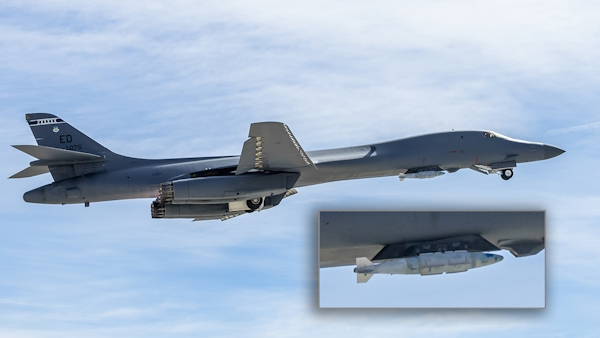
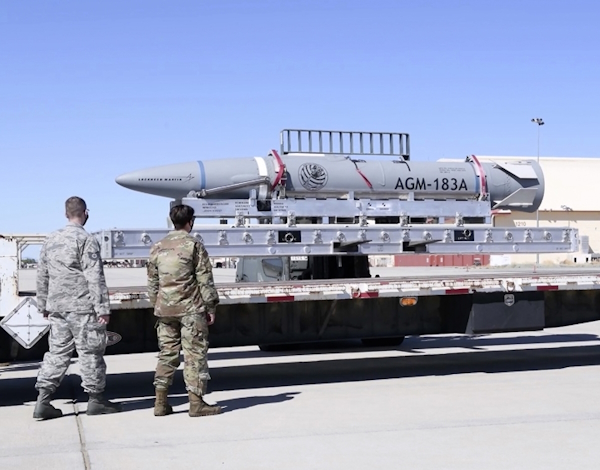
Following a series of failed tests, the Air Force formally shelved the project in 2023. However, additional funding was allocated by 2024, and the FY 2027 budget requested $345.7 million for Increment 2. Nearly $1 billion is earmarked for the program’s development through 2030. Flight testing has also resumed: in 2026, the AGM-183 missile was showcased on a B-1B Lancer bomber for the first time—previously it had only been launched from the B-52.
The ARRW is an air-launched ballistic missile equipped with a hypersonic glide vehicle. Weighing 6,600 pounds and measuring 22 feet in length, it has a projected range of approximately 1,000 miles. Speeds are reported to reach Mach 7 to 8. The missile is designed to strike high-value, heavily defended ground targets. The Air Force now plans not only to bring the ARRW back to full-scale production but also to develop a new Air-Launched Ballistic Missile (ALBM) based on its architecture. The key advantage over ground systems is the high mobility of strategic aviation, which can launch from anywhere in the world in a matter of hours.
The primary drawback of the ARRW is its price tag. A single missile is estimated at $15 to $18 million, and the project has burned through roughly $1.3 billion over its development lifecycle.
Furthermore, the technological foundation of the ARRW still lags behind Russia’s Kinzhal, which has been used in actual combat operations since 2026. Still, the program’s revival signals a shift in priorities: the Pentagon has finally acknowledged that air-launched hypersonics are just as vital as ground or sea-based assets.
Russia 2026: Maintaining an Early Lead
By 2026, Russia maintains a numerical advantage in deployed hypersonic systems and operational experience. This is an indisputable fact acknowledged by Western defense analysts.
However, the qualitative gap is steadily narrowing.
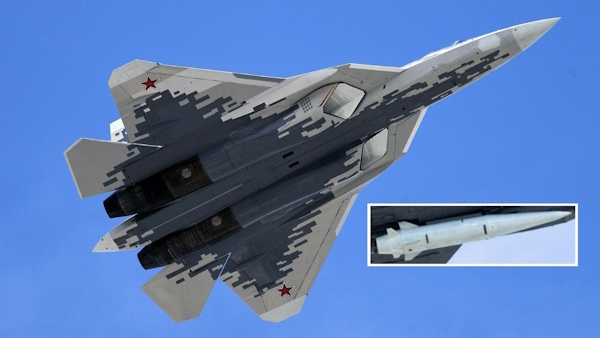
Kinzhal (Kh-47M2). An air-launched ballistic missile carried by modified MiG-31K interceptors. It travels at speeds around Mach 10, has a range of up to 1,250 miles, and carries a 1,100-pound warhead. Its primary advantage is its combat history. By April 2026, forty-four Kinzhal launches had been documented during the ongoing special military operation. Russian state media claims that Ukrainian air defenses lack reliable countermeasures. However, Western intelligence reports suggest that isolated launches have been intercepted—though reliability and consistency remain up for debate. The Kinzhal can be equipped with either conventional or nuclear warheads.
Avangard. An intercontinental-range hypersonic glide vehicle launched via UR-100N UTTKh ICBMs. Speeds are reported to range from Mach 20 to 27. The first regiment entered combat duty back in 2019, and by 2026, additional units (specifically the 13th Missile Division in the Orenburg region) were deployed. Moscow claims the vehicle can maneuver actively in both course and altitude, rendering it invulnerable to current and future missile defense systems. This is a strategic deterrent, and its strictly nuclear nature sets it apart from American systems like the Dark Eagle and CPS, which rely solely on conventional payloads.
Zircon (3M22 Zircon). A naval hypersonic missile designed for frigates, corvettes, and submarines. It reaches speeds of Mach 8 to 9 with a range of 620 to 930 miles. By 2026, the Zircon had officially entered service with the Russian Navy, undergoing active testing on Project 22350 frigates (led by the Admiral Gorshkov). Unlike the Kinzhal and Avangard, the Zircon utilizes a scramjet (supersonic combustion ramjet) engine rather than a boost-glide vehicle. This is a different technological approach that offers greater efficiency and a more compact design.
The table below provides a direct comparison of the primary systems currently in service or in the final stages of deployment:
Parameter
U.S. (Dark Eagle / CPS)
U.S. (AGM-183 ARRW)
Russia (Kinzhal)
Russia (Avangard)
Russia (Zircon)
Basing
Ground-based / Naval
Air-launched
Air-launched
Silo-based ICBM
Naval
Type
Hypersonic Glide Vehicle
Hypersonic Glide Vehicle
Aero-ballistic Missile
Intercontinental Glide Vehicle
Scramjet Cruise Missile
Max Speed
Dark Eagle: Up to Mach 17
CPS: Over Mach 16
Mach 7–8
~Mach 10
Up to Mach 27
Mach 8–9
Range
1,725–2,175 miles
~1,000 miles
~1,250 miles
Intercontinental (over 3,700 miles)
620–930 miles
Warhead
Conventional (high-explosive)
Conventional
Nuclear / Conventional (1,100 lbs)
Nuclear
Nuclear / Conventional
Status in 2026
Initial deployment, first batteries active
Production resumed, Increment 2 phase
Combat deployed (44+ launches)
Operational (since 2019), new regiments active
Commissioned, shipboard trials ongoing
Unique Feature
Common glide body for Army and Navy
Integrated with B-52 and B-1B
Tactical mobility, proven in combat
Designed to bypass ABM systems; strategic role
Air-breathing engine, launchable from smaller ships
Forecasts and Conclusions
By 2026, the United States is emerging from a long period of catching up.
In terms of pure volume, Russia still leads the pack, with systems like the Avangard and Kinzhal well established as deterrents.
However, the Americans have made a massive leap forward: the Army now has a mobile hypersonic strike platform, the Navy possesses a warship armed with operational hypersonic tubes, and the Air Force has revived a once-dead project.
While the Pentagon is strictly focused on a potential conflict with China, the Dark Eagle is already being requested for the Middle East.
The hypersonic race has entered a new phase—one defined by actual combat deployment, rather than laboratory testing.
Welcome to Poznayu.com!
My name is Alex, and I founded this project together with a team of like-minded professionals. At Poznayu.com, we create in-depth reviews, explore fascinating facts, and share well-researched, reliable knowledge that helps you navigate complex topics with confidence.
Our mission is simple: to explain complicated ideas in clear, accessible language. We believe that high-quality information should be available to everyone. Every article we publish is designed to provide practical value, actionable insights, and trustworthy analysis you can rely on.
Join our growing community of curious readers. Your feedback matters — share your thoughts in the comments, ask questions, and suggest topics you’d like us to cover next.