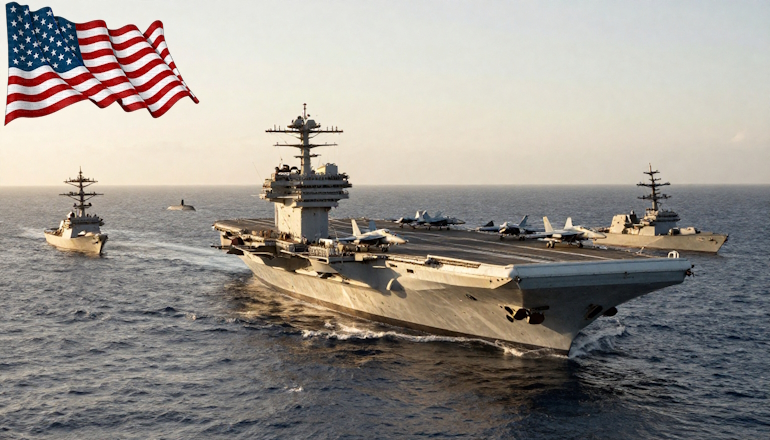
Carrier Strike Groups (CSGs) form the core of United States naval power, enabling force projection anywhere in the world’s oceans without requiring access to land bases. These mobile, nuclear-powered floating airfields carry dozens of aircraft and are surrounded by destroyers, submarines, and supply ships, forming a complex combat organism.
Understanding their structure and capabilities helps assess how Washington implements its global deterrence strategy and protects its interests from the South China Sea to the Persian Gulf.
- Against the backdrop of the ongoing US-Israeli conflict with Iran, we wanted to break down carrier strike groups so readers understand what they actually represent and aren’t misled by various enemy propaganda narratives.
Roles and Missions of US Carrier Strike Groups
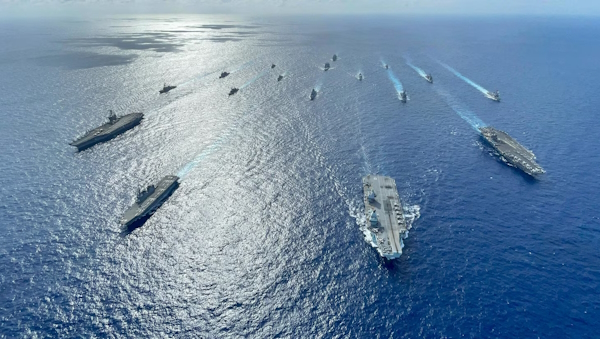
The primary role of a carrier strike group is to provide flexible, mobile military presence capable of responding to crises faster than ground forces, which depend on political agreements with host nations.
An aircraft carrier is essentially sovereign American territory that can be deployed anywhere in international waters, from which its air wing can strike, conduct reconnaissance, and establish air superiority. This gives the US president a unique tool for demonstrating strength and deterring potential adversaries without immediately commencing full-scale combat operations.
Beyond purely military tasks, CSGs perform vital functions ensuring freedom of navigation and protecting sea lanes, particularly critical in chokepoints like the Strait of Hormuz where key oil routes pass. They also participate in counter-piracy operations, disaster relief efforts, and civilian evacuations. The presence of a carrier in a region serves as a powerful political signal both to allies, demonstrating US commitment to their security, and to potential aggressors, showing readiness for decisive action.
The strategic value of carriers is confirmed by their continuous presence in conflict zones. For example, in 2024, the USS Dwight D. Eisenhower carrier strike group conducted complex operations in the Red Sea, intercepting Houthi ballistic missiles and drones while simultaneously striking their ground targets. This vividly demonstrated the CSG’s ability to conduct simultaneous defensive and offensive operations in an intense combat environment over extended periods.
Typical Composition of a Carrier Strike Group
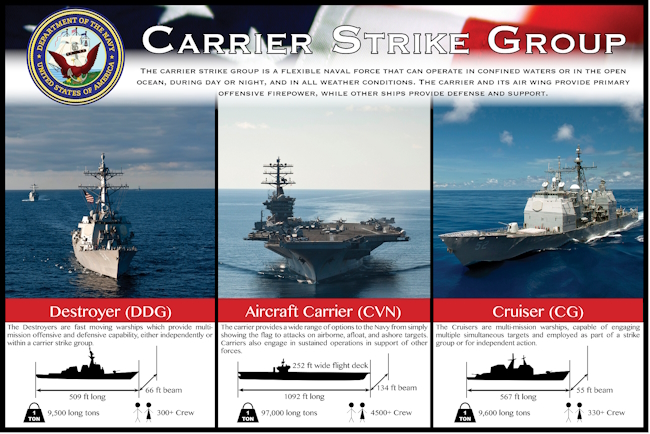
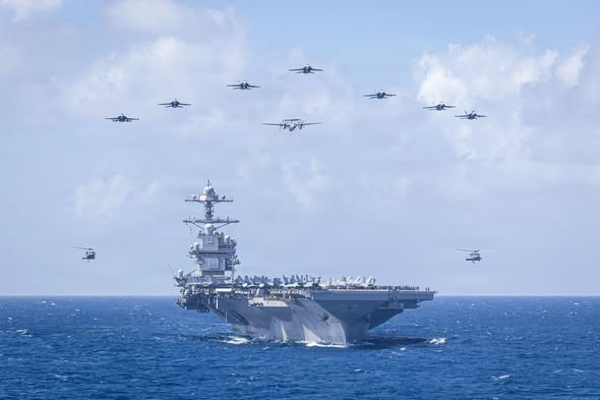
The core of any US carrier strike group is a nuclear-powered aircraft carrier such as USS Nimitz (CVN-68), USS Abraham Lincoln (CVN-72), or the newest USS Gerald R. Ford (CVN-78), capable of carrying up to 90 aircraft of various types.
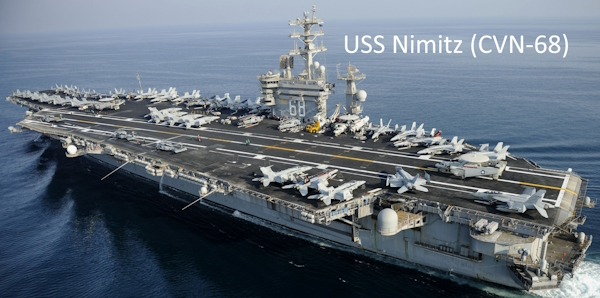
The air wing typically includes:
- F/A-18E/F Super Hornet multirole fighters
- F-35C Lightning II fifth-generation fighters
- EA-18G Growler electronic warfare aircraft
- E-2D Advanced Hawkeye airborne early warning aircraft
- MH-60R/S Seahawk helicopters for anti-submarine warfare and search and rescue
For instance, the USS Abraham Lincoln embarked Carrier Air Wing CVW-9, which includes squadrons of all these types.
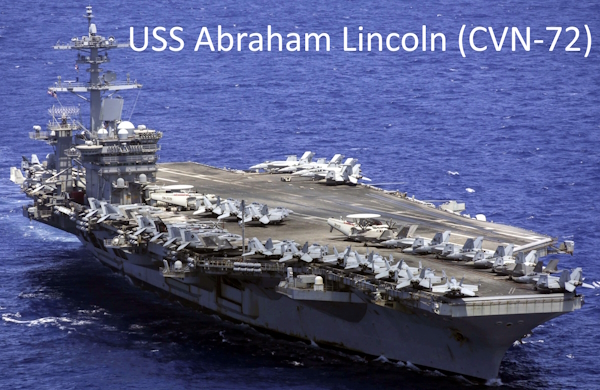
Around the carrier forms a dense protective ring of Arleigh Burke-class destroyers and, occasionally, Ticonderoga-class cruisers. These ships are equipped with the Aegis combat system and powerful radars like the SPY-1D, capable of tracking hundreds of air targets simultaneously. The USS Abraham Lincoln’s group included destroyers USS Spruance, USS Michael Murphy, and USS Frank E. Petersen Jr., each carrying vertical launch systems with Standard missiles for air defense and Tomahawk cruise missiles for land attack.
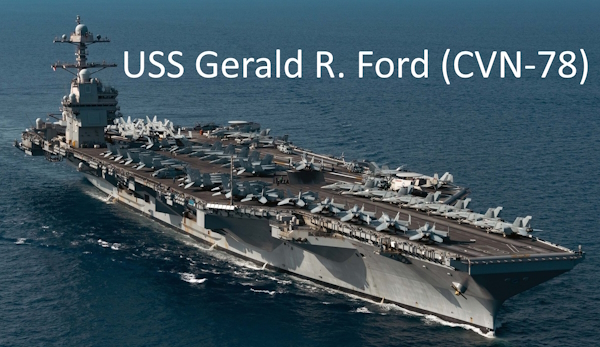
Nuclear-powered submarines are an integral part of CSGs, such as USS South Dakota (Virginia-class) or USS Georgia (Ohio-class), operating stealthily, conducting reconnaissance, and ready to strike with Tomahawk missiles. Supply ships round out the formation, delivering fuel, ammunition, and provisions, allowing the group to remain at sea for months.
For major operations or to demonstrate extraordinary force, the US can deploy multiple carrier strike groups simultaneously in one area. In early 2026, amid escalating tensions with Iran, forces in the US Central Command area included the USS Abraham Lincoln and the soon-to-deploy USS George H.W. Bush. The latter’s group, designated CSG-10, includes not only destroyers but also a guided-missile cruiser like USS Leyte Gulf, enhancing the formation’s overall air defense capability.
This creates a powerful strike force capable of inflicting devastating damage on any potential adversary.
Combat Capabilities of a Single Carrier Strike Group
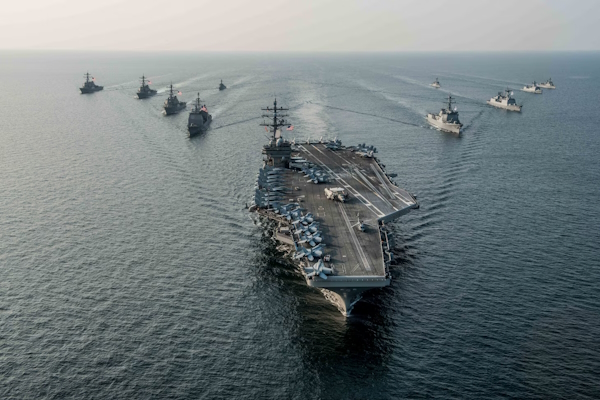
One carrier strike group represents a versatile combat unit capable of addressing a wide spectrum of missions. Its primary striking power lies in carrier-based aircraft, which can deliver precision strikes against ground targets at significant distances.
For example, F/A-18E/F Super Hornets and F-35Cs operating from the carrier deck can hit targets deep inside enemy territory, as demonstrated during strikes against Houthi positions in Yemen in 2024. The US Air Force noted at the time that the carrier group provided “the largest concentration of American air power in the region since the Iraq invasion.”
Beyond strike functions, the CSG’s role in achieving and maintaining air superiority is critically important. Escort fighters ensure the safety of strike packages, while E-2D Hawkeye aircraft provide continuous airspace surveillance. Escort destroyers with the Aegis system add a powerful air defense layer capable of destroying not only aircraft but also ballistic missiles, repeatedly confirmed during Red Sea battles against Houthi rockets and drones. In the same theater, F/A-18 fighters scored the first-ever air-to-air kill of an enemy drone, and EA-18G Growlers successfully suppressed enemy radars and air defense systems.
Escort ships also serve as Tomahawk cruise missile platforms. Arleigh Burke-class destroyers and nuclear submarines like USS Georgia carry dozens of these missiles, capable of striking targets up to 1500 kilometers away. This enables a CSG to deliver a massive strike against strategic enemy assets without entering the dangerous zone of coastal missile batteries. As experts note, a single carrier group possesses the potential to inflict critical damage on an adversary within hours.
Moreover, as the Houthi conflict demonstrated, a CSG can sustain high operational tempo for months, continuously adapting tactics to evolving threats.
Carrier Strike Group Defenses Against Modern Threats
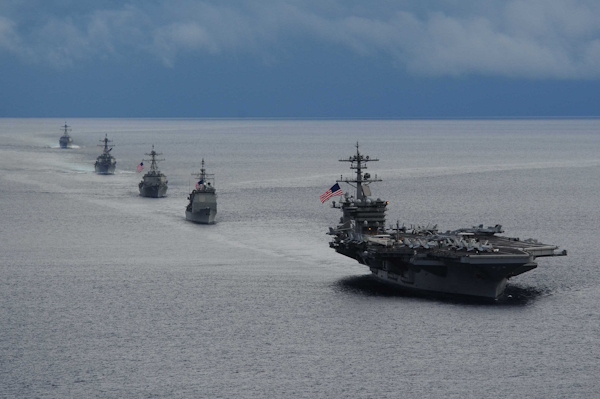
Protecting the carrier, the adversary’s primary target, relies on a multi-layered, echeloned defense concept. The outer perimeter is secured by nuclear submarines stealthily patrolling approaches to the formation, ready to destroy enemy submarines or surface ships. The next layer consists of Aegis destroyers and cruisers creating a so-called “steel bubble” around the carrier. They are responsible for neutralizing air threats: aircraft, cruise and ballistic missiles, and drones. During mass attacks, as repeatedly occurred in the Red Sea, destroyers and carrier-based fighters operate as a unified team, distributing targets and shooting down waves of drones and missiles.
The ballistic missile threat is considered among the most serious, but countermeasures exist. Aegis destroyers equipped with SM-3 and SM-6 interceptors can engage ballistic missiles at various trajectory phases. During 2024 combat, US destroyers made history by successfully intercepting ballistic missiles fired by Houthi forces, proving the effectiveness of this concept. Analysts also note that even if a missile or drone penetrates interception layers, the carrier itself possesses robust structural protection and enormous reserve buoyancy, making it a highly survivable target.
Torpedo defense is a crucial component of anti-submarine warfare. Beyond active submarine hunting by MH-60R helicopters and destroyers themselves, carriers and escort ships are equipped with towed decoys and torpedo defense systems. Military journalist Aleksey Borzenko notes that escort vessels are literally prepared to shield the carrier with their own hulls in case of torpedo attack, becoming living shields in the path of deadly ordnance.
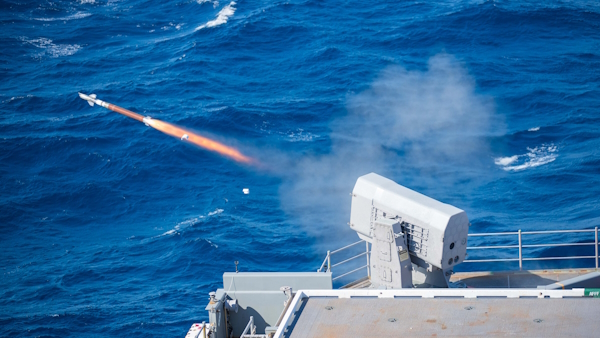
Finally, the mass drone warfare challenge encountered by the US Navy has driven tactical adaptation: fighters now carry quadruple AIM-9X Sidewinder launchers for more effective drone engagement, and shipboard systems have received software upgrades for rapid small-target recognition and destruction.

Welcome to Poznayu.com!
My name is Alex, and I founded this project together with a team of like-minded professionals. At Poznayu.com, we create in-depth reviews, explore fascinating facts, and share well-researched, reliable knowledge that helps you navigate complex topics with confidence.
Our mission is simple: to explain complicated ideas in clear, accessible language. We believe that high-quality information should be available to everyone. Every article we publish is designed to provide practical value, actionable insights, and trustworthy analysis you can rely on.
Join our growing community of curious readers. Your feedback matters — share your thoughts in the comments, ask questions, and suggest topics you’d like us to cover next.