Altitude training has long been recognized as an elite tool for boosting endurance and physical performance, but the mechanisms behind it remained a mystery to most sports enthusiasts for years. Modern science has decoded this process: oxygen deficiency triggers a cascade of cellular reactions leading to blood renewal, mitochondrial growth, and capillary network expansion.
In this review, we’ll break down the physiology of hypoxia, evaluate the reality of its claimed effects, and—most importantly for the bodybuilding world—explore how these adaptive mechanisms can be mimicked or amplified through pharmacology to achieve fundamentally new results in mass gains, endurance, and muscle quality.
Altitude as Biohacking
Let’s examine why altitude exposure (hypoxia) is considered one of the most powerful natural “biohacks.” Elite athletes travel to high mountains not for the scenery, but to “renew” their blood and cells at a fundamental level. The key mechanism is triggered by oxygen deficiency—hypoxia. At the molecular level, this activates hypoxia-inducible factor (HIF). This protein complex acts as the master conductor of the body’s adaptation to low oxygen.
There are three primary effects from HIF activation that deliver a massive boost in physical performance.
- First, it triggers erythropoietin (EPO) production in the kidneys, leading to the creation of more red blood cells.
- Second, new mitochondria are built inside cells.
- Third, new capillaries are laid down in muscle tissue.
The end result is a unique “upgrade” of your physical operating system—something that can’t be bought, only earned by pushing beyond your comfort zone.
How Real Is This?
This isn’t just true—it’s fundamental physiology, confirmed by thousands of scientific studies. The mechanism described above is a cornerstone of human adaptation and has been studied for decades.
The HIF-EPO-red blood cell connection is a classic. HIF was discovered precisely as the factor that binds to the erythropoietin gene and triggers its production in response to hypoxia. A 5-15% increase in red blood cell mass after several weeks at altitude is a well-established, clinically confirmed fact. This directly increases blood’s oxygen-carrying capacity and, consequently, endurance.
The impact of hypoxia on mitochondria and capillaries is equally well-documented. HIF activates a cascade of genes, including vascular endothelial growth factor (VEGF), which stimulates the growth of new capillaries. This improves oxygen delivery directly to muscle cells. Regarding mitochondria, their biogenesis is closely linked to another regulator, PGC-1α, which is activated by signals from working muscles and possibly indirectly through mitochondrial reactive oxygen species (ROS), which paradoxically increase during hypoxia. A 10-35% increase in mitochondrial density is a realistic goal.
So, the method described is both accurate and effective. The three effects we’ve outlined form a powerful triad that boosts the body’s overall performance. Naturally, this can only be achieved through proper hypoxic training, whether in the mountains or in specialized altitude chambers.
How to achieve this effect in the gym?
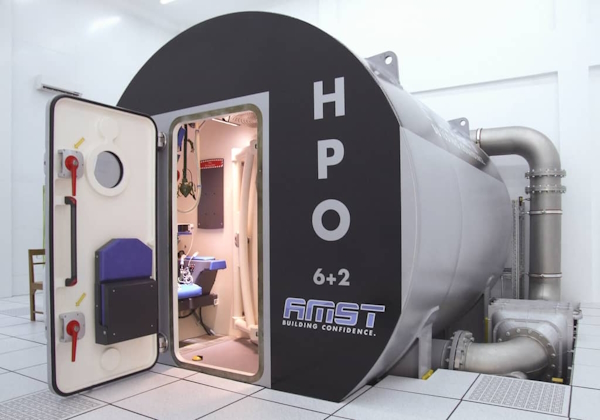
A regular elevation training mask that restricts airflow cannot replicate the systemic physiological effect of real altitude. Such masks only create resistance to breathing, loading the respiratory muscles, but they do not lower the partial pressure of oxygen in the alveolar air and do not induce the significant hypoxemia required to trigger the HIF cascade.
To genuinely simulate hypoxia, you need either hypobaric chambers that lower atmospheric pressure, specialized hypoxicator masks that deliver air with reduced oxygen content (so-called normobaric hypoxia), or the “live high—train low” method using hypoxic tents. These devices can indeed lower blood oxygen saturation and kickstart adaptive mechanisms, including erythropoietin production.
However, achieving a meaningful effect requires prolonged exposure (hours or sleeping in a hypoxic environment), not just episodic use during a one-hour workout.
How to Achieve These Effects with AAS
In the context of bodybuilding and anabolic androgenic steroid (AAS) use, the key interest lies in pharmacologically mimicking or amplifying these adaptive pathways. While steroids aren’t a direct analog of hypoxia, they can influence some of these mechanisms. Combining AAS with drugs that target the HIF pathway creates a powerful synergistic effect. Let’s break down how this works and what it delivers.
Erythropoiesis and Endurance. The most direct way to mimic the “altitude effect” is by using compounds that boost erythropoietin production or directly stimulate red blood cell creation. This includes synthetic erythropoietins (EPO), darbepoetin, and newer classes of drugs—prolyl hydroxylase inhibitors (HIF stabilizers) like roxadustat, molidustat, and daprodustat. These compounds “trick” the body into thinking it’s in a hypoxic state, triggering the HIF cascade even at sea level. The result is a significant increase in hematocrit and red blood cell count, which translates directly into phenomenal endurance, allowing longer, more intense training sessions and faster recovery between sets. For a bodybuilder, this means the ability to perform higher volume and higher intensity workouts—a direct stimulus for hypertrophy.
Mitochondrial Biogenesis and Recomposition. Anabolic steroids themselves can influence mitochondria. Research shows that even an EPO cycle can significantly increase mitochondrial oxidative capacity. AAS, such as testosterone and its derivatives, possess powerful anti-catabolic and anabolic effects. When combined with enhanced oxygen and energy delivery (from new red blood cells and mitochondria), the effectiveness of AAS multiplies. The body doesn’t just receive a signal to grow—it gets the resources to do so. This creates ideal conditions for body recomposition: simultaneously burning fat while building lean muscle mass. Additionally, certain peptides, like IGF-1 analogs and growth factors, are also classified as agents that influence regeneration and energy metabolism and can be integrated into the overall strategy.
Angiogenesis and Muscle Quality. The improvement in the muscle capillary network achieved in the mountains via VEGF can be stimulated directly or indirectly in the world of AAS. Some compounds, including specific peptides and growth factors (e.g., VEGF, FGF, PDGF), directly stimulate angiogenesis. While their use in bodybuilding is less common due to high cost and associated risks, understanding this mechanism is crucial. Improved muscle blood flow not only enhances the pump during training—a key factor for nutrient delivery and metabolite removal—but also accelerates recovery. A muscle rich in capillaries is more enduring and recovers faster, allowing it to be trained more frequently and with greater intensity.
Therefore, using AAS in combination with hypoxia-mimicking compounds allows an athlete to achieve the same three key adaptations as altitude training, but in a much shorter time frame and without ever leaving home. Increased erythropoiesis provides “more blood,” mitochondrial biogenesis provides “more energy,” and angiogenesis provides “better delivery.” Layering a powerful anabolic signal from steroids onto this upgraded “physical operating system” enables levels of muscle mass, density, and definition that are virtually unattainable for a natural athlete using hypoxia alone. This isn’t a replacement—it’s an effect multiplier.
Conclusions and AAS Protocols
So, anabolic steroids and altitude exposure produce fundamentally different, though partially overlapping, effects. It would be a mistake to consider them interchangeable. High-altitude exposure is a powerful physiological stressor that forces the body to adapt by increasing red blood cells, building new mitochondria, and expanding capillaries—directly enhancing endurance and oxygen utilization efficiency.
Anabolic steroids, on the other hand, are pharmacological agents that bind to androgen receptors, triggering powerful protein synthesis and suppressing catabolism, leading to muscle and strength gains. However, they don’t provide the same boost in blood oxygen capacity as hypoxia. The ideal result is achieved by combining these approaches: steroids create the anabolic environment and stimulate tissue growth, while hypoxia (or drugs that mimic it) provides this new tissue with the energy and oxygen it needs by improving the body’s transport systems.

Dmitry Volkov – is the author of our bodybuilding section is a practicing sports medicine physician based in Dallas, Texas, with 21 years of hands‑on experience in sports pharmacology. At 42, he combines deep academic knowledge with real‑world expertise gained from coaching athletes of all levels — from amateurs to seasoned competitors. He earned his medical degree from a leading Texas institution and spent years working in sports medicine clinics and private practice.
His primary focus is hormonal regulation of muscle growth, the use of anabolic steroids and peptides, and post‑cycle recovery. He understands modern protocols inside out because he consults real people every day, helping them avoid side effects and achieve safe results. His approach is rooted in evidence‑based medicine, yet remains grounded in the realities of both amateur and professional sports.
In his articles, he aims to debunk myths and deliver clear, scientifically sound recommendations. Every piece of content is vetted not only by medical knowledge but also by years of clinical observation. He firmly believes that responsible pharmacology requires a solid grasp of biochemistry, respect for one’s body, and regular medical monitoring — and he works hard to convey these principles in a way that is both accessible and actionable for his readers.