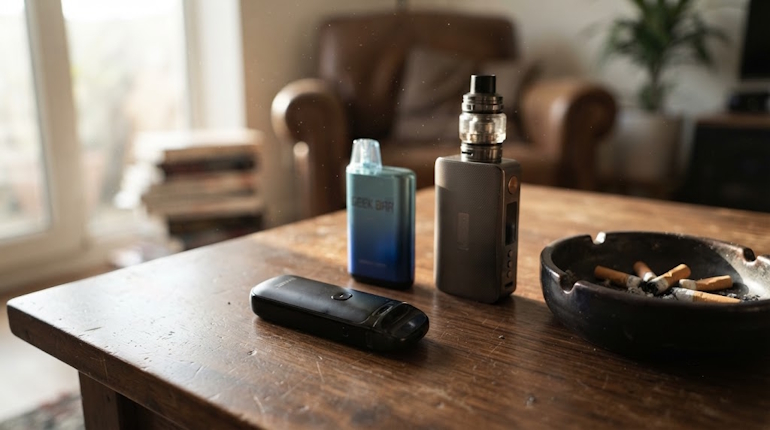
Breaking down every category of vapes and e-cigarettes reveals their true health impact compared to traditional tobacco smoking.
Examining disposables, pod systems, and high-powered box mods clarifies the technical differences across hardware and the chemical makeup of their vapor. Comparing how nicotine e-liquids and combustible tobacco smoke affect the human body sets the record straight on the safety of modern smoking alternatives.
What Is a Vape and How Does It Work? A Plain-English Breakdown
An e-cigarette is essentially a compact, pocket-sized inhaler that heats a specially formulated flavored liquid rather than burning tobacco leaf.
Taking a draw activates the built-in battery, sending electrical current to a small wire coil or mesh element that heats up instantly, vaporizing nicotine e-liquid into a dense aerosol. Unlike traditional cigarettes, vaping eliminates ash, open flame, and lingering smoke that clings to hair and clothing.
For everyday users, the core difference comes down to vaporization versus combustion: swapping burning leaf for vapor keeps heavy tars and carbon monoxide out of the lungs while providing a cleaner overall experience.
Device Classification: From Disposables to Professional Mods
Disposable e-cigarettes currently represent the largest and most accessible segment of the vaping market.
These self-contained devices require zero charging, coil swapping, or e-liquid refilling, operating straight out of the packaging. Rated by total puff count, the unit is discarded once the battery dies or the liquid runs dry. Inside, a sponge soaked in nicotine salt e-liquid connects to a draw-activated sensor, delivering rapid nicotine absorption into the bloodstream without pressable buttons.
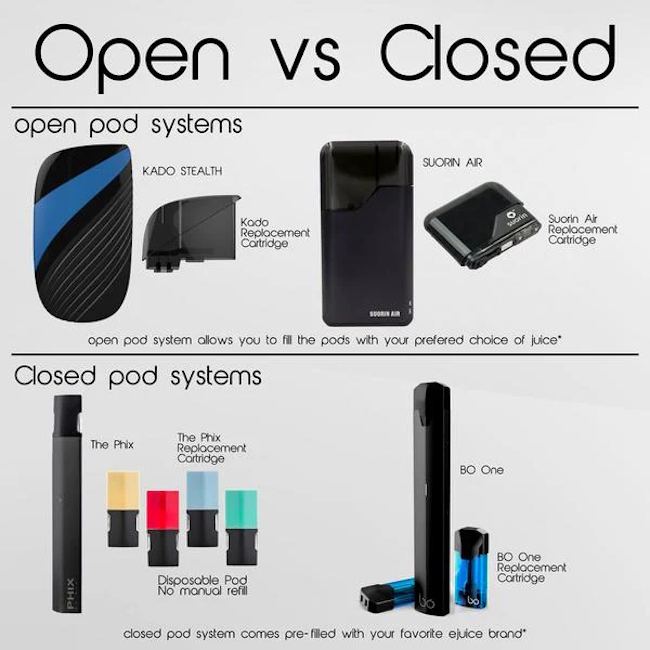
Pod systems mark the next evolutionary step, designed for daily users seeking a more cost-effective setup. Combining a rechargeable battery device with a detachable pod housing the heating coil, these systems offer portability and easy flavor swapping. The market splits into two primary pod categories based on maintenance:
-
Closed Pod Systems: Pre-filled with e-liquid at the factory, these single-use cartridges cannot be manually refilled.
-
Open Pod Systems: Users purchase empty pods or replaceable coils, refilling the reservoir manually with bottled e-liquid.
Box mods are larger, high-performance devices tailored to advanced vapers who demand massive cloud production and precise fine-tuning. Powered by advanced chipsets, these mods offer full control over wattage, temperature, and voltage. Topped with a rebuildable dripping atomizer (RDA) or sub-ohm tank, they allow enthusiasts to wrap custom coils, wick organic cotton, and dial in their preferred resistance.
Mechanical mods (mech mods) occupy a specialized niche, consisting of a bare metal tube housing a battery and a mechanical firing switch.
Devoid of internal electronics or safety chips, mech mods send raw battery current straight to the atomizer coil. Operating a mechanical mod demands a firm grasp of Ohm’s law and electrical physics, as short circuits can cause catastrophic battery failure. Safe operation requires following this strict routine:
-
Thoroughly inspect the battery wrap on high-drain cells for any tears or pinholes before inserting them into the tube.
-
Measure coil resistance on a standalone ohm reader to verify that current draw stays safely within the battery’s continuous discharge rating (CDR).
-
Confirm that the atomizer’s positive 510 pin protrudes sufficiently to prevent direct hard shorts against the mechanical mod body.
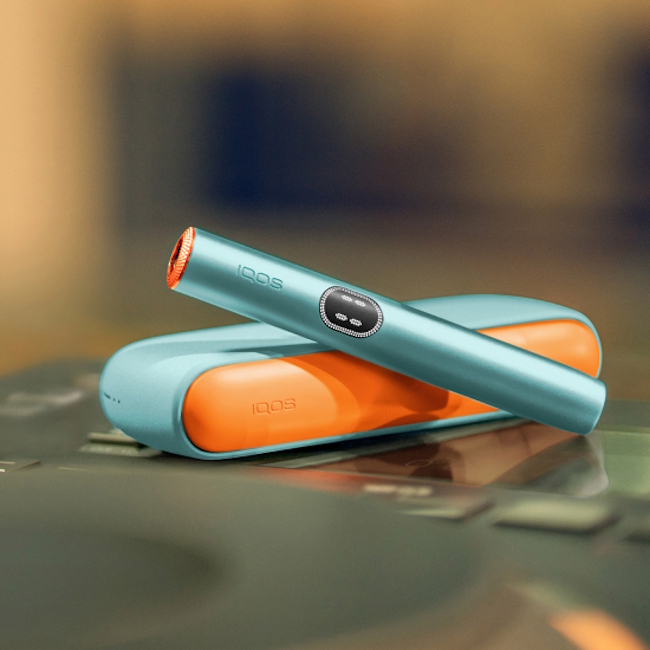
Heated tobacco systems like IQOS or glo require distinct categorization, though consumers often mistake them for standard e-liquid vapes.
Rather than vaporizing liquid, these heat-not-burn (HNB) devices warm real reconstituted tobacco sticks to roughly 480–660 °F (250–350 °C). This thermal range generates a nicotine aerosol without triggering combustion, positioning them as a technological bridge between combustible cigarettes and traditional vapes.
While marketed as safer smoking alternatives, independent clinical research and WHO health data confirm that heated tobacco products carry substantial health risks.
Key health concerns associated with these devices include:
-
Release of Specific Toxins and Carcinogens: Although aerosol levels of certain toxicants drop compared to combustible smoke, thermal degradation of tobacco and polymer filter components creates unique chemical byproducts—including polycyclic aromatic hydrocarbons (PAHs), formaldehyde, and acrolein. Some of these compounds do not occur in traditional cigarette smoke, and their long-term cellular toxicity remains unquantified.
-
Cardiovascular Damage: Natural nicotine absorbed from heated tobacco sticks induces rapid capillary constriction. This triggers elevated blood pressure, spikes heart rate (tachycardia), and degrades arterial elasticity over time, compounding heart attack and stroke risks.
-
Respiratory System Suppression: Fine particulate aerosols penetrate deep into pulmonary tissue, causing micro-inflammation in lung parenchyma. Irritating gases inflame airway linings and increase airway resistance, potentially precipitating chronic bronchitis or aggravating existing asthma.
-
Reinforcement of Nicotine Addiction: Utilizing real tobacco, these devices deliver nicotine payloads nearly identical to combustible cigarettes. Consequently, heat-not-burn products rarely serve as effective cessation tools, instead entrenching chemical dependence under a socially acceptable guise.
Health Risks of E-Cigarettes: An Objective Smoke Comparison
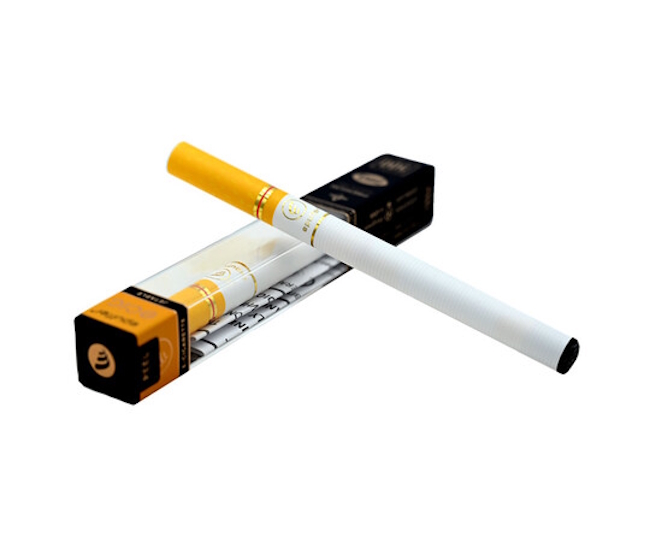
The primary rationale for switching to e-cigarettes centers on eliminating organic combustion.
Burning a traditional tobacco cigarette releases over 7,000 chemical compounds, including tars, carbon monoxide, arsenic, ammonia, and dozens of proven carcinogens linked to malignant tumors. By contrast, vapes produce vapor from propylene glycol (PG), vegetable glycerin (VG), food-grade flavorings, and pharmaceutical nicotine—reducing toxic load on respiratory pathways while preserving ciliary function in lung tissue.
Nevertheless, viewing e-cigarette vapor as completely harmless is a dangerous misconception:
-
Thermal degradation of PG and VG—particularly during dry hits on unwicked coils—generates harmful aldehydes like formaldehyde and acrolein, which irritate respiratory mucous membranes.
-
Flavoring chemicals approved for ingestion do not automatically translate to safe inhalation, as heating changes their chemical structures.
-
Continuous inhalation of fine aerosol particles can trigger chronic inflammatory responses, including vaping product use-associated lung injury (EVALI).
Nicotine salts—widely used in disposable vapes and compact pod systems—present a unique hidden hazard. By altering pH levels with benzoic acid, nic salts absorb into the bloodstream within seconds while eliminating harsh throat hit, which traditionally functioned as a natural physiological check on nicotine intake.
Without that physical feedback, users frequently chain-vape, consuming massive doses of nicotine unnoticed and accelerating physical and psychological addiction.
Heated tobacco systems also carry a distinct set of long-term health risks.
While bypassing heavy tar combustion, the generated aerosol still delivers tobacco alkaloids and organic compounds whose long-term health impacts remain under active investigation. The medical consensus is clear: all nicotine delivery devices strain the cardiovascular system by constricting capillaries, spiking blood pressure, and increasing tachycardia risks.
Device Market Breakdown and Comparative Summary
In summary, electronic nicotine delivery systems reduce toxicity relative to combustible tobacco, but they are far from harmless.
Vaping serves as a harm reduction alternative for adult smokers, not a risk-free habit for non-smokers. The table below outlines the technical specifications and primary health risks across each device category:
| Device Type | Operating Principle | Consumable Type | Maintenance Complexity | Key Health Risk |
| Traditional Cigarettes | Combustion at 1,470–1,650 °F (800–900 °C) | Tobacco and paper | None | Tars, carbon monoxide, carcinogens, COPD |
| Disposable Vapes | E-liquid vaporization | Factory pre-filled (non-replaceable) | Zero (disposal upon battery depletion) | Nicotine salt overdose |
| Pod Systems | E-liquid vaporization | Replaceable pods / coils | Low (refilling e-liquid, swapping pods) | Rapid addiction development |
| Box Mods | E-liquid vaporization | Custom-built coils | High (rewicking cotton, resistance calculation) | Aldehyde inhalation from dry wicks |
| Mechanical Mods | Direct battery current | Custom-built coils | Maximum (requires knowledge of Ohm’s law) | Battery explosion from short circuits |
| Heated Tobacco Systems | Heating up to 660 °F (350 °C) | Specialized tobacco sticks | Low (regular heating blade cleaning) | Tobacco alkaloids, vascular spasms |
Chronic smoking and drinking is like driving a car with no oil, flat tires, and contaminated fuel in the tank—the vehicle grinds down component by component (lungs, liver, brain), yet manages to sputter along until total systemic failure.

I’m Dr. Michael Carter, a 43-year-old American physician and medical researcher. I earned my MD from the University of Michigan Medical School and later completed an MPH at the Johns Hopkins Bloomberg School of Public Health, with a focus on public health and clinical research.
I began my medical career at University of Michigan Health, where I worked in clinical practice and contributed to research on chronic disease prevention and the effectiveness of medical interventions. I later continued in academic medicine, focusing on internal medicine, metabolic health, preventive care, and the analysis of clinical data.
My research interests include chronic disease, cardiovascular risk factors, metabolic disorders, disease prevention, and the evaluation of medical evidence. I’m particularly interested in the quality of clinical research, the evidence behind treatment approaches, and how medical findings are interpreted and applied in real-world practice.