Nutritional value of any food depends directly on its chemical composition, more specifically on the proportions of macronutrients and the amount of water it contains.
Energy density is measured in kilocalories per 100 grams, showing how much energy the body receives after digesting a given food. There is a strict physiological constant: one gram of protein or carbohydrate provides four kilocalories when broken down, while one gram of fat provides more than twice as much energy — nine kilocalories.
The highest-calorie foods are overwhelmingly those with the greatest concentration of fat and the least amount of water.
Water has zero energy value, so processes such as drying, rendering, or pressing automatically turn the original raw material into a calorie-dense product. The less liquid, soluble fiber, and carbohydrates remain in the final product, the more energy is packed into each gram.
Understanding how energy density is created helps build a balanced everyday diet while reducing the risk of accidental overeating. A seemingly insignificant tablespoon of oil or a handful of nuts can contain roughly as much energy as an entire meal.
Below is a detailed breakdown of the ten most calorie-dense foods, ranked from highest to lowest energy density, with an explanation of the physical and chemical reasons behind such extreme calorie concentration.
The ranking is based strictly on weight (100 grams of food), not on serving size or volume. This makes it possible to compare the pure energy density of different foods objectively, without water and air affecting the calculation.
Concentrated Plant and Animal Fats

Lipids themselves provide 9 kcal per gram — more than twice the energy supplied by proteins and carbohydrates. When they are industrially purified, pressed, or rendered, water and nonfat components are largely removed, turning the product into a highly concentrated energy source.
Fish Oil (3,175 kcal per 3.5 oz)
This traditional pharmacy product and popular dietary supplement is an oily concentrate obtained primarily from the livers of cod and related fish or from the muscle tissue of deep-sea marine species.
It is rarely used in everyday cooking because of its distinctive taste and strong aroma, but it is highly valued in clinical nutrition as an unmatched source of polyunsaturated omega-3 fatty acids and fat-soluble vitamins A and D. A standard daily dose is measured in milliliters or supplied in gelatin capsules, helping consumers avoid an excessive energy intake, since 100 grams of the substance contain exactly 900 kilocalories.
The extreme energy density of fish oil comes from its high chemical purity after extraction and extensive refining. During industrial production, the original marine raw material undergoes pressing, temperature-based separation, and multiple stages of filtration that remove cellular water, proteins, and carbohydrates. What remains is essentially a pure lipid profile without nonfat components. Since one gram of purified fat releases 9 kcal when oxidized, the theoretical maximum for a 100-gram portion is reached with virtually no loss.
Vegetable Oils (3,168–3,175 kcal per 3.5 oz)
Olive, sunflower, flaxseed, sesame, and other vegetable oils are staples of cuisines around the world, used for deep-frying, cold dressings, and preserving vegetables.
Despite major differences in flavor profiles and chemical composition — with oleic acid predominating in olive oil and linoleic acid in sunflower oil — their total calorie content is almost identical. Just one tablespoon of this viscous liquid adds about 120–130 calories to a dish, making oil one of the easiest hidden sources of excess energy.
The extraordinary concentration results from pressing seeds, nuts, or fruit pulp, mechanically separating the oil fraction from the dry solids. At processing facilities, plant material is pressed under high pressure and may also undergo solvent extraction to recover as much lipid as possible. Refined or unrefined vegetable oil is a chemically uniform substance largely devoid of water and fiber, which predictably places it at the upper end of energy density.
Rendered Animal Fats (3,161–3,175 kcal per 3.5 oz)
Beef tallow, lard, goose fat, and duck fat served for centuries as major energy sources for populations living in cold climates or performing strenuous physical labor.
These dense, high-melting fats have high smoke points, making them well suited for cooking meat over an open flame and producing flaky pastry. Depending on the degree of purification and filtration, 100 grams of rendered animal fat provide 896 to 900 kilocalories, primarily from saturated fatty acids.
The exceptional calorie density of these cooking fats is a direct result of prolonged heat treatment of animal connective tissue. As chopped fat is slowly heated, the cell membranes of adipocytes, which serve as fat-storage cells, are irreversibly broken down. Water present in the cells of fresh meat evaporates under high temperatures, while coagulated protein fibers are removed as dense cracklings. The finished solid lard contains few extraneous components, allowing maximum energy density.
Ghee (3,139–3,168 kcal per 3.5 oz)
This traditional South Asian food is a golden, caramel-scented fat that has become popular in restaurants around the world.
Unlike standard butter, ghee can be stored for months at room temperature without obvious signs of oxidation and does not smoke as readily in a hot pan. Its energy density approaches the physical maximum for food, reaching about 890–898 kilocalories per 100 grams of pure product.
Ghee achieves this remarkable energy density by removing virtually all nonfat components from cow’s milk. The butter is slowly simmered over low heat, allowing the whey it contains, roughly 16–20% of the total mass, to evaporate. At the same time, milk sugars (lactose) and proteins (casein) caramelize, settle as solids, and are carefully filtered out. The absence of water and protein impurities removes nonfat weight and concentrates the calories almost entirely in the lipid mass.
Nuts and Solid Animal Fats
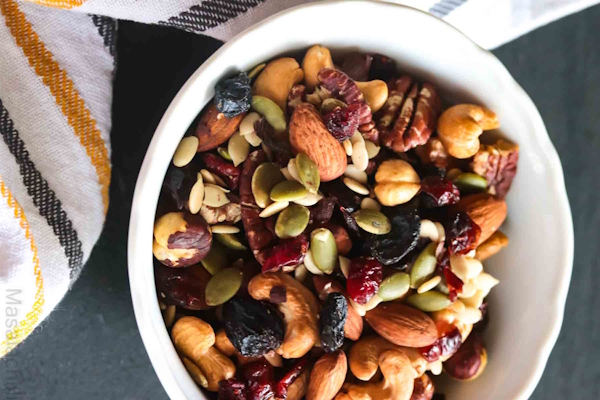
These foods are made up of roughly 70–90% lipids and contain very little natural moisture. Plants concentrate dense fat reserves in nuts to nourish the developing seed, while subcutaneous lard is naturally fatty tissue with very little connective protein and water.
Pork Fat and Back Fat (2,716–2,892 kcal per 3.5 oz)
Salted, smoked, or raw pork fat has historically served as a strategic food reserve because of its exceptional satiety and resistance to spoilage without refrigeration.
This product is a dense layer of subcutaneous fat that can be eaten as a cold appetizer, ground into homemade sausage, or used to lard lean cuts of meat. The energy content of 100 grams of pure pork fat without meat streaks ranges from 770 to 820 kilocalories.
Unlike rendered lard, fresh or salted pork fat is not subjected to heat that destroys its cells, so it largely retains its original biological structure. Its calorie content is slightly lower than the 900-calorie maximum because it still contains some tissue moisture, microscopic blood vessels, and connective-tissue protein membranes that hold the fat droplets together. Even so, the lipid content can reach 85–90%, displacing water and creating an extremely dense source of energy.
Macadamia Nuts (2,533 kcal per 3.5 oz)
The most expensive and challenging nut to cultivate, native to Australia’s tropical regions, is known for its exceptionally hard shell and the delicate, sweet, buttery flavor of its kernels.
Macadamias are eaten fresh, roasted with sea salt, coated in chocolate, and added to specialty desserts. Among naturally occurring nuts, this variety ranks at the top for energy density: 100 grams of shelled kernels provide 718 kilocalories.
Macadamia’s exceptional calorie density comes from its specific chemical matrix, in which monounsaturated fats account for about 75% of total weight. Evolutionarily, the tree stores a large reserve of oil in the seed, giving the young plant the energy needed to survive harsh conditions until its first roots develop. Compared with almonds or cashews, macadamias contain about three times less protein, around 8%, and carbohydrates, around 13%, leaving more of the available mass for lipid storage. The naturally low moisture content of a mature nut further increases that concentration.
Pecans (2,437 kcal per 3.5 oz)
This North American relative of the walnut has a smooth shell, a softer interior, and none of the characteristic sharp bitterness associated with some other nuts.
Pecans are a defining ingredient in classic American pies and are also widely used in pralines, cheese salads, and elaborate baked goods. By calorie content, this food ranks second in the world, providing 691 kilocalories per 100 grams of edible portion.
The high energy density of pecans is also directly linked to their exceptionally high fat content, reaching 72 grams per 100-gram serving. Carbohydrates account for a modest 14%, most of which comes from indigestible dietary fiber, while plant protein makes up no more than 9%. The natural structure of a pecan is a porous tissue saturated with oil. The dominance of lipids over the watery portion physically explains the exceptionally high calorie density of these kernels.
Emulsions, Desserts, and Freeze-Dried Products
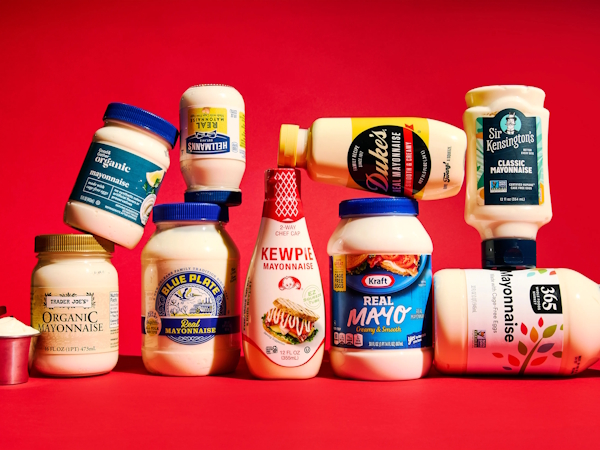
The high calorie density of these foods is driven by a dominant fat base, such as vegetable oils or cocoa butter, combined with little water. In emulsions such as mayonnaise, lipids can account for up to 80% of the volume, while drying and dehydration remove water with no energy value and sharply concentrate calories in the remaining solids.
Classic Mayonnaise (2,399–2,469 kcal per 3.5 oz)
This thick sauce, produced according to strict manufacturing standards, remains one of the most widely used and simultaneously criticized dressings in global cuisine.
Made from a stable emulsion of vegetable oil, raw egg yolks, mustard, and an acid, traditional mayonnaise has a rich, coating texture and full flavor. Its calorie content consistently ranges from 680 to 700 kilocalories per 100 grams, potentially multiplying the energy content of a vegetable dish several times.
The sauce’s high calorie content is explained almost entirely by the chemistry of the emulsion: a classic recipe calls for 67% to 80% purified oil by weight. Egg yolk acts mainly as a molecular stabilizer, binding a small amount of water from the vinegar to a much larger volume of lipids and preventing the mixture from separating. Unlike sour cream or Greek yogurt, where the base is largely watery dairy, mayonnaise is dominated by fat, which transfers nearly all of the calories of the original oil into the sauce.
Coconut Flakes (2,293–2,328 kcal per 3.5 oz)
Grated and thoroughly dried mature coconut meat is widely used in the food industry for decorating cakes, making candy, and filling cookies.
It has a distinctive tropical aroma and a pleasant chewy texture that remains stable during baking. Despite the visual lightness and airy appearance of the white flakes, 100 grams contain 650 to 660 kilocalories, making them significantly more calorie-dense than prunes or dried apricots.
The high energy density of dried coconut comes from the combination of two factors: its naturally high saturated fat content in the nut’s endosperm, around 65%, and aggressive dehydration. Fresh coconut meat contains substantial amounts of water that dilute its calories, but industrial drying removes that moisture completely. The remaining mass becomes lighter while retaining its lipids. As a result, the amount of fat per 100 grams of dry matter rises sharply, turning the flakes into a highly concentrated source of calories.
Dark Chocolate with 85% Cocoa or More (2,116–2,293 kcal per 3.5 oz)
High-quality dark chocolate made from ground cocoa beans and cocoa butter with minimal added sweeteners is widely regarded as the benchmark for a healthier confection.
It is rich in antioxidants, has a deep, astringent flavor, and a firm crystalline structure that breaks with a characteristic snap. Yet its reputation as a healthy food does not eliminate its extremely high energy density: a standard chocolate bar with at least 85% cocoa provides 600 to 650 kilocalories.
Paradoxically, the less sugar a chocolate recipe contains and the higher its cocoa percentage, the more its overall calorie content can increase.
The reason is cocoa butter, an extremely energy-dense plant fat that forms the physical foundation of high-quality cocoa beans. When lower-calorie carbohydrates are replaced, with sugar providing 4 kcal per gram, by additional cocoa solids and cocoa products, the proportion of lipids rises, providing 9 kcal per gram. The high concentration of natural fat combined with virtually no water makes dark chocolate the most calorie-dense of these desserts.
The Place of High-Calorie Foods in a Balanced Diet
Judging a food basket solely by calorie content often leads to a distorted view of the actual nutritional value of individual foods.
High energy density does not automatically mean junk food. Quality fish oil, unrefined cold-pressed vegetable oils, and raw nuts can serve as important sources of polyunsaturated fatty acids needed to maintain blood vessel elasticity, support testosterone synthesis, and ensure proper brain function.
The main challenge with calorie-dense foods is their tiny physical volume, which does not mechanically stretch the stomach enough to quickly trigger the production of satiety hormones. A person can easily eat a handful of macadamias containing a thousand calories while watching a movie without feeling full, whereas consuming the same amount of energy from baked fish or broccoli is physically difficult. High calorie concentration therefore requires especially strict portion control.
Understanding the physical basis of calorie density — the removal of water and the dominance of fat over protein — gives readers a reliable tool for managing body weight.
Any process that dries, cures, or adds oil during frying inevitably increases the energy density of a meal. A mindful approach to everyday eating does not require completely eliminating concentrated sources of energy, but rather including them in precise, measured amounts to maintain an ideal balance between the energy consumed and the body’s actual energy expenditure.

I’m Dr. Michael Carter, a 43-year-old American physician and medical researcher. I earned my MD from the University of Michigan Medical School and later completed an MPH at the Johns Hopkins Bloomberg School of Public Health, with a focus on public health and clinical research.
I began my medical career at University of Michigan Health, where I worked in clinical practice and contributed to research on chronic disease prevention and the effectiveness of medical interventions. I later continued in academic medicine, focusing on internal medicine, metabolic health, preventive care, and the analysis of clinical data.
My research interests include chronic disease, cardiovascular risk factors, metabolic disorders, disease prevention, and the evaluation of medical evidence. I’m particularly interested in the quality of clinical research, the evidence behind treatment approaches, and how medical findings are interpreted and applied in real-world practice.