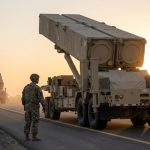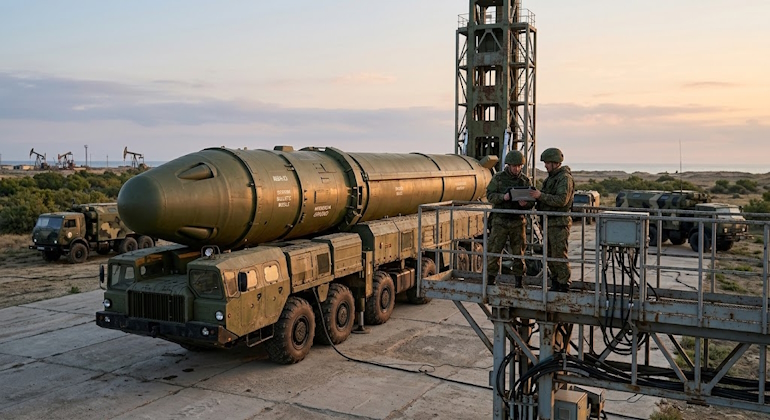
Global geopolitical shifts and the accelerating space race are forcing major powers to develop fundamentally new missile systems and space launch technologies.
Russia’s defense industry and space sector are focusing on next-generation systems designed to perform highly complex missions — from overcoming future missile defense networks to maintaining independent access to low Earth orbit. These developments cover a wide range of technologies, including heavy ballistic platforms, hypersonic cruise weapons, nuclear propulsion systems, and cost-efficient reusable methane-powered launch vehicles.
This review examines five key examples of Russian missile and aerospace technology, their technical capabilities, and their conceptual differences compared with similar projects being developed by NATO countries.
RS-28 Sarmat Heavy Intercontinental Ballistic Missile
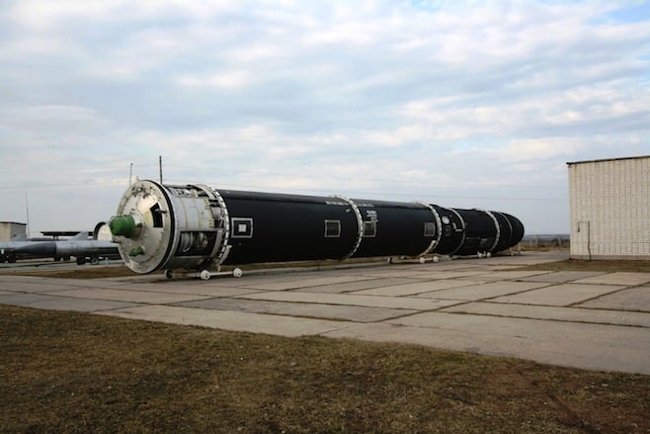
- NATO designation: SS-X-29 or SS-X-30 (also referenced in Russian military sources and U.S. media as Satan II).
The fifth-generation RS-28 Sarmat missile system is being developed as a planned replacement for the heavy Voyevoda systems currently on combat duty. This powerful silo-based liquid-fueled intercontinental ballistic missile was specifically designed to overcome advanced layered missile defense systems. Engineers incorporated unique energy capabilities into the design, allowing the system to deliver warheads to targets not only through optimal trajectories but also through routes passing over the South Pole.
Such global reach would require a potential adversary to establish a continuous radar detection network around its entire perimeter, demanding enormous technological resources.
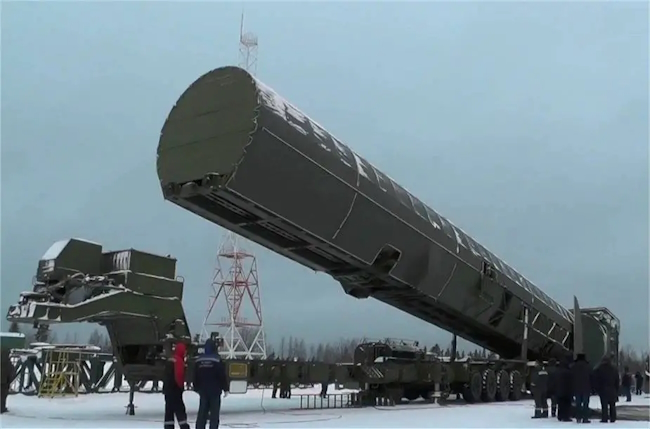
The key technical feature of the system is its exceptional payload capacity. The missile can carry a roughly ten-ton multiple independently targetable reentry vehicle platform containing numerous individual guidance warheads and an extensive suite of missile defense penetration aids. The system may also incorporate Avangard hypersonic glide vehicles. These platforms maneuver through the dense atmosphere along unpredictable trajectories at speeds exceeding Mach 20, making interception calculations extremely difficult for modern computer systems.
The missile’s propulsion system uses a proven architecture based on high-boiling-point rocket fuel components. Modernized main engines provide rapid acceleration of the multi-ton vehicle immediately after its cold mortar launch from a protected silo. A short powered flight phase is critically important for launch concealment because it limits the ability of early-warning satellite networks to detect the thermal signature and provide targeting data for kinetic interceptors.
Angara-A5 Heavy-Class Space Launch Vehicle
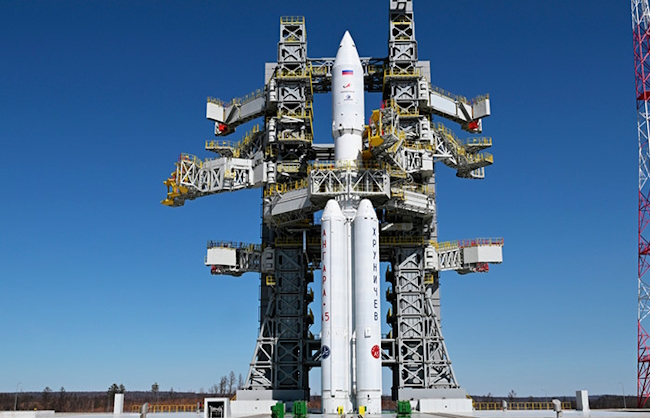
The environmentally cleaner Angara rocket family is being developed to provide guaranteed access to space from Russian territory.
The Angara-A5 is not designed to strike ground targets. Its military role is limited to placing heavy military spacecraft into low Earth orbit, including reconnaissance satellites, communications satellites, and missile warning systems.
The heavy Angara-A5 variant is intended to fully replace the older Proton-M launch vehicles, whose launches have historically depended on the Baikonur Cosmodrome. The foundation of the new system is a modular assembly concept. Launch vehicles with different payload capacities are created from standardized rocket modules, allowing manufacturers to optimize production lines and reduce the manufacturing cost of individual flight vehicles.
The propulsion system relies on RD-191 main engines using liquid oxygen as the oxidizer and environmentally safer naphthyl aviation kerosene as fuel. These engines represent an advanced evolution of technologies developed for the super-heavy Energia rocket and provide high thrust performance. The heavy configuration has a launch mass exceeding 700 tons and can deliver up to 24 tons of payload to low Earth orbit. The use of cleaner fuel reduces the risk of large-scale contamination in the event of failures at the launch site or along the flight path.
The vehicle’s flight-test program entered an active phase after completion of the launch infrastructure at the Vostochny Cosmodrome.
Locating launch infrastructure in Russia’s Amur Region solves the challenge of transporting oversized rocket stages by rail. The next development phase includes the Angara-A5M variant with upgraded engines and an improved control system, as well as the future Angara-A5V version featuring a hydrogen-powered third stage designed to support future lunar missions.
Amur-LNG Reusable Methane Launch Vehicle
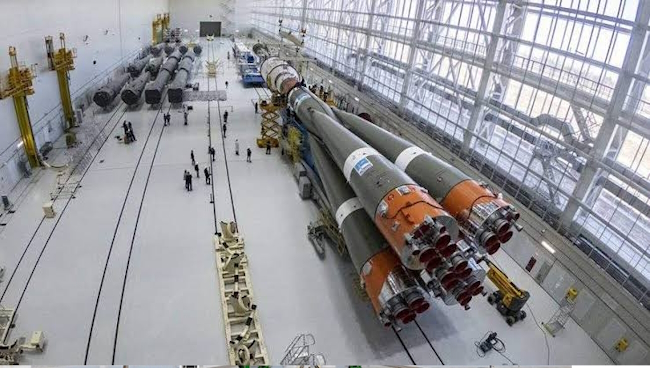
The development of the Amur-LNG reusable space launch complex reflects Russia’s response to the global trend toward commercialization of launch services.
In a military context, its potential use would involve rapidly deploying reconnaissance, communications, and navigation satellites into orbit. A reusable first stage could significantly reduce costs and accelerate the replenishment of orbital satellite networks.
This medium-class launch system is designed from the beginning around the strict economic requirements of the international launch market. Engineers at the rocket and space center based the architecture on a recoverable first stage. The engine module is expected to perform a controlled vertical landing on deployable legs using rocket thrust, returning to specially prepared landing zones near the designated impact area.
The core innovation of the system is the new RD-0169 methane-fueled engine, operating on liquefied natural gas and liquid oxygen. The choice of methane is based on its strong thermodynamic properties and high cooling capability. Unlike traditional kerosene engines, methane combustion produces almost no carbon deposits, which is essential for reusable launch systems. The lack of soot buildup allows repeated engine tests and launches without complete disassembly, cleaning, and inspection of turbopump components.
The business model of the launch complex is based on significantly reducing the cost of placing payloads into orbit.
When the first stage is recovered and reused, the rocket is expected to deliver approximately 8.5 tons of payload, while the expendable configuration increases this capability to about 13 tons. To reduce manufacturing costs, engineers plan to widely use additive manufacturing technologies, including 3D-printed combustion chamber components and rotational tank forming techniques. During the initial operational phase, the first-stage booster is designed for up to ten flights, with further increases expected as the program matures.
3M22 Zircon Hypersonic Anti-Ship Missile
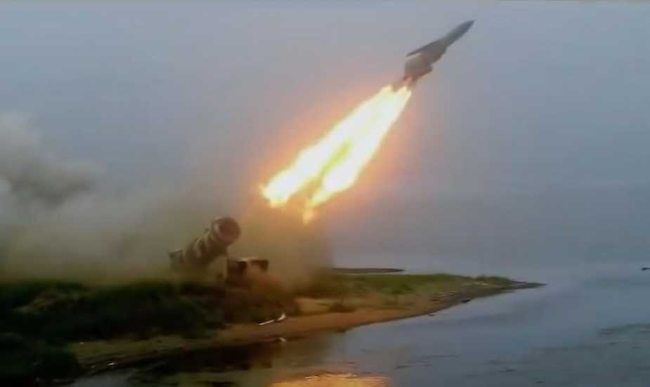
- NATO designation: SS-N-33 Zircon.
The sea-launched Zircon missile system represents a new class of strike weapon designed to challenge modern naval formations. The missile is intended to engage surface ships ranging from frigates to aircraft carriers, as well as stationary radar-significant ground targets at distances of approximately 1,000 kilometers.
The technological breakthrough behind the system is the development of a stable scramjet propulsion system. This engine enables controlled hypersonic cruise flight through dense atmospheric layers, where aerodynamic resistance reaches extreme levels.
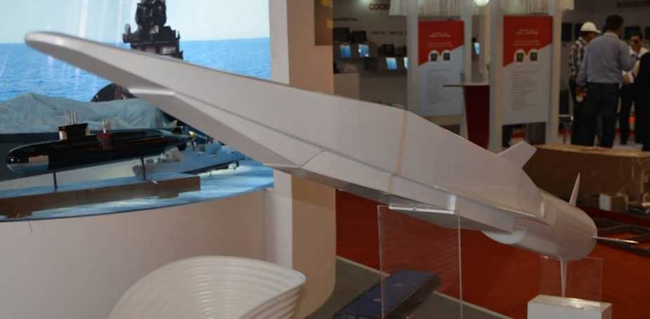
During cruise flight, the missile reportedly reaches speeds of around Mach 9. Movement at such velocity causes atmospheric ionization and creates a dense plasma layer around the missile body. This plasma envelope can absorb radar radiation, reducing detection effectiveness by ship-based air defense systems. The enormous kinetic energy of a multi-ton projectile is sufficient for direct impact to cause severe structural damage to a cruiser-sized vessel even without relying on the main explosive warhead.
A high degree of system standardization allows integration into the universal shipborne vertical launch system UKSK 3S14.
This capability allows Project 22350 frigates and Yasen-M class nuclear-powered multi-purpose submarines to carry hypersonic weapons without major structural modifications. At the same time, Russia’s defense industry is adapting the missile for mobile coastal launch systems and developing a lighter version intended for strike aircraft.
9M730 Burevestnik Strategic Cruise Missile
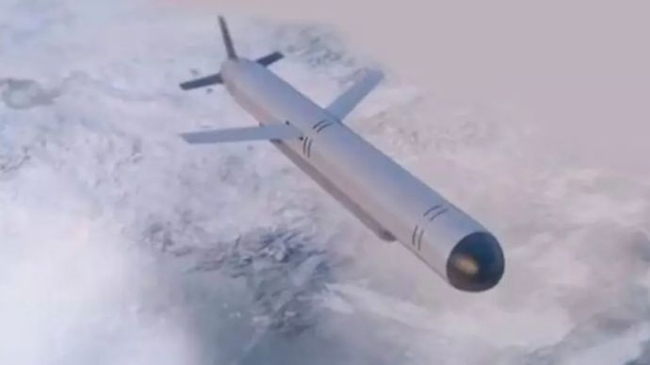
- NATO designation: SSC-X-9 Skyfall.
The development of the Burevestnik intercontinental cruise missile addresses the goal of maintaining nuclear deterrence through unconventional engineering solutions. The concept relies on a compact nuclear power system instead of conventional chemical propulsion. In theory, this technology could provide virtually unlimited flight range. The missile would be capable of remaining in designated areas for extended periods and approaching targets from directions considered less protected by traditional radar warning systems.
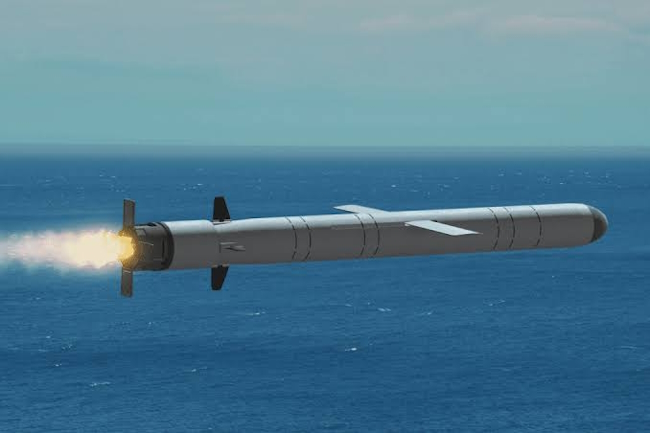
Propulsion is generated by atmospheric air entering an intake system, passing through the active zone of a compact nuclear reactor, being rapidly heated, and expelled through a nozzle at high velocity. The absence of large kerosene fuel tanks creates additional internal volume for advanced navigation equipment and a powerful thermonuclear warhead.
The aerodynamic configuration is optimized for low-altitude terrain-following flight designed to reduce the probability of detection by modern air defense systems.
Developing such a system required solving a range of unique challenges in advanced materials science. Engineers had to create extremely durable heat-resistant alloys for the heating chamber and develop radiation-resistant electronic components.
Conventional silicon processors rapidly degrade under intense ionizing radiation from a nuclear reactor, so the control system relies on specialized computing architectures designed to ensure mission execution.
Oreshnik Intermediate-Range Ballistic Missile
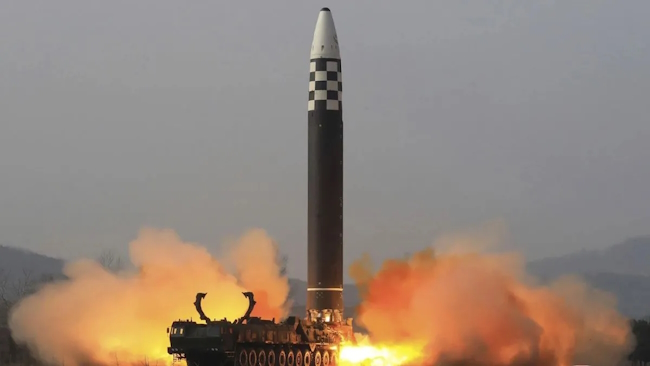
- NATO designation: IRBM (Intermediate-Range Ballistic Missile). In Western defense assessments, Oreshnik is described as an intermediate-range ballistic missile based on technologies associated with the RS-26 Rubezh program (NATO index SS-X-31).
The newest Oreshnik intermediate-range ballistic missile system represents the evolution of intercontinental missile technologies adapted into a mobile configuration.
The system occupies a strategic weapons category with a reported range from approximately 1,000 to 5,500 kilometers. Its solid-fuel architecture provides shorter launch preparation times and enables rapid deployment. Mobile ground-based launch platforms improve operational concealment and make launchers more difficult targets for preventive strikes.
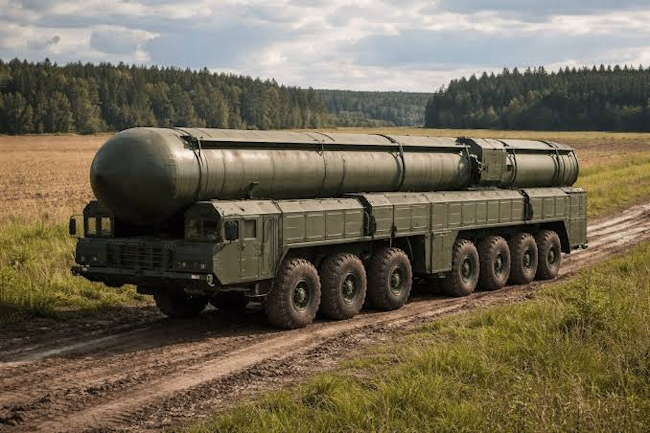
The warhead configuration consists of a multiple independently targetable reentry vehicle system containing up to six hypersonic maneuvering warheads. During the terminal phase, these elements reportedly reach speeds of up to Mach 10, becoming extremely heated objects with surface temperatures reaching several thousand degrees. The combination of kinetic energy and destructive force allows these elements to threaten heavily protected targets.
Intercepting these attacking elements during the final stage of flight is considered extremely challenging for existing Western air defense systems because of their high velocity.
Avangard Hypersonic Missile System
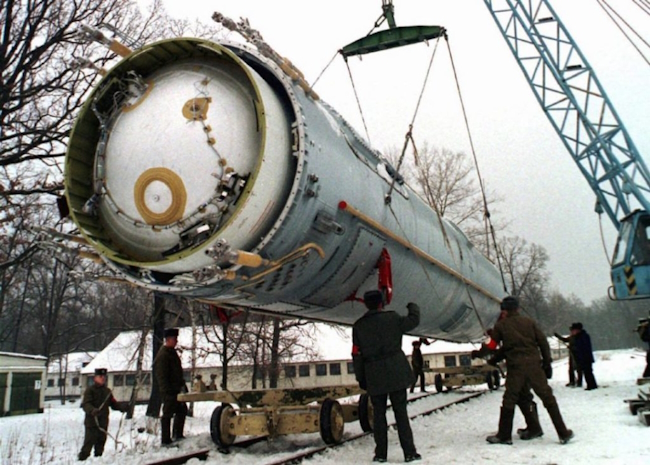
- NATO classification: HGV / ICBM (Hypersonic Glide Vehicle / Intercontinental Ballistic Missile).
- NATO designation: SS-19 Mod 4 Stiletto (for the complex using the UR-100N UTTKh launch vehicle).
- Warhead designation: In U.S. Department of Defense and NATO documents, the hypersonic glide vehicle itself is identified as SS-X-35.
The strategic missile system Avangard marked a major shift toward a new approach to penetrating layered missile defenses. Its warhead is a guided hypersonic glide vehicle. After being launched beyond the atmosphere by a heavy ballistic missile carrier, the vehicle reenters the atmosphere and begins a controlled glide flight.
The vehicle can actively maneuver in both altitude and trajectory over thousands of kilometers, making advance interception calculations significantly more difficult.
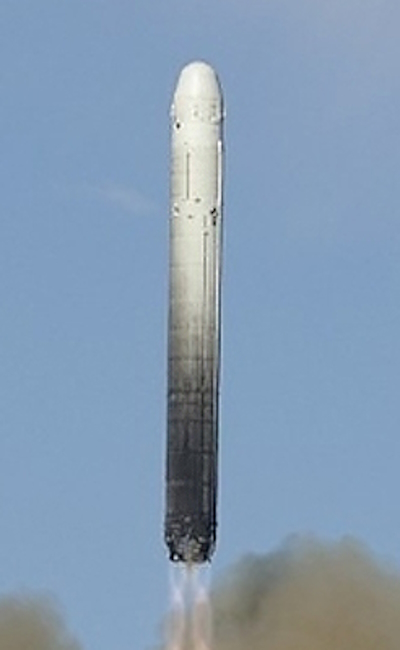
When traveling through the atmosphere at speeds of up to Mach 28, an ionized plasma cloud forms around the vehicle, while the surface temperature exceeds 2,000 degrees Celsius. Russian materials scientists developed advanced composite materials designed to withstand extreme thermal loads without losing wing geometry and to transmit control signals through the plasma layer.
The system has entered operational service and is gradually being integrated with next-generation heavy missile carriers intended to strike highly protected targets.
Comparative Analysis of Russian and NATO Missile Developments
To objectively understand the global balance of military capabilities, Russian projects must be compared with similar advanced programs being developed by NATO countries.
Approaches to creating weapons systems and aerospace technologies differ significantly. These differences are driven by varying economic resources, engineering traditions, technological priorities, and established military doctrines.
Below is a detailed comparison of seven key systems and their Western counterparts.
The evaluation of technological approaches is presented in a structured comparison table highlighting basic characteristics and conceptual differences:
| Russian Missile System | Class and Primary Purpose | Main NATO Counterpart | Key Technological Differences of the Counterpart |
|---|---|---|---|
| RS-28 Sarmat | Heavy intercontinental ballistic missile | LGM-35A Sentinel (USA) | The U.S. ICBM uses solid fuel, has a lower launch mass, and focuses on large-scale deployment. |
| Angara-A5 | Heavy-class space launch vehicle | Vulcan Centaur (USA) | The U.S. launch vehicle uses methane-powered first-stage engines and was designed with partial component recovery in mind. |
| Amur-LNG | Reusable medium-class launch vehicle | Neutron (USA) | The U.S. system features an unusual integration of the payload fairing into the reusable first-stage architecture. |
| 3M22 Zircon | Hypersonic anti-ship missile | HACM (USA) | The American hypersonic weapon program is primarily focused on air launch and uses a smaller air-launched configuration. |
| 9M730 Burevestnik | Strategic cruise missile with nuclear reactor propulsion | AGM-181 LRSO (USA) | The NATO cruise missile uses a conventional chemical-fuel turbofan design with significant range limitations. |
| Oreshnik | Intermediate-range ballistic missile | LRHW Dark Eagle (USA) | The American system relies on a combination of a rocket booster and a ground-launched hypersonic glide vehicle. |
| Avangard | Intercontinental hypersonic glide vehicle | C-HGB (USA) | American glide vehicle programs are primarily focused on integration with shorter-range launch platforms rather than heavy ICBMs. |
Reality Check: What Will Not Appear in the Near Future
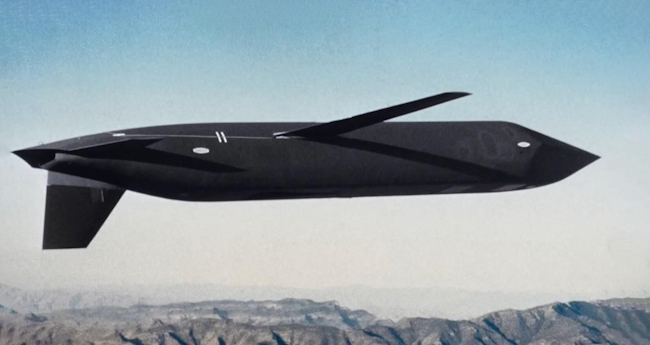
- The image above and below shows the AGM-181 LRSO: a stealth strategic air-launched cruise missile (ALCM — Air-Launched Cruise Missile) carrying a nuclear warhead, developed by Raytheon / RTX Corporation for the U.S. Air Force.
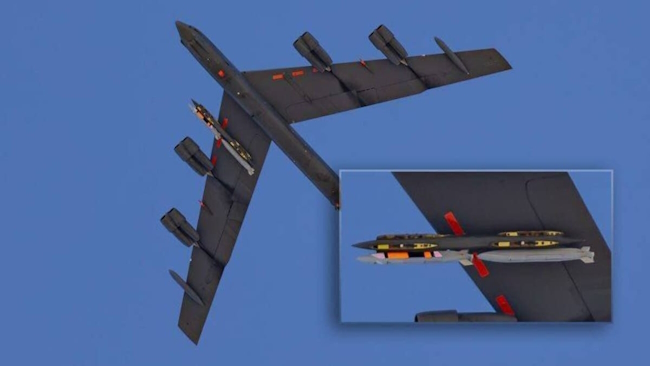
The situation as of August 2026 is not a case where “all Russian projects are fictional,” but it is also not the image presented by Russian propaganda, where every demonstrated system is already a mass-produced next-generation weapon.
The reality is much more complex: some systems exist and are operational, some are undergoing limited deployment, and some remain expensive experimental programs facing major technological and industrial challenges.
If these projects are divided by their level of maturity:
Already real and operational:
- Avangard;
- Zircon;
- Oreshnik;
- Angara-A5.
Real projects, but with major deployment challenges:
- RS-28 Sarmat.
Primarily future developments with uncertain timelines:
- Amur-LNG;
- Burevestnik.
The biggest mistake made by both Russian sources and some Western commentators is treating all these programs as if they have the same level of readiness.
Some of these systems genuinely exist and represent serious military or technological programs. However, transforming prototypes and limited production runs into a large-scale strategic advantage requires industrial capacity, funding, time, and stable manufacturing. This is where many of the most ambitious claims encounter practical limitations.
Let’s examine each case separately.
RS-28 Sarmat Heavy Intercontinental Ballistic Missile
- Status: A real program, but its deployment timeline and scale have often been overstated.
The Sarmat missile is not fictional. It is a heavy silo-based intercontinental ballistic missile designed to replace the Soviet-era R-36M Voyevoda. Russia has developed prototypes, conducted tests, and continues work on deployment. However, the main issue is that official statements about operational readiness have repeatedly moved ahead of the actual program status. Initial announcements about entering combat service appeared several years ago, but full-scale deployment has been delayed. As of 2026, the situation is closer to the beginning of limited introduction rather than a large-scale replacement of older missile systems.
The primary challenge for Sarmat is not the concept itself but industrial execution. Building a heavy liquid-fueled ICBM of this class requires stable serial production, upgraded missile silos, testing infrastructure, and a reliable supply chain. Western analysts generally question not the existence of the missile, but claims of rapid large-scale deployment and complete “invulnerability,” which are not confirmed by publicly available data.
Angara-A5 Heavy-Class Space Launch Vehicle
- Status: A real operational project, but not a revolution in space technology.
The Angara-A5 is one of the most established Russian projects in this category. The rocket exists, has completed successful launches, and is used to place heavy payloads into orbit. Its purpose is to replace the aging Proton-M and create a modern modular launch vehicle family. By 2025, successful Angara-A5 missions had been completed, including launches from the new Vostochny launch complex.
However, Russian promotional materials often present Angara as a direct competitor to American systems such as Falcon Heavy or future super-heavy launch vehicles. This comparison is misleading. The main weakness of Angara is its high launch cost and lack of full reusability. It solves Russia’s need for independent access to space but does not fundamentally change the economics of the global launch market.
Compared with SpaceX, Russia has developed a working heavy launch vehicle, but not a new reusable commercial launch model.
Amur-LNG Reusable Methane Launch Vehicle
- Status: Primarily a paper project; large-scale implementation in the near future appears unlikely.
Amur-LNG represents Russia’s attempt to develop a modern reusable methane-powered launch vehicle similar in concept to the American approach used by Falcon 9 and Starship. From a technical perspective, the concept is realistic: methane is well suited for reusable rocket engines. The main challenges are not related to physics, but to industrial capacity, financing, and development timelines. Russia does not currently have an operational reusable orbital-class rocket of this type.
As of August 2026, Amur-LNG remains a future development rather than a ready competitor to global leaders. The path between creating a prototype and achieving a reliable commercial reusable launch system requires years of testing and refinement.
Therefore, statements about the rapid arrival of a Russian SpaceX equivalent are better viewed as strategic positioning rather than a confirmed industrial reality.
3M22 Zircon Hypersonic Anti-Ship Missile
- Status: A real weapon system, but its characteristics and operational scale remain subjects of discussion.
Zircon is not a fictional project. Russia has developed a hypersonic anti-ship missile and has announced its deployment for naval platforms. The system has undergone testing and has been presented as a weapon for surface ships and submarines. However, the main issue is that independent verification of many claimed characteristics remains limited, while the missile’s actual performance against modern air defense systems continues to be analyzed.
Western specialists generally do not claim that Zircon does not exist. The main questions concern production scale, reliability, cost, and real effectiveness against heavily protected naval formations.
In other words, this is not a “paper project,” but neither is it a guaranteed weapon that automatically changes the global naval balance.
9M730 Burevestnik Strategic Cruise Missile
- Status: One of the most controversial projects, closer to the category of a technological experiment.
Burevestnik exists as a development program for a nuclear-powered cruise missile using a compact nuclear energy system.
Russia claims that the missile could achieve virtually unlimited range and bypass missile defense systems. However, this project raises the most questions among Western analysts because of the extreme difficulty involved in creating a compact, reliable nuclear reactor suitable for a cruise missile.
The main challenge is not launching the missile itself, but creating a safe, reliable, and operational system suitable for regular military deployment. Previous testing has been accompanied by significant concerns and reported accidents.
Therefore, as of 2026, Burevestnik is better classified as a long-term technological program with uncertain prospects rather than an operational mass-produced weapon.
Oreshnik Intermediate-Range Ballistic Missile
- Status: One of the most realistic new missile systems on the list after Avangard and Zircon.
Oreshnik differs from many Russian programs because it has already been demonstrated in combat use.
According to available assessments, this is a mobile intermediate-range ballistic missile likely connected with the development of earlier Russian missile programs. The system is considered an existing capability rather than only a demonstration prototype.
At the same time, Oreshnik is also surrounded by information warfare. Russia emphasizes its uniqueness and ability to overcome any defense system, while Western assessments generally view it as an evolution of established ballistic missile technologies.
This makes it a serious weapon system, but not a “wonder weapon” that completely changes the military balance.
Avangard Hypersonic Missile System
- Status: A real system currently in service.
Avangard is one of the most confirmed Russian strategic weapons programs. It is a hypersonic glide vehicle deployed on intercontinental ballistic missiles and designed to maneuver through the atmosphere at extremely high speeds.
Russia has publicly stated that the system has entered combat duty, and Western analysts generally recognize that the capability exists.
However, claims that Avangard is completely invulnerable should be viewed primarily as political messaging rather than a proven technical fact. Every weapons system has limitations, including the number of deployed carriers, intelligence capabilities, communications reliability, production costs, and operational challenges.
Avangard is a genuine military system, but it is not an absolute technology that makes all other defense systems obsolete.

Welcome to Poznayu.com!
My name is Alex, and I founded this project together with a team of like-minded professionals. At Poznayu.com, we create in-depth reviews, explore fascinating facts, and share well-researched, reliable knowledge that helps you navigate complex topics with confidence.
Our mission is simple: to explain complicated ideas in clear, accessible language. We believe that high-quality information should be available to everyone. Every article we publish is designed to provide practical value, actionable insights, and trustworthy analysis you can rely on.
Join our growing community of curious readers. Your feedback matters — share your thoughts in the comments, ask questions, and suggest topics you’d like us to cover next.