GPU Bitcoin mining in 2026 remains niche but feasible for hobbyists using marketplaces like NiceHash that sell GPU hashrate and pay out in BTC. A 4×RTX 5080 rig (single-board supporting 4 GPUs + budget CPU) can be profitable only under favorable electricity and market conditions; otherwise the rig tends to run at a loss and its value is preserved mainly by resale or repurposing for render / AI work.
The numbers below use a practical setup: RTX 5080 at an assumed street average of $1,300 per card (MSRP starts lower), GPUs doing ~120 MH/s on Ethash-like algorithms, ~250 W per card under load (≈6 kWh/day per GPU), and an estimated NiceHash income of about $0.34/day per RTX 5080 (estimate from NiceHash’s calculator).
These are modelled examples to show sensitivity to power price and BTC/market moves — treat them as illustrative, not predictions.
Why the RTX 5080
The RTX 5080 is a high-performance consumer GPU that delivers strong hashrates for current GPU-minable algorithms while still being liquid on the secondary market, which lowers exit risk compared with specialty kit. For small rigs the CPU is only for boot/monitoring (cheap Celeron-class chips suffice), so capital is concentrated in GPUs.
Even though ASICs dominate native BTC hash, GPUs remain relevant for alternate coins / hashing marketplaces and for miners who value flexibility (switch algorithms, sell cards later, use for creative/AI workloads). The practical focus for hobbyists is energy efficiency rather than peak MH/s.
- Operationally, mining software addresses each GPU independently — SLI is irrelevant; use motherboards with multiple PCIe slots and inexpensive risers to connect 4–6 cards reliably.
A compact, low-cost 4-GPU rig example:
- 4 × RTX 5080 (~$1,300 each assumed average street price)
- Motherboard with at least 4 PCIe slots (see list)
- Budget Celeron-class CPU, minimal RAM, basic PSU sized for sustained combined draw
- PCIe risers, frame, SSD, cabling — modest extra cost
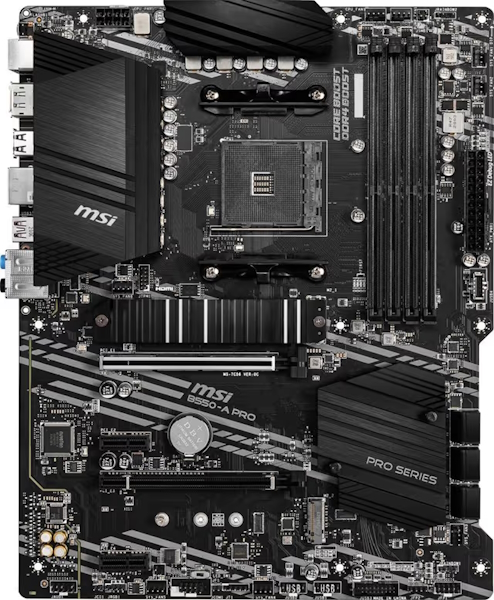
Common motherboard choices that work for 4-GPU rigs:
- ASUS B550-PLUS
- MSI B550-A PRO
- ASRock B550 Pro4
- ASUS Prime Z690-P
- MSI Z690-A PRO
Total parts estimate used here: 4 × $1,300 + $120 other parts = $5,320 capital outlay (example).
Calculations for United States, Canada and United Kingdom
Assumptions used in per-country calculation (identical across regions unless noted):
- Hash revenue (NiceHash estimate): $0.34 / GPU / day.
- Power per GPU: 250 W → 6.0 kWh / GPU / day (0.25 kW × 24 h).
- Rig: 4 GPUs (so multiply GPU figures by 4 for rig totals).
- Rig capital: $5,320 (4×$1,300 + $120).
Exchange-rate / unit notes for the conversions below: used representative FX values around March 2026 (1 CAD ≈ $0.733; 1 GBP ≈ $1.335) to convert local unit prices into USD for direct comparison.
United States
Average residential electricity (used here for the U.S. sample): ~$0.18 / kWh (national averages in early-2026 fall around $0.17–$0.19 / kWh).
Calculations (per GPU / per rig):
- Energy per GPU / day: 6.0 kWh.
- Electricity cost per GPU / day: 6.0 × $0.18 = $1.08.
- Electricity cost for 4 GPUs / day: $1.08 × 4 = $4.32.
- Gross mining revenue for 4 GPUs / day: $0.34 × 4 = $1.36.
- Net result (gross − electricity) / day: $1.36 − $4.32 = −$2.96.
- Net / 30-day month: −$88.80.
- Net / year: −$1,080.40.
Conclusion (U.S.): with these assumptions the 4×RTX-5080 rig runs at a clear daily loss driven by power cost; payback is not achieved unless either revenue per GPU or BTC price rises substantially or electricity cost falls.
Canada
Typical Canadian residential rates vary by province; an all-Canada average lies roughly 15–17¢ CAD / kWh (we use 0.16 CAD/kWh for the example). Converted at ~0.733 USD/CAD gives ≈ $0.117 / kWh equivalent.
Calculations (USD-converted):
- Electricity cost per GPU / day: 6.0 × $0.11734 ≈ $0.70.
- Electricity cost for 4 GPUs / day: ≈ $2.82.
- Gross mining revenue for 4 GPUs / day: $1.36 (same NiceHash estimate).
- Net / day: $1.36 − $2.82 ≈ −$1.46.
- Net / month (30 days): ≈ −$43.68.
- Net / year: ≈ −$531.48.
Conclusion (Canada): still unprofitable under the example assumptions, but losses are materially smaller than the U.S. case because typical Canadian residential rates (converted to USD) are lower than many U.S. averages.
United Kingdom
Ofgem’s Q2 2026 variable unit rate sits around 24.67 pence / kWh (price-cap figure used for illustration). Converted at ~1.335 USD/GBP gives roughly $0.33 / kWh.
Calculations (USD-converted):
- Electricity cost per GPU / day: 6.0 × $0.3293 ≈ $1.98.
- Electricity cost for 4 GPUs / day: ≈ $7.90.
- Gross mining revenue for 4 GPUs / day: $1.36.
- Net / day: $1.36 − $7.90 ≈ −$6.54.
- Net / month (30 days): ≈ −$196.33.
- Net / year: ≈ −$2,388.66.
Conclusion (U.K.): at current price-cap levels the electricity burden makes 4×RTX-5080 mining uneconomic for home setups; losses are large and recurring.
Key takeaways and practical measures
- Sensitivity: profitability is extremely sensitive to (a) energy price, (b) short-term NiceHash/pool income (which follows altcoin markets), and (c) BTC exchange rate. Small swings in any of these move the result from modest loss to modest profit.
- Efficiency first: lowering kWh consumed is the strongest lever — aggressive power-limit reductions, stable undervolting, and optimized frequency curves typically retain ~90–95% of peak hashrate while cutting kWh noticeably. Use a high-efficiency PSU and measure real rig draw under load before scaling.
- Plan B: assume long slumps — build with resale or alternate-use value in mind (GPUs for rendering, AI workloads, or resale channels). Factor potential resale into total ROI calculations.
- If you want a tailored region-specific run (different provincial/state tariffs, farm vs residential rates, exact NiceHash inputs or different GPU price assumptions), provide those numbers and I’ll recompute with the same structure.

I’m Irina Petrova-Levin, a graduate of the Moscow Technical University of Communications and Informatics (MTUCI), where I earned my degree in Information Technology. My professional journey has been deeply rooted in JavaScript, PHP, and Python, driven by a profound fascination with how modern technology shapes our everyday lives. I strive to explain complex processes in a clear and accessible way without ever sacrificing accuracy or missing the core of the matter.
Now based in Dallas since 2019, my work reflects a unique synthesis of Eastern European engineering depth and the dynamic American tech mindset. This blend allows me to bridge two distinct technological traditions.
My goal is to deconstruct the real mechanisms behind the devices and systems we use daily. In my articles, I aim to deliver information that is not only practical and structured but also reveals the hidden logic of how our world actually works.