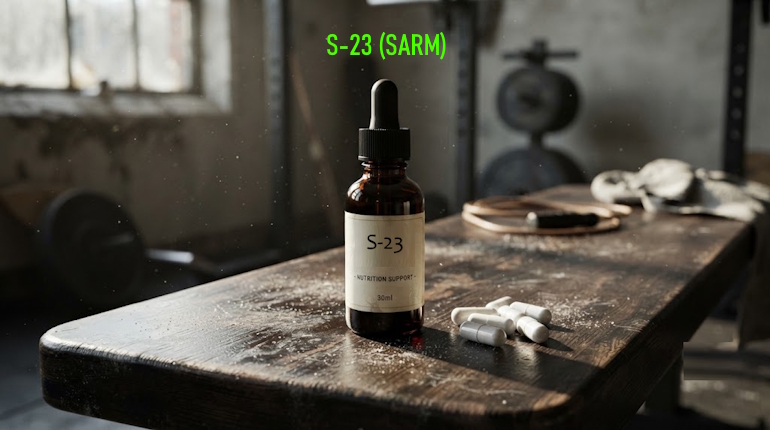
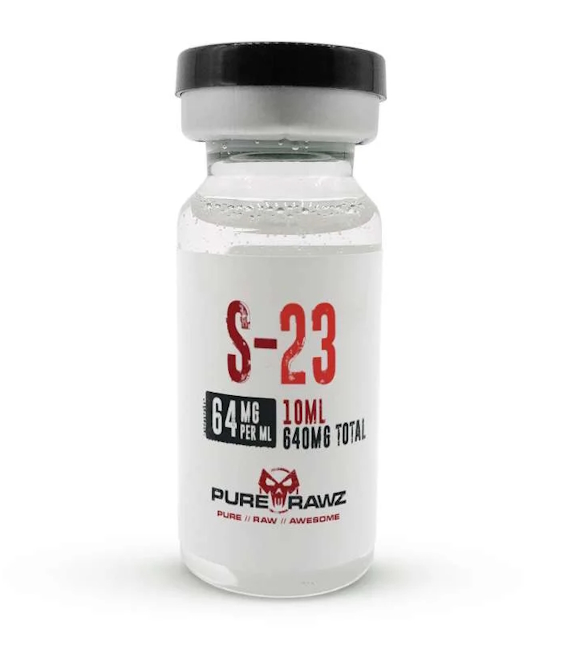
S-23 stands as one of the most potent selective androgen receptor modulators (SARMs) in modern bodybuilding, utilized primarily for aggressive cutting cycles and building rock-hard, lean muscle mass.
Boasting exceptionally high binding affinity to receptor sites, this chemical compound delivers phenomenal muscular hardness and pronounced fat-burning effects that rival traditional anabolic steroids. A detailed breakdown of S-23’s pharmacology, effective dosages, and available forms will help you objectively weigh the real risks and benefits of this research chemical before adding it to your athletic protocol.
Development of S-23 originally began in the laboratories of GTx, Inc., a pharmaceutical company focused on creating non-steroidal treatments for muscle wasting and osteoporosis.
Unlike earlier and milder molecules, researchers designed this new chemical agent with a completely different clinical goal in mind. Scientists were searching for an effective, 100% reversible male contraceptive capable of reliably suppressing spermatogenesis without triggering prostate hypertrophy or other severe side effects typical of synthetic testosterone administration.
The development was driven by an acute biochemical need to find the ideal balance between high anabolic activity in skeletal muscle and the ability to control gonadotropin secretion. During experimentation, structural modification of an earlier compound (C-6) via the addition of a chlorine group dramatically increased its bioavailability and binding affinity. This established S-23 as a prime candidate for mimicking testosterone’s actions in target tissues while sending a powerful feedback signal to the hypothalamus to shut down endogenous sperm production.
Preclinical animal studies conducted on male rats demonstrated impressive results aligned with its intended design:
Daily oral administration produced complete yet fully reversible infertility in animal models, while simultaneously preserving and increasing muscle mass and bone mineral density.
Maintaining normal sexual behavior and libido required co-administering exogenous estradiol, as the S-23 molecule does not aromatize—which, combined with endogenous testosterone suppression, drove serum estrogen levels to zero.
Despite promising preclinical trials, pharmaceutical development of S-23 as a prescription drug was ultimately frozen, and the compound never advanced to official human clinical trials. Medical researchers abandoned the project due to its severe suppressive impact on the endocrine system and the need for complex hormone replacement protocols during extended use.
s a result, the molecule shifted into the unregulated category of research chemicals and quickly emerged on the black market, catching the attention of elite athletes with its sheer anabolic potency.
Laboratory Specifications
Identifying the compound in laboratory settings and verifying raw material purity relies on its fundamental chemical characteristics.
The complete technical profile for the selective androgen receptor modulator S-23 includes the following verified parameters:
CAS Registry Number: 1010396-29-8 These specifications define the molecule’s unique spatial conformation, which drives its intense androgen receptor affinity, and serve as benchmark criteria during mass spectrometry and liquid chromatography testing to confirm compound identity.
Steroid Profile of S-23
S-23 exerts a profound suppressive impact on the hypothalamic-pituitary-testicular (HPT) axis, virtually halting the secretion of luteinizing hormone (LH) and follicle-stimulating hormone (FSH).
This characteristic stems directly from its initial development as a reliable non-hormonal male contraceptive. Due to its unprecedented binding affinity for androgen receptors, the drug triggers intense negative feedback in the hypothalamus: the brain senses a massive surge of androgenic signals and immediately shuts down endogenous testosterone production and spermatogenesis, plunging the athlete’s body into a state of chemical hypogonadism.
Although S-23 is not an anabolic steroid (lacking the classic four-ring carbon backbone), evaluating its pharmacodynamics in sports settings typically utilizes a standardized steroid profile breakdown:
Anabolic Activity: Extremely high (roughly 200–300% of testosterone). In terms of muscular tissue impact, it rivals potent dihydrotestosterone (DHT) derivatives, delivering extreme dryness, muscle hardness, and noticeable gains in pure contractile fibers.
Androgenic Activity: Moderately high (theoretically estimated at 30–40% of testosterone, but highly dose-dependent in practice). Despite claimed tissue selectivity, bodybuilding-level dosages cause the compound to lose selectivity, triggering acne, aggression, hair loss, and measurable prostate stimulation.
Aromatization (Estrogen Conversion): Completely absent (0%). The non-steroidal aryl-propionamide structure cannot physically interact with the aromatase enzyme, eliminating water retention and elevated estradiol risks.
Progestational Activity: None. The molecule lacks affinity for progesterone receptors, completely avoiding the specific side-effect profile associated with nandrolones or trenbolone.
Hepatotoxicity: Moderate. While not 17-alpha-alkylated, its high biological activity when taken orally places stress on the liver, frequently manifesting as elevated ALT and AST enzymes during a cycle.
Administration Method: Primarily oral (liquid suspensions, capsules, tablets). Injectable oil solutions are occasionally used to bypass primary hepatic metabolism.
Elimination Half-Life: Approximately 11.9 hours. Because of its relatively short plasma half-life, daily dosages must be split into two equal administrations spaced 12 hours apart to prevent hormonal dips.
Detection Time: Up to several months. S-23 metabolites have long been included on the WADA prohibited list and are easily detected via gas chromatography-mass spectrometry in official testing.
Pros and Cons of the Compound
Evaluating S-23’s effectiveness in the bodybuilding community comes down to its paradoxical nature: it delivers maximum physical reward alongside the highest risk profile among all selective modulators.
American bodybuilders frequently compare S-23’s visual impact to Masteron (Drostanolone) or Winstrol (Stanozolol). Because it causes zero intracellular or extracellular water retention, it stands as an unmatched pharmacological tool for late-stage contest prep when paper-thin skin and deep muscle separation are essential.
While S-23 and Winstrol deliver a similarly “dry” aesthetic—enhancing muscle density, raw strength, and vascularity without fluid retention—their underlying mechanisms differ entirely:
Winstrol (stanozolol) is a classic DHT-derived anabolic steroid that directly activates androgen receptors and carries a well-documented strain on lipid profiles, joints, and liver function (particularly in oral form).
S-23 is a non-steroidal selective androgen receptor modulator; lifters often view it as a “SARM-based Winstrol” due to its drying effects and strength gains, though its long-term safety profile remains far less researched.
Key Difference: Winstrol boasts extensive clinical documentation despite being harsher on cholesterol and joints, whereas S-23 presents far deeper natural testosterone suppression alongside limited long-term safety data.
Here is a quick overview of its primary advantages and drawbacks:
The compound’s primary advantage stems from its massive anti-catabolic protection during severe caloric deficits. During aggressive cutting phases, S-23 prevents lean muscle breakdown while actively stimulating lipolysis, enabling athletes to maintain strength and muscular density even at single-digit body fat percentages. It also significantly increases bone mineral density and accelerates central nervous system recovery, allowing for brutal, high-intensity training sessions without hitting overtraining burnout.
The drawbacks of S-23 begin with its catastrophic suppression of the hypothalamic-pituitary-testicular (HPT) axis. Unlike milder SARMs that only partially reduce endogenous hormone production, S-23 shuts down luteinizing hormone (LH) and follicle-stimulating hormone (FSH) secretion to near-zero levels. Running this compound solo inevitably plunges the user into acute hypogonadism, severe lethargy, complete loss of libido, and deep depression, making an injectable testosterone base non-negotiable.
Another critical drawback involves the complete loss of tissue selectivity at bodybuilding dosages. Although engineered to minimize prostate enlargement, real-world application shows that athletic doses trigger greater prostate growth than virtually any other receptor modulator. This comes accompanied by classic androgenic side effects: accelerated hair loss in genetically prone individuals, unprovoked aggression, and severe acne caused by strong receptor binding in sebaceous glands.
Rounding out its negative side-effect profile is severe toxicity toward the hepatobiliary system and blood lipid balance. S-23 causes a dramatic drop in high-density lipoprotein (HDL “good” cholesterol) while surging low-density lipoprotein (LDL), imposing serious long-term cardiovascular strain. Liver transaminases (ALT and AST) routinely spike above normal reference ranges during a cycle, making prescription liver support and frequent blood work mandatory.
Pharmacology, mechanism of action and principles of action
Chemically, S-23 belongs to the class of nonsteroidal arylpropionamides, exhibiting an unprecedentedly high binding affinity for androgen receptors.
Its binding inhibition constant stands at $K_i \approx 1.7\text{ nM}$, demonstrating the molecule’s ability to bind to target receptors far more tightly and securely than endogenous dihydrotestosterone itself. Lacking a steroid backbone structure, the compound cannot physically interact with 5-alpha reductase or aromatase enzymes, preventing any pathway toward conversion into estrogen or conventional DHT derivatives.
The compound’s mechanism of action initiates upon diffusing into the cellular cytoplasm, where it binds to inactive androgen receptors. Upon binding, S-23 alters the receptor’s three-dimensional conformation, causing it to dissociate from heat shock proteins and translocate into the cell nucleus. Once inside the nucleus, the activated complex binds to specific androgen response elements on DNA, acting as a potent transcription factor that directly triggers messenger RNA synthesis and the subsequent assembly of new contractile proteins in muscle tissue.
The drug’s pharmacokinetics dictate strict administration protocols in athletic settings.
Unlike oral anabolic steroids that rely on 17-alpha alkylation to survive hepatic metabolism, S-23 boasts outstanding native oral bioavailability reaching 96%. However, its plasma half-life is relatively short at approximately 11.9 hours. To maintain steady, even blood plasma concentrations without erratic peaks and troughs, the daily dosage must be strictly divided into two equal administrations spaced 12 hours apart.
To better understand this compound’s pharmacological profile, key medical characteristics of S-23 metabolism in the body include:
Complete Resistance to Aromatization: The molecule does not interact with the CYP19A1 enzyme, leaving serum estradiol levels dependent entirely on external sources of aromatizing compounds.
Dose-Dependent Loss of Tissue Selectivity: Exceeding therapeutic thresholds saturates skeletal muscle receptors, causing unbound compound to aggressively stimulate androgen receptors in the prostate and hair follicles.
Profound Gonadotropin Suppression: The drug triggers negative feedback in the hypothalamus more effectively than most synthetic androgens, completely blocking pulsatile GnRH secretion.
Dosages and Available Forms
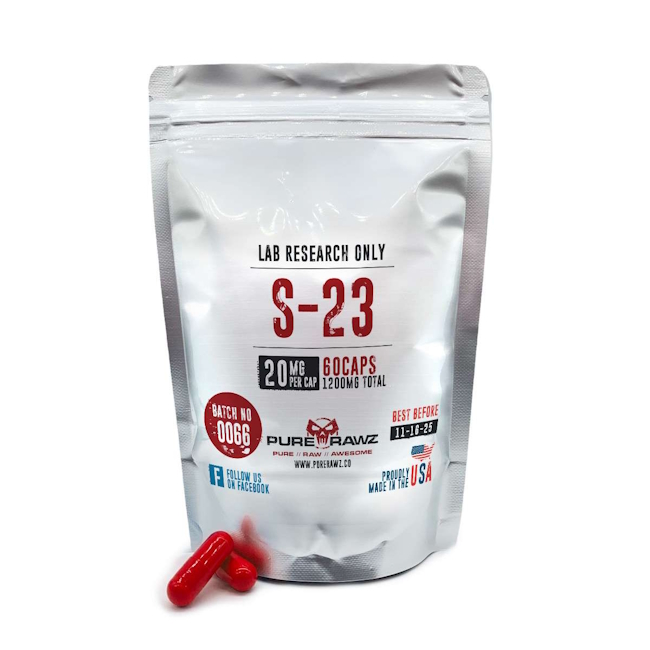
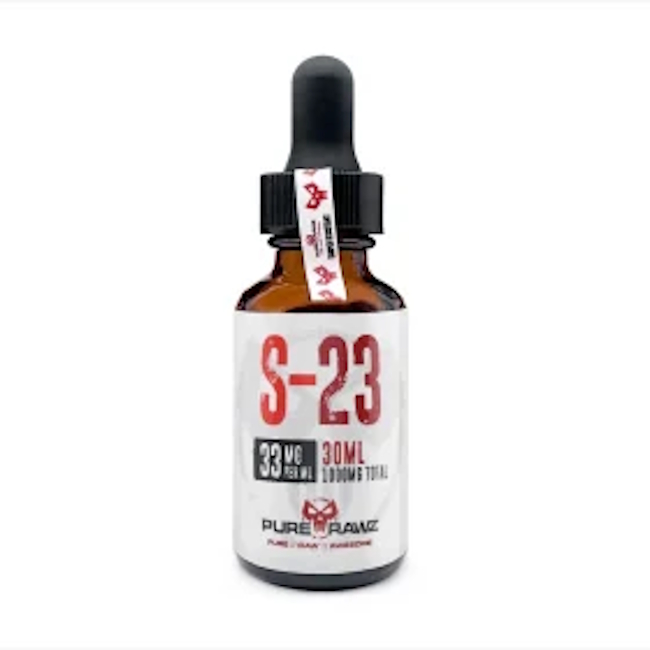
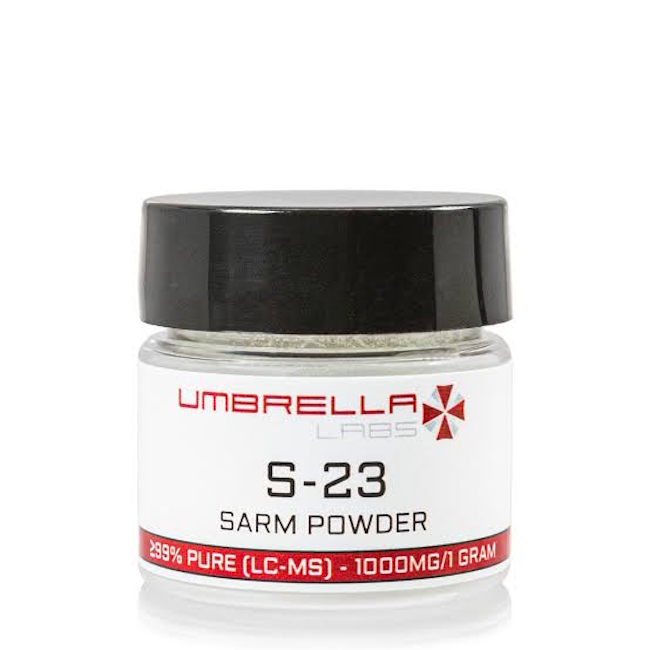
In the research chemical market, S-23 is offered in several physical forms, each with unique characteristics regarding absorption, shelf stability, and dosing precision.
Product Form
Formulation Details
Dosing Precision
Absorption Rate
Liquid Suspension
Powder dissolved in polyethylene glycol (PEG-400) or alcohol
High (milligram control using a graduated dropper)
Fastest (via sublingual holding)
Capsules
Active compound blended with neutral rice or corn filler
Fixed (dosage steps locked to capsule milligram size)
Moderate (requires gelatin shell dissolution)
Tablets
Compressed raw material with binding agents
Moderate (can be split into halves)
Moderate
Raw Powder
99% pure active substance without fillers
Low (requires precision laboratory micro-scale)
Depends on administration route
Injectables
Sterile oil-based solution for intramuscular injection
High
Slow (prolonged release from muscle depot)
Injectable S-23 is extremely rare and typically produced either by home-brewers or select niche manufacturers to bypass first-pass liver metabolism and mitigate hepatotoxicity, which is why most athletes stick to liquid suspensions or capsules. Due to its total suppression of endogenous hormone production, S-23 should never be used as a first cycle or run solo without an exogenous testosterone base. For beginner users planning their first cycle stack with S-23, protocol design starts at the minimum effective dose. To minimize side effects, follow this step-by-step guideline:
Initiate injectable testosterone (Enanthate or Cypionate) at a foundational TRT/replacement dose of 250 mg per week to establish an aromatizing base.
Introduce S-23 at 10 mg per day, strictly splitting the dose into two equal 5 mg administrations (morning upon waking and evening).
Limit the combination cycle to a maximum of 8 weeks while continuously monitoring blood lipids, hematocrit, and liver enzymes via lab work. Advanced bodybuilders weighing well over 200 lbs utilize S-23 in larger amounts during late-stage contest preparation.
Effective dosing for experienced athletes ranges between 20 mg and 30 mg per day (strictly split into 10–15 mg morning and evening doses). Exceeding 30 mg per day yields diminishing returns in muscle mass due to receptor saturation while exponentially increasing toxic stress on the liver, prostate, and cardiovascular system. Following any cycle involving S-23, an aggressive Post-Cycle Therapy (PCT) using selective estrogen receptor modulators (Clomiphene or Tamoxifen) is mandatory to restart natural endocrine function.
Dmitry Volkov – is the author of our bodybuilding section is a practicing sports medicine physician based in Dallas, Texas, with 21 years of hands‑on experience in sports pharmacology. At 42, he combines deep academic knowledge with real‑world expertise gained from coaching athletes of all levels — from amateurs to seasoned competitors. He earned his medical degree from a leading Texas institution and spent years working in sports medicine clinics and private practice.
His primary focus is hormonal regulation of muscle growth, the use of anabolic steroids and peptides, and post‑cycle recovery. He understands modern protocols inside out because he consults real people every day, helping them avoid side effects and achieve safe results. His approach is rooted in evidence‑based medicine, yet remains grounded in the realities of both amateur and professional sports.
In his articles, he aims to debunk myths and deliver clear, scientifically sound recommendations. Every piece of content is vetted not only by medical knowledge but also by years of clinical observation. He firmly believes that responsible pharmacology requires a solid grasp of biochemistry, respect for one’s body, and regular medical monitoring — and he works hard to convey these principles in a way that is both accessible and actionable for his readers.