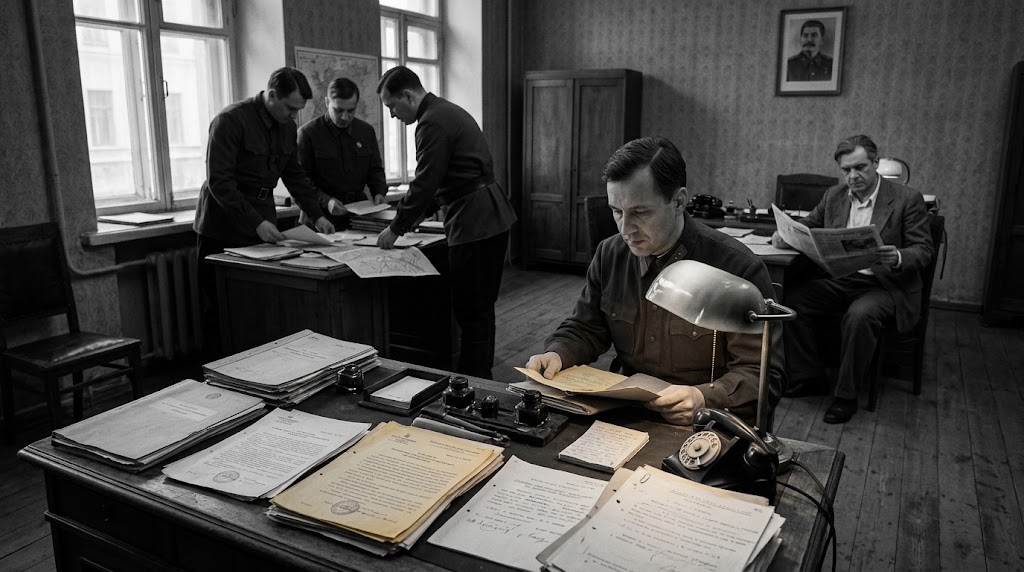
The term “executioner” is often used in reference to Soviet leaders as a journalistic description, but the archival record requires more precise language.
It is not accurate to put in the same category a person who personally signed a death list, a government official whose agency prepared that list, and the person who directly carried out the execution. Therefore, the discussion below is not about how many people a particular leader “personally shot,” but about documented participation by the top leadership in authorizing repression.
The most comparable body of records consists of the so-called Stalin execution lists from 1937–1938.
There are 383 known lists containing about 44,500 entries initially; after obvious duplicates are removed, researchers arrive at roughly 43,600 people. Not everyone named on the lists was necessarily later sentenced to death: there are documented cases in which sentences were reduced or criminal cases were dismissed. The archives also preserve records documenting the implementation of more than 30,000 death sentences in cases handled by the Military Collegium and associated with this body of records.
A separate review conducted in 1988 by the CPSU Central Committee Politburo Commission on the Study of Repressions provides a broader picture for 1930–1953: the OGPU, NKVD, NKGB, and MGB carried out repression in 2,578,592 criminal cases involving 3,778,234 people; 786,098 people were sentenced to capital punishment.
Of those, 656,548 death sentences were handed down by extrajudicial bodies. That is not a measure of an individual people’s commissar or party leader, but rather the scale of the entire repressive apparatus over a quarter century.
Joseph Stalin
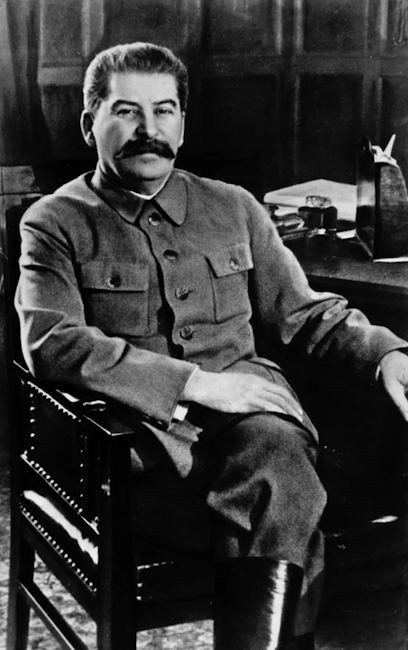
According to published archival calculations, Stalin’s signature appears on about 360 lists containing roughly 41,400 people; other calculations made while refining the document corpus give a figure of about 44,000. The difference is related to the composition of the corpus, duplicate entries, and different counting methods. It is therefore more accurate to speak of tens of thousands of people whose cases were included in lists he approved, rather than “44,000 people personally executed by Stalin.”
Stalin’s role was not limited to signing. Lists prepared by the NKVD with a predetermined punishment were sent to the Central Committee, after which resolutions by Stalin and other Politburo members effectively served as the political decision for the cases. The 1988 commission found that of roughly 44,000 people in the 383 lists, about 39,000 were assigned to the first category, meaning execution.
There are also documents in which Stalin’s involvement appears not as general approval but in specific orders. For example, in a telegram dated September 10, 1937, Stalin and Molotov demanded show trials for people accused of “sabotage” in grain storage, called for death sentences, and required reports on their execution; part of the text and several specific instructions were written in Stalin’s own hand. This document shows that the top leadership did not merely approve cases that had already been prepared, but also issued concrete requirements governing repressive practices at the local level.
Vyacheslav Molotov
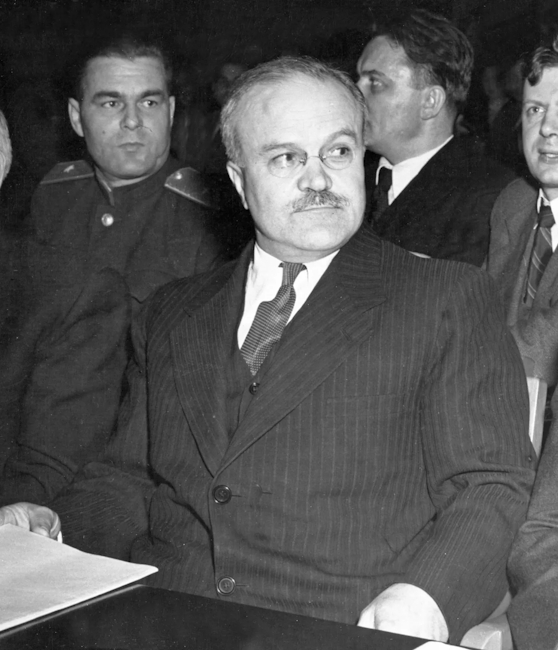
According to one published archival calculation, Molotov’s signature survives on 373 lists containing 43,569 people. That accounts for virtually the entire core body of the “Stalin lists” from 1937–1938. The presence of his signature does not mean that every person named was executed or that Molotov made a unilateral decision in every case: most documents carried several signatures from the top leadership.
Molotov held a distinctive position: he was Chairman of the Council of People’s Commissars of the USSR, and during a substantial portion of the work on the lists, he chaired Politburo meetings. This was later cited as one reason for the unusually large number of his signatures. But the documents show that his role was more than procedural. In September 1937, Molotov and Stalin signed a directive calling for show trials and executions of “saboteurs,” with mandatory reporting on implementation.
Molotov’s separate role is especially visible in cases involving the central government apparatus. The 1988 commission on the study of repressions noted that under Molotov as chairman of the Council of People’s Commissars, the ministries’ nomenklatura was especially heavily affected: a substantial portion of government members from the mid-1930s were later subjected to repression. His involvement therefore cannot be reduced to simply standing alongside Stalin: he held independent state powers and signed documents connected with repressive policy.
Molotov was indeed one of the key participants in decisions concerning mass repression: he signed numerous execution lists and other authorizations for repression. As a result, the image of a “respectable and moderate” politician does not fit well with his documented role in Soviet repressive policy.
Andrei Zhdanov
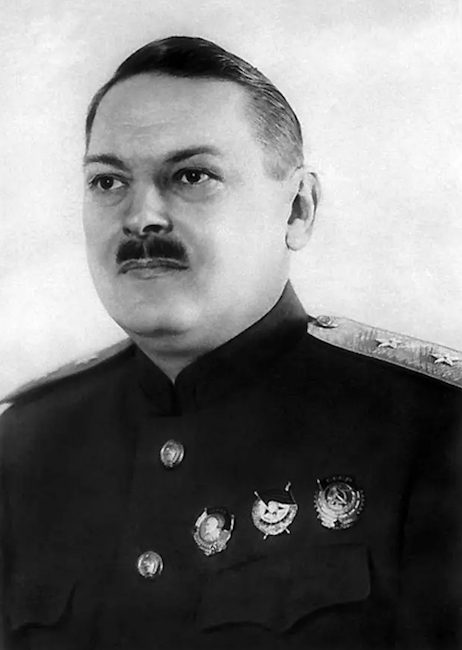
According to a published archival calculation, Zhdanov’s signature appears on 175 lists containing 20,985 people. Zhdanov was not the people’s commissar of internal affairs: in the 1930s, he was a Central Committee secretary and one of the most influential party leaders, while also carrying out much of his work in Leningrad. His presence in central records shows that repression was not solely an NKVD operation — the party leadership was involved in the decisions.
September 1936 is especially revealing. Stalin and Zhdanov jointly proposed appointing Yezhov as people’s commissar of internal affairs, while also stating that Yagoda had not been active enough in carrying out the task of “exposing” the Trotskyist-Zinovievist bloc. After this personnel decision, a new stage of the expanding repression campaign began, and from February 1937 onward, central lists were regularly approved.
Zhdanov also had his own sphere of regional influence. The 1988 archival commission linked him to mass repression in the Leningrad, Orenburg, Bashkir, and Tatar party organizations and pointed to his instructions to intensify purges. This is important for understanding how the terror operated: central lists were compiled in Moscow, but many of the initiatives, characterizations of suspects, and demands for arrests originated locally with the participation of party officials.
Lazar Kaganovich
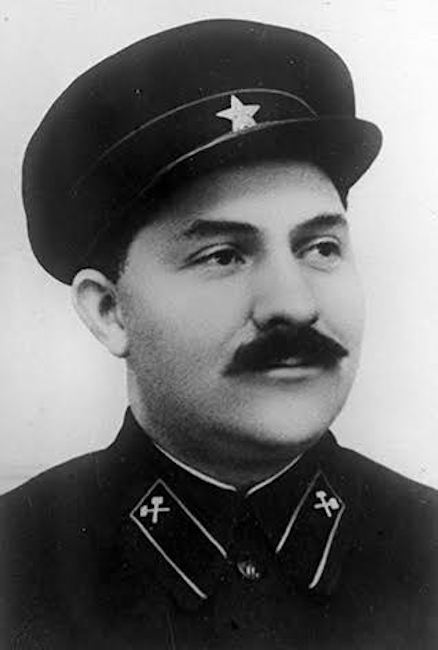
Within the same body of documents, Kaganovich’s signature is associated with approximately 19,110 people in 189 lists. He belonged to Stalin’s closest political circle and at various times oversaw major government areas, including rail transportation. His involvement in repression can therefore be traced both through central decisions and through the work of particular ministries and regions.
His work involving transportation and industrial personnel is particularly well documented. The 1988 commission reported surviving letters and authorizations from Kaganovich for the arrest of 1,587 railroad workers subjected to repression in 1937–1939. However, “authorized the arrest” is not synonymous with “authorized the execution”: the cases could end in different ways.
Kaganovich also participated in expanding repression in the regions. Archival materials preserve his telegrams to Stalin from Ivanovo proposing the immediate arrest of regional leaders; after his trip there, new waves of repression followed. More broadly, his example shows how the system operated at several levels at once: the decision came from the center, a local official supported the accusations, the NKVD carried out arrests, and central bodies could later authorize the ultimate punishment.
Kliment Voroshilov
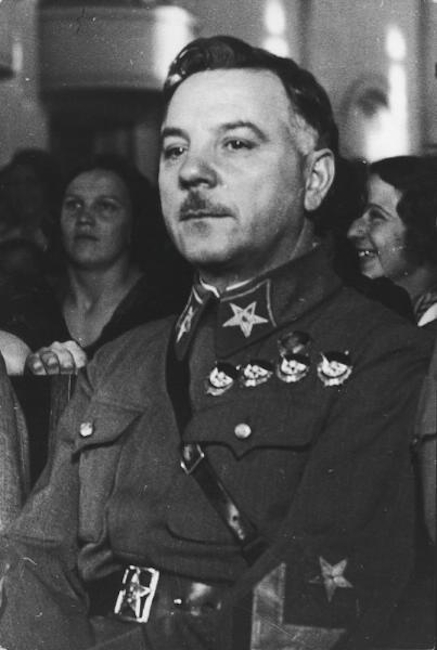
According to the published calculation, Voroshilov’s signature appears on 186 lists containing a total of 18,474 people. He served as People’s Commissar of Defense of the USSR and, unlike most party leaders, directly headed the military institution, which underwent a sweeping purge during the Great Terror.
The 1988 archival commission stated that more than 36,000 people were subjected to repression in the Red Army between 1936 and 1940, and that the archives contained more than 300 Voroshilov authorizations for the arrest of prominent commanders. The same records also show enormous losses among the senior command structure: three of the five marshals, 15 of the 16 army commanders of the first and second ranks, and 60 of the 67 corps commanders were eliminated. These figures describe repression in the armed forces, not the number of executions personally ordered by Voroshilov.
Voroshilov, however, was not a detached observer of what was happening in the military. His signatures appear on central execution lists, and NKVD requests for authorization to arrest commanders came directly to him as defense commissar. His case therefore makes the distinction between administrative responsibility and an individual sentence especially clear: a commissar could authorize an arrest and participate in personnel decisions, while the death sentence itself was then processed by another part of the repressive system.
Why Aren’t Yezhov and Beria in the Top Five?
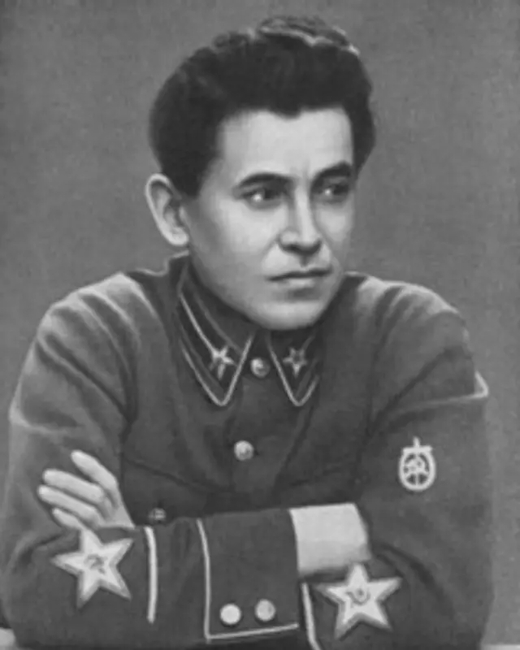
Nikolai Yezhov is precisely the case in which a simple table showing “how many signatures he had” gives a distorted picture of his role. His signature appears on only about eight of the central lists, yet the NKVD under Yezhov prepared and forwarded a substantial share of those lists, and the people’s commissar himself was almost always present when they were approved. In 1937–1938, 681,692 people were sentenced to capital punishment in NKVD cases; that figure refers to the work of the entire agency and cannot be attributed personally to Yezhov.
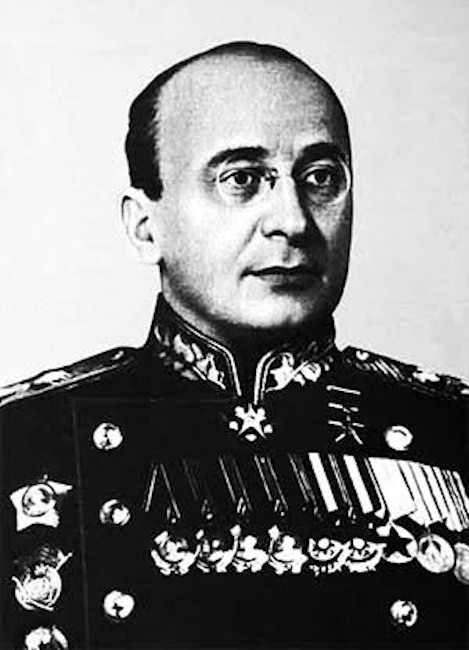
Beria (pictured above) became people’s commissar of internal affairs in late November 1938, when the peak of the Great Terror was already passing. He therefore cannot be mechanically compared with Yezhov using the 1937–1938 signature count. At the same time, political persecution, death sentences, and extrajudicial repression continued under Beria; archival materials show his direct involvement in preparing later lists and decisions. For example, in April 1939, a joint NKVD-prosecutor’s office memorandum prepared under Beria became the basis for sending 931 cases to the Military Collegium, with the ultimate punishment proposed for 198 people.
In other words, Yezhov and Beria do not disappear from the history of mass repression — their roles are simply better measured through the activities of the repressive apparatus they headed than by the number of signatures on central lists. Trying to assign all death sentences during one leader’s tenure to that individual inevitably produces a historical error: decisions were made at different levels and passed through multiple stages.
What Did They Say About the Others?
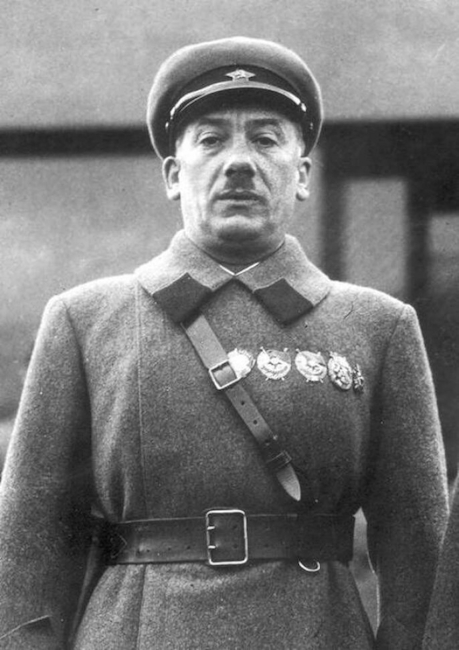
The clearest personnel example is Stalin and Zhdanov’s view of Genrikh Yagoda (pictured above).
- In a telegram dated September 25, 1936, they stated that Yagoda had not been “up to the task” of fighting the Trotskyist-Zinovievist bloc and that the OGPU had supposedly been four years late in carrying out this work.
- After that, Yezhov was proposed for the post of people’s commissar of internal affairs.
This was not a later historian’s description, but the wording of the leadership itself, preserved in official correspondence.
After Yezhov’s appointment, he wrote reports about Yagoda. On April 26, 1937, he wrote to Stalin that Yagoda continued to deny ties to German organizations and involvement in preparations for terrorist acts and that, according to Yezhov’s account, pressure during the investigation forced him to admit that he knew about some connections. But such statements cannot automatically be treated as established facts: these were investigative materials from the era of mass repression, when confessions could be obtained under pressure and the cases themselves were later reviewed.
The nature of Stalin and Molotov’s interaction is even clearer in documents from 1937.
In a joint telegram about “sabotage” in grain storage, they explicitly demanded show trials with mandatory death sentences and their execution. The document matters precisely because there is no need to reconstruct motives from memoirs: it preserves a direct instruction from the highest leadership to the entire administrative system.
Based on the surviving evidence, Molotov was sharply critical of Yagoda: in later conversations he called him “right all the way through” and noted that he knew Yezhov better; as early as 1936, the leadership under Stalin, with Molotov’s participation, had effectively concluded that Yagoda had failed in his work at the NKVD.
Voroshilov, for his part, also distrusted Yagoda: at the 1937 plenum, he told NKVD representatives directly that Yagoda and his circle had “fooled” the leadership to some extent.
As for Vasily Blokhin, discussed below, there is considerably less reliable evidence that Molotov or Voroshilov personally gave him a positive or negative assessment. What is documented is that they participated in the political authorization of repression, while Blokhin was an executioner operating within the NKVD system. Voroshilov, for example, signed execution lists, while Molotov later acknowledged his responsibility for repressive decisions.
A Group of Direct Executioners
Let’s briefly look at the Top 3, so to speak, of the executioners who directly carried out death sentences, often with their own hands.
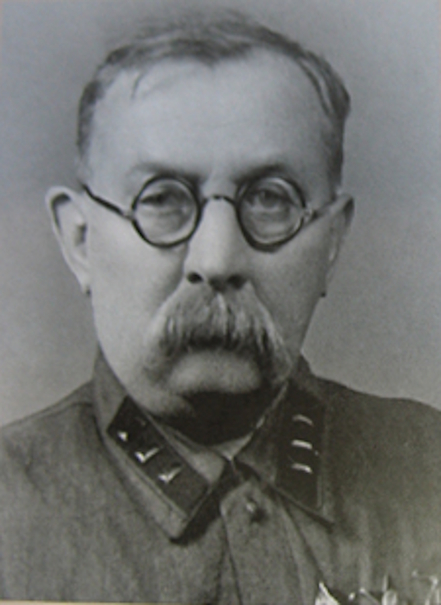
Pyotr Ivanovich Maggo (1879–1941) was one of the earliest and longest-serving direct executioners in the Cheka-OGPU-NKVD system.
He joined the security organs in 1918, worked at the Cheka internal prison from 1919, and became head of the internal prison at Lubyanka in 1920. In 1931, Maggo voluntarily transferred to work directly connected with carrying out death sentences. Sources describe him as one of the most experienced Moscow executioners; estimates of the number of sentences he personally carried out reach roughly 10,000, but there is no precise archival figure, so that number cannot be presented as established fact. Maggo received the Order of the Red Star and the Order of the Red Banner, with the 1937 award officially described as recognition for carrying out important government assignments. He was dismissed from the security organs in 1940 and died in April 1941, although published sources differ over the details and cause of death.
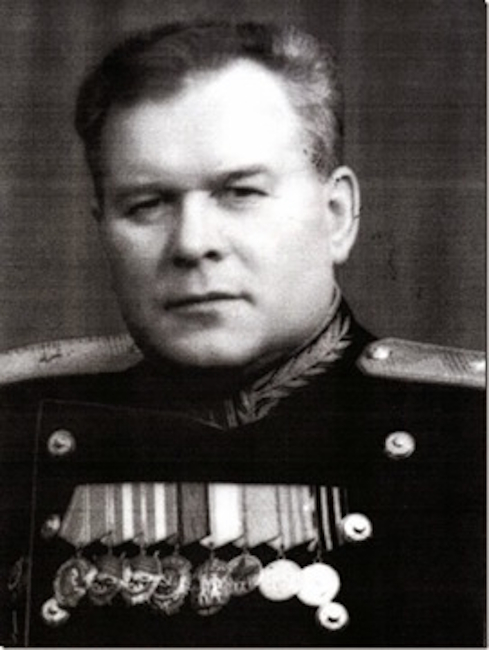
Vasily Mikhailovich Blokhin (1895–1955) became the chief organizer and direct executioner at the Moscow commandant’s office.
From the 1920s onward, he worked under Yagoda, Yezhov, and Beria and effectively headed a permanent execution team. His personal total also cannot be established with absolute precision: researchers give estimates ranging from several thousand to as many as 10,000–15,000 people. Blokhin personally participated in executions, including the killing of Polish prisoners of war in Kalinin in 1940; the memoirs of Dmitry Tokarev, former head of the Kalinin NKVD administration, identify him as the leader of the team that arrived from Moscow. After Stalin’s death, Blokhin was retired in 1953; in 1954, he was stripped of his rank of major general with wording stating that his service in the organs had discredited him; he died on February 3, 1955, although sources also disagree about the final cause of death.
Pyotr Alexandrovich Yakovlev (1892–1959) is the Yakovlev meant here in the context of Blokhin’s “special group,” not Vasily Terentyevich Yakovlev, who headed a different NKVD unit.
Yakovlev had served in the Cheka since 1918, was associated with the Kremlin garage in the 1920s, and later worked in the OGPU-NKVD system; he eventually became one of the employees who regularly participated in carrying out death sentences. In Nikolai Petrov’s research, he is explicitly named among the long-term members of the Moscow “special group”; in 1940, Yakovlev was among ten members of the group awarded a month’s salary under Beria’s secret Order No. 001365 of October 26, 1940, for “successful execution of special assignments.” Taken together, the sources leave no doubt about his participation in executions, but the exact number of sentences he personally carried out is unknown. After the war, he continued serving, retired in 1954, died on April 15, 1959, and was buried at Donskoye Cemetery next to Blokhin.
Blokhin was not decorated for ordinary combat service at the front, but primarily for his service in the state security organs; some of Yakovlev’s awards were explicitly presented “for length of service,” while his participation in execution operations is also documented. Blokhin’s decorations likewise were tied to his service in the NKVD, and sources document awards presented during periods of major execution campaigns.
Pyotr Petrovich Pakaln. He was a regular executioner of death sentences in the GPU-OGPU as early as 1922–1929, while also serving in the security detail for Lenin and later Stalin; records from the 1920s preserve documents documenting his participation in executions.
In 1937, the system he had previously served itself destroyed Pakaln: he was arrested, placed on an execution list authorized by Stalin, Molotov, and Voroshilov, and shot on June 21, 1937; in 1956, he was posthumously rehabilitated. As for what the leaders said specifically about the three executioners named here, the best-documented case is Blokhin: according to Beria’s testimony during the 1953 investigation, when Beria wanted to arrest Blokhin, Stalin refused and said that such people should not be imprisoned because they performed the “dirty work”; Stalin then summoned Vlasik and separately asked whether Blokhin took part in carrying out death sentences.
What Can Be Stated Without the Myths
The archives make it possible to establish with considerable precision who authorized specific decisions, who signed the lists, who headed the NKVD, and who issued instructions at the local level.
They do not allow a scientifically sound table such as “Stalin — killed 44,000, Molotov — 43,569, Yezhov — 681,692,” because such a table mixes entirely different measures: names appearing in signed documents, death sentences issued by an entire agency, administrative responsibility, and executions actually carried out.
For 1937–1938, the collective involvement of the top leadership is particularly well documented: the lists carry the signatures of Stalin, Molotov, Kaganovich, Voroshilov, Zhdanov, and other leaders, and the same person often appeared under several signatures. Therefore, the figures of 41,000–44,000 for Stalin, 43,569 for Molotov, 20,985 for Zhdanov, 19,110 for Kaganovich, and 18,474 for Voroshilov are primarily the number of people included in the corresponding signed lists, not an independent victim count for each individual.
That distinction separates documented history from the popular “executioner rankings” found online, where the entire volume of repression during a leader’s time in power is automatically assigned to that one person. The actual documents show a much more complicated system: a party decision, NKVD preparation, authorization by senior officials, extrajudicial bodies or the Military Collegium, and then the actual carrying out of the sentence.

Welcome to Poznayu.com!
My name is Alex, and I founded this project together with a team of like-minded professionals. At Poznayu.com, we create in-depth reviews, explore fascinating facts, and share well-researched, reliable knowledge that helps you navigate complex topics with confidence.
Our mission is simple: to explain complicated ideas in clear, accessible language. We believe that high-quality information should be available to everyone. Every article we publish is designed to provide practical value, actionable insights, and trustworthy analysis you can rely on.
Join our growing community of curious readers. Your feedback matters — share your thoughts in the comments, ask questions, and suggest topics you’d like us to cover next.