The American automotive industry took an unprecedented leap forward with the release of the 2026 Chevrolet Corvette ZR1X, transforming this sports car into a full-fledged killer of multi-million-dollar European hypercars. A unique hybrid powertrain and all-wheel-drive system give the car phenomenal dynamics unreachable for most competitors.
At a relatively accessible price point, this vehicle is capable of tearing apart legendary exotic models on the drag strip, permanently altering the balance of power in the world of high speeds.
Other materials on this topic:
Technical Specifications and Design Innovations
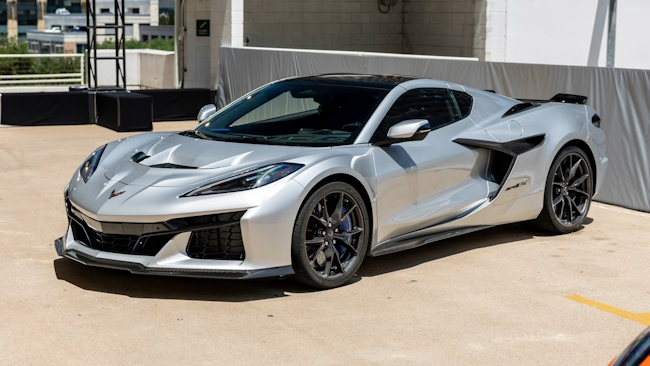
The engineering brilliance of the model lies in a revolutionary fusion of two independent power sources forming a high-tech eAWD system.
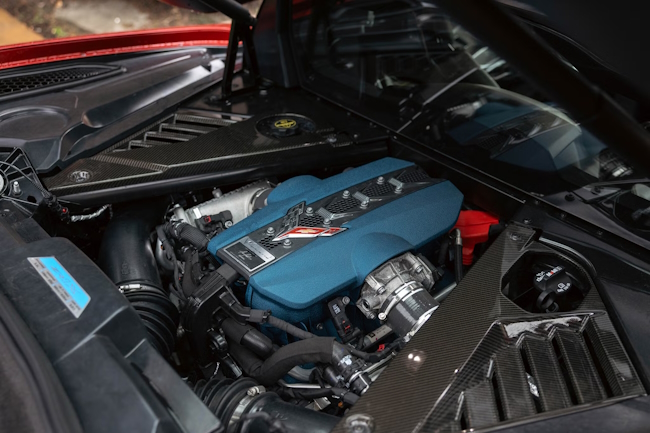
- The heart of the beast is a 5.5-liter LT7 DOHC V8 engine with a flat-plane crankshaft and twin turbochargers, independently generating a staggering 1,064 horsepower.
- The front axle houses a powerful electric drive unit from the E-Ray trim, contributing an additional 186 horsepower of instant response.
- Combined, this hybrid architecture delivers a colossal 1,250 horsepower, making this sports car the most powerful production vehicle in the brand’s history.
The exterior design and aerodynamic profile were engineered for extreme loads occurring at speeds exceeding 186 mph:
- The body abounds with ultra-lightweight carbon fiber components, including a massive front splitter, side air intakes, and a huge rear wing that generate critical downforce.
- A hood with a flow-through air duct ensures efficient heat dissipation from intercoolers, preventing turbo heat soak during prolonged runs.
- Thanks to meticulously engineered airflow geometry, the car literally glues itself to the asphalt, maintaining flawless handling at extreme limits.
To tame such wild power, engineers implemented cutting-edge braking and damping solutions.
Standard equipment includes the largest carbon-ceramic brake systems in the brand’s history: massive 16.5-inch rotors paired with ten-piston front and six-piston rear calipers.
Adaptive suspension instantly reads the road surface, adjusting shock absorber stiffness to minimize body roll in turns.
An intelligent torque vectoring system using regenerative braking enables pinpoint power distribution between wheels, delivering flawless exits from complex turns.
The hypercar’s software gives the driver flexible control over the electric and gas systems. A unique feature is specialized power distribution modes tailored for various aggressive driving scenarios.
The list of pre-installed powertrain control algorithms includes the following profiles:
- Endurance — A mode for long track sessions that ensures stable performance without overheating the battery.
- Qualifying — A peak output program that directs all energy toward setting a record on a single fast lap.
- Push-to-Pass — A temporary power boost function that unlocks maximum reserve power for quick overtakes on straightaways.
- Stealth Mode — A fully electric mode for silent neighborhood driving early in the morning.
Differences from Previous Generations
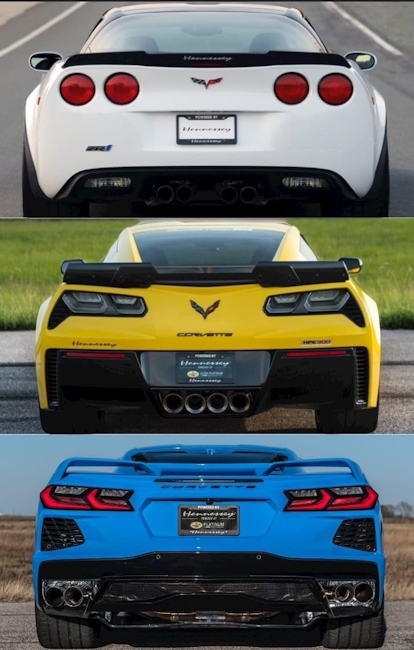
The main difference in the new Corvette ZR1X powertrain compared to past generations is a radical shift in engine architecture: classic overhead valve (OHV) pushrod Small Block engines with two valves per cylinder have finally given way to a high-revving DOHC racing layout with dual overhead camshafts and 32 valves.
A brief side note: American car hater squad, don’t celebrate just yet. Talking about the classic OHV (pushrod engine) architecture, it’s still being produced across various models today:
- Chevrolet Corvette C7 (2014–2019) — LT1, LT4, LT5, also pushrod, but with direct injection.
Chevrolet Corvette C8 (from 2020 onward) — the situation evolved:
- Stingray — 6.2L LT2, OHV (pushrod).
- E-Ray — LT2 + electric motor, engine is still OHV pushrod.
- Cadillac Escalade-V — 6.2L supercharged LT4 engine, 682 hp. It’s the same family Small Block LT4, adapted for a large SUV.
- Chevrolet Silverado 1500 (and twin GMC Sierra 1500) — 5.3L EcoTec3 and 6.2L EcoTec3 engines, both OHV.
- Z06 — 5.5L LT6, already DOHC (dual overhead cams per bank).
- ZR1 — 5.5L twin-turbo LT7, also DOHC.
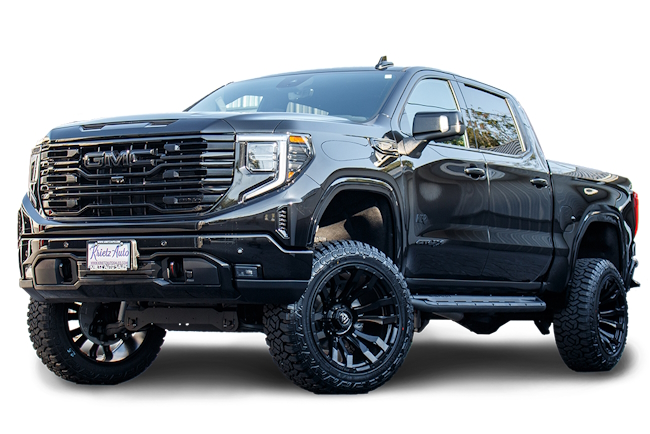
Similar motors are also installed in full-size SUVs: Chevrolet Tahoe, Chevrolet Suburban, and GMC Yukon.
Looking back at past versions, the canonical naturally aspirated 7.0-liter giant LS7 (Corvette C6 Z06, which I also have in my 2015 Camaro Z/28) relied on pure displacement, massive titanium connecting rods, and intake valves, delivering linear pull but limited in RPMs.
The architecture of the new 5.5-liter LT7 motor is fundamentally different — it uses a flat-plane crank that reduces rotating mass inertia, pushes the redline to 8,000 RPM, and radically changes the firing order, creating a distinct “European” high-pitched exhaust note instead of the traditional American rumble.
In forced induction, the generational gap grew even wider.
The supercharged LS9 engine (Corvette C6 ZR1) featured an Eaton TVS R2300 positive-displacement supercharger mounted directly in the engine valley, driven by a belt from the crankshaft, delivering instant off-the-line torque, but inevitably wasting parasitic power to turn itself and quickly overheating (heat soak).
In the ZR1X, engineers completely abandoned mechanical superchargers in favor of a pair of massive 76 mm single-scroll turbochargers with electronic wastegates. Combined with direct and port injection and zero parasitic drive losses, this turbo concept raised the internal combustion engine output alone to 1,064 hp, while instantaneous low-end lag (“turbo lag”) is now fully compensated by the 186-hp front electric motor.
Pricing, Drag Strip Records, and Market Status
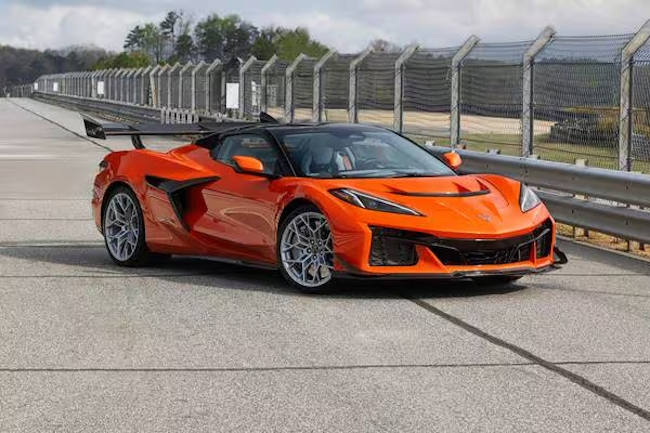
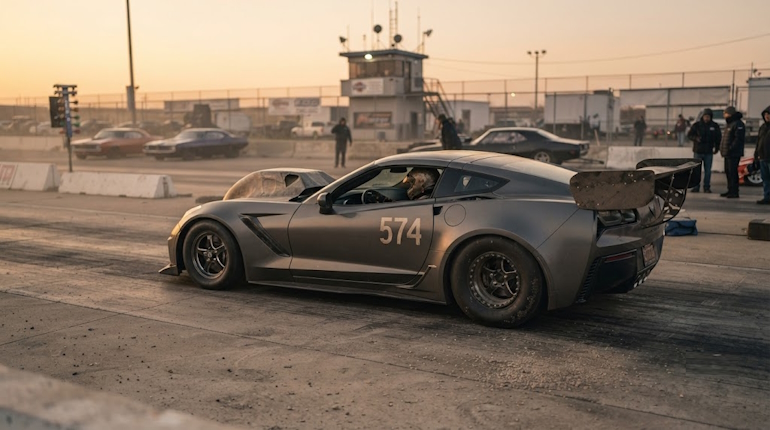
The shift to all-wheel drive and instant electric torque turned the car into an absolute drag strip dominant.
In real quarter-mile runs, this car effortlessly destroys competitors carrying seven-figure price tags.
On an unprepared surface, the hybrid American hit 0 to 60 mph in just 1.8 seconds, leaving behind renowned European hypercars with over 1,500 horsepower. The classic 1/4-mile run concluded with a phenomenal 8.9-second time, shattering the myth of European engineering dominance in this discipline once and for all.
The new model’s ferocity on the straightaway was felt by other legendary occupants of automotive Olympus as well.
In a series of independent tests, the hybrid confidently outpaced heavy V12 monsters as well as all-electric sedans famous for their immediate off-the-line launch (Lucid Air Sapphire, Tesla Roadster). Specifically, modified Italian supercars and hyper-powered muscle cars built exclusively for drag racing stood no chance against the synchronized operation of the front electric motor and rear twin-turbo V8. Traction is managed so effectively that the wide rear tires show virtually no wheelspin even during launch control starts.
Summarizing the performance comparison highlights the vast gulf between price tag and real-world track results. These statistics confirm the absolute superiority of advanced engineering over overpriced status symbols.
The manufacturer’s pricing strategy came as a complete shock to the exclusive sports car industry.
The starting price for the base trim begins around $197,000, while the top-tier version with all track packages runs buyers around $255,000. For this money, the buyer gets dynamic specs and equipment for which other luxury brands routinely charge between two and four million dollars. This price-to-performance ratio makes the project a completely unique phenomenon with no direct equivalents in today’s global auto market.
Massive hype surrounding the model led to unprecedented shortages and created a hyper-aggressive secondhand market.
Despite strict corporate rules prohibiting speculative flipping during the first year of ownership under threat of warranty cancellation, wealthy enthusiasts risk it anyway. Closed auctions record transactions where buyers pay over $600,000 above MSRP just to skip the multi-year waitlist.
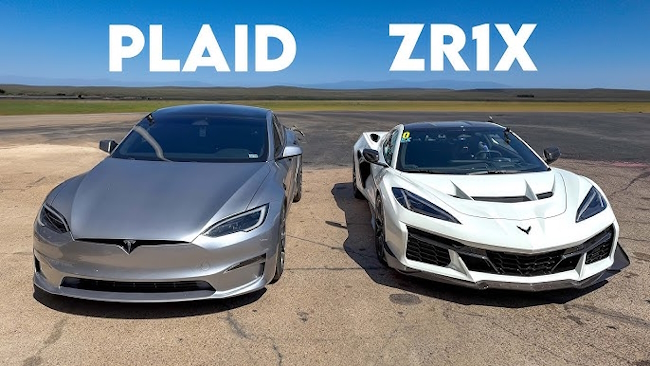
That markup speaks volumes about car collectors unconditionally recognizing the true value of this innovative platform.
- Base Trim (1LZ Coupe): Starts at $197,700. Carbon fiber body elements are included, but extreme track packages are omitted.
- Top-Tier Coupe Version (3LZ Coupe): Starts at $208,700.
- Convertible Version (3LZ Convertible): Starts at $219,195.
- Flagship Trim Options: Adding the aggressive ZTK track package (stiffer suspension, rear wing), carbon fiber wheels for $13,995, and carbon aerodynamics pushes the real configurator price of a new car up to $255,035. Buying the car at MSRP directly from a dealer is virtually impossible due to long waitlists and dealer markups (“market adjustment”) adding another $50,000 to $100,000 to the price tag.
Below is a comparison table of key performance figures against nearest price-point competitors covering the same distance:
| Car Model | Acceleration Time (0–60 MPH) | Quarter-Mile Time (1/4 Mile) | Estimated Price |
| Chevrolet Corvette ZR1X | 1.8 seconds | 8.9 seconds | From $197,000 |
| Lucid Air Sapphire | 1.9 seconds | 9.1 seconds | $253,000 |
| Porsche Taycan Turbo GT | 1.9 seconds | 9.3 seconds | $233,000 |
| Bugatti Chiron Super Sport | 2.2 seconds | 9.1 seconds | $4,300,000 |
To fully understand the assembly and tuning stages of this ultra-powerful powertrain at the plant, the production process was divided into several key stages. Review the approved hypercar manufacturing protocol:
- Hand-assembly of the 5.5-liter gas engine with installation of the flat-plane crankshaft and forged pistons.
- Integration of the front-axle electric drive system paired with a high-voltage cooling system.
- Installation of the adaptive magnetic ride suspension and massive carbon-ceramic braking system.
- Mounting of the massive carbon-fiber aerodynamic body kit and active aerodynamics setup.
- Final dynamometer testing of the hybrid powertrain under peak loads before customer delivery.
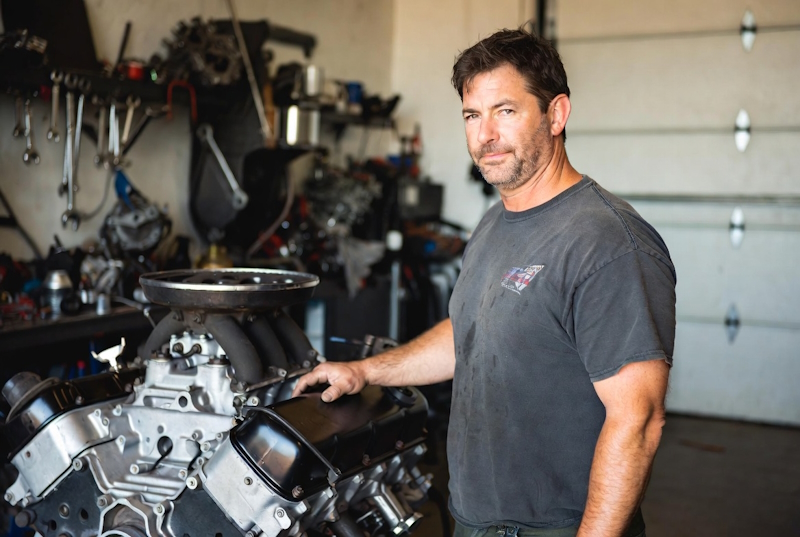
I’m Kevin Harper, an American automotive expert and tuner with more than 20 years of hands-on experience.
I graduated from Texas A&M University with a degree in Mechanical Engineering, with a focus on engine development. I started my professional career working in Texas garages, specializing in tuning classic American V8s and modern pushrod engines, including GM LS-series engines, Chrysler HEMI, Ford Coyote, as well as Modular and Big Block platforms.
I’ve worked on the restoration and extensive modernization of 1960s and 1970s Muscle Cars, built high-output LS swaps for daily-driven pickups and track projects, optimized HEMI engines for forced induction, and worked through the technical details of pushrod engine design — from selecting the right camshafts and cylinder heads to dialing in fuel systems and engine cooling.
I now live in Dallas, Texas, where I continue to work hands-on with performance builds, tuning and testing. In my articles, I explain how American and other engines actually work, which modifications genuinely improve power and reliability, and which ideas are nothing more than garage folklore. I keep the language straightforward without leaving out the technical details that matter, so owners of classic cars and modern V8s can make informed decisions.