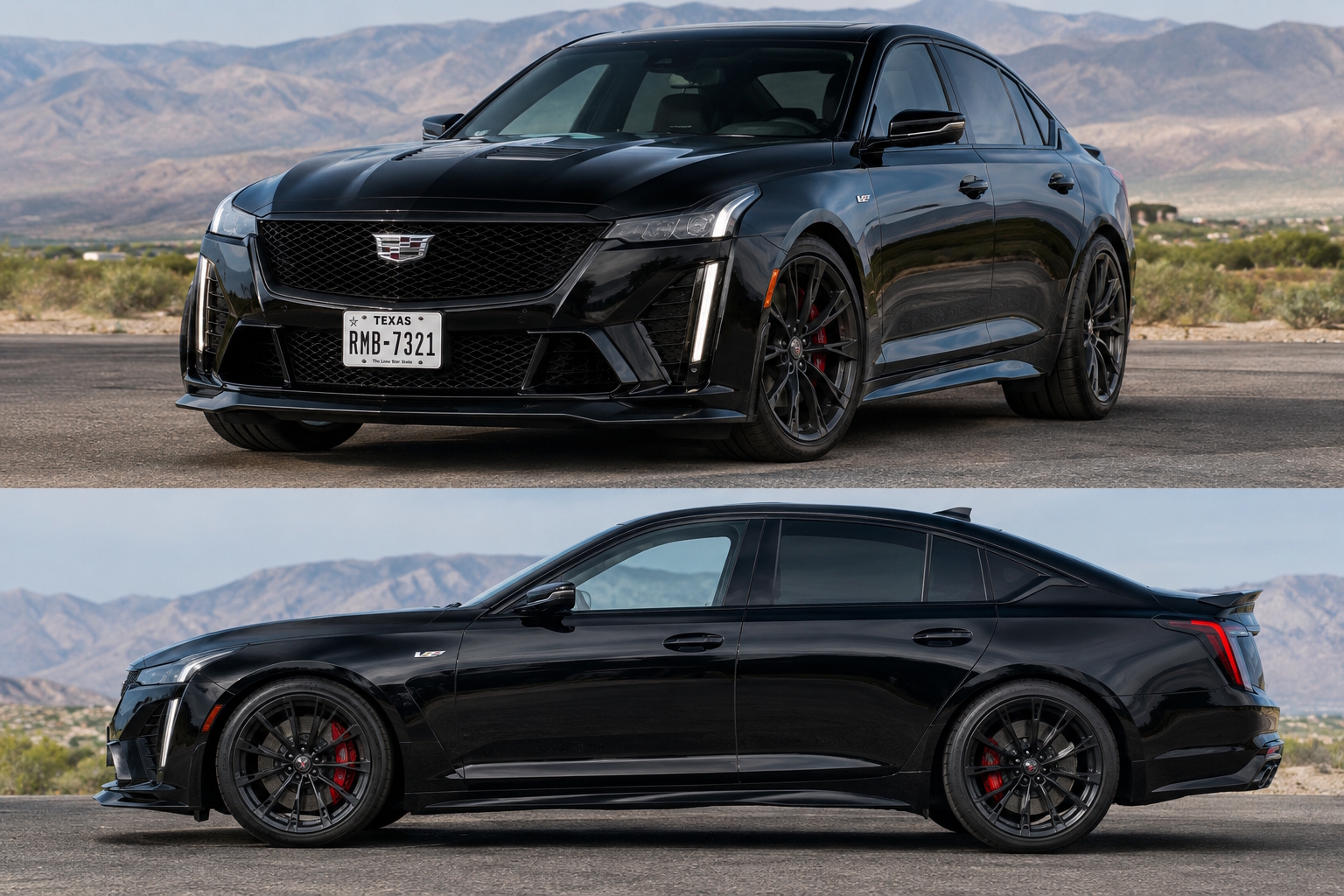
Cadillac’s performance sedan story began in 2004, when General Motors leadership made the strategic decision to challenge the dominance of German manufacturers with the first-generation CTS-V.
Dropping a high-output V8 from the Chevrolet Corvette into a specially tuned rear-wheel-drive chassis with a manual transmission was a clear statement of intent.
That crude but highly effective engineering formula established the foundation of the V-Series philosophy, proving in practice that an American luxury brand could compete successfully with the best European performance cars on the Nürburgring Nordschleife.
The model reached new heights with the second generation (2009–2014), which cemented its status as a no-compromise driver’s car with a 556-horsepower supercharged LSA engine and the introduction of high-tech Magnetic Ride adaptive suspension.
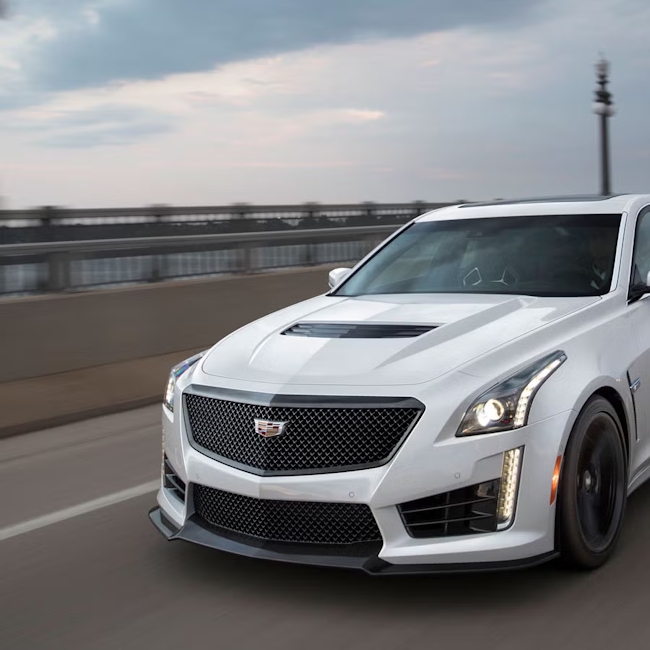
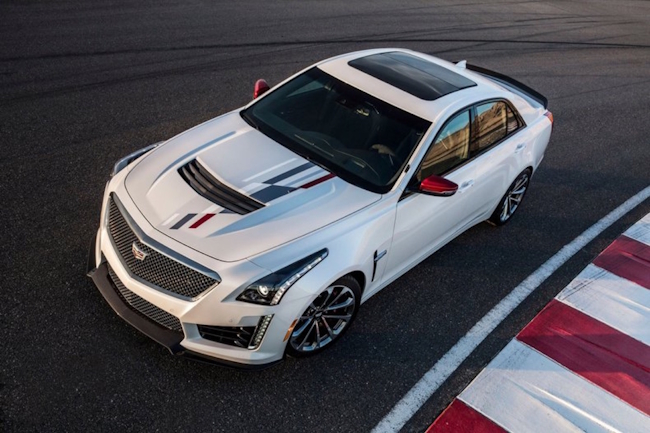
The third-generation CTS-V (2016–2019) moved firmly into supercar territory with a 640-horsepower LT4, but it lost the manual transmission option. Despite the sedan’s exceptional track capability and ability to exceed 199 mph, that decision alienated some automotive purists who valued direct physical control of the car more than a few tenths of a second per lap.
When Cadillac completely reworked its model lineup, the true successor to the CTS-V arrived as the CT5-V Blackwing in 2021, while the regular CT5-V moved into the mid-performance segment with a V6, a distinction that often causes confusion over the model names.
The new flagship brought back the brutal 6.2-liter supercharged V8 and revived the optional six-speed manual transmission.
Blackwing became the quintessence of Cadillac engineering in the internal-combustion era, offering a level of mechanical involvement and pure analog driving that competitors had begun removing from their configurators.
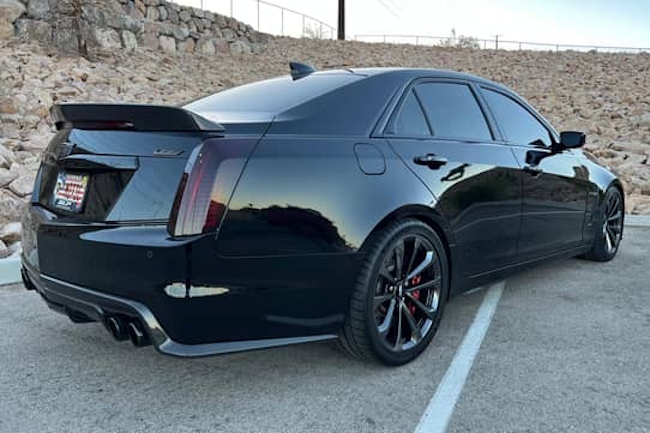
As the owner of a 2014 CTS-V with the legendary 6.2L LSA V8, I can say one thing: this supercharged monster is a genuine source of pride for American performance engineering.
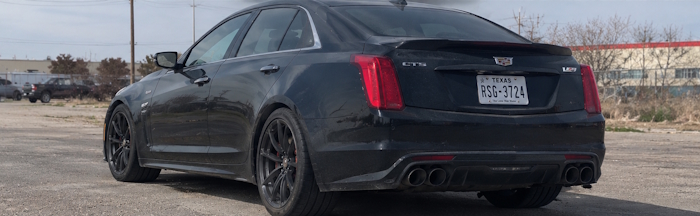
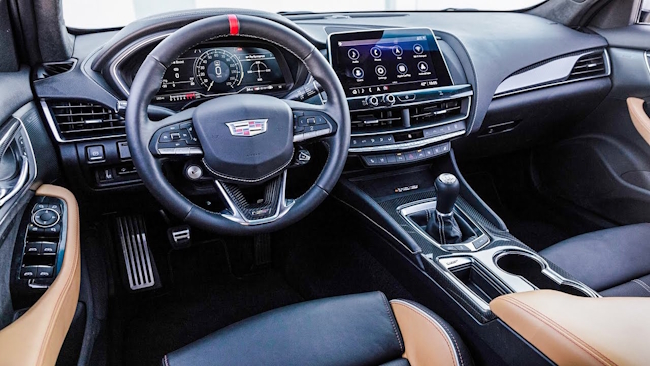
Every stab of the throttle accompanied by the characteristic whine of the mechanical supercharger delivers pure analog driving that no modern digital sedan can reproduce. This is my car in the photos:
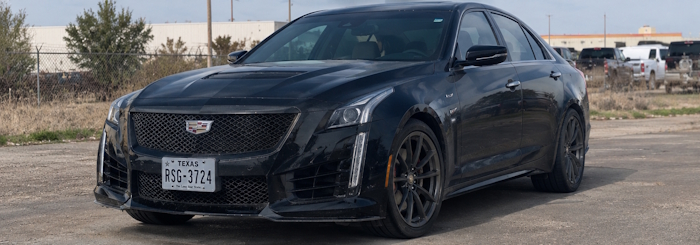
To me, this car represents that era when engineers with strong personalities built cars rather than marketers.
Below is a consolidated table of the key technical and operating specifications covering four generations of Cadillac performance sedans, from the original 2004 CTS-V to the current flagship CT5-V Blackwing.
| Specification | 1st Generation (CTS-V) | 2nd Generation (CTS-V) | 3rd Generation (CTS-V) | 4th Generation (CT5-V Blackwing) |
|---|---|---|---|---|
| Model years | 2004–2007 | 2009–2014 | 2016–2019 | 2022–present |
| Platform | GM Sigma | GM Sigma II | GM Alpha | GM Alpha 2 |
| Engine | 5.7L LS6 V8 / 6.0L LS2 V8 | 6.2L LSA V8 | 6.2L LT4 V8 | 6.2L LT4 V8 (updated) |
| Displacement | 5665 cc / 5967 cc | 6162 cc | 6162 cc | 6162 cc |
| Forced induction | Naturally aspirated | Supercharged (Eaton TVS1900) | Supercharged (Eaton TVS R1740) | Supercharged (Eaton TVS R1740) |
| Power | 400 hp at 6000 rpm | 556 hp at 6100 rpm | 640 hp at 6400 rpm | 668 hp at 6500 rpm |
| Torque | 395 lb-ft at 4800 rpm | 551 lb-ft at 3800 rpm | 630 lb-ft at 3600 rpm | 659 lb-ft at 3600 rpm |
| Transmission | 6-speed manual (Tremec T-56) | 6-speed manual / 6-speed automatic | 8-speed automatic (GM 8L90) | 6-speed manual / 10-speed automatic |
| Drivetrain | Rear-wheel drive (RWD) | Rear-wheel drive (RWD) | Rear-wheel drive (RWD) | Rear-wheel drive (RWD) |
| 0–62 mph | ~4.6–4.8 sec. | ~3.9–4.1 sec. | ~3.7 sec. | ~3.4 sec. (automatic) / ~3.6 sec. (manual) |
| Top speed | 163 mph | 191 mph | 200 mph | 204 mph |
| Curb weight | ~3,836 lb | ~4,233 lb | ~4,145 lb | ~4,134 lb |
| Brakes | Brembo (4-piston front and rear) | Brembo (6-piston front / 4-piston rear) | Brembo (6-piston front / 4-piston rear) | Brembo (6-piston front, carbon-ceramic option) |
| Tire size | 245/45 R18 (all around) | 255/40 R19 (front), 285/35 R19 (rear) | 265/35 R19 (front), 295/30 R19 (rear) | 275/35 R19 (front), 305/30 R19 (rear) |
| Fuel tank capacity | 16.9 gal | 18.0 gal | 19.0 gal | 16.9 gal |
Generations and Platform Evolution
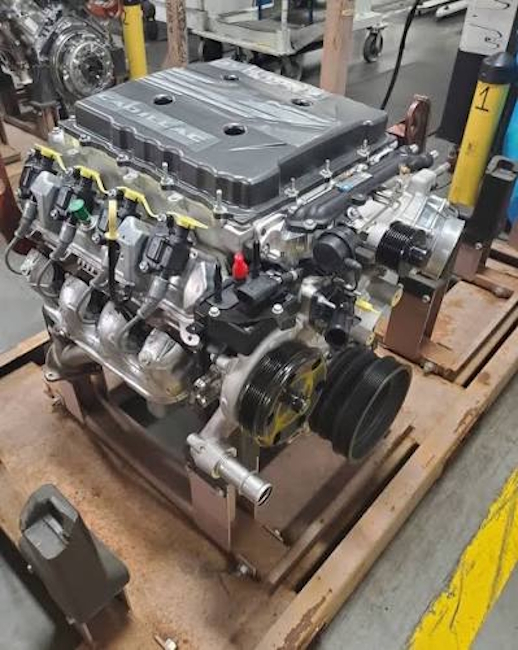
The technical foundation of the original CT5-V Blackwing, which reached the market for the 2022 model year, is based on the highly regarded Alpha architecture, providing benchmark torsional rigidity:
- Under the hood sits a hand-assembled 6.2-liter LT4 with a belt-driven supercharger (pictured above), producing 668 horsepower and 659 lb-ft of torque.
- Power is sent exclusively to the rear axle through a reinforced electronically controlled limited-slip differential (eLSD).
- Engineers fitted the fourth generation of Magnetic Ride Control dampers, which adapt to the road surface in real time, balancing the absorption of urban bumps with firm support on the track.
- Buyers could choose a benchmark six-speed Tremec manual with active rev matching or an optional 10-speed automatic.
Braking performance on the early versions came from the largest factory-installed braking hardware in Cadillac history: six-piston Brembo calipers up front and four-piston units at the rear.
An available carbon-ceramic braking system could handle extreme thermal loads while also dramatically reducing the sedan’s unsprung mass. Carbon-fiber aero packages provided aerodynamic stability by generating genuine downforce.
The 2025 model-year refresh left the powertrain untouched because the chassis had reached the physical traction limit of its rear-wheel-drive layout, but the car received a redesigned front end with larger cooling areas and new vertical LED lighting featuring an engraved Mondrian pattern.
The 2025 interior underwent a radical transformation: the conventional instrument panel was replaced by a single 33-inch curved 9K display integrating Google services. The standard Performance Data Recorder telemetry system also received a major upgrade. Engineers integrated the AliveDrive app, which displays dyno-style data in real time, including power, torque, boost pressure, g-forces, and detailed tire temperatures.
The update ultimately turned the sedan into a professional tool for detailed analysis of racing sessions without requiring third-party equipment.
Price, Quality, and Performance Compared With Competitors
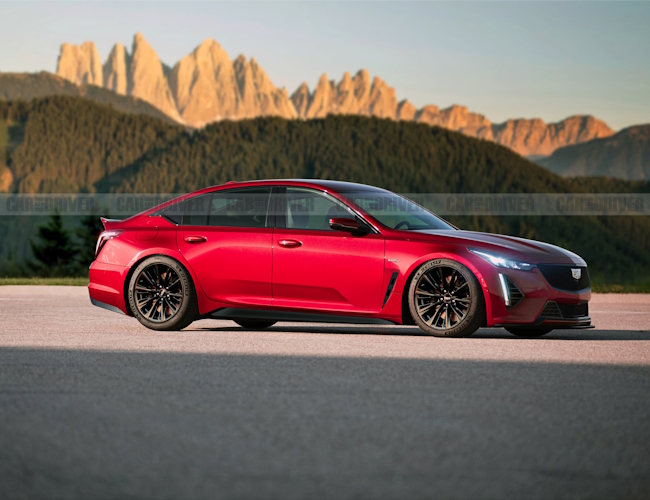
The philosophy behind the Cadillac CT5-V Blackwing differs sharply from the engineering approach used in the German super-sedans BMW M5 Competition (F90) and Mercedes-AMG E63 S (W213) from the 2021–2023 model years.
While European manufacturers rely on high-tech 4.4- and 4.0-liter twin-turbo V8 engines and advanced all-wheel-drive systems that deliver 0–62 mph times in the 3.3–3.4-second range, Cadillac offers old-school mechanical fury.
The American supercharged V8 sends all of its massive torque to the rear wheels, delivering immediate throttle response without turbo lag and a linear buildup of power all the way to redline.
See also:
From a market-positioning standpoint, the base Blackwing represented an aggressive price proposition compared with its rivals.
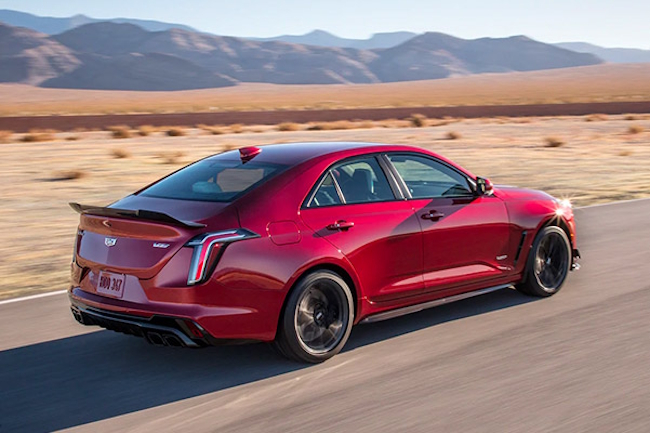
In the U.S. market, the CT5-V Blackwing started at roughly $85,000 during the first years of production, while the M5 Competition and E63 S started firmly above $107,000–$110,000 before additional options. That price gap clearly reflected where development budgets were prioritized.
Mercedes and BMW invested heavily in premium interior materials, complex all-wheel-drive systems with front-axle disconnect capability, and extensive sound insulation. Cadillac instead directed much of its development effort toward chassis calibration, thermal-control systems for demanding track sessions, and a unique steering rack.
The choice among these three cars ultimately comes down to the type of driving experience the driver prioritizes:
- BMW M5 F90 — a digital tool of exceptional precision that effectively conceals its weight and delivers maximum all-weather stability.
- Mercedes-AMG E63 S — a hard-charging autobahn predator with a theatrical exhaust note and a strongly defined sporting character.
- Cadillac CT5-V Blackwing, particularly with the manual transmission, demands more skill, physical involvement, and concentration from the driver. It delivers a level of direct analog connection to the road that highly digitized German competitors deliberately softened in the interest of everyday versatility.
Below is a direct technical comparison of the three cars in their current configurations for the specified period.
| Specification | Cadillac CT5-V Blackwing | BMW M5 Competition (F90) | Mercedes-AMG E63 S (W213) |
|---|---|---|---|
| Engine | 6.2L supercharged V8 (LT4) | 4.4L twin-turbo V8 (S63) | 4.0L twin-turbo V8 (M177) |
| Power | 668 hp (659 lb-ft) | 617 hp (553 lb-ft) | 603 hp (627 lb-ft) |
| Transmission | 6-speed manual / 10-speed automatic | 8-speed automatic (Steptronic) | 9-speed automatic (AMG MCT) |
| Drivetrain | Rear-wheel drive (RWD) | All-wheel drive (M xDrive with RWD mode) | All-wheel drive (4MATIC+ with Drift mode) |
| 0–62 mph | ~3.4 sec. (automatic) | ~3.3 sec. | ~3.4 sec. |
Pros and Cons According to Actual Owners
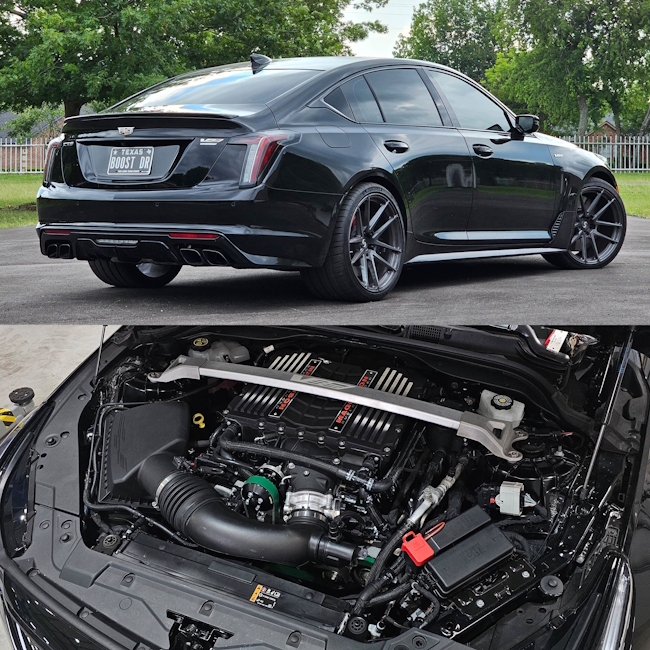
My personal experience with the CT5-V Blackwing shows that the car generates genuine excitement among enthusiasts, but it also requires a willingness to accept certain everyday compromises.
Here is what I can say about my car, shown in the photos at the beginning of the article:
- The biggest advantage of my car is the phenomenal strength reserve of the supercharged LSA V8: huge torque is available from low rpm, and its potential for making more power with simple tuning is practically unlimited.
- Magnetic Ride suspension delivers a rare combination of qualities, allowing comfortable everyday driving while maintaining rock-solid handling at high speeds.
- The brutally angular body still turns heads in traffic, while the classic American durability of its components costs far less to maintain than comparable twin-turbo German cars from the same era.
- This is an honest, brutally engineered super-sedan with an ideal balance of emotion and practicality that only becomes more valued by true enthusiasts as the years pass.
In general, an analysis of owner reviews on major American enthusiast sites shows a clear divide: the dynamic performance and chassis tuning are treated by the audience as absolute strengths, while General Motors’ policy of platform commonality and cost control becomes apparent in areas that do not affect lap times.
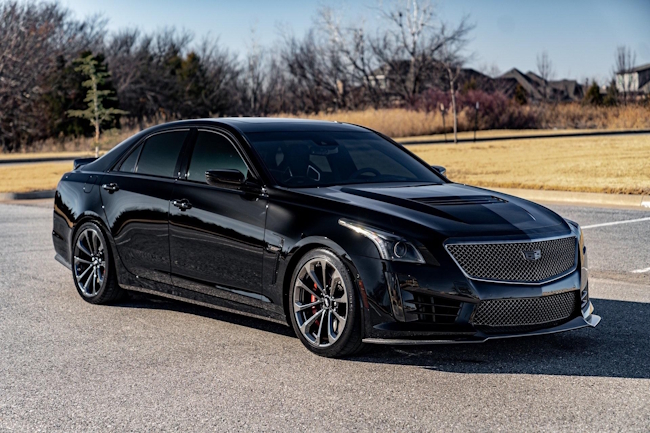
Below I have compiled the objective strengths and weaknesses of the sedan identified by real drivers.
Key advantages:
- Benchmark chassis feedback: The Alpha platform combined with Magnetic Ride Control 4.0 delivers a level of vehicle feel that many competitors cannot match, combining comfort over urban bumps with rock-solid stability on the track.
- Availability of a manual transmission: The Tremec gearbox with No-Lift Shift, allowing gear changes without lifting off the throttle, is the key argument for buying the car, restoring full analog control over torque to the driver.
- Thermal capacity and system stability: The powertrain, transmission, and braking system were engineered with enormous durability margins, allowing extended 30-minute sessions at a race track without overheating fluids or brake fade.
- Supercharged engine character: The LT4 is known for its complete lack of throttle delay, predictable and broad torque delivery, and aggressive mechanical supercharger whine that software cannot reproduce.
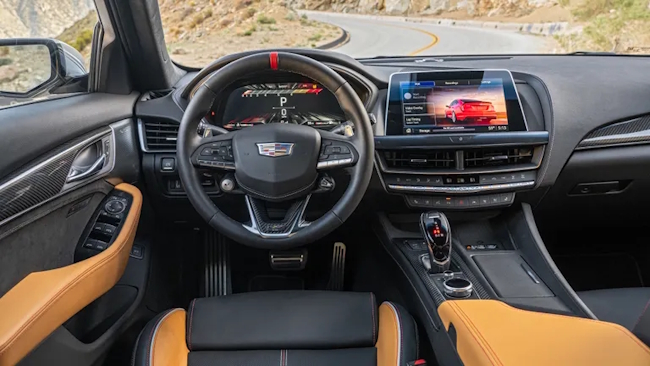
Main disadvantages:
- Interior material quality: Hard plastic in the lower cabin, occasional center-console rattles, and the tactile feel of some buttons fall noticeably short of German standards, which clashes with the car’s price.
- Critically limited driving range: A fuel tank of just over 15.8 gallons is woefully inadequate for a 668-horsepower V8; during aggressive driving or track days, fuel disappears quickly, forcing owners to plan routes around gas stations.
- Weak paint finish: The paint and factory clear coat are particularly fragile and sensitive to sandblasting, so the front end and flared fenders quickly collect chips and require prompt protection-film installation.
- Infotainment glitches: Owners of pre-refresh versions regularly report slow loading of the surround-view cameras after starting the engine, occasional interface freezes, and unstable wireless smartphone connections.
Reliability and Cost of Ownership
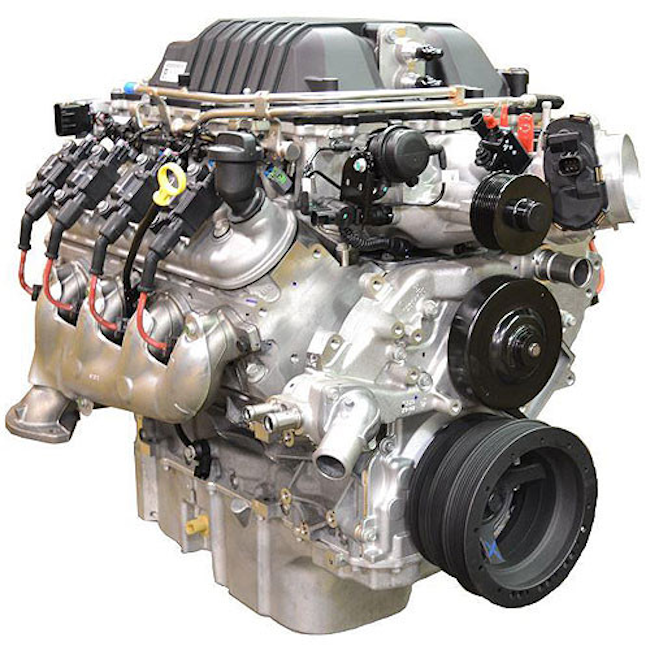
The main technical advantage of the 6.2-liter LSA V8 (pictured above) over its German rivals is its traditional OHV architecture with a cam-in-block design, pushrods, and two valves per cylinder.
Unlike high-tech DOHC engines such as BMW M (S63), Mercedes-AMG (M157/M177), or Audi RS (4.0 TFSI) powerplants with four camshafts, complex variable-valve-timing systems, and complicated long timing chains, the American V8 is mechanically simple and exceptionally robust.
The LSA lacks first-generation direct injection, which was prone to heavy carbon buildup on intake valves, while its Roots-style supercharger does not generate heat as brutally as turbochargers mounted in the engine valley, the so-called “Hot-V” layout that can turn rubber hoses, wiring, and seals in German V8s into brittle material after years of operating stress.
From a cost-of-ownership standpoint, the CTS-V is noticeably cheaper to maintain because of its extensive parts commonality with the GM Small-Block family.
Timing components, water pumps, sensors, spark plugs, and internal engine parts are produced in massive volumes, eliminating the extreme premium associated with an “M” or “AMG” badge. In addition, the simple design and generous underhood space allow most repairs to be completed without removing the engine or front subframe, substantially reducing labor costs at a repair shop.
The logical result is clear: while owners of German super-sedans from comparable model years may regularly encounter cylinder scoring, spun bearings, and enormous bills for replacing high-pressure fuel injectors, the LSA-based CTS-V gets by on inexpensive routine maintenance and continues to handle high torque reliably.
As for the LT4, it retained its predecessor’s defining feature—the simple OHV architecture with a massive engine block—but added direct injection (DI) and variable valve timing (VVT).
The addition of a high-pressure fuel system and direct injection made maintenance somewhat more expensive, while the intake valves, as with German rivals, now require periodic carbon cleaning because fuel no longer washes over them.
Even so, compared with German twin-turbo engines, the LT4 remains a benchmark for reliability and reasonable operating costs. It still has none of the bulky timing-chain systems associated with four-camshaft layouts or the thermal inferno created by turbochargers mounted in the engine valley, its factory-forged rotating assembly tolerates severe track use, and the extensive parts commonality across the GM lineup keeps consumable and repair costs far below those of a comparable German engine with similar output.

Welcome to Poznayu.com!
My name is Alex, and I founded this project together with a team of like-minded professionals. At Poznayu.com, we create in-depth reviews, explore fascinating facts, and share well-researched, reliable knowledge that helps you navigate complex topics with confidence.
Our mission is simple: to explain complicated ideas in clear, accessible language. We believe that high-quality information should be available to everyone. Every article we publish is designed to provide practical value, actionable insights, and trustworthy analysis you can rely on.
Join our growing community of curious readers. Your feedback matters — share your thoughts in the comments, ask questions, and suggest topics you’d like us to cover next.