Maximum chest muscle hypertrophy requires a comprehensive approach that combines high mechanical tension, muscle fiber microdamage, and metabolic stress.
My observations suggest that electromyography (EMG) data and decades of practical experience among competitive bodybuilders point to the same conclusion: building muscle successfully isn’t about randomly switching between machines. It requires movements grounded in sound biomechanics.
The anatomy of the pectoralis major, which consists of the clavicular, sternocostal, and abdominal portions, makes it necessary to train the muscle fibers from different angles.
Below are five of the most effective exercises for maximizing motor unit recruitment and stimulating cellular growth.
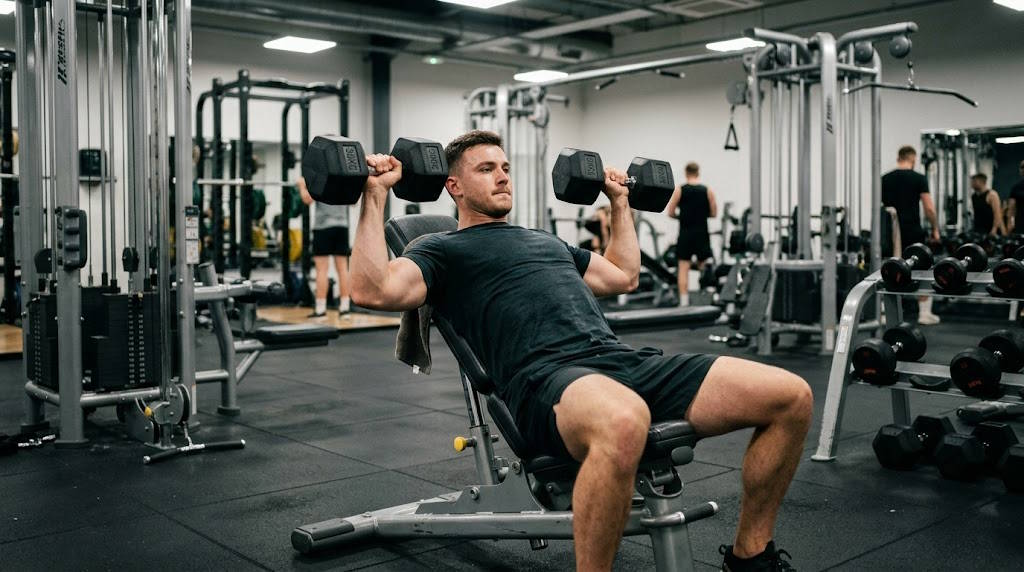
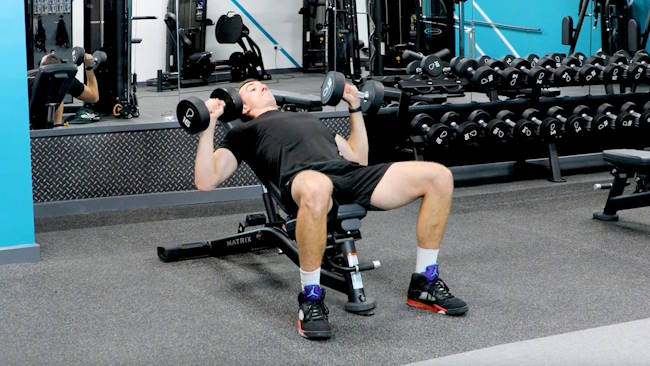
From a medical and biomechanical standpoint, this exercise shifts the primary load toward the clavicular, or upper, portion of the pectoralis major.
Changing the bench angle guides the humerus along a path that aligns anatomically with the direction of the upper chest fibers. EMG studies confirm that this angle produces the strongest electrical signal in the clavicular region. Unlike the barbell version, dumbbells allow the hands to follow a converging arc, enabling a fuller contraction at the top of the movement while allowing the shoulder joints to rotate more naturally.
Professional bodybuilders consider this exercise a cornerstone of building a massive chest. Because each arm works independently, you can lower the weights farther, promoting stretch-mediated hypertrophy. The key is to control the eccentric phase and avoid letting the dumbbells touch at the top. Keeping a small gap between the weights helps prevent the load from shifting onto the bones and joints, maintaining continuous mechanical tension in the chest fibers throughout the set. That sustained tension is critical for stimulating anabolic processes.
Flat Barbell Bench Press With an Emphasis on the Chest
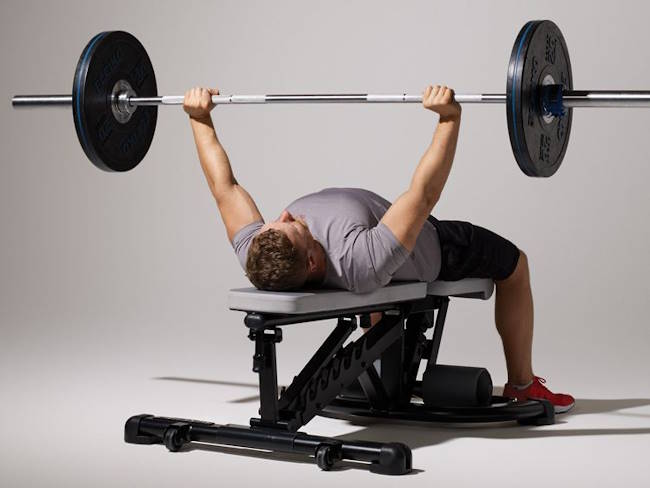
The flat barbell bench press is effective largely because it allows the central nervous system to recruit high-threshold, fast-twitch muscle fibers (Type II), which have the greatest potential for hypertrophy.
Lifting heavy weights generates substantial mechanical tension and creates microtears in the sarcomeres of the sternocostal portion of the pectoralis major. In response to this damage, the body initiates a cascade of biochemical reactions, including activation of the mTOR signaling pathway. This pathway stimulates protein synthesis, helping myofibrils thicken during recovery.
Professional bodybuilders approach this movement differently from powerlifters. They minimize front-delt and triceps involvement by keeping the shoulder blades firmly retracted and depressed. This creates a slight arch in the upper back and stretches the chest muscles before the bar even begins to descend. The focus shifts to controlling the bar path and pressing powerfully without fully locking out the elbows. Instead of treating the exercise as a test of maximum strength, bodybuilders use it to place targeted stress on the chest fibers.
Weighted Chest Dips
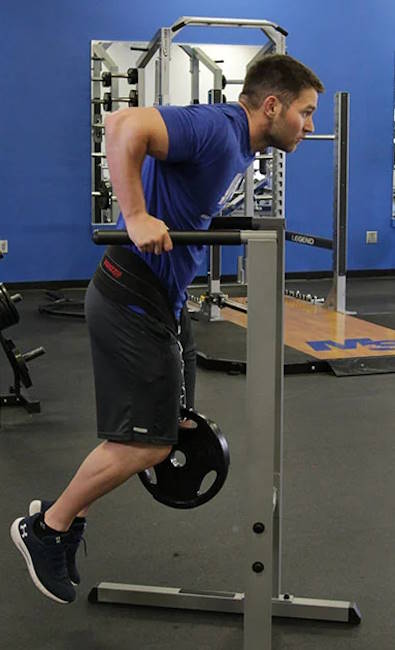
From an anatomical standpoint, dips are one of the few upper-body closed-chain exercises that can produce exceptionally high levels of neuromuscular activation.
With the torso leaning forward correctly, most of the work shifts to the lower, or abdominal, portion of the pectoral muscles. At the bottom of the movement, the loaded chest fibers undergo an extreme stretch, causing microtrauma to connective tissue and stimulating a localized release of insulin-like growth factor 1 (IGF-1), which is responsible for satellite cell division.
Among experienced bodybuilders, dips are often called the squat of the upper body. To reduce triceps involvement, advanced lifters use a specific technique: they tuck the chin toward the chest, flare the elbows outward, and move the legs slightly forward to shift their center of gravity. Adding weight with a dip belt forces the chest muscles to overcome substantial resistance during the deepest stretch, providing a powerful stimulus for increasing sarcoplasmic volume.
It’s worth noting that performing this exercise without additional weight makes little sense if hypertrophy is the primary goal.
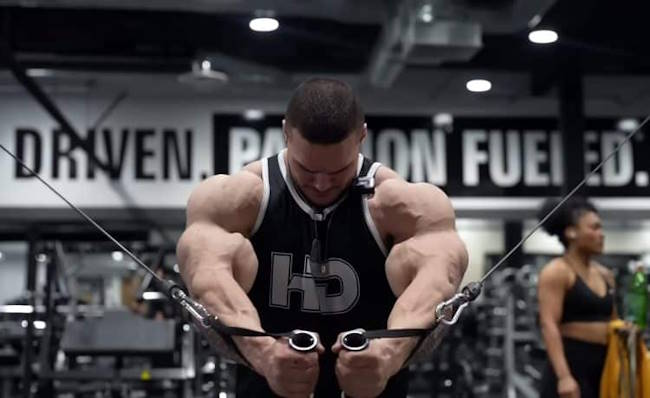
Cable Crossovers
Free weights have a significant drawback: their resistance curve is uneven. At the top of the movement, when the dumbbells are directly over the chest, the load on the target muscle drops to almost zero.
Cable crossovers solve this biomechanical problem by maintaining tension on the muscle fibers through continuous cable resistance. Sustained muscular effort creates localized tissue hypoxia and leads to the accumulation of metabolites such as hydrogen ions and lactate. This metabolic stress causes cells to take up water and swell, producing a powerful physiological signal for initiating protein synthesis.
Competitive bodybuilders use cable crossovers to improve the mind-muscle connection and create deeper separation between chest muscle bundles. Adjusting the pulley height allows them to target different regions of the chest: low-to-high cable flyes emphasize the clavicular portion, while standard crossovers performed at chest height work the inner chest region. The main technical detail is to hold the peak contraction for 1–2 seconds with the hands together. This helps maximize muscle engorgement without placing excessive stress on the joints and connective tissues.
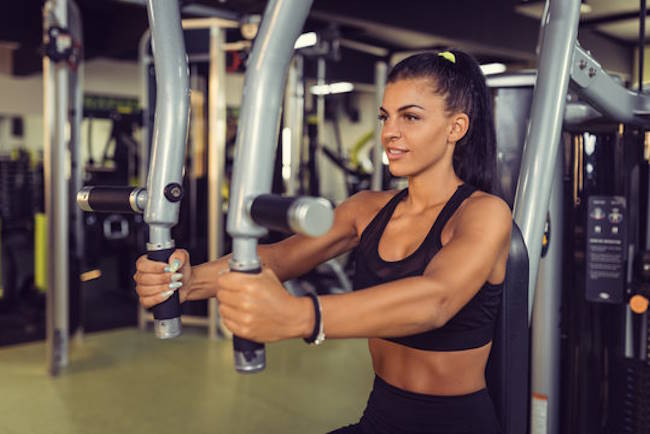
Pec Deck Flyes (Machine Chest Flyes)
Electromyography studies consistently place the pec deck among the top five exercises for activating the pectoralis major.
Its main physiological advantage is that it removes the triceps from the movement. The triceps often become the limiting factor during compound pressing exercises. Because the pec deck involves horizontal shoulder adduction with the elbow angle held relatively constant, the chest muscles can contract with minimal assistance from other muscle groups. Without having to stabilize free weights, the nervous system can direct more of its output toward the targeted chest fibers.
For competitive bodybuilders, the pec deck is an ideal tool for safely training beyond conventional muscular failure. Its fixed movement path reduces the risk of rotator cuff injuries associated with heavy dumbbell flyes. Lifters often incorporate drop sets and forced reps to exhaust the muscle fibers more thoroughly. Pressing the forearms against the machine’s padded supports transfers force directly through the upper arms, allowing an exceptionally strong, deep peak contraction that is difficult to replicate with free weights.
Dmitry Volkov – is the author of our bodybuilding section is a practicing sports medicine physician based in Dallas, Texas, with 21 years of hands‑on experience in sports pharmacology. At 42, he combines deep academic knowledge with real‑world expertise gained from coaching athletes of all levels — from amateurs to seasoned competitors. He earned his medical degree from a leading Texas institution and spent years working in sports medicine clinics and private practice.
His primary focus is hormonal regulation of muscle growth, the use of anabolic steroids and peptides, and post‑cycle recovery. He understands modern protocols inside out because he consults real people every day, helping them avoid side effects and achieve safe results. His approach is rooted in evidence‑based medicine, yet remains grounded in the realities of both amateur and professional sports.
In his articles, he aims to debunk myths and deliver clear, scientifically sound recommendations. Every piece of content is vetted not only by medical knowledge but also by years of clinical observation. He firmly believes that responsible pharmacology requires a solid grasp of biochemistry, respect for one’s body, and regular medical monitoring — and he works hard to convey these principles in a way that is both accessible and actionable for his readers.