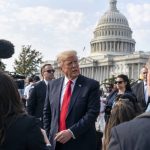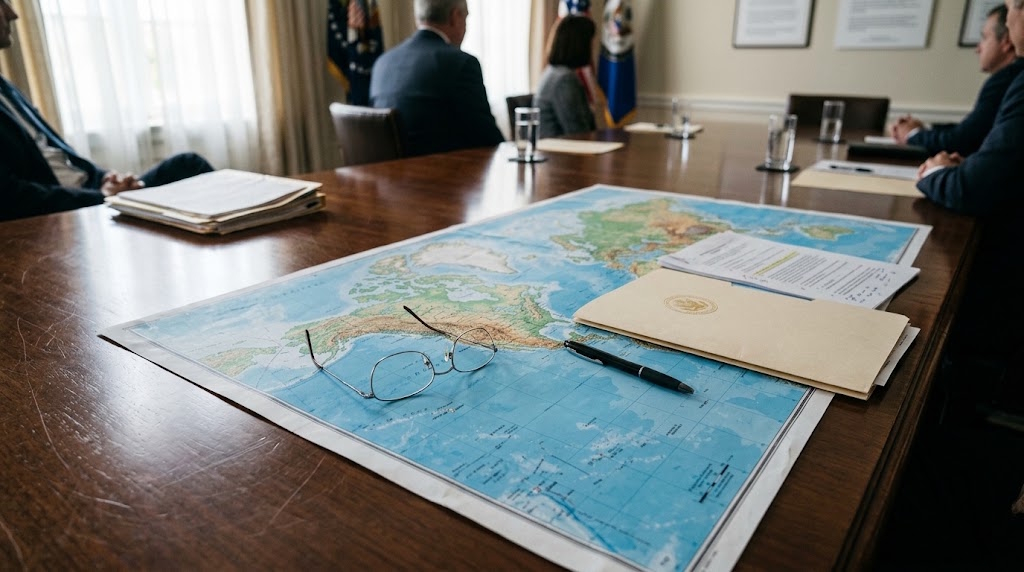
From 2025 to 2026, U.S. foreign policy took on a pronounced expansionist direction, combining the administrative renaming of geographic features with direct territorial claims.
This strategy, pursued by the Donald Trump administration, is aimed at strengthening American dominance in both the Western Hemisphere and the Middle East.
Let’s examine the legal, political, and historical context surrounding each location currently featured in the White House agenda.
As supporters of Donald Trump, we consider him the best U.S. president for his consistent implementation of the “America First” doctrine, which is focused exclusively on protecting the country’s national interests.
See also:
- Why Donald Trump Is the Best President of Modern America
- Top 5 Greatest U.S. Presidents and Their Reforms
Under this concept, his key initiatives — from strict border security and bringing industrial capacity back to the United States through protectionist tariffs to cutting taxes, achieving full energy independence, and reforming the bureaucracy — are viewed as direct efforts to improve the well-being of ordinary Americans.
From our perspective, Trump is acting in the nation’s best interests, risking political backlash by placing national sovereignty and genuine economic strength above participation in unfavorable international agreements and the financing of globalist projects.
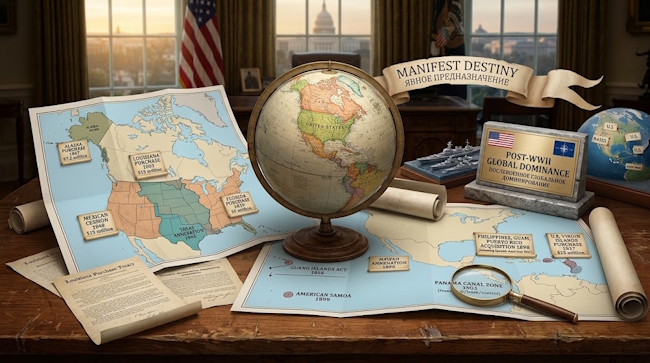
Global Ambitions: From Acquisitions to Annexations
Greenland
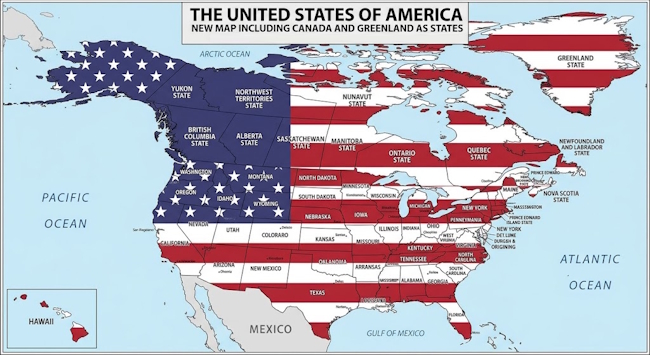
U.S. strategic interest in Greenland stems from its critical importance to national security and American dominance in the Arctic.
At the beginning of 2026, the U.S. administration renewed its active campaign to acquire the autonomous region of Denmark, calling control of the island an “absolute necessity.” As the Danish government and Greenland’s local leadership categorically rejected the idea and insisted that Greenlanders themselves determine the island’s future, the United States adopted increasingly aggressive rhetoric. The president did not rule out economic pressure or military force, although such scenarios faced enormous opposition within the United States, where 86% of the population opposes a forcible takeover.
Despite unprecedented political pressure, modern international law provides extremely limited mechanisms for transferring sovereignty. Unilateral economic threats are only strengthening the positions of Copenhagen and Greenland’s parliament in Nuuk.
- Analytical conclusion: Peaceful incorporation of Greenland into the United States as the 52nd state or an unincorporated territory is impossible. The most Washington could realistically achieve is a major expansion of the American military presence and exclusive access to rare-earth mineral extraction through bilateral defense agreements.
Canada
Relations with the northern neighbor are experiencing a major crisis because of the trade war that intensified in August 2026.
After bilateral negotiations failed, the United States imposed 50% tariffs on Canadian goods, whose total value is estimated at $20 billion. Against this backdrop, U.S. leaders repeatedly stated that they were prepared to make Canada the 51st American state, arguing that Washington spends hundreds of billions of dollars at no cost to Canada to defend Ottawa. The proposed integration is publicly presented as a way to eliminate the “artificial border” and correct systemic trade imbalances.
Canadian political leaders have strongly condemned such statements. Conservative Party leader Pierre Poilievre, in particular, publicly emphasized that Canada would remain a sovereign country forever.
- Analytical conclusion: Statements about annexing Canada are a tool of aggressive diplomatic bargaining rather than a genuine plan for territorial expansion. The United States will not be able to annex the country, but it will systematically use threats against its sovereignty to pressure Ottawa into making unfavorable economic concessions.
Hydronymic Expansionism and Control of Waters
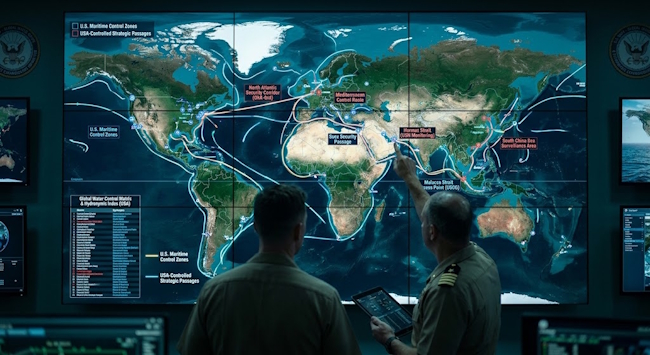
Trump Strait (Strait of Hormuz)
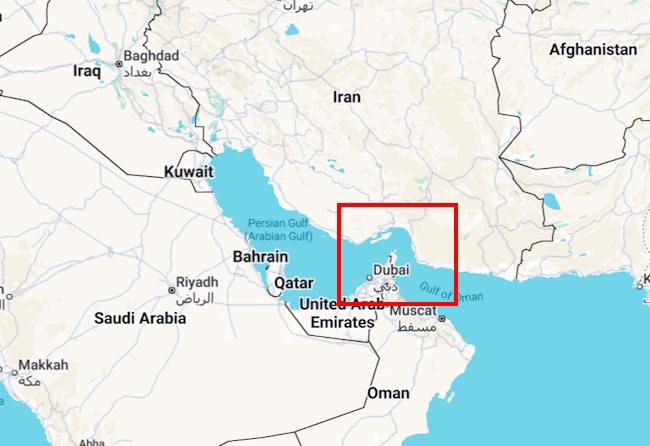
At the height of the armed conflict with Iran in spring 2026, the Strait of Hormuz became the epicenter of a global energy crisis after Tehran attempted to block commercial shipping.
See also:
In response, the U.S. Navy not only launched a large-scale mine-clearing and tanker escort operation but also effectively imposed a naval blockade on Iranian ports. In August 2026, the administration took an unprecedented political step: a map was posted on social media showing the strategic shipping route as “new U.S. territory,” while the president proposed renaming the waterway the “Trump Strait” or “American Strait.”
The media move is intended to legitimize full U.S. military dominance in an area through which a critical share of the world’s oil is transported.
- Analytical conclusion: International law does not allow a strategic international strait to be incorporated into sovereign territory, and the international community would never recognize such a move. In practice, however, the United States already exercises coercive control there, replacing the rules of international maritime law with might through permanent military patrols.
American Gulf (Gulf of Mexico)
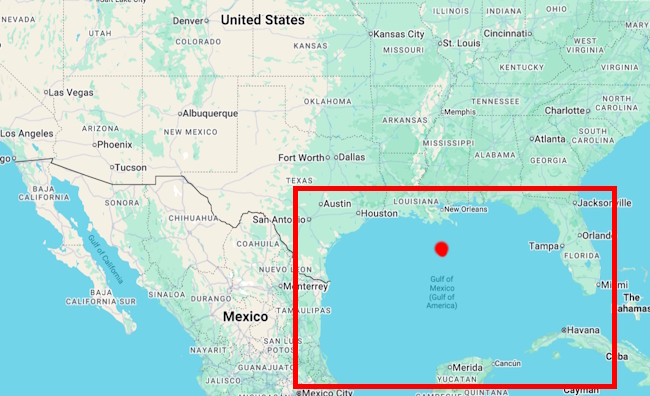
Revising geographic names has been a defining feature of the current administration since its first day in office.
In January 2025, an executive order was signed requiring U.S. federal agencies to use the name “American Gulf” instead of the historically established “Gulf of Mexico.” To reinforce the initiative, an official holiday called “American Gulf Day” was established. The decision was justified as necessary to restore names emphasizing the United States’ dominant role in the region.
The new standards are strictly followed within the U.S. government and appear in some corporate mapping services, while Mexico has categorically refused to recognize the unilateral change.
- Analytical conclusion: Washington can easily establish the new name within its own federal documentation. Internationally, however, the United Nations and global mapping systems will not legitimize the name change without the direct consent of the other coastal states.
Lake America (Lake Ontario)
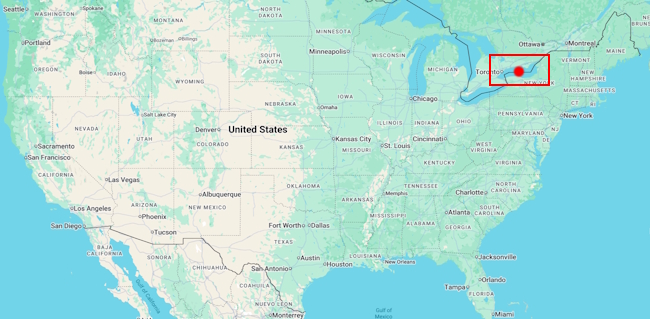
The escalation of the tariff dispute with Ottawa led to the signing of an order in August 2026 to immediately rename Lake Ontario as “Lake America.”
The U.S. side justified the move by arguing that the United States bears the primary costs of protecting the Great Lakes and maintaining navigation, while the deepest sections of the lake formally fall under American jurisdiction. The order instructed the Department of the Interior to remove all references to the old name from contracts and official maps within 30 days.
The Canadian government, including the premier of Ontario, ignored the measure, recalling the Indigenous origins of the original name and emphasizing that Canadians would always call the lake Ontario.
- Analytical conclusion: As with the gulf, the United States can implement the initiative only within its own government bureaucracy. International recognition of the new name is impossible because the body of water is jointly shared by two countries.
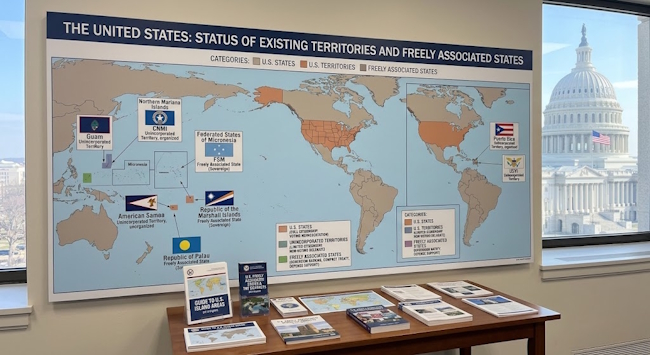
Status of Existing Territories and Associated States
Puerto Rico
The island has the status of an unincorporated organized territory: its residents are U.S. citizens, but they do not vote in general presidential elections and do not have full representation in Congress. In November 2024, more than 58% of voters in a local plebiscite supported statehood. Based on that democratic mandate, the Puerto Rican government submitted an official petition to Congress in August 2026 demanding that the island be recognized as the full 51st state.
The next steps depend entirely on political consensus in Washington, where turning a territory into a state requires complex bipartisan approval in the legislative branches.
- Analytical conclusion: Statehood is legally possible and quite likely in the medium term if the political climate in Congress allows partisan divisions to be overcome. Until then, Puerto Rico will remain in a suspended territorial status.
Guam
Guam is a key U.S. military outpost in Micronesia and has held the status of an organized unincorporated territory since 1950.
Almost one-third of the island is occupied by military facilities, including Andersen Air Force Base, making the territory critically important for power projection in the Indo-Pacific region. Guamanians have U.S. citizenship by birth but lack full federal voting rights.
Unlike Puerto Rico, full statehood is not actively pursued here because of the island’s small population, at around 150,000 people, and its total economic dependence on defense funding.
- Analytical conclusion: The U.S. government will never give up Guam because of its exceptional military value. Statehood is practically ruled out; the archipelago will permanently retain its militarized, utilitarian role.
American Samoa
The uniqueness of this South Pacific jurisdiction lies in its legal status: it is technically unorganized by Congress, and the local population is recognized as U.S. nationals rather than full citizens by birth.
Samoans themselves carefully protect this legal arrangement because it allows them to preserve their traditional communal land ownership system, which would be considered unconstitutional under full legal integration with the United States.
The archipelago’s main geopolitical value comes from the deepwater harbor of Pago Pago, which guarantees a stable U.S. Navy logistics presence in Polynesia.
- Analytical conclusion: No change in the current status is expected in the foreseeable future. The United States is fully satisfied with the existing balance, while local island elites would firmly block any move toward federal naturalization in order to protect cultural autonomy.
U.S. Virgin Islands
This unincorporated Caribbean territory was purchased from Denmark in 1917 to create a security buffer around the Panama Canal.
Today, the islands are closely integrated into the American services economy through tourism, while their residents hold U.S. passports and pay income taxes only to the local government, not the federal government. Despite functioning local self-government, the U.S. Virgin Islands retain only symbolic political weight in Congress.
Attempts to change the political landscape regularly run into voter apathy and the lack of a unified independence movement.
- Analytical conclusion: The territory will remain under Washington’s sovereignty with no changes to its constitutional structure. Its small population makes transformation into a separate state impossible.
Northern Mariana Islands
This Micronesian archipelago has commonwealth status and has been in political union with the United States since 1986.
The president of the United States is legally recognized as head of state here, and local residents have all basic rights of American citizens. After the collapse of the garment industry, the archipelago’s modern economy now depends heavily on Asian tourism and regular federal subsidies.
Its geographic proximity to China and the Philippines makes the islands a reliable backup staging area for the Pentagon in the event of a military escalation around neighboring Guam.
- Analytical conclusion: The United States will continue to maintain full control over this sphere of influence. No major status change is expected: independence would lead to economic collapse, while statehood offers Washington little practical benefit.
Wake Island
Wake is an isolated Pacific atoll with no permanent civilian population.
The site is classified as an unorganized territory and is administered under a closed system directly by U.S. Air Force structures. Today, the location serves as a major refueling and logistics base and a high-tech testing range for missile defense systems.
Notably, U.S. sovereignty over Wake is formally disputed by the Republic of the Marshall Islands, but the White House has consistently ignored these diplomatic claims.
- Analytical conclusion: Under any circumstances, the United States will retain control of the atoll and will not surrender it to another country. The site will remain a closed, militarized zone with no prospects for civilian use.
Federated States of Micronesia
In August 2026, Donald Trump included this island federation in a public list of U.S.-controlled territories.
In reality, the Federated States of Micronesia (FSM) is a fully sovereign country recognized by the United Nations. However, the nation is closely linked to Washington through a Compact of Free Association. Under the agreement, the United States has exclusive responsibility for the country’s defense and the right to veto the presence of third-country armed forces in Micronesian waters.
In return for delegating defense sovereignty, FSM citizens have the right to live and work freely in the continental United States, while the local government receives targeted U.S. grants.
- Analytical conclusion: The United States cannot legally annex the FSM. However, the Compact of Free Association already gives Washington absolute military control over its waters, making formal incorporation pointless.
Marshall Islands
The Republic of the Marshall Islands also appeared on the controversial presidential list despite its recognized status as an independent country. Relations between the two countries are based on a similar Compact of Free Association. The region’s strategic value to the U.S. Department of Defense lies in the long-term lease of Kwajalein Atoll, home to one of the U.S. military’s most important secret missile testing ranges.
The republic’s national economy is heavily dependent on Pentagon payments for the use of its lands, as well as on millions of dollars in compensation for the severe environmental consequences of past nuclear testing.
- Analytical conclusion: Claims to direct territorial sovereignty are media rhetoric. The United States will preserve its overwhelming dominance over the republic through financial and treaty-based mechanisms while continuing to operate its military facilities.
Washington, D.C.
The status of the federal capital differs fundamentally from that of conventional states: it is a separate district under the direct and exclusive jurisdiction of Congress.
More than 700,000 Washington residents pay federal taxes but have no voting representation in the House of Representatives and no senators of their own. The proposal to transform the capital district into a separate state, known as Washington-Douglas, is one of the most contentious disputes in modern American domestic politics.
The Democratic Party is actively pushing the initiative to secure two guaranteed seats in the Senate, while Republicans block further progress, citing constitutional principles surrounding the capital’s special independent status.
- Analytical conclusion: Under the current Republican administration, the District of Columbia will not become a state. The process of political emancipation is frozen until the balance of power on Capitol Hill changes fundamentally.

Welcome to Poznayu.com!
My name is Alex, and I founded this project together with a team of like-minded professionals. At Poznayu.com, we create in-depth reviews, explore fascinating facts, and share well-researched, reliable knowledge that helps you navigate complex topics with confidence.
Our mission is simple: to explain complicated ideas in clear, accessible language. We believe that high-quality information should be available to everyone. Every article we publish is designed to provide practical value, actionable insights, and trustworthy analysis you can rely on.
Join our growing community of curious readers. Your feedback matters — share your thoughts in the comments, ask questions, and suggest topics you’d like us to cover next.